Culinary Explorer

A cooking platform built around craft, culture, and the stories behind what we eat.
Discover Culinary Explorer
Ensalada de Manzana Navideña

Ensalada de Manzana Navideña

Created by

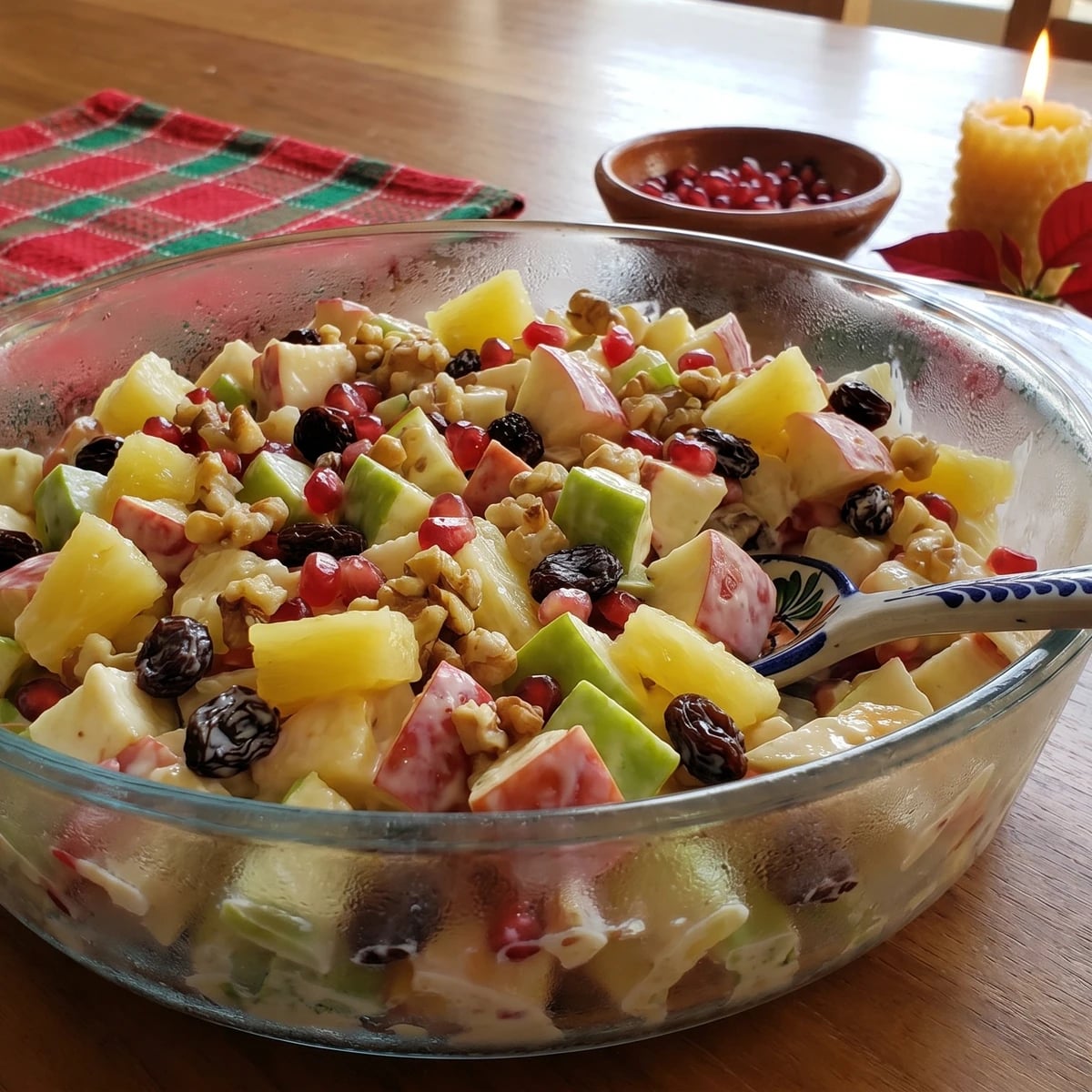
The cold Christmas salad of central Mexican tables, diced apple and plumped raisins folded into crema and condensed milk with pineapple and nuez de Castilla, finished with pomegranate seeds for the colors of the season.

Salads
Mexican
Christmas
Holiday
Potluck
25 min
Active Time
0 min cook4 hr 25 min total
Yield10 to 12 servings

This is a Bajio dish. Guanajuato, Querétaro, San Luis Potosí, the central Mexican states where Christmas Eve means a long table and a cold ensalada de manzana sitting next to the bacalao and the pavo. It has cousins in every region of Mexico now, but the version with crema, condensed milk, pineapple, and nuez de Castilla belongs to the central altiplano and to the December holiday table.

Do not call this a fruit salad. A fruit salad is what you eat in the summer with yogurt. This is a Christmas dish, sweet on purpose, served cold, made the night before because it has to sit. The condensed milk is not a mistake or an excess. It is the recipe. The cream binds the apple and the raisin and the pineapple into something that tastes like the December of a Mexican childhood, the bowl your aunt brings to the posada in a glass refractario covered with plastic wrap.

My mother made this every Nochebuena in Colonia Roma. She would dice the apples on the morning of the 24th, plump the raisins in warm water (never skip this, she would say, the raisins have to come back to life), and let the whole thing sit in the refrigerator until midnight. The pomegranate seeds went on at the last minute because she wanted the colors of the flag visible on the table. Cada estado, su propia cocina, and this one belongs to central Mexico in December. Recetas probadas y garantizadas.

Apples are not indigenous to Mexico. They arrived with Spanish colonists in the 16th century and took root in the cooler highlands of Chihuahua, Coahuila, Puebla, and the Bajio, where the altitude and dry climate suited them. The pairing of apple with sweetened dairy as a holiday dish reflects the 20th-century arrival of industrially canned condensed milk (La Lechera, the Nestlé brand, began Mexican production in the 1930s) and the integration of leche condensada into the celebratory cooking of central Mexican homes. The dish's standardization on Christmas Eve tables coincided with the mid-century rise of Nochebuena as a family gathering centered on a single long meal rather than a series of religious observances, and the cold creamy salad served as the sweet counterpoint to the savory bacalao a la vizcaina and roasted turkey that anchor the menu.

The technique, the tradition, and the story behind every dish.

Discover Culinary Explorer

Ingredients

red apples (manzana roja or Red Delicious)

Quantity

5 large

cored and diced into 1/2-inch cubes

green apples (Granny Smith)

Quantity

2 large

cored and diced into 1/2-inch cubes

fresh lime juice

Quantity

1 tablespoon

raisins (pasitas)

Quantity

1 cup

warm water

Quantity

1/2 cup

for plumping the raisins

pineapple chunks in juice

Quantity

1 can (20 ounces)

drained well

nuez de Castilla (fresh walnut halves)

Quantity

1 cup

roughly chopped

pecans (optional)

Quantity

1/2 cup

roughly chopped

crema mexicana

Quantity

1 cup

sweetened condensed milk (leche condensada)

Quantity

1 can (14 ounces)

pomegranate seeds (granada roja) (optional)

Quantity

1/2 cup

for serving

kosher salt

Quantity

pinch

Equipment Needed

  • Sharp paring knife for the apples
  • Large glass or ceramic mixing bowl
  • Fine-mesh strainer for the pineapple
  • Wide rubber spatula
  • Glass refractario (Pyrex-style) serving dish, the kind every Mexican household keeps for the holidays

Instructions

  1. 1

    Plump the raisins

    Place the raisins in a small bowl and cover with the warm water. Let them sit for 15 minutes until they swell back to life. Drain them well and pat dry. Dry raisins shrink into hard bullets inside the crema and ruin the texture. Plumped raisins give back the sweetness they absorbed. This step takes five minutes of patience and it is the difference between a serious ensalada and a careless one.

  2. 2

    Dice the apples

    Core the apples but leave the skin on. The skin is where the color lives, and on a Christmas table the flecks of red and green matter. Dice into half-inch cubes, as even as you can manage. Toss the diced apple in a large bowl with the tablespoon of lime juice and the pinch of salt. The lime keeps the flesh from browning. The salt wakes up the sweetness of everything else.

    Use a mix of red and green apples. The red brings sweetness and softer flesh, the green brings tartness and crunch that holds up overnight in the cream. One alone makes a flat salad.
  3. 3

    Drain the pineapple well

    Tip the canned pineapple into a fine-mesh strainer over the sink. Press gently with the back of a spoon to push out the juice. Wet pineapple bleeds into the crema and turns the whole bowl into a thin sweet soup. You want the chunks dry to the touch before they go in. Drink the juice, do not throw it away.

  4. 4

    Build the cream base

    In a separate large bowl, whisk together the crema mexicana and the sweetened condensed milk until completely smooth. No lumps. The condensed milk is what makes this a Christmas salad and not a fruit salad. It is sweet on purpose. This is the bowl your tia in Guanajuato has been making the same way since 1972 and she is not adjusting the sugar for anyone.

  5. 5

    Fold everything together

    Add the diced apples, drained raisins, drained pineapple chunks, and chopped walnuts to the cream base. Fold with a wide rubber spatula, gently, from the bottom up. Do not stir hard. You are coating the fruit, not whipping the cream. Every piece of apple should wear a thin coat of the sweet crema.

  6. 6

    Chill until cold

    Cover the bowl with plastic wrap pressed directly onto the surface of the salad. Refrigerate for at least four hours, preferably overnight. The raisins keep absorbing the cream, the apples release a little of their juice, and the whole thing settles into the texture it is supposed to have. A warm ensalada de manzana is not the dish. A cold one is.

  7. 7

    Finish and serve

    Just before serving, give the salad a gentle fold to redistribute the cream that has settled. Transfer to a wide serving bowl. Scatter the pomegranate seeds across the top along with a handful of reserved walnut pieces. The granada is not decoration. It is what tells the table this is a December dish, served cold from the refrigerator next to the bacalao and the pavo. Saber cocinar es saber vivir.

Chef Tips

  • Use nuez de Castilla (English walnuts) and not pecans for the central Mexican version. The northern states, Coahuila and Chihuahua, will swap in pecans because that is what grows there. Both are correct for their region. Do not mix them and call it improved.
  • The condensed milk is non-negotiable. Do not substitute honey, agave, or maple syrup. This is a Christmas dish and the leche condensada is the flavor that tells you it is Christmas. No me vengas con atajos.
  • Make this the night before. Not two hours before. Overnight. The texture and the flavor are not the same on a salad made the same day. The raisins need time to absorb the cream and the apples need time to release a little juice.

Advance Preparation

  • This salad must be made at least four hours ahead and is better made the night before. The flavors marry, the raisins plump further in the cream, and the texture sets correctly only with time in the refrigerator.
  • Keeps refrigerated for three days. After that the apples start to soften too much and the cream thins. Make what you will eat in two days, not more.

Frequently Asked Questions

Nutrition Information

1 serving (about 305g)

Calories
490 calories
Total Fat
25 g
Saturated Fat
10 g
Trans Fat
0 g
Unsaturated Fat
14 g
Cholesterol
45 mg
Sodium
100 mg
Total Carbohydrates
60 g
Dietary Fiber
5 g
Sugars
49 g
Protein
8 g

Note: Chef personas and recipes are created with AI assistance. Cook with care: follow safe food-handling practices, check doneness with a thermometer when needed, and adapt for allergies and your kitchen.

Where cooking meets culture.

Culinary guides, cultural storytelling, and the editorial depth that makes cooking meaningful.

Discover Culinary Explorer

More from Central Mexican Salads

Browse the full collection