
Chef Klaus
Allgäuer Krautkrapfen
The Allgäu pan dish that makes a meal from noodle dough, winter kraut, onion, and fat: brown the cut sides first, then cook gently so the rolls hold.
A cooking platform built around craft, culture, and the stories behind what we eat.
Created by
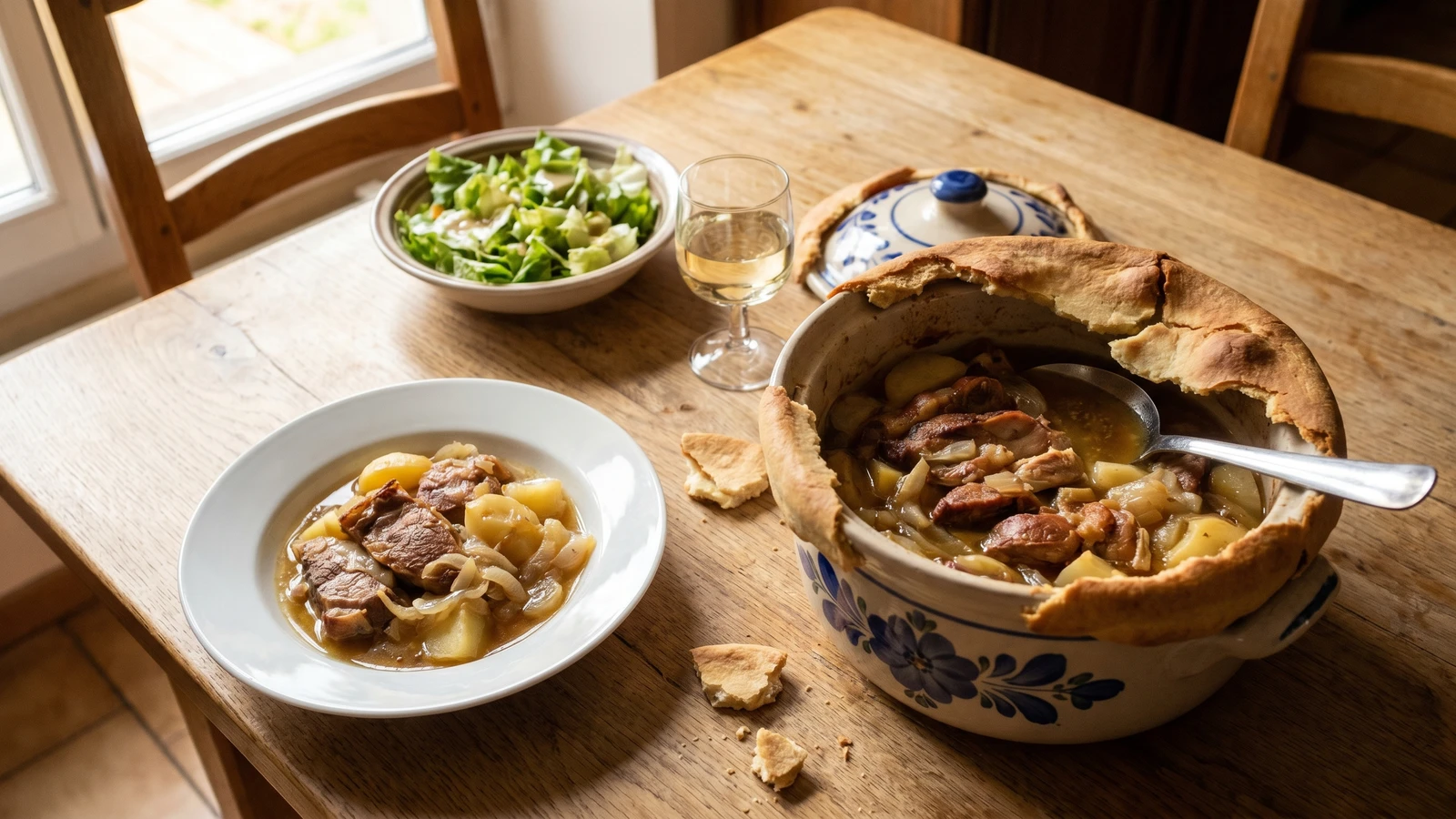
Three meats, dry Riesling, potatoes, onions, and a sealed pot from the Alsace border: the work is done overnight, then the oven earns its keep.
Baeckeoffe belongs to Alsace, right on the German border, and it sits naturally on the Upper Rhine table: wine in the pot, potatoes underneath, onions doing the quiet work, and three meats that need time more than fuss. Baden and the Pfalz understand this kind of cooking, but they don't make the same dish. Im Norden anders, im Süden anders. Here the argument is closer to the Rhine: lamb or no lamb, carrots or none, dough seal or only a tight lid.
I keep the Alsatian shape: pork shoulder, beef chuck, and lamb shoulder marinated overnight in dry Riesling with onion, leek, garlic, thyme, bay, juniper, and pepper. The wine is not there to perfume the room. It seasons and loosens sturdy cuts before the oven starts, then turns into the cooking liquor that carries the onions and potatoes all the way through.
The technique that decides the dish is the seal. Press dough around the lid so the pot braises in its own small weather; without that seal the wine escapes, the top potatoes dry out, and the meat cooks in patches instead of surrendering evenly. Das braucht seine Zeit. A hard boil would toughen the meat and break the potatoes, so runter mit der Temperatur, down with the temperature, and let the covered pot work slowly.
Use the larder sense of the old kitchens. Shoulder cuts, stored potatoes, onions, a bottle of dry white wine, and patience. Weggeworfen wird nichts: the marinade becomes the broth, the browned edge on the potato is part of the dish, and the pot goes to the table whole. Schön ist, was schmeckt.
Baeckeoffe means baker's oven in Alsatian, and the dish is tied to the village practice of leaving a sealed earthenware terrine in the communal or baker's oven after the bread came out. One strong line of food history connects it to Alsatian Jewish Sabbath cooking, especially cholent, a pot sealed and cooked slowly when no work could be done, later absorbed into the Christian household table. The regional dispute is still practical rather than decorative: Strasbourg and the north of Alsace often defend the three-meat version, while many households adjust the mix by butcher, season, and confession.
Quantity
500g
cut into 4cm pieces
Quantity
500g
cut into 4cm pieces
Quantity
500g
cut into 4cm pieces
Quantity
750ml
Quantity
2 large
thinly sliced
Quantity
1
white and pale green parts sliced and well washed
Quantity
2
crushed
Quantity
2
Quantity
4
Quantity
6
lightly crushed
Quantity
1 teaspoon
lightly crushed
Quantity
1.5kg
peeled and sliced 5mm thick
Quantity
2
sliced 5mm thick
Quantity
2 teaspoons, plus more to taste
Quantity
to taste
Quantity
1 tablespoon
for greasing the pot
Quantity
250g
for the sealing dough
Quantity
125ml
for the sealing dough
Quantity
1 pinch
for the sealing dough
| Ingredient | Quantity |
|---|---|
| pork shouldercut into 4cm pieces | 500g |
| beef chuck or shouldercut into 4cm pieces | 500g |
| lamb shouldercut into 4cm pieces | 500g |
| dry Riesling or Sylvaner | 750ml |
| onionsthinly sliced | 2 large |
| leekwhite and pale green parts sliced and well washed | 1 |
| garlic clovescrushed | 2 |
| bay leaves | 2 |
| thyme sprigs | 4 |
| juniper berrieslightly crushed | 6 |
| black peppercornslightly crushed | 1 teaspoon |
| firm waxy potatoespeeled and sliced 5mm thick | 1.5kg |
| carrotssliced 5mm thick | 2 |
| fine salt | 2 teaspoons, plus more to taste |
| freshly ground black pepper | to taste |
| lard or neutral oilfor greasing the pot | 1 tablespoon |
| plain flourfor the sealing dough | 250g |
| waterfor the sealing dough | 125ml |
| saltfor the sealing dough | 1 pinch |
Put the pork, beef, and lamb in a glass or ceramic bowl with the Riesling, half the onions, the leek, garlic, bay, thyme, juniper, and peppercorns. Cover and refrigerate overnight, turning once if you remember. The wine needs time against the shoulder cuts; it seasons deep and gives the braise its liquid, so don't pour it away later.
Heat the oven to 160C. Grease a large lidded earthenware terrine or Dutch oven with lard or oil, because the bottom layer of potatoes needs fat between starch and clay or iron. Slice the potatoes evenly, about 5mm, so they cook through at the same pace as the meat instead of leaving hard coins at the edge.
Lay one third of the potatoes in the bottom of the pot and season with salt and black pepper. Add half the marinated meat and aromatics, then a layer of onions and carrots, then repeat, finishing with potatoes on top. Strain the marinade over the layers until the liquid comes just below the top potatoes; they should braise from below and brown lightly above, not drown.
Mix the flour, water, and pinch of salt into a plain dough, roll it into a rope, and press it around the rim before setting on the lid. Pinch the dough tight all the way around. This seal is the point: it traps the wine and meat juices, so the pot cooks evenly and the potatoes stay tender instead of drying out. Nicht aus dem Glas, and not under foil pretending to be a lid.
Bake for 3 hours, then lower to 150C if the pot is bubbling hard. A quiet bubble tenderises shoulder cuts; a violent boil tightens them and breaks the potato layers into paste. After 3 hours, crack the dough seal, lift the lid, and test the beef with a fork. If it resists, seal the lid back as well as you can and give it another 30 minutes.
Let the pot stand 15 minutes before serving, because the potatoes need that pause to drink back the wine-rich juices. Taste the top layer and salt at the end, not before the whole pot has reduced and settled. Würzen, Fett, Salz zum Schluss. Serve from the terrine with the broken sealing crust beside it if anyone wants to pull at it.
1 serving (about 650g)
Culinary guides, cultural storytelling, and the editorial depth that makes cooking meaningful.
Discover Culinary ExplorerChef Klaus
The Allgäu pan dish that makes a meal from noodle dough, winter kraut, onion, and fat: brown the cut sides first, then cook gently so the rolls hold.

Chef Klaus
Swabian egg pasta turned toward the apple cellar: fresh Spätzle tossed with browned butter, tart apples, cinnamon, and enough restraint to stay supper, not cake.

Chef Klaus
Hesse's pork goulash belongs to Apfelwein country: shoulder, onions, and tart cider cooked low until the cheap cut turns soft and the sauce lands sweet-sour, not sour-sweet.

Chef Klaus
The old sweet supper that saves yesterday's loaf: stale bread drinks eggy milk, the pan stays moderate, and butter browns the outside only after the centre has set.