Culinary Explorer

A cooking platform built around craft, culture, and the stories behind what we eat.
Discover Culinary Explorer
Eggs with Xico Longaniza

Eggs with Xico Longaniza

Created by

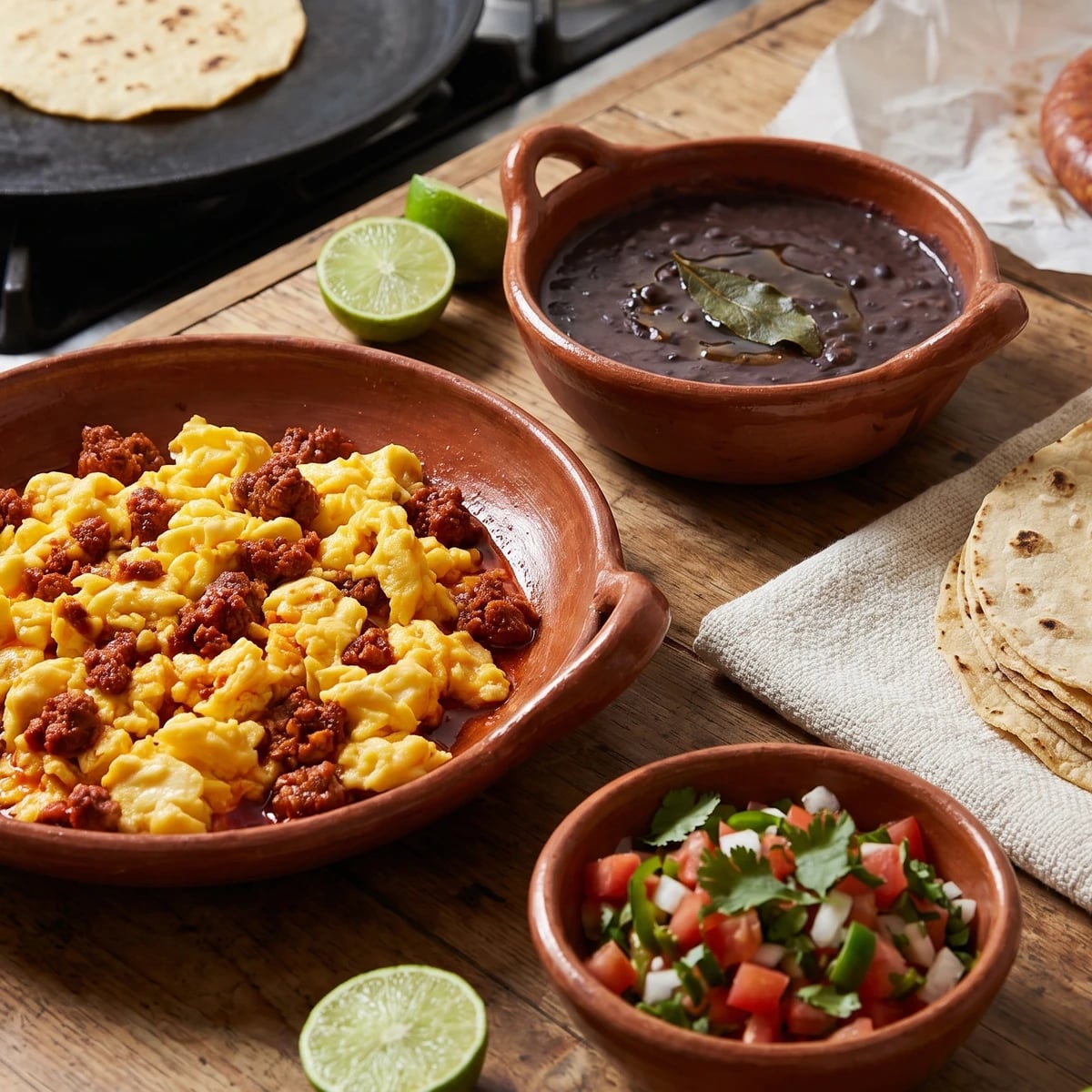
Central Veracruz breakfast built on Xico's chile ancho longaniza, soft scrambled eggs, epazote-scented black beans, and corn tortillas warmed on the comal, a fast almuerzo with mountain town backbone.

Breakfast & Brunch
Mexican
Weeknight
Quick Meal
Comfort Food
20 min
Active Time
25 min cook45 min total
Yield4 servings

Veracruz, the central highlands around Xico, is where these eggs belong. Not the port, not the seafood postcard. Xico sits near Xalapa, under the cloud forest and coffee country, where the market sells mole xiqueño, pan de huevo, black beans, and longaniza red with chile ancho and vinegar. That is the map before the pan goes on the stove.

The longaniza is the authority here. Xico's version is pork seasoned with dried chiles, garlic, Mexican oregano, vinegar, and warm spices, then left long enough for the adobo to settle into the meat. When the señoras in the market cook it for breakfast, they don't drown it in tomato or hide it under cheese. They render it slowly until the fat turns red, then scramble the eggs into that fat. La manteca es el sabor, and in this case the longaniza brings its own.

The beans matter too. Veracruz is black bean country, and the epazote in the refritos tells you the cook knows where she is standing. Corn tortillas come off the comal, salsa cruda goes into a clay bowl, and everything lands on the table in barro rojo, generous and practical. My mother used to say that breakfast tells you whether a kitchen has order. This one does. Saber cocinar es saber vivir.

Xico sits in the central Veracruz highlands, on the old food route between Xalapa, Coatepec, and the coffee-growing foothills of Cofre de Perote, where Spanish pork sausage-making was adapted with American chiles and local vinegar. The chile jalapeño takes its name from nearby Xalapa, so using it in the table salsa is geography, not decoration. Xico's July feast for Santa María Magdalena is famous for mole xiqueño, but longaniza is the daily counterpart: sold in market links, fried for almuerzo, and folded into eggs, beans, and corn tortillas.

The technique, the tradition, and the story behind every dish.

Discover Culinary Explorer

Ingredients

Xico-style longaniza

Quantity

12 ounces

casings removed if necessary and meat crumbled

large eggs

Quantity

8

fine sea salt

Quantity

1/4 teaspoon, plus more to taste

pork lard (manteca de cerdo), for the eggs (optional)

Quantity

1 tablespoon

cooked black beans

Quantity

2 cups

with 1/2 cup of their cooking broth

pork lard (manteca de cerdo), for the beans

Quantity

1 tablespoon

white onion, for the beans

Quantity

1/4 cup

finely diced

fresh epazote

Quantity

1 small sprig

ripe Roma tomatoes (jitomates guaje)

Quantity

4

finely diced

fresh chile jalapeño

Quantity

2

stemmed and finely minced

white onion, for the salsa

Quantity

1/4 cup

finely diced

fresh cilantro leaves and tender stems

Quantity

1/2 cup

chopped

fresh lime juice

Quantity

1 tablespoon

fine sea salt, for the salsa

Quantity

1/2 teaspoon

hand-pressed corn tortillas

Quantity

8 to 12

warmed on a comal

lime halves (optional)

Quantity

for serving

Equipment Needed

  • Heavy 10-inch skillet for the longaniza and eggs
  • Cast iron comal for warming corn tortillas
  • Wooden spoon for folding the eggs
  • Clay bowl or molcajete for the salsa
  • Warm barro rojo cazuela from the Veracruz highlands for serving

Instructions

  1. 1

    Make the salsa

    Combine the diced Roma tomatoes, minced chile jalapeño, diced white onion, cilantro, lime juice, and salt in a clay bowl. Stir and let it sit while you cook the rest. The salt pulls juice from the tomato and turns the bowl into a salsa, not a chopped salad. Use jalapeño here because Xalapa is right there in the region. Geography belongs in the food.

  2. 2

    Refry the beans

    Melt 1 tablespoon of manteca in a small skillet over medium heat. Add the diced onion and cook until it smells sweet and turns translucent, about 3 minutes. Add the black beans, their broth, and the epazote sprig. Mash half the beans with the back of a spoon and leave the rest whole. Cook until glossy and loose enough to spoon, about 8 minutes. Veracruz beans should not be dry paste.

    Use black beans. Pinto beans belong to another table. Cada estado, su propia cocina.
  3. 3

    Warm the tortillas

    Heat a dry comal over medium. Warm the corn tortillas one by one until they puff in spots and show a few toasted freckles. Stack them in a woven servilleta so they stay pliable. Do not bring flour tortillas to this breakfast. Flour is a northern tradition. Xico is Veracruz, and Veracruz eats corn here.

  4. 4

    Render the longaniza

    Set a heavy skillet over medium-low heat and add the crumbled Xico longaniza. If it is very lean, add 1 tablespoon of manteca. Cook slowly, breaking it into rough pieces, until the pork is cooked through, the edges darken, and the fat in the pan turns brick red from the chile ancho and chile guajillo in the adobo, 7 to 9 minutes. Do not blast the heat. The adobo will burn before the pork finishes, and burned chile tastes bitter.

    Good longaniza de Xico smells of pork, garlic, dried chile, vinegar, Mexican oregano, and warm spice. If it smells like supermarket breakfast sausage, you bought the wrong thing.
  5. 5

    Scramble the eggs

    Beat the eggs with 1/4 teaspoon salt just until the yolks and whites are joined. Lower the skillet to medium-low. If the longaniza has released more than 2 tablespoons of fat, spoon off the excess and save it for beans. Pour the eggs directly into the red fat and longaniza. Fold slowly with a wooden spoon, pulling the set edges toward the center, until the eggs are softly set and still moist. The pan will finish the last bit of cooking. Dry eggs are not discipline, they are neglect.

  6. 6

    Serve the almuerzo

    Spoon the huevos con longaniza into a warm clay cazuela. Set the refried black beans beside them, not buried underneath. Bring the salsa, lime halves, and warm corn tortillas to the table. Each person makes their own bite: tortilla, egg, longaniza, beans, salsa. This is breakfast that works because every part knows its job. Así se hace y punto.

Chef Tips

  • Ask a Mexican carnicería for longaniza de Xico or longaniza roja made with chile ancho, chile guajillo, garlic, vinegar, Mexican oregano, and spices. Spanish dry chorizo is not the same thing. Supermarket breakfast sausage is not even in the conversation.
  • Taste the cooked longaniza before you salt the eggs heavily. Many Veracruz butchers season their longaniza with a firm hand. The eggs need enough salt to stand up, not so much that they fight the sausage.
  • If the tomatoes are pale and woolly, do not make salsa cruda that day. Roast the tomatoes on the comal or make a salsa verde with tomatillo and chile serrano. Cook what the mercado is selling today.
  • Use manteca for the beans. Vegetable oil will fry them, yes, but it will not give them the round, market-stall flavor that belongs next to eggs and longaniza. No me vengas con atajos.
  • Keep the eggs soft. The longaniza has already been cured and seasoned; the eggs are there to catch the red fat and carry it into the tortilla.

Advance Preparation

  • Cook the black beans up to 3 days ahead with onion, garlic, and epazote. Refry them right before serving so they stay glossy.
  • The salsa cruda can be made 30 minutes ahead. Do not hold it overnight. The tomato collapses and the cilantro goes tired.
  • The longaniza can be crumbled the night before and kept covered in the refrigerator. Cook it fresh in the morning. Eggs wait for nobody.

Frequently Asked Questions

Nutrition Information

1 serving (about 430g)

Calories
880 calories
Total Fat
51 g
Saturated Fat
18 g
Trans Fat
0 g
Unsaturated Fat
33 g
Cholesterol
455 mg
Sodium
1650 mg
Total Carbohydrates
59 g
Dietary Fiber
13 g
Sugars
4 g
Protein
46 g

Note: Chef personas and recipes are created with AI assistance. Cook with care: follow safe food-handling practices, check doneness with a thermometer when needed, and adapt for allergies and your kitchen.

Where cooking meets culture.

Culinary guides, cultural storytelling, and the editorial depth that makes cooking meaningful.

Discover Culinary Explorer

More from Veracruz Breakfast & Almuerzo

Browse the full collection