Chef Thomas
All-Butter Shortbread Fingers
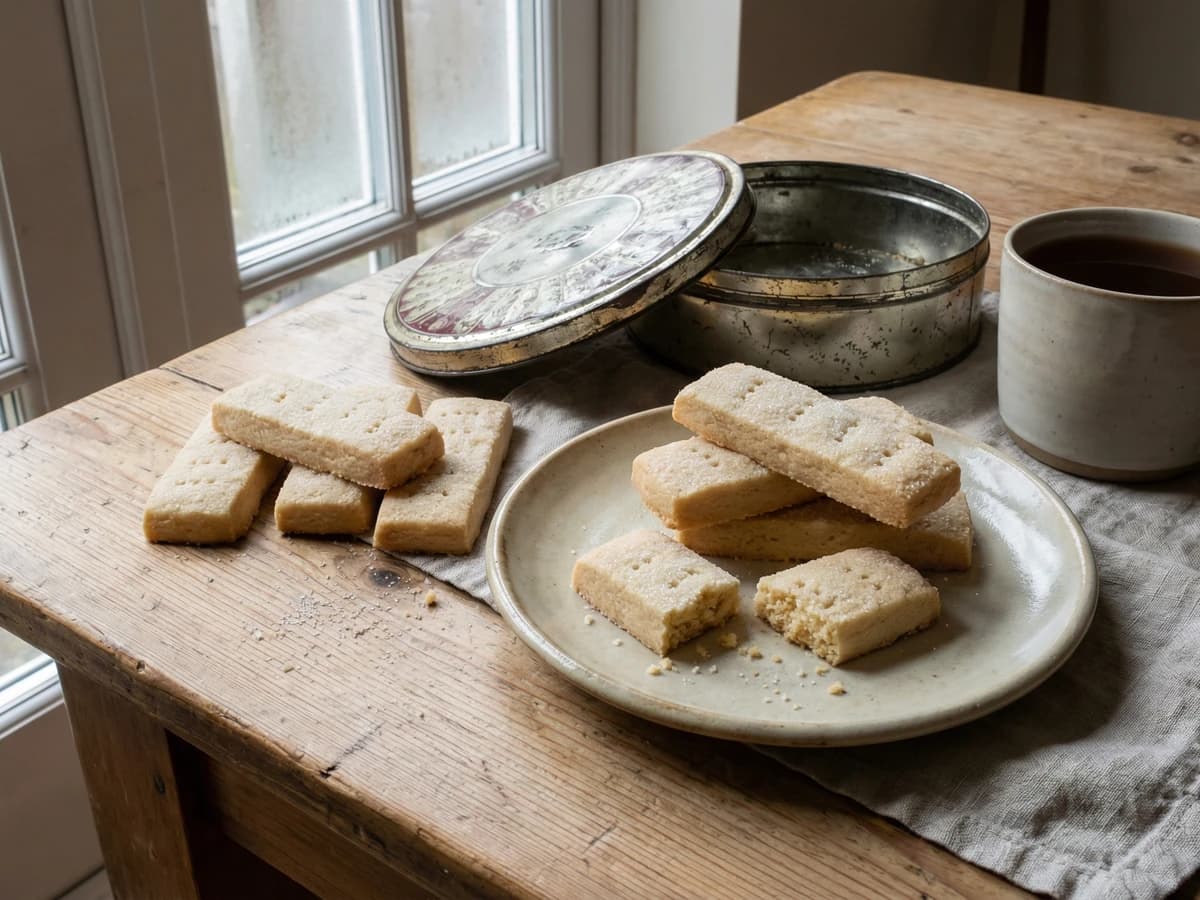
The plainest biscuit in the tin and the hardest one to stop eating, three ingredients and a slow oven turning good butter into something quietly perfect with a cup of tea.
A cooking platform built around craft, culture, and the stories behind what we eat.
Created by Chef Thomas
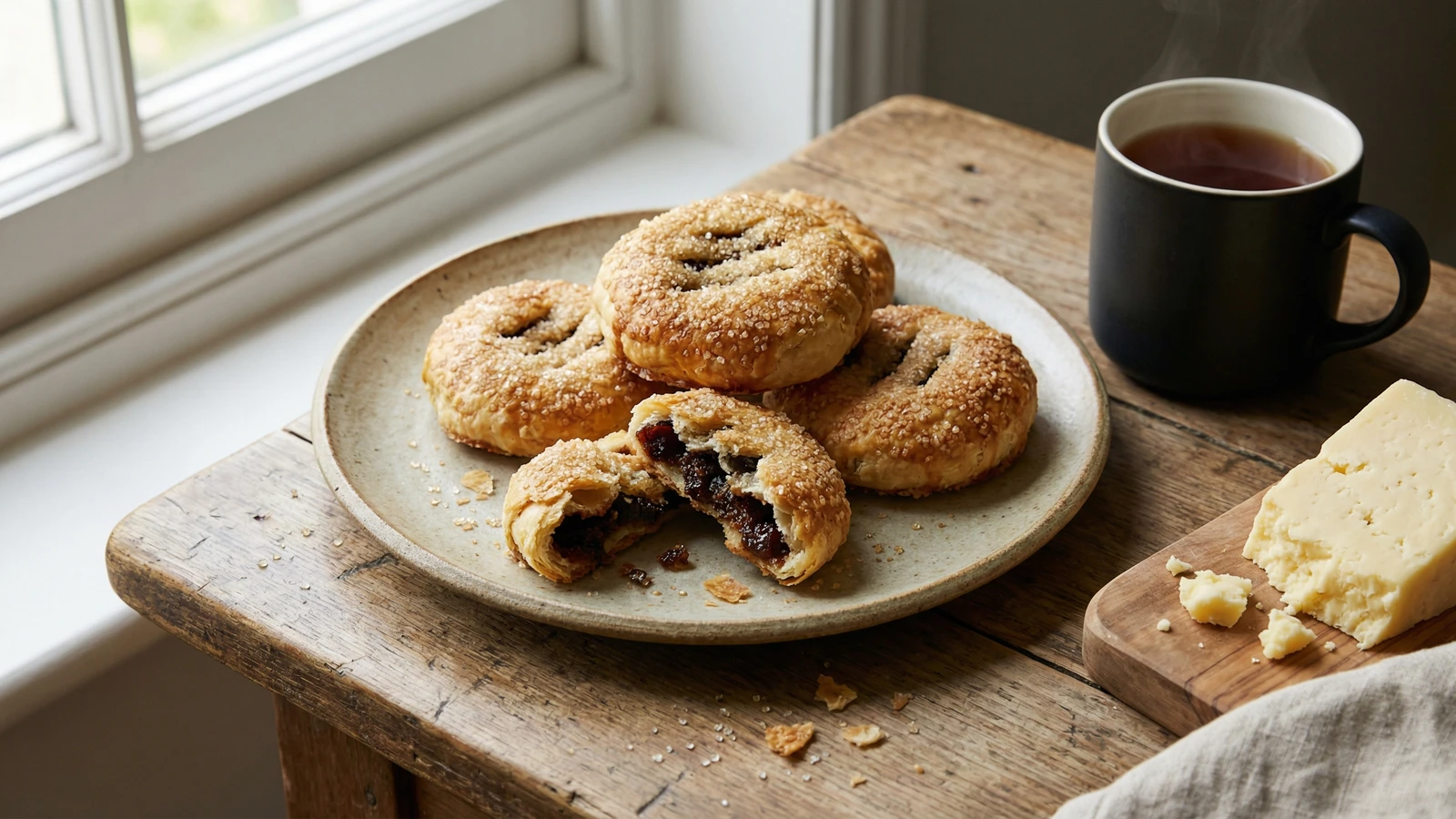
Buttery puff pastry parcels stuffed with spiced currants and peel, slashed three times and crusted with demerara, the Lancashire teatime tradition that earns its place beside a wedge of crumbly cheese.
There's a particular kind of late autumn afternoon, the light already going by four, the kettle on for the second time, when an Eccles cake makes complete sense. Not before. They're a cold-weather pastry. The dried fruit, the warm spice, the buttery flake of the pastry, none of it belongs to summer. This is what you make when the garden has gone quiet and the cooking turns inward, towards the cupboard, towards what keeps.
I didn't grow up with Eccles cakes. They came to me later, at a baker's stall at a market in the north of England, on a day so cold my fingers couldn't manage the change. I ate one standing in the rain, the sugar crackling under my teeth, the warm spiced fruit catching the back of my throat, and I understood immediately why people from Lancashire are protective of them. Some things travel and lose themselves. These don't.
The traditional way, the only way I'd argue for, is to eat them slightly warm with a piece of crumbly Lancashire cheese. The salt of the cheese against the sweet, dark fruit. It sounds odd if you've never tried it. It isn't. It's one of those quietly perfect pairings that British food does better than anyone gives it credit for, and once you've had it, you won't go back to eating them on their own.
Use shop-bought puff pastry without apologizing for it. Making puff from scratch is a fine thing if you've got the morning, but it isn't what Eccles cakes are about. Eccles cakes are about the filling, about the slash of the knife on top, about the sugar going into the oven white and coming out gold. We're only making dinner. Or in this case, only making tea.
Quantity
500g
shop-bought block is fine
Quantity
50g
Quantity
75g
Quantity
200g
Quantity
50g
finely chopped
Quantity
1/2 teaspoon
Quantity
1/4 teaspoon
freshly grated
Quantity
1
zest only
Quantity
1 tablespoon
Quantity
1
lightly beaten
Quantity
2 tablespoons
for the tops
Quantity
to serve
| Ingredient | Quantity |
|---|---|
| all-butter puff pastryshop-bought block is fine | 500g |
| unsalted butter | 50g |
| soft light brown sugar | 75g |
| currants | 200g |
| mixed candied peelfinely chopped | 50g |
| ground allspice | 1/2 teaspoon |
| nutmegfreshly grated | 1/4 teaspoon |
| unwaxed lemonzest only | 1 |
| brandy or dark rum (optional) | 1 tablespoon |
| large egg whitelightly beaten | 1 |
| demerara sugarfor the tops | 2 tablespoons |
| Lancashire cheese (optional) | to serve |
Melt the butter in a small pan over a low heat. Stir in the brown sugar and let it dissolve into the butter, no need to boil it, just warm it through until it looks glossy and smells like toffee. Take it off the heat and tip in the currants, the chopped peel, the allspice, the nutmeg, the lemon zest, and the brandy if you're using it. Stir well and leave it to sit for ten minutes. The fruit will plump slightly and drink up the spiced butter. The smell at this stage is the smell of Christmas arriving early.
Set the oven to 200C/180C fan. Line a baking tray with parchment. Roll the puff pastry out on a lightly floured surface to about 3mm thick, no thinner. Using a saucer or a round cutter about 12cm across, cut out eight discs. Gather the scraps, press them gently together (don't knead them, that kills the layers), and re-roll if needed. The pastry should feel cold under your hands. If it starts to soften, put it back in the fridge for ten minutes.
Place a generous tablespoon of the fruit mixture into the centre of each disc. More than you think looks reasonable. The pastry needs to bulge. Brush the edges with a little water, then gather the pastry up and over the filling, pinching it together at the top to seal completely. Turn each parcel over so the seam is underneath, and flatten gently with the palm of your hand into a slightly domed round. The fruit should just be visible through the pastry in places. That's how you know they'll be good.
Lay the cakes on the baking tray, leaving room between them. With a sharp knife, cut three parallel slashes across the top of each, going right through the pastry. Three. Not two, not four. It matters to people in Lancashire and I'm not going to argue. Brush the tops with the beaten egg white, then scatter generously with demerara sugar. Don't be shy with the sugar. It's what gives the tops that crackling, crystalline finish.
Bake for eighteen to twenty-two minutes. You're looking for a deep, properly burnished gold, not the pale, anaemic gold of a pastry that's been pulled too early. The slashes will have opened up and you'll see dark fruit bubbling through. The kitchen will smell of butter and spice and caramelizing sugar. Trust your nose. It knows before you do. Let them cool on the tray for ten minutes, then move them to a wire rack.
1 serving (about 115g)
Culinary guides, cultural storytelling, and the editorial depth that makes cooking meaningful.
Discover Culinary ExplorerChef Thomas
The plainest biscuit in the tin and the hardest one to stop eating, three ingredients and a slow oven turning good butter into something quietly perfect with a cup of tea.
Chef Thomas
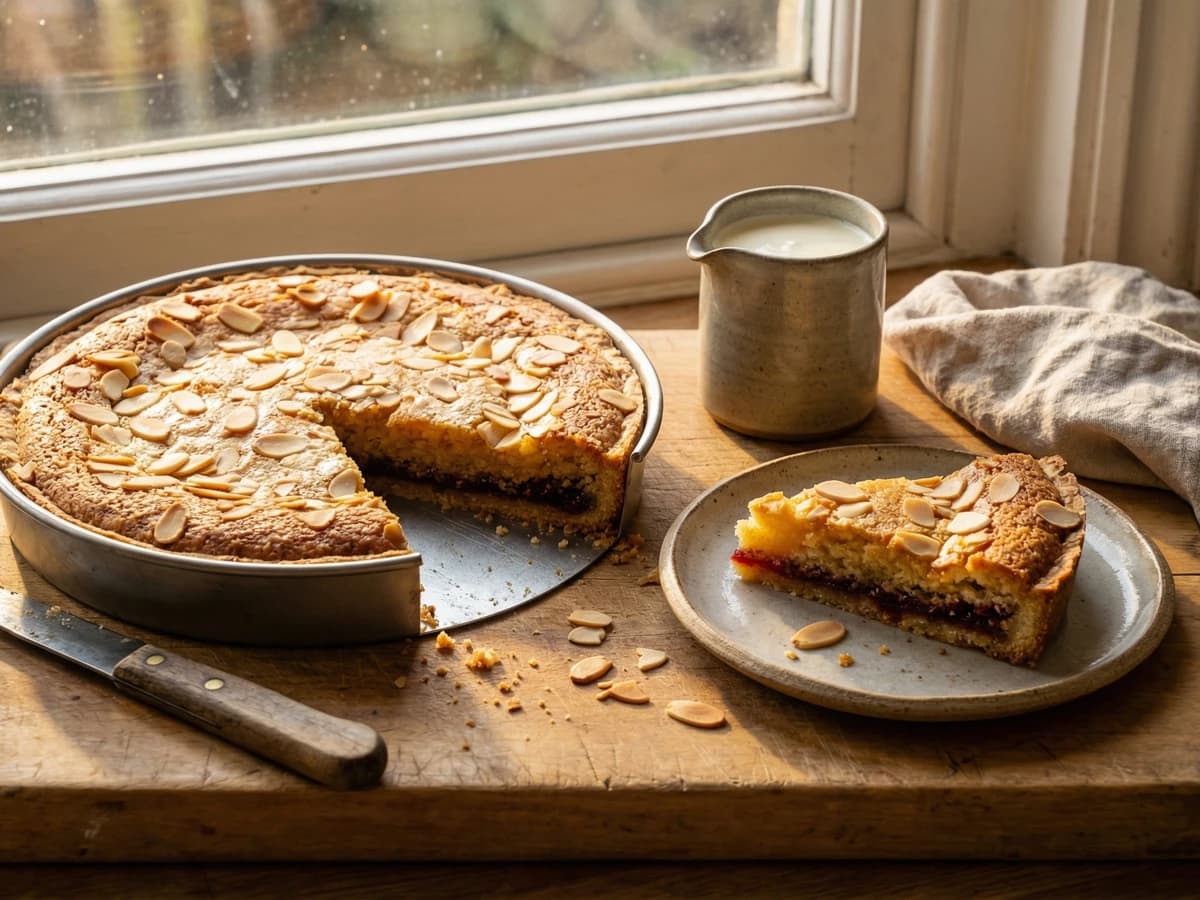
A proper Bakewell tart with buttery shortcrust, a thick layer of raspberry jam, and almond frangipane baked golden under a scattering of flaked almonds. No icing. No nonsense.
Chef Thomas
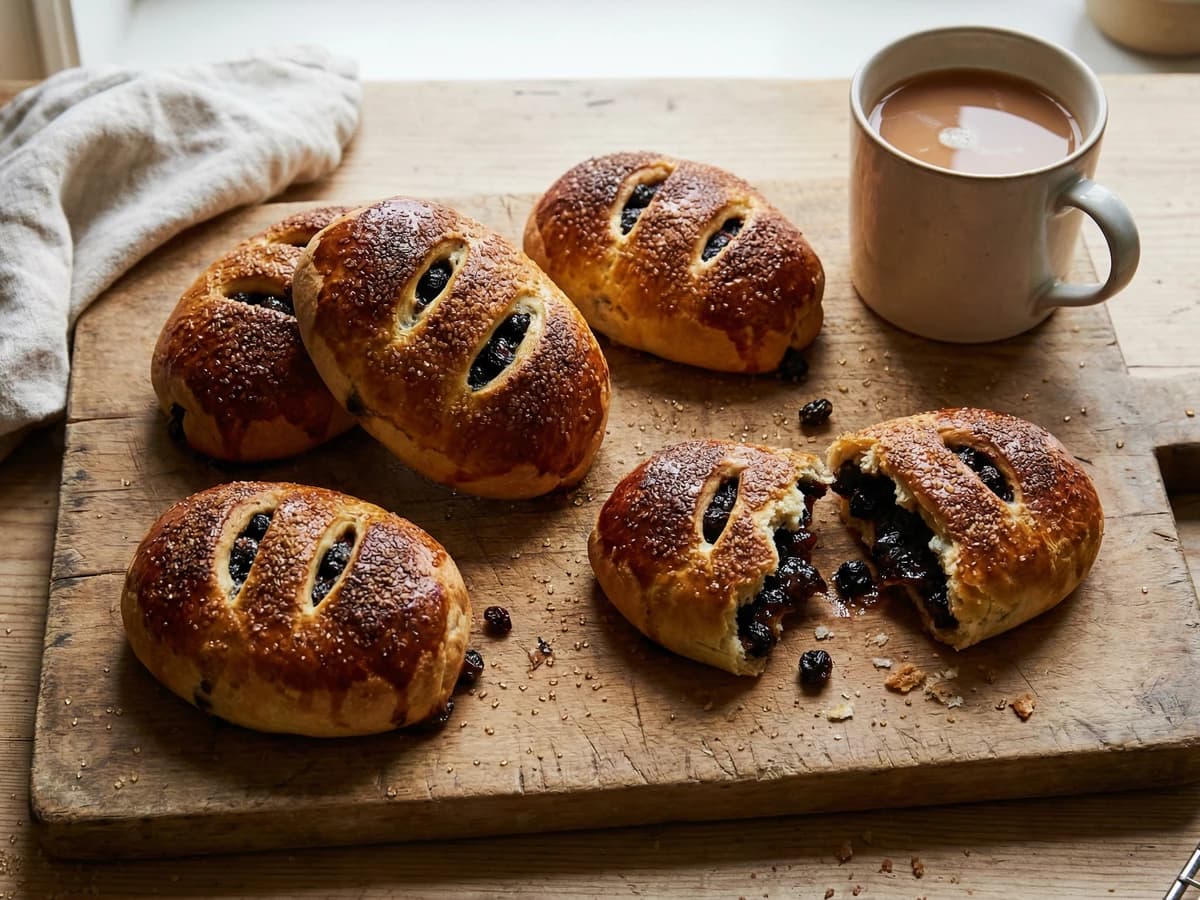
Oval pastries filled with rum-soaked currants and spice, baked until the tops crackle with sugar. The kind of thing to make on a wet Sunday afternoon when you want the kitchen to smell of something.
Chef Thomas
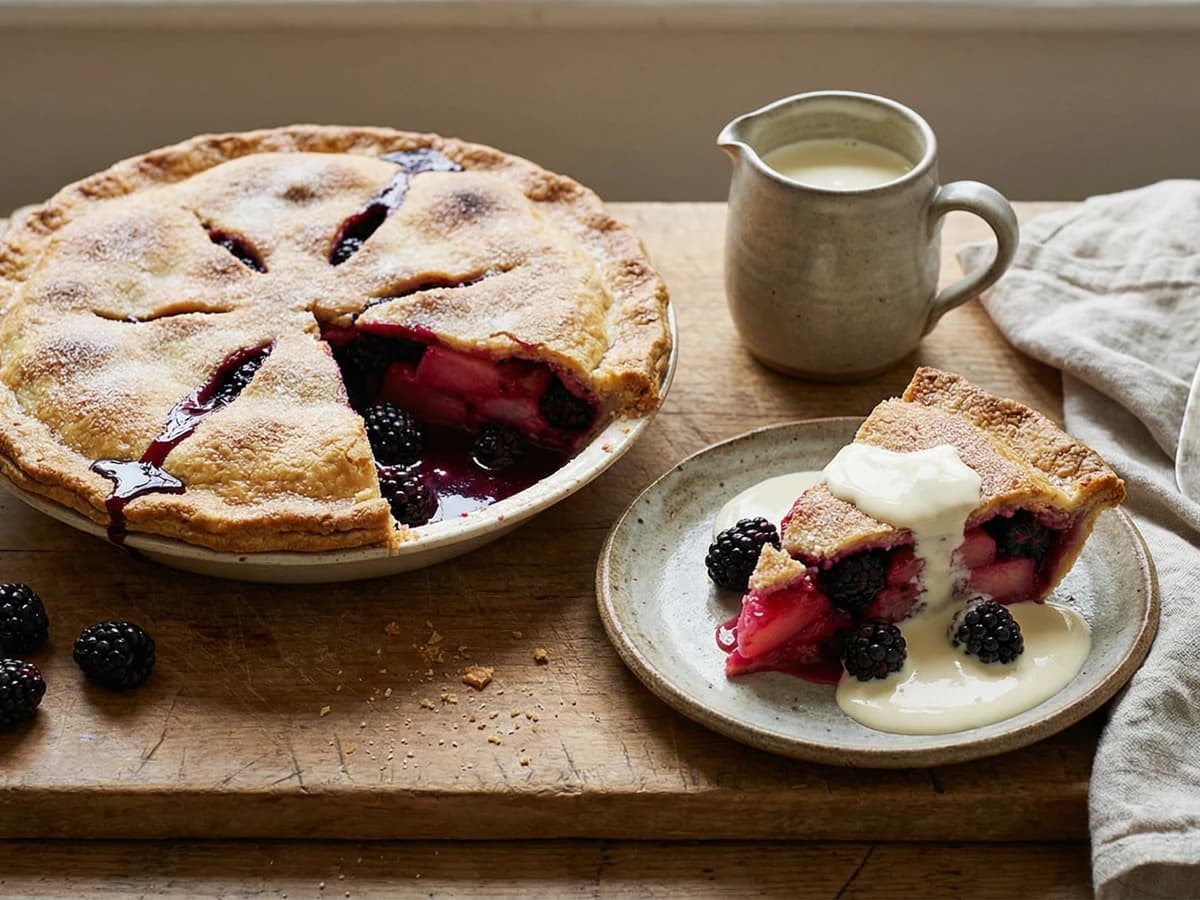
A proper hedgerow pie of Bramley apples and blackberries under a sugar-crusted pastry lid, the kind of pudding that turns a Sunday in September into something you'll remember.