
Chef Jeong-sun
Agwi-jjim (Braised Monkfish with Bean Sprouts)
Firm monkfish buried under crisp soybean sprouts, minari, and a red gochugaru sauce thickened at the end; Masan's market dish asks for heat, timing, and a steady hand.
A cooking platform built around craft, culture, and the stories behind what we eat.

Created by
Pork ribs braised slowly in soy, pear, onion, and garlic until the meat gives at the bone and the sauce turns glossy, rich, and just sweet enough.
Dwaeji-galbi-jjim lives or dies before the pot ever settles down to braise. Pork ribs carry more richness than beef short ribs, so you must clean them properly, blanch them hard, rinse away the gray foam, and trim the loose fat. Skip that and no pear, soy sauce, or sesame oil will save the dish. My teacher would have looked into the pot once and gone quiet. That was never good news.
This is the rib-bones cousin to the holiday beef galbi-jjim, but it belongs just as well to a Saturday dinner with rice, kimchi, and two bright namul on the side. The sauce should be soy-brown and fruit-sweetened, not sticky with sugar. Pear and onion soften the edges of the pork, garlic and ginger keep it clean, and a little gochugaru (Korean chili flakes) gives warmth without turning the whole pot into a red stew. Let the pork carry it.
I won't tell you this is quick. You will blanch, rinse, blend, braise, and reduce. None of those steps is difficult, but each one has a job. 손맛 is real. I still measure it, so it can be handed on. When the sauce coats the ribs and a chopstick slips into the meat without force, write down the timing for your pot. Memory is a borrowed bowl.
Jjim refers to Korean dishes cooked gently with seasoning and limited liquid until the main ingredient turns tender, a technique long used for meat, fish, and vegetables in home and occasion cooking. Beef galbi-jjim became strongly associated with holidays and special meals, while dwaeji-galbi-jjim grew more common as pork became affordable and widely eaten in the twentieth century. Many modern versions divide into soy-braised and spicy maeun dwaeji-galbi-jjim, with regional restaurants and home cooks adjusting the heat rather than changing the braising method.
Quantity
1.5kg
cut across the bone into 5 to 6cm pieces
Quantity
as needed
for soaking
Quantity
8 cups
for blanching
Quantity
4 slices
for blanching
Quantity
3 tablespoons
for blanching
Quantity
1
halved, for blanching
Quantity
1/2
peeled and grated
Quantity
1/2
grated
Quantity
7 tablespoons
Quantity
2 tablespoons
or 1 additional tablespoon soy sauce
Quantity
2 tablespoons
Quantity
1 tablespoon
Quantity
2 tablespoons
Quantity
1 tablespoon
Quantity
6 cloves
minced
Quantity
1 tablespoon
minced
Quantity
1 tablespoon
Quantity
1 teaspoon
for a deeper red sauce
Quantity
1/2 teaspoon
Quantity
2 cups
Quantity
1 medium, about 350g
peeled and cut into 4cm chunks
Quantity
2 medium
cut into 4cm chunks with edges rounded
Quantity
6
soaked until soft, stems removed
Quantity
8
fresh or vacuum-packed
Quantity
8
Quantity
2
cut into 5cm lengths
Quantity
1 tablespoon
for finishing
Quantity
1
thinly sliced on the diagonal
Quantity
1
thinly sliced on the diagonal
| Ingredient | Quantity |
|---|---|
| pork spare ribs or baby back ribscut across the bone into 5 to 6cm pieces | 1.5kg |
| cold waterfor soaking | as needed |
| waterfor blanching | 8 cups |
| fresh gingerfor blanching | 4 slices |
| rice wine or mirimfor blanching | 3 tablespoons |
| small onionhalved, for blanching | 1 |
| Korean pear or Asian pearpeeled and grated | 1/2 |
| medium oniongrated | 1/2 |
| soy sauce | 7 tablespoons |
| soup soy sauce (guk-ganjang)or 1 additional tablespoon soy sauce | 2 tablespoons |
| brown rice syrup, corn syrup, or honey | 2 tablespoons |
| sugar | 1 tablespoon |
| rice wine or mirim | 2 tablespoons |
| toasted sesame oil | 1 tablespoon |
| garlicminced | 6 cloves |
| fresh gingerminced | 1 tablespoon |
| gochugaru (Korean chili flakes) (optional) | 1 tablespoon |
| gochujang (Korean chili paste) (optional)for a deeper red sauce | 1 teaspoon |
| freshly ground black pepper | 1/2 teaspoon |
| anchovy-kelp broth or water | 2 cups |
| Korean radish or daikonpeeled and cut into 4cm chunks | 1 medium, about 350g |
| carrotscut into 4cm chunks with edges rounded | 2 medium |
| dried shiitake mushroomssoaked until soft, stems removed | 6 |
| peeled chestnuts (optional)fresh or vacuum-packed | 8 |
| jujubes (daechu) (optional) | 8 |
| scallionscut into 5cm lengths | 2 |
| toasted sesame seedsfor finishing | 1 tablespoon |
| red chili (optional)thinly sliced on the diagonal | 1 |
| green chili (optional)thinly sliced on the diagonal | 1 |
Put the pork ribs in a large bowl and cover with cold water by 5cm. Soak 30 minutes, changing the water once. This pulls out blood and bone dust, which keeps the braise from tasting heavy. Drain well.
Bring 8 cups water to a hard boil with the ginger slices, rice wine, and halved onion. Add the ribs and boil 6 minutes, turning once. Drain, discard the blanching liquid, and rinse each rib under warm running water, rubbing away foam and bone grit. Trim off loose flaps of fat, but leave some marbling. Pork without any fat dries out before it becomes tender.
In a bowl, stir together the grated pear, grated onion, soy sauce, soup soy sauce, rice syrup, sugar, rice wine, sesame oil, garlic, minced ginger, gochugaru, optional gochujang, and black pepper. Taste it now. It should be salty, lightly sweet, and sharp from the raw aromatics, because the pork and vegetables will soften it as they cook.
Put the cleaned ribs in a wide heavy pot. Add the sauce and 2 cups anchovy-kelp broth or water. Bring to a boil over medium-high heat, then lower to a steady simmer. Cover and cook 45 minutes, turning the ribs every 15 minutes so the bones and meat season evenly.
While the ribs cook, round the sharp edges of the radish and carrot chunks with a small knife if you have the patience. This is not decoration only. Rounded edges keep the vegetables from breaking apart during the long braise, so the sauce stays clean instead of cloudy.
After the ribs have cooked 45 minutes, add the radish, carrots, soaked shiitake, chestnuts, and jujubes. Press them down into the sauce. Cover again and simmer 30 to 35 minutes, until the radish is translucent at the edges and a chopstick slides into the thickest rib with only a little resistance.
Uncover the pot and raise the heat to medium. Simmer 15 to 20 minutes, spooning the sauce over the ribs often, until the liquid reduces to about 1 cup and turns glossy enough to coat the meat. This is where the dish becomes jjim, not soup. Watch the bottom of the pot in the last 5 minutes, because the fruit sugars can catch.
Add the scallion lengths for the final 2 minutes, just until they bend. Turn off the heat and let the ribs rest 10 minutes in the pot so the sauce settles back into the meat. Scatter with sesame seeds and the sliced chilies if using. Serve with rice, kimchi, and something green and clean, because a rich braise needs a clear neighbor.
1 serving (about 400g)
Culinary guides, cultural storytelling, and the editorial depth that makes cooking meaningful.
Discover Culinary ExplorerChef Jeong-sun
Firm monkfish buried under crisp soybean sprouts, minari, and a red gochugaru sauce thickened at the end; Masan's market dish asks for heat, timing, and a steady hand.

Chef Jeong-sun
A quick Korean rice bowl built on contrast: warm rice, cold popping flying-fish roe, chopped vegetables, gim, sesame oil, and the crisp rice bottom a hot stone bowl gives you.
Chef Jeong-sun
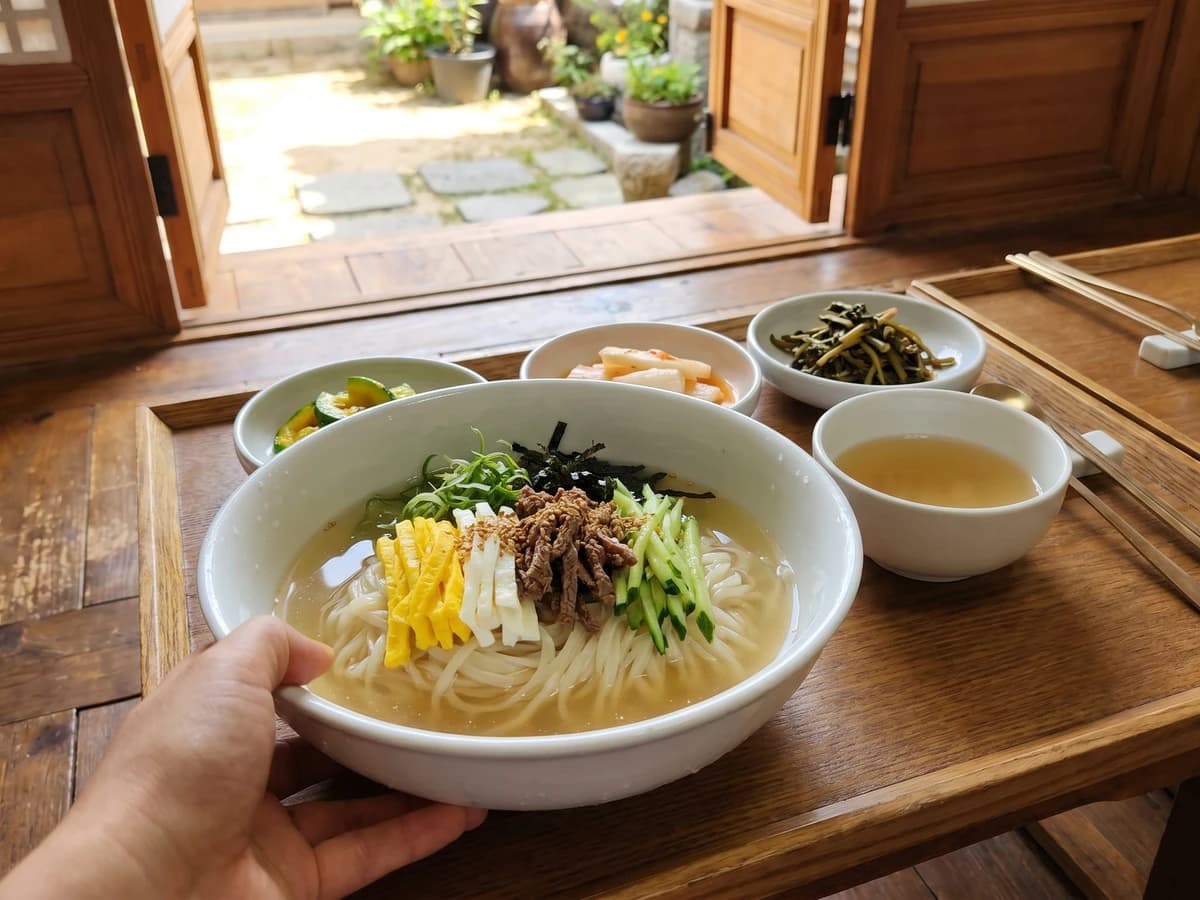
Andong's guest noodles, wheat and roasted soybean flour rolled thin, boiled and rinsed cold, then set in a clear chilled anchovy broth with careful strips of beef, egg, and cucumber.

Chef Jeong-sun
Andong's ritual-table rice served on an ordinary day: separate soy-sesame namul, warm rice, and clear radish soup, mixed without gochujang so every vegetable keeps its own voice.