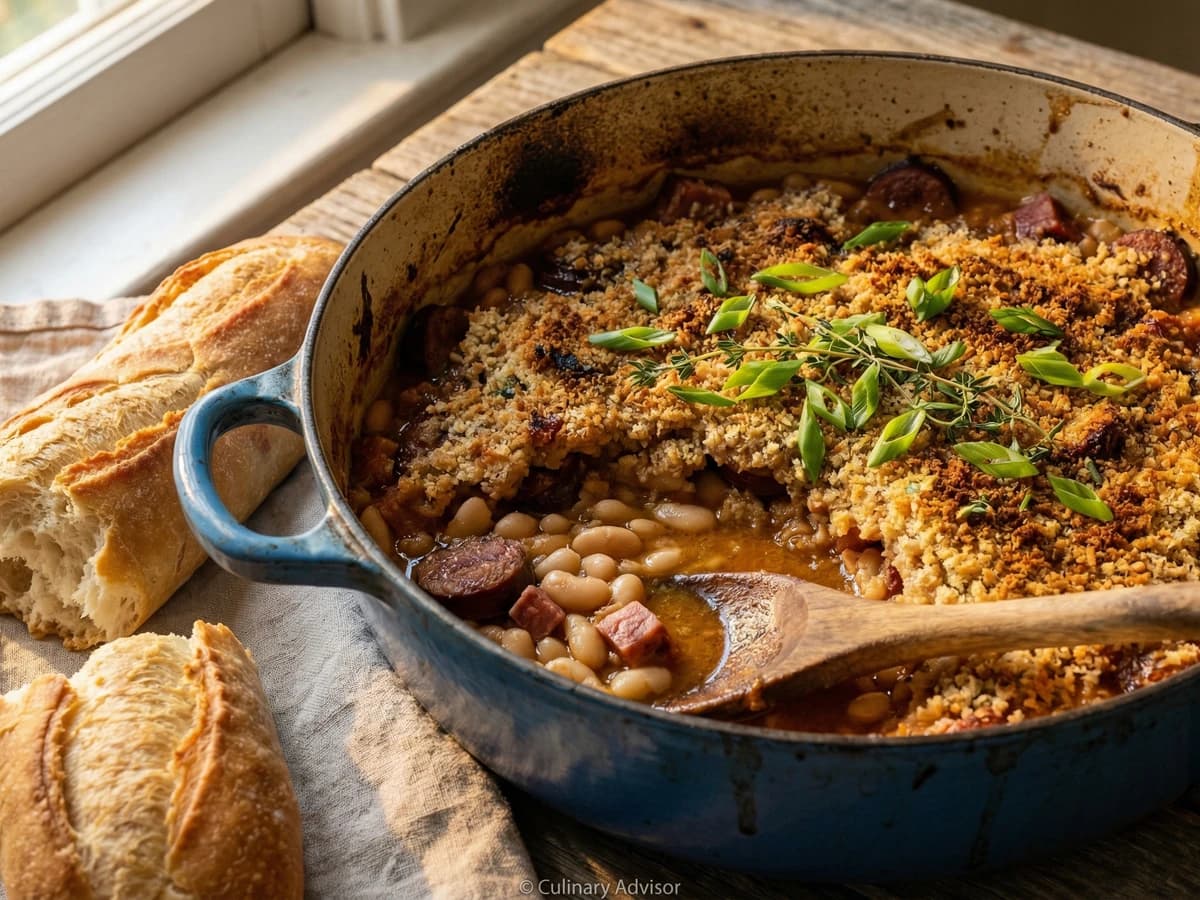
A hunter's celebration in a bowl: rich duck braised until it surrenders to the fork, smoky andouille, and a dark roux so deep you can taste four generations of bayou tradition in every spoonful.
Main Dishes
Cajun
Dinner Party
Holiday
Special Occasion
1 hr
Active Time
3 hr 30 min cook•4 hr 30 min total
Yield10-12 servings
This is the gumbo my grandfather made after a good hunt. Duck and sausage, nothing fancy, just honest food that feeds a crowd and warms the soul. The duck fat renders into the broth, making it richer than any chicken gumbo could dream of being. At Lagniappe, we serve this during hunting season and people drive from three parishes away.
The roux is everything. I've said it a thousand times and I'll say it a thousand more: you cannot rush a roux. For duck gumbo, you want it dark as chocolate, with that toasted, almost smoky quality that only comes from patience and constant stirring. My grandmother Evangeline would set a kitchen timer for forty-five minutes and tell me not to leave the stove until it rang. She was right.
Now here's what separates good gumbo from great gumbo: layered seasoning. You season the duck before it goes in the pot. You season the trinity as it cooks. You taste the broth and season again. Every layer builds on the one before it. By the time you're ladling it over rice, you've built a symphony of flavor that no single addition could ever achieve.
Duck gumbo is celebration food. It's what you make when company's coming, when the hunt was good, when you want to show people what Louisiana cooking really means. This isn't restaurant food dressed up to impress. It's honest, generous, down-and-dirty Cajun cooking at its finest.
The technique, the tradition, and the story behind every dish.
green onionssliced thin, green and white parts separated
1 bunch
fresh flat-leaf parsleychopped
1/2 cup
cooked white rice
for serving
filé powder (optional)
for serving
Equipment Needed
•Large Dutch oven or heavy-bottomed pot (7-quart minimum)
•Wooden spoon or flat-edged spatula for stirring roux
•Ladle
•Fine-mesh skimmer for removing foam
Instructions
1
Season the duck
Pat the duck pieces completely dry with paper towels. Season generously on all sides with salt, black pepper, and half the cayenne. Let the duck sit at room temperature for thirty minutes while you prep the vegetables. This is your first layer of seasoning. The salt draws moisture to the surface, which means better browning. The spices have time to wake up against the fat.
Dry skin is the secret to crispy duck. Water is the enemy of browning. Be thorough.
2
Render the duck fat
Place duck pieces skin-side down in a large Dutch oven or heavy-bottomed pot over medium heat. No oil needed: duck has plenty of its own fat to give. Cook without moving for twelve to fifteen minutes until the skin turns deep golden and crispy, the fat pooling in the pot. You'll hear it sizzling and popping. That's the sound of flavor building. Flip and brown the other side for five minutes more. Remove duck to a plate and pour off all but two tablespoons of the rendered fat. Save that liquid gold for another use.
Duck fat keeps for months in the refrigerator. Use it for roasting potatoes, frying eggs, or making an even richer roux next time.
3
Brown the andouille
Add the andouille slices to the pot with the reserved duck fat. Let them sizzle over medium-high heat until the edges caramelize and the fat renders out, about five minutes. The sausage should have dark spots where it kissed the pan. Remove to the plate with the duck. Every bit of fond (those brown bits stuck to the bottom) is pure concentrated flavor. Don't you dare wash that pot.
4
Build the roux
Add the vegetable oil to the pot and heat over medium. Whisk in the flour all at once and reduce heat to medium-low. Now begins the meditation. Stir constantly with a wooden spoon or flat-edged spatula, scraping the bottom with every pass. The roux will go from white to blond to peanut butter to milk chocolate. You want dark chocolate: the color of a Hershey bar, with a smell like roasted nuts and just a hint of smoke. This takes forty-five minutes to an hour. Your arm will ache. That's the bayou way.
If you see black specks or smell burning, you've gone too far. Throw it out and start over. There's no saving a burned roux, and it will ruin everything it touches.
5
Add the holy trinity
When your roux reaches that deep chocolate color, add the onions, celery, and bell peppers all at once. The roux will seize and bubble furiously. This is good. Stir constantly for ten minutes as the vegetables soften and the roux clings to them. The mixture will look like wet sand at first, then loosen as the vegetables release their moisture. Add the white parts of the green onions and the garlic, cooking two minutes more until fragrant.
6
Build the gumbo base
Slowly ladle in the warm stock one cup at a time, stirring well after each addition. The mixture will resist at first, then gradually thin into a silky base. Add the bay leaves, thyme, smoked paprika, and remaining cayenne. Stir to combine. Taste the broth. It should have depth from the roux and a gentle heat at the back of your throat. Season with salt as needed.
7
Simmer the duck
Nestle the browned duck pieces into the gumbo, submerging them in the liquid. Bring to a gentle simmer (lazy bubbles, not a rolling boil) and cook partially covered for two hours. The duck will become tender enough to fall from the bone, the fat melting into the broth and making it impossibly rich. Skim any foam that rises to the surface.
8
Shred the duck
Remove the duck pieces to a cutting board. When cool enough to handle, pull the meat from the bones in generous chunks, discarding skin and bones. The meat should shred easily with just a fork. Return the meat to the pot along with the browned andouille. Simmer together for thirty minutes more to let the flavors marry.
9
Finish and serve
Remove the bay leaves. Stir in the green onion tops and parsley. Taste, taste, taste. Adjust salt and cayenne until the gumbo sings. Ladle generous portions over mounds of hot white rice in deep bowls. Offer filé powder at the table for those who want it. When the last bite is as good as the first, you've done it right.
Filé powder thickens and adds a subtle sassafras flavor. Stir it into your bowl, never the pot, or it turns stringy.
Chef Tips
•If you can't find whole duck, buy duck legs. They're meatier, fattier, and more forgiving than breast meat. Four pounds of legs will do the job beautifully.
•The stock should be warm when it goes into the roux. Cold stock will seize the roux and create lumps that never fully dissolve.
•Make the gumbo a day ahead. Like all stews, it improves overnight as the flavors settle and deepen. Reheat gently and add fresh herbs before serving.
•Andouille is not negotiable. Don't substitute kielbasa or Italian sausage. The smoky, garlicky punch of real andouille is what makes this taste like Louisiana.
Advance Preparation
•Gumbo tastes better the next day. Make it completely, cool, and refrigerate overnight. The fat will solidify on top; remove most of it before reheating if you prefer a leaner broth.
•The roux can be made ahead and stored refrigerated for up to a week or frozen for three months. Reheat gently before adding the trinity.
•Duck can be seasoned and refrigerated uncovered overnight. The dry-brining improves both flavor and texture.
Frequently Asked Questions
Nutrition Information
1 serving (about 400g)
Calories
825 calories
Total Fat
58 g
Saturated Fat
16 g
Trans Fat
0 g
Unsaturated Fat
38 g
Cholesterol
105 mg
Sodium
790 mg
Total Carbohydrates
38 g
Dietary Fiber
2 g
Sugars
4 g
Protein
30 g
Where cooking meets culture.
Culinary guides, cultural storytelling, and the editorial depth that makes cooking meaningful.