Chef Joost
Aardappelgratin
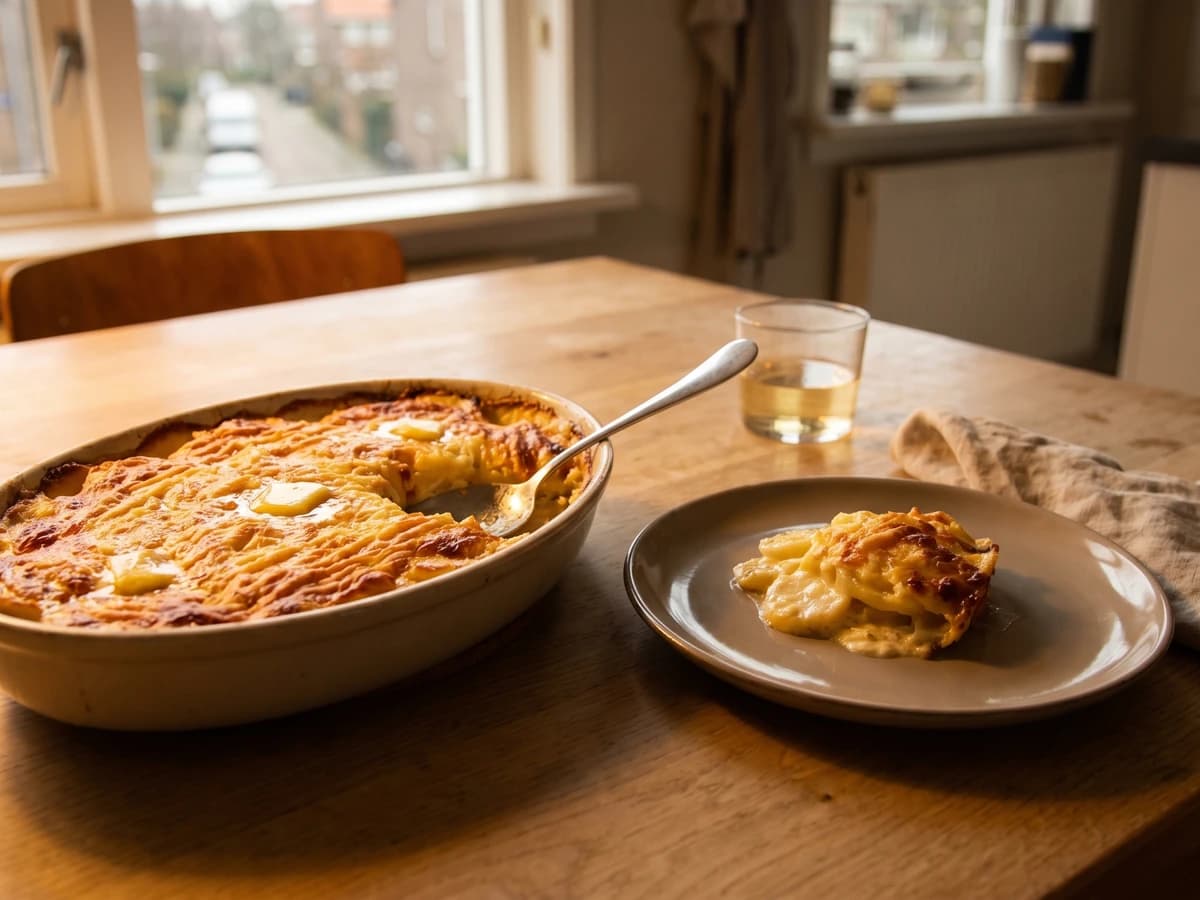
A French name, a Dutch potato, and a Sunday table: aardappelgratin is what happens when a frugal kitchen borrows richness and behaves as if it had always belonged.
A cooking platform built around craft, culture, and the stories behind what we eat.
Created by
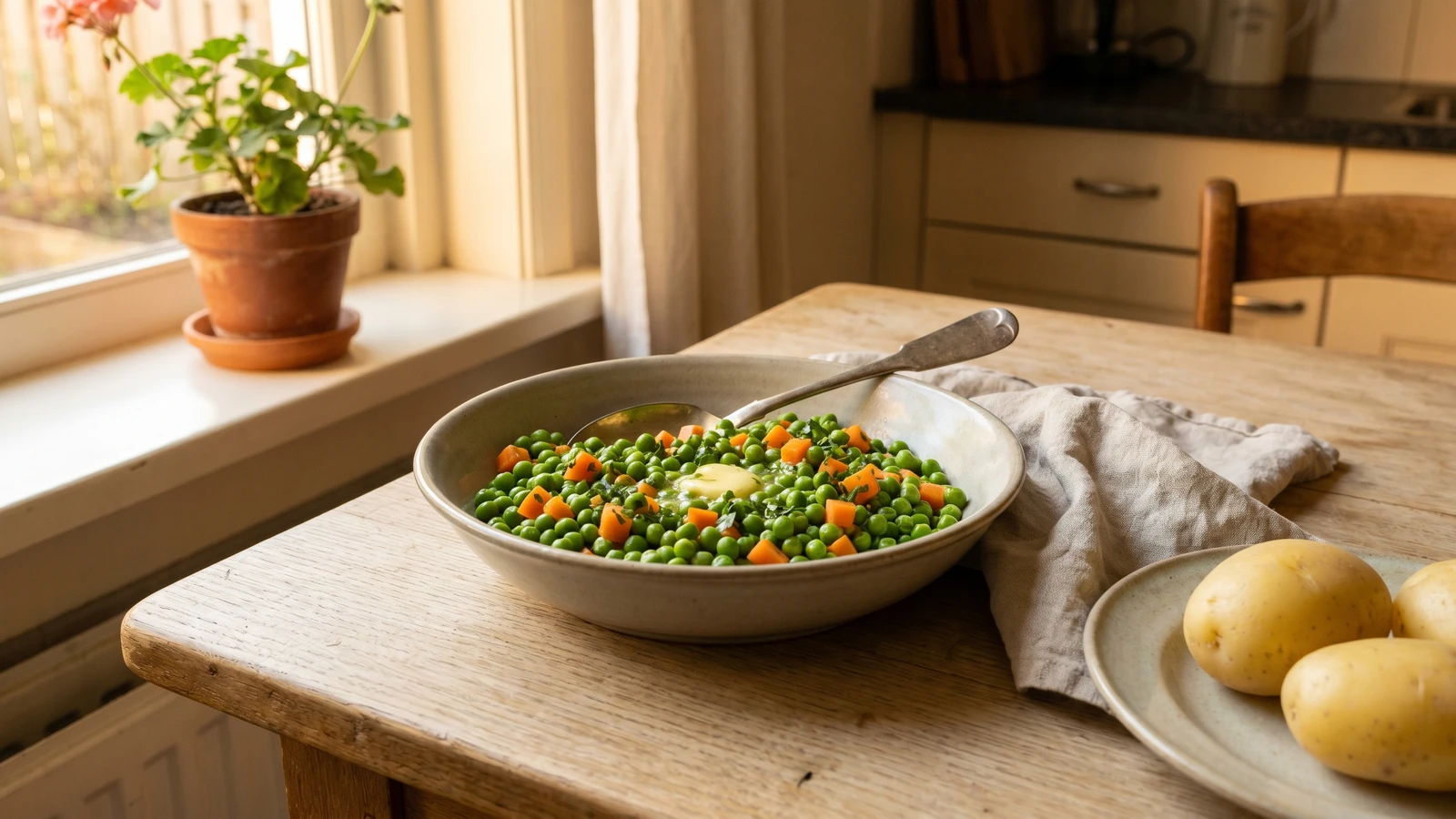
The small green-and-orange dish of the Dutch weekday table, where peas, carrots, butter, and restraint prove that plain food is often only food described lazily.
In my grandmother's second notebook, doperwten met worteltjes appears without ceremony. No grand title. No flourish. Just peas, carrots, butter, salt, and a little parsley if the garden was feeling generous. That is how you know a dish belongs to the family table: nobody thinks to explain it because everyone assumes it will always be there.
But let me tell you a secret. This is the sort of Dutch food foreigners call plain because they meet it overcooked, grey-green, and defeated. Made properly, it is a small seasonal argument in favour of restraint. Doperwten are shelled peas, from dop, the pod or shell, and worteltjes are little carrots, the diminutive doing exactly what Dutch diminutives do: making the thing smaller, nearer, more domestic. The name already tells you the method. These are tender vegetables, not soldiers for a long campaign.
The trick is not technique, it is mercy. The carrots get a short head start because they are firmer; the peas come later because their sweetness fades if you punish them. A little butter, a spoon of water, a lid, and enough time for the vegetables to gloss and soften without collapsing. Hou het altijd simpel, always keep it simple, but simple is not the same as careless. This dish belongs beside boiled potatoes and a meatball, the old AVG'tje: aardappelen, vlees, groente, potatoes, meat, vegetables. A whole national grammar on one plate.
Doperwten met worteltjes belongs to the Dutch household tradition of the AVG'tje, the twentieth-century shorthand for aardappelen, vlees, groente: potatoes, meat, and vegetables served as the standard weekday plate. Peas and carrots were long seasonal kitchen-garden crops, but canning and later freezing made the combination a year-round Dutch side dish after industrial preservation expanded in the nineteenth and twentieth centuries. Its best version still remembers the garden: late-spring peas, young carrots, and brief cooking so the green stays green and the orange stays sweet.
Quantity
300g
fresh or frozen
Quantity
300g
diced small
Quantity
30g
Quantity
3 tablespoons
Quantity
1/2 teaspoon, plus more to taste
Quantity
to taste
Quantity
1 tablespoon
finely chopped
Quantity
pinch
| Ingredient | Quantity |
|---|---|
| shelled garden peasfresh or frozen | 300g |
| young carrotsdiced small | 300g |
| unsalted butter | 30g |
| water | 3 tablespoons |
| fine salt | 1/2 teaspoon, plus more to taste |
| freshly ground white pepper | to taste |
| parsley (optional)finely chopped | 1 tablespoon |
| sugar (optional) | pinch |
Dice the carrots small, roughly the size of the peas or just a little larger. If you're using frozen peas, keep them frozen until they go into the pan; thawing only makes them softer before the cooking has even begun.
Put the carrots, butter, water, and salt into a wide shallow pan over medium heat. Cover and cook for 5 to 6 minutes, shaking the pan once or twice, until the carrots have brightened and are just beginning to soften. They should still have a little bite; the peas are coming, and they will not wait politely.
Stir in the peas, cover again, and cook for 3 to 5 minutes, depending on whether they are fresh or frozen. You want them tender, glossy, and still green. If the pan looks dry, add one more spoon of water, but do not turn this into soup. The butter should cling, not swim.
Remove the lid and let any remaining water reduce for a minute, tossing the vegetables so the butter coats them in a light shine. Taste, add white pepper, and only add the pinch of sugar if the carrots lack sweetness. Fold in parsley if using, then serve at once.
1 serving (about 165g)
Culinary guides, cultural storytelling, and the editorial depth that makes cooking meaningful.
Discover Culinary ExplorerChef Joost
A French name, a Dutch potato, and a Sunday table: aardappelgratin is what happens when a frugal kitchen borrows richness and behaves as if it had always belonged.
Chef Joost
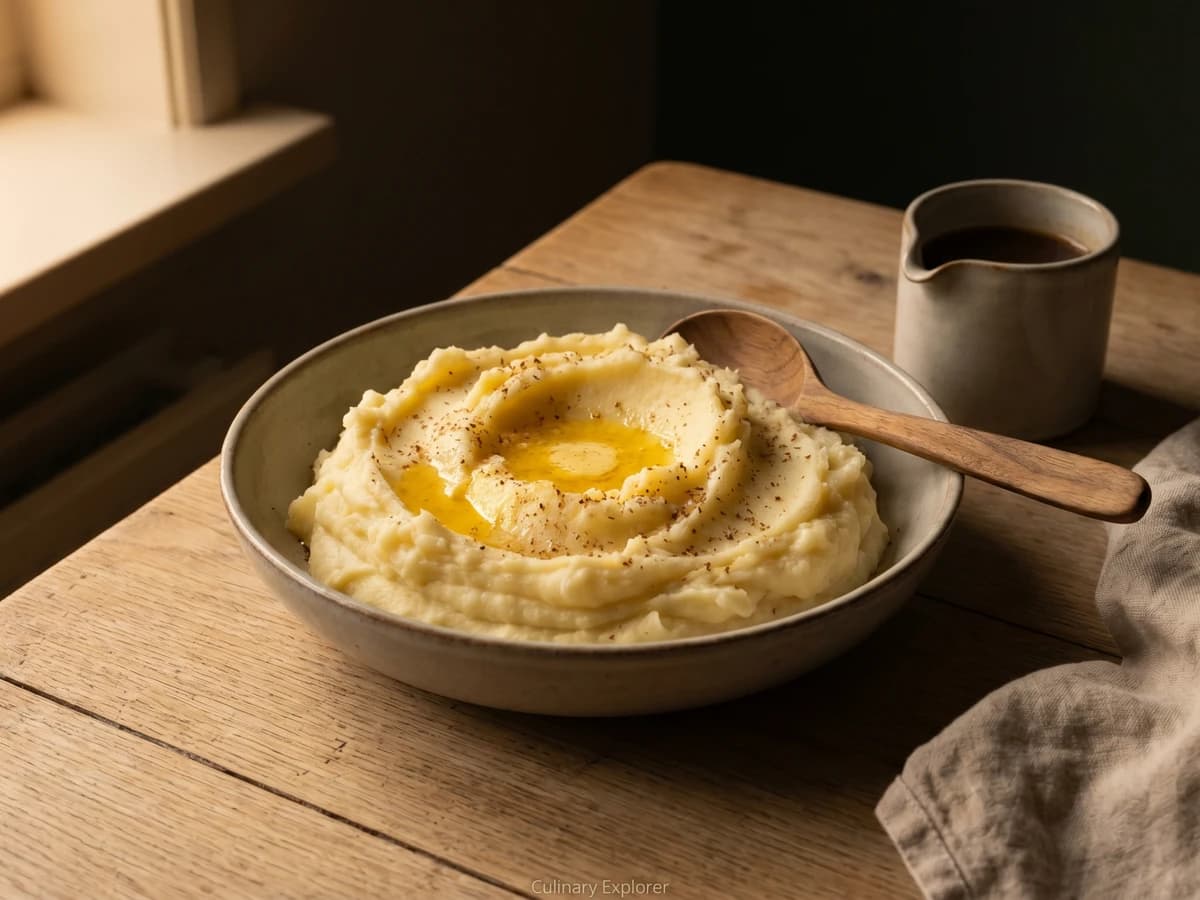
Aardappelpuree is the quiet heart of the Dutch AVG'tje: floury potatoes, warm milk, butter, nutmeg, and a small kuiltje, little well, built for the jus.

Chef Joost
Flower cabbage under old Gouda sauce: the quiet Dutch side dish that turns one boiled vegetable into the reason everyone reaches for the spoon twice.

Chef Joost
White beans peeking through green snijbonen give this old Dutch side its nursery-table joke: bare little children in the grass, sweet garden thrift with butter, nutmeg, and no apology.