Chef Graziella
Arrosto di Maiale alle Erbe Aromatiche
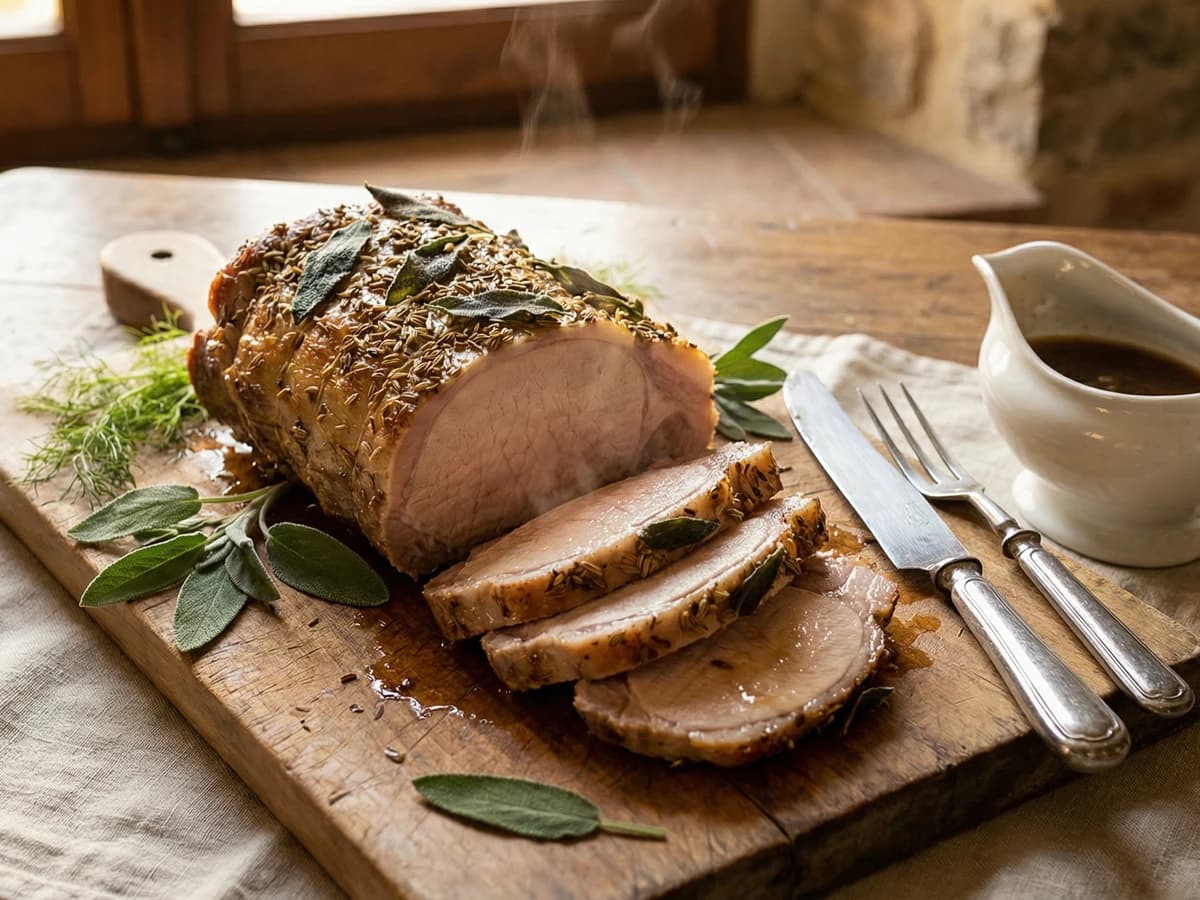
Bone-in pork loin rubbed with fennel, rosemary, and sage, roasted until the herbs form a crackling crust and the meat stays pink and succulent. This is the roast that brings Sunday to life.
A cooking platform built around craft, culture, and the stories behind what we eat.
Created by
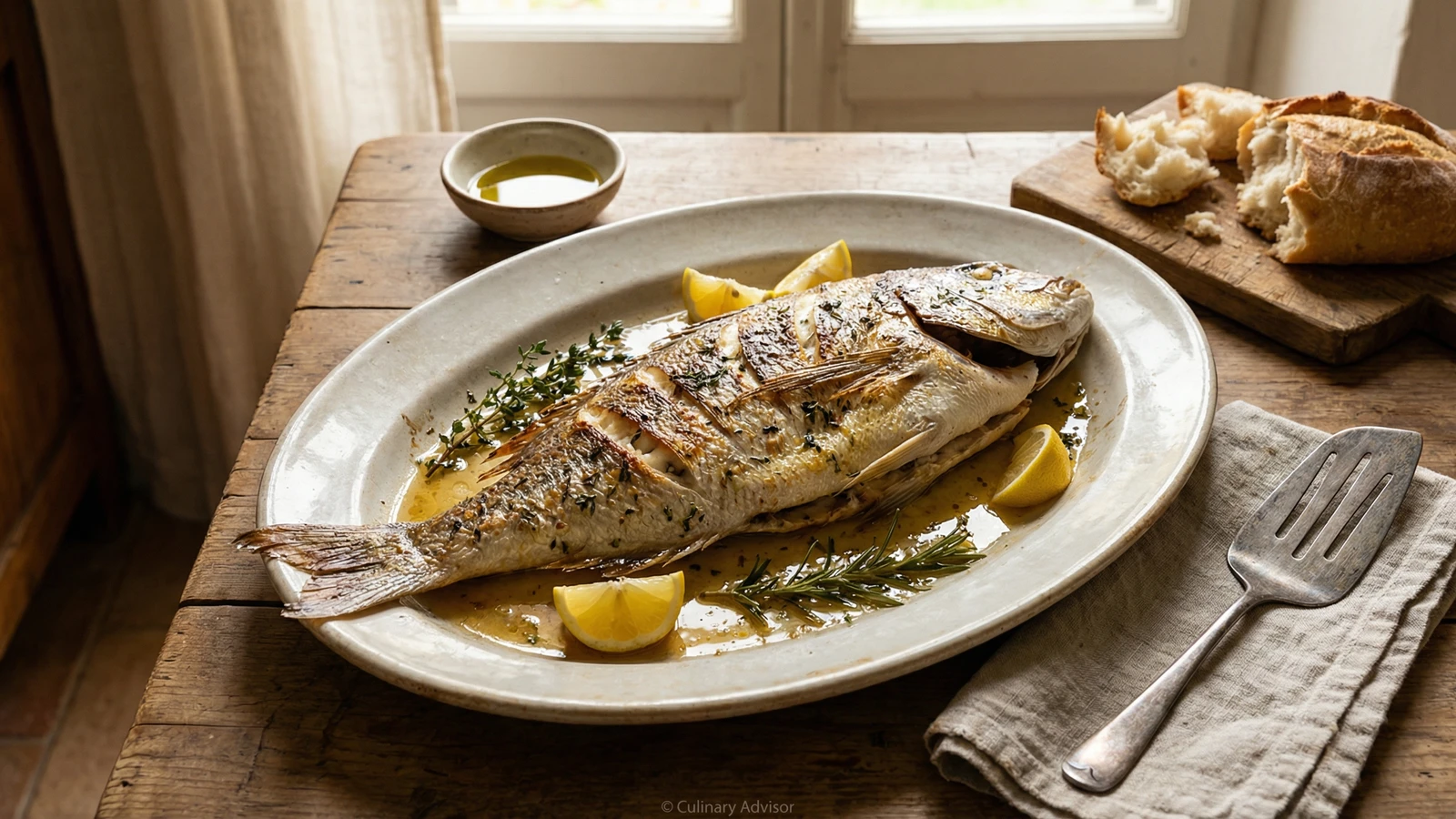
The noble dentex of the Mediterranean, roasted whole with nothing more than olive oil, white wine, and a whisper of herbs. When you begin with a fish this fine, your job is to stay out of its way.
Dentice is the fish that Italian fishermen keep for themselves. When the boats come in along the Adriatic or off the coast of Sicily, the best specimens never reach the market. They go home with the men who caught them, roasted simply that same evening while the flesh still carries the memory of the sea.
This is not a dish that rewards cleverness. There is no sauce to compose, no technique to master beyond the fundamental skill of recognizing when fish is done. You score the skin, you rub it with oil, you tuck herbs and garlic into the cavity, and you apply heat. The fish does the rest.
What you keep out matters as much as what you put in. I have seen recipes that bury this magnificent fish under capers, olives, breadcrumbs, and tomatoes until you cannot taste the dentex at all. This is not cooking. This is hiding. A fish of this quality deserves your restraint, not your intervention.
The garlic here is a suggestion, not a presence. Two cloves, lightly crushed, tucked inside where they perfume the flesh without announcing themselves. The wine creates steam and mingles with the fish juices to form the only sauce you need. Everything else is patience and attention.
Dentex has been prized in Mediterranean kitchens since antiquity. Roman fishermen knew it as one of the finest catches, and Apicius recorded preparations for it in the 4th century. Along the Italian coastline today, from Liguria to Puglia, whole roasted dentex remains the preparation of choice when the catch is truly fresh.
Quantity
1 fish (2 1/2 to 3 pounds)
cleaned and scaled
Quantity
1/3 cup, plus more for drizzling
Quantity
2
lightly crushed
Quantity
4 sprigs
Quantity
6 sprigs
Quantity
1 small bunch
Quantity
1
half sliced thin, half reserved
Quantity
3/4 cup
Quantity
to taste
Quantity
to taste
freshly ground
| Ingredient | Quantity |
|---|---|
| whole dentexcleaned and scaled | 1 fish (2 1/2 to 3 pounds) |
| extra virgin olive oil | 1/3 cup, plus more for drizzling |
| garlic cloveslightly crushed | 2 |
| fresh rosemary | 4 sprigs |
| fresh thyme | 6 sprigs |
| flat-leaf parsley | 1 small bunch |
| lemonhalf sliced thin, half reserved | 1 |
| dry white wine | 3/4 cup |
| kosher salt | to taste |
| black pepperfreshly ground | to taste |
Remove the fish from refrigeration 30 minutes before cooking. Cold fish roasts unevenly. Rinse it under cold water and pat completely dry inside and out with paper towels. Moisture on the skin prevents browning. Make three diagonal slashes on each side, cutting through the skin and about half an inch into the flesh. These cuts allow heat to penetrate evenly and seasoning to reach the meat.
Heat your oven to 425 degrees Fahrenheit. Season the cavity generously with salt and pepper. Rub olive oil over the entire exterior of the fish, working it into the slashes. Season the outside with salt and pepper. The fish should glisten.
Stuff the cavity with the crushed garlic cloves, half the rosemary and thyme, several parsley stems, and the lemon slices. Do not overstuff. The aromatics should fit loosely, allowing heat to circulate.
Choose a roasting pan or baking dish that fits the fish with about two inches of space around it. Scatter the remaining rosemary and thyme in the bottom of the pan. Lay the fish on top. Pour the white wine around the fish, not over it. The wine should pool in the bottom of the pan.
Place the pan in the hot oven. Roast for 25 to 35 minutes, depending on the thickness of your fish. After 20 minutes, check for doneness. The flesh should be opaque and flake easily when tested with a fork at the thickest part near the head. The skin should be golden and slightly blistered in places.
Remove the pan from the oven and let the fish rest for 3 to 4 minutes. This allows the juices to redistribute. Do not cover it. The skin will lose its crispness under foil.
Transfer the fish to a warm serving platter. Spoon the pan juices over and around it. Drizzle with fresh olive oil and squeeze the reserved lemon half over the top. Scatter fresh parsley leaves if you wish. Serve at once, at the table, letting guests see the whole fish before you portion it. Fish waits for no one.
1 serving (about 200g)
Culinary guides, cultural storytelling, and the editorial depth that makes cooking meaningful.
Discover Culinary ExplorerChef Graziella
Bone-in pork loin rubbed with fennel, rosemary, and sage, roasted until the herbs form a crackling crust and the meat stays pink and succulent. This is the roast that brings Sunday to life.

Chef Graziella
The ancient technique of salt-baking creates a sealed chamber where the fish steams in its own moisture. What emerges is flesh of remarkable purity, seasoned perfectly, ready for nothing but your best olive oil.

Chef Graziella
The ugly fish that cooks like veal, braised in tomatoes until the firm white flesh absorbs the briny sweetness of olives and capers. Fishermen's wives along the Adriatic knew its worth before restaurants discovered it.

Chef Graziella
A fifteen-minute lesson in restraint: pork chops, butter, sage, and the understanding that what you leave out matters as much as what you put in.