Chef Thomas
Anchovy Sauce
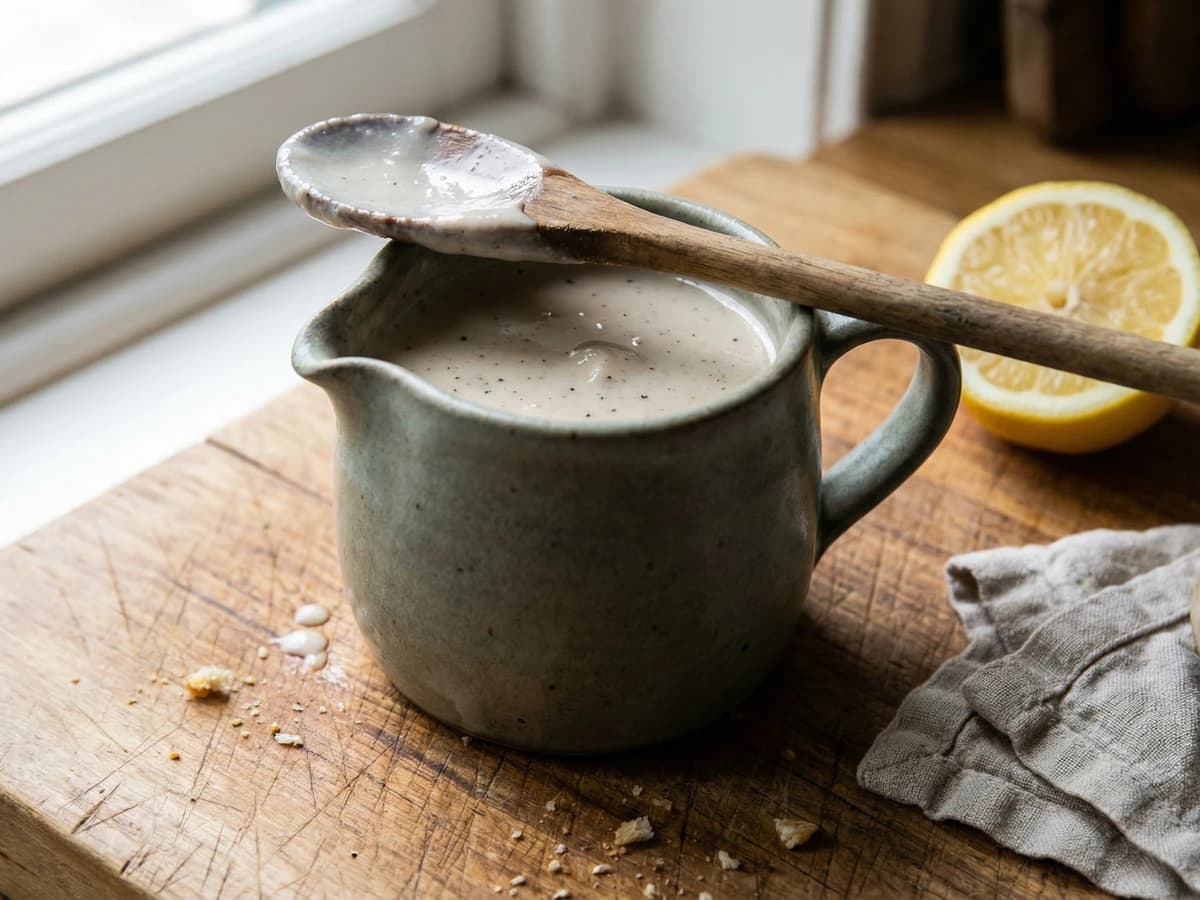
A proper white sauce sharpened with pounded anchovy, the old Georgian trick for waking up a piece of poached fish or a slice of roast lamb on a Sunday in spring.
A cooking platform built around craft, culture, and the stories behind what we eat.
Created by Chef Thomas
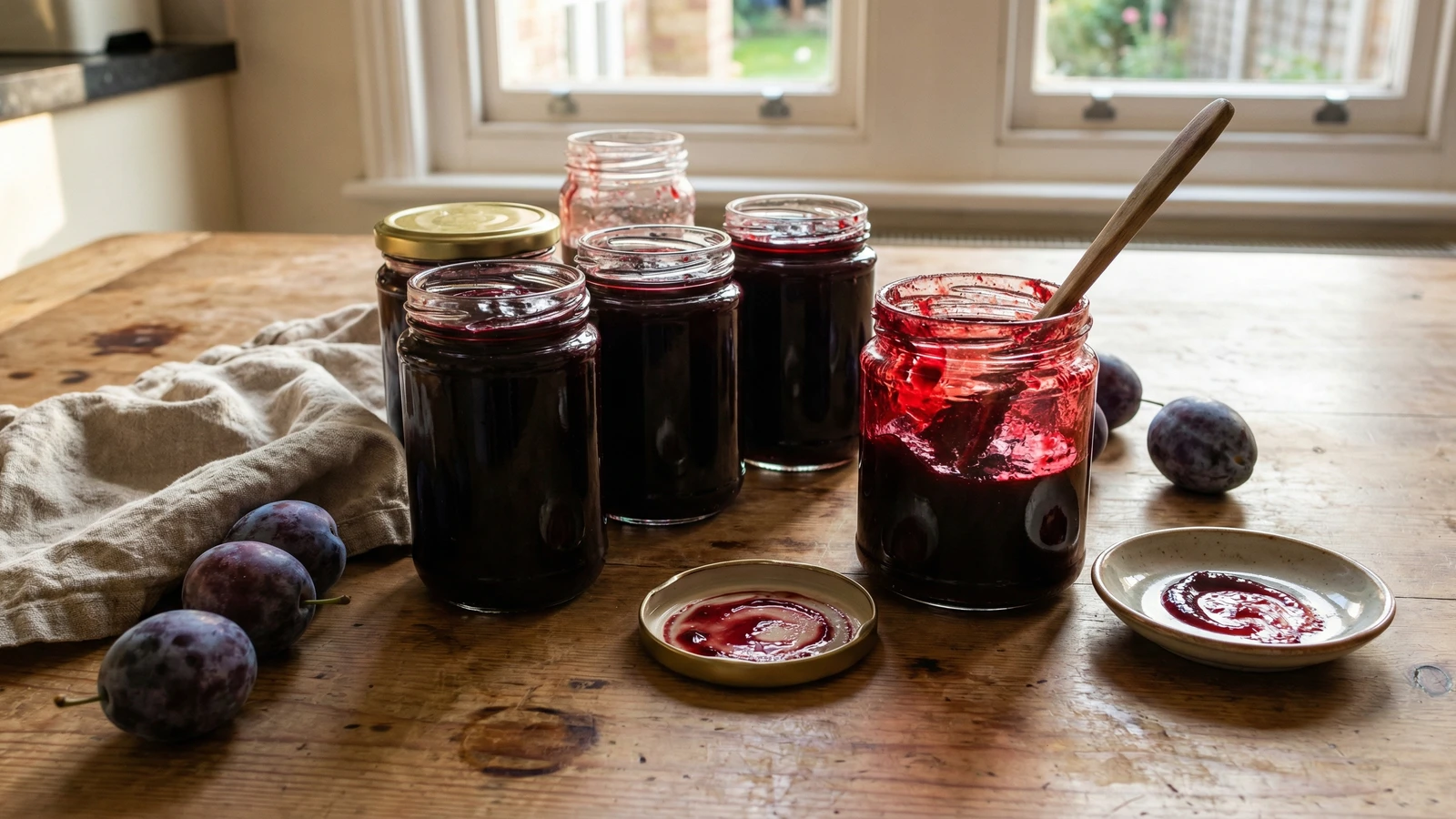
Small, dark damsons cooked down with sugar into a glossy, ruby-black jam that tastes of October mornings and tastes even better in the middle of February.
Damsons are not patient fruit. They arrive in late September, hang heavily on the trees through October, and then they're gone. Miss the window and you wait another year. The market decides.
They're the wrong fruit for almost everything except jam. Too sour to eat raw, too small to bother stoning properly, with skins that pucker your mouth and stones that cling to the flesh like they mean it. But cooked down with sugar, something quietly miraculous happens. The sourness becomes depth. The astringency becomes complexity. The colour deepens from bright purple to a glossy, almost-black ruby that looks like wine in the jar. There is no jam in the British calendar quite like it.
I make this every year when the damsons come in, usually on a Saturday morning when the kitchen is cold and the rain is doing whatever it does in late October. The whole house smells of stewed fruit and warm sugar for half a day, and by the evening there are six jars lined up on the side, still warm to the touch, the colour of winter evenings. I wrote it down in the notebook the first time I made it: damsons, sugar, water, patience. That was twenty-odd years ago and I haven't changed a thing.
A spoonful on toast in the dead of January is one of the more useful things you can do with an October afternoon. We're only making jam, but we're also making sure that something of this autumn lasts.
Quantity
1.5kg
washed, stalks removed
Quantity
1.5kg
Quantity
300ml
Quantity
small knob
| Ingredient | Quantity |
|---|---|
| damsonswashed, stalks removed | 1.5kg |
| granulated sugar | 1.5kg |
| water | 300ml |
| unsalted butter (optional) | small knob |
Wash six jam jars in hot soapy water, rinse them, and put them upside down on a baking tray in a low oven, around 120C, until you need them. Boil the lids in a pan of water for a few minutes. Hot jars, hot jam. Cold jars will crack the moment you ladle the first spoonful in.
Tip the damsons and the water into a large, heavy-bottomed pan. Bring it slowly to a gentle simmer and let the fruit cook for twenty to thirty minutes, stirring now and then. The skins will split, the flesh will collapse, and the kitchen will start to smell like autumn at its most generous. Don't rush this. The fruit needs to break down completely before the sugar goes in.
This is the part nobody warns you about. As the damsons cook, the stones float free of the flesh, and you spend the next ten minutes lifting them out with a slotted spoon. You will not get them all. Don't try. A few will stay behind and you'll find them later, on a teaspoon, in November. That's just how damson jam works.
Pour in the sugar and stir over a low heat until every grain has dissolved. Run the back of a wooden spoon up the side of the pan; if you can feel any grittiness, keep stirring. Sugar that hasn't dissolved properly will crystallize in the jar and you'll regret it in February.
Turn the heat up and bring the jam to a furious, rolling boil. Not a polite simmer. A proper, volcanic, doesn't-stop-when-you-stir-it boil. Damsons are full of pectin, so the jam sets quickly, often in ten to fifteen minutes. Watch it. Stir occasionally to stop it catching on the bottom. The colour will deepen from bright purple to a dark, glossy ruby that looks almost black in the pan.
Put a small saucer in the freezer before you start the boil. To test, take the pan off the heat for a moment and drop half a teaspoon of jam onto the cold saucer. Wait thirty seconds, then push it gently with your finger. If the surface wrinkles, it's ready. If it slides about like syrup, give it another few minutes and try again. Trust the wrinkle. It knows.
Take the pan off the heat and let it settle for a couple of minutes, just long enough for the fruit to distribute evenly through the jam rather than floating to the top. Ladle into the hot jars, filling them almost to the brim. Wipe the rims with a clean damp cloth, screw the lids on tightly, and leave them on the side to cool. You'll hear the lids pop as they seal, a small, satisfying sound that means winter is taken care of.
1 serving (about 20g)
Culinary guides, cultural storytelling, and the editorial depth that makes cooking meaningful.
Discover Culinary ExplorerChef Thomas
A proper white sauce sharpened with pounded anchovy, the old Georgian trick for waking up a piece of poached fish or a slice of roast lamb on a Sunday in spring.

Chef Thomas
A spiced autumn chutney made from a glut of apples and a quiet afternoon, simmered down until the kitchen smells of October and the jars line up on the counter like a small, useful insurance policy.
Chef Thomas
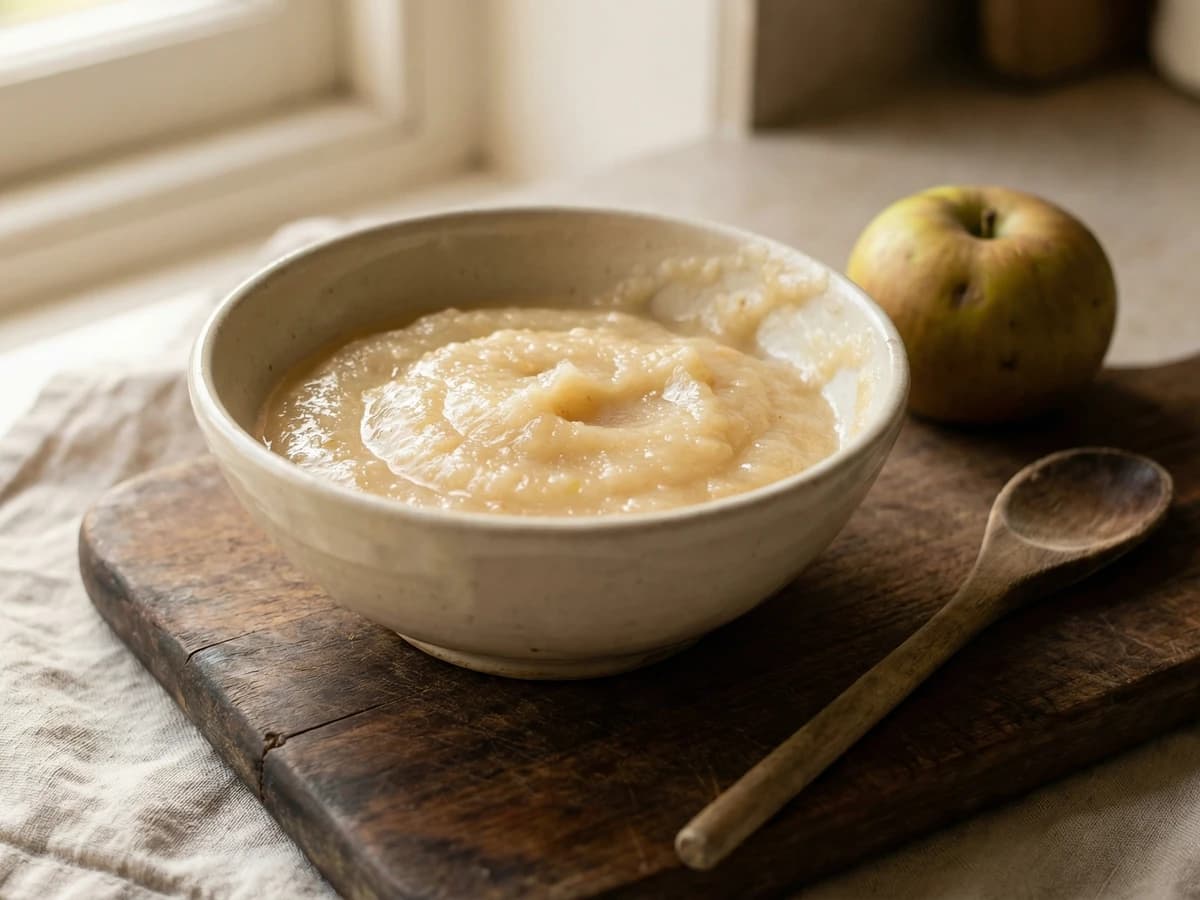
A bowl of sharp, fluffy Bramley apple sauce, made in the time it takes to carve the pork, the kind of small condiment that quietly makes the whole meal make sense.
Chef Thomas
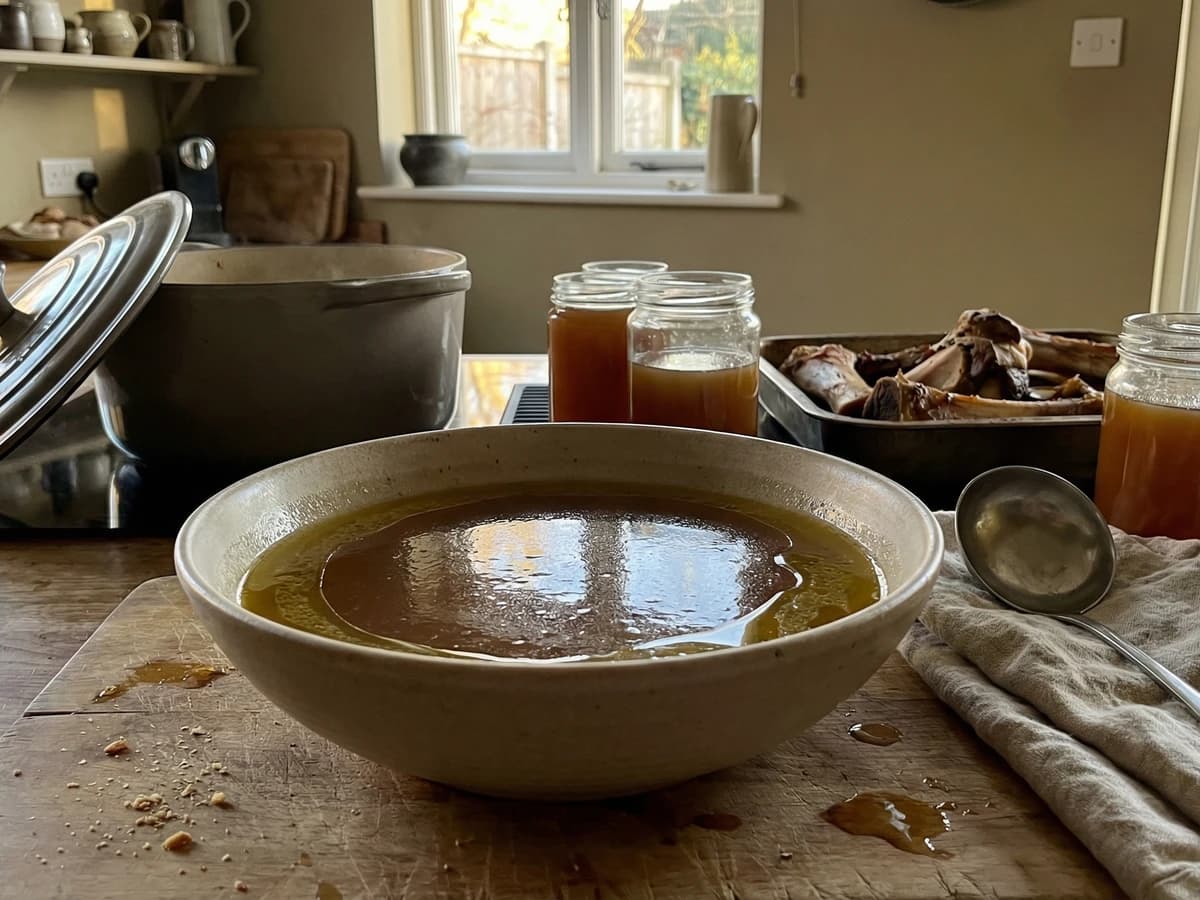
Beef bones roasted until dark, then coaxed for a long afternoon into a deep amber stock, the foundation of every good gravy, every braise, every bowl of winter soup worth the trouble.