Chef Jeong-sun
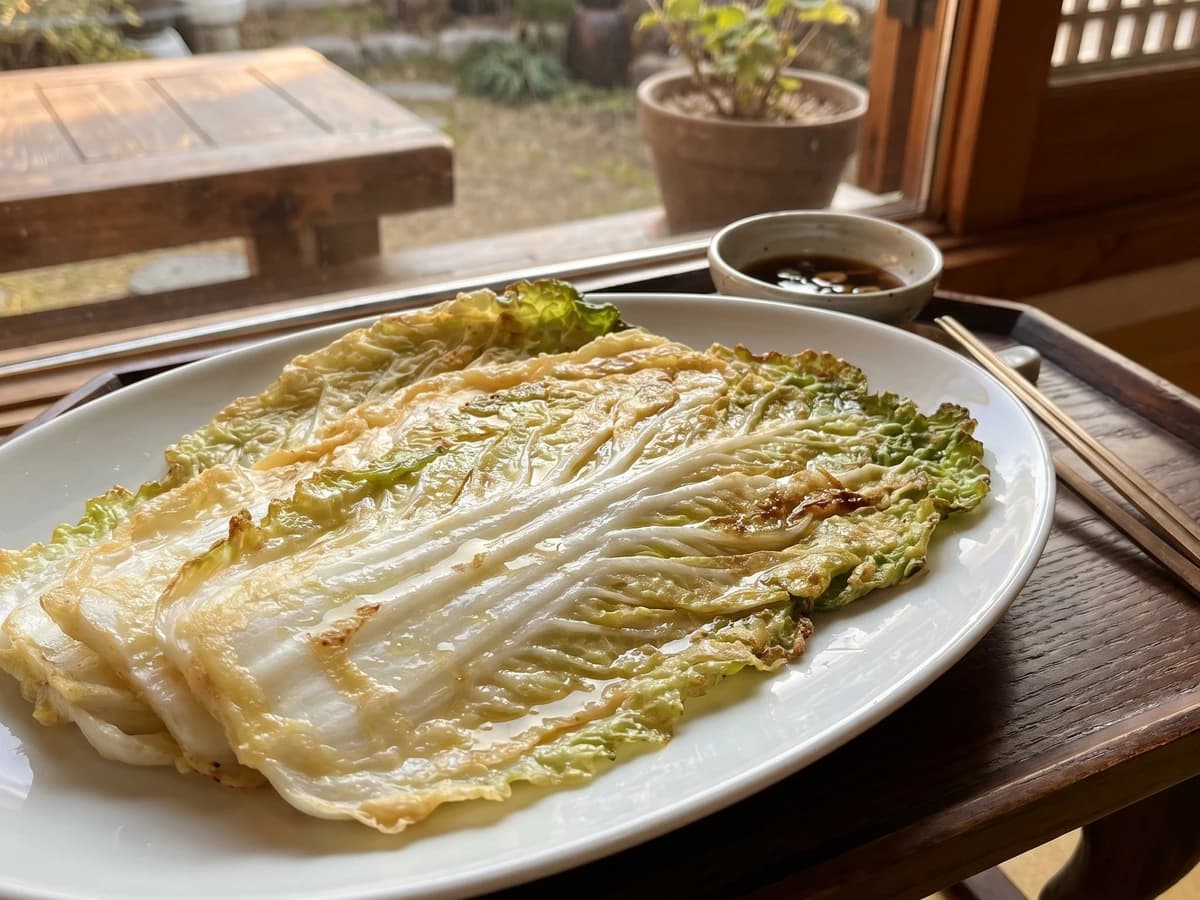
Baechu-jeon (배추전, Napa Cabbage Pancake)
A Gyeongsang home pancake made from one whole napa cabbage leaf at a time, flattened at the rib, brushed in thin salted batter, and fried until sweet, tender, and quietly crisp at the edges.
A cooking platform built around craft, culture, and the stories behind what we eat.

Created by
Cheap chicken skin treated properly: scraped, salted, dried until firm, dusted with potato starch, and fried twice until each piece lies flat and crisp enough for a late-night anju plate.
Chicken skin teaches patience better than expensive meat. People think the frying is the important part, but the dish is decided before the oil gets hot: scraped clean, seasoned lightly, dried until the surface tightens. If you skip that, it spits at you and curls into hard little knots. I won't tell you this is easy. I will tell you it is simple if you do the work in order.
Dak-kkeopjil-twigim belongs to the anju (drinking food) table, the cheap late-night plate ordered after someone says they only want one more glass. Nobody admits to loving it first. Then the chopsticks keep returning until only salt and sesame are left on the stainless plate. It is comfort food with no grand clothes on, and that is not a smaller thing.
Season it with restraint. Ginger, a little salt, pepper, potato starch, and hot oil are enough. Gochujang would only make every piece taste the same, and this dish is valuable because the skin still reads as chicken skin: crisp, fatty, a little stubborn. Write it down. Memory is a borrowed bowl, and even a snack eaten beside beer deserves its measure.
Dak-kkeopjil-twigim has no palace lineage to borrow; it belongs to Korea's modern fried-chicken and hof culture, which grew quickly after broiler chicken, cooking oil, and delivery shops became common in the 1970s and 1980s. Chicken skin as a standalone snack became especially visible in Korea in the late 2010s, when fried-chicken shops and fast-food chains sold it separately, but the habit behind it is older and simpler: inexpensive parts, seasoned well, fried crisp, and eaten as anju with beer or soju.
Quantity
450g
from thighs or whole chickens
Quantity
1 teaspoon
divided
Quantity
1 tablespoon
Quantity
1 teaspoon
grated
Quantity
1/4 teaspoon
Quantity
1/2 cup
Quantity
2 tablespoons
Quantity
1/2 teaspoon
Quantity
1/2 teaspoon
lightly crushed
Quantity
4 cups
canola or grapeseed
Quantity
1 tablespoon
for dipping sauce
Quantity
1 tablespoon
for dipping sauce
Quantity
1 tablespoon
for dipping sauce
Quantity
1/2 teaspoon
for dipping sauce
Quantity
1 small
thinly sliced
Quantity
1
thinly sliced
| Ingredient | Quantity |
|---|---|
| chicken skinfrom thighs or whole chickens | 450g |
| fine sea saltdivided | 1 teaspoon |
| soju or cheongju | 1 tablespoon |
| fresh gingergrated | 1 teaspoon |
| ground white pepper or black pepper | 1/4 teaspoon |
| potato starch | 1/2 cup |
| rice flour or cornstarch | 2 tablespoons |
| gochugaru (Korean chili flakes) | 1/2 teaspoon |
| toasted sesame seedslightly crushed | 1/2 teaspoon |
| neutral frying oilcanola or grapeseed | 4 cups |
| soy saucefor dipping sauce | 1 tablespoon |
| rice vinegarfor dipping sauce | 1 tablespoon |
| waterfor dipping sauce | 1 tablespoon |
| sugarfor dipping sauce | 1/2 teaspoon |
| Cheongyang chili or green chili (optional)thinly sliced | 1 small |
| scallion (optional)thinly sliced | 1 |
Lay the chicken skin flat on a board, outside skin-side down. With the back of a knife, scrape away soft yellow fat and any bits of meat. Leave the skin itself whole when you can, because large pieces fry flatter and hold better in the hand. Pat it dry with towels. Do not rinse chicken skin in the sink; you spread more trouble than you wash away.
Cut the skin into pieces about 7 by 10 cm. Toss with 3/4 teaspoon of the salt, the soju, grated ginger, and pepper. Let it sit 10 minutes, then blot every piece dry again. The soju and ginger clean the smell, not the character. This is still chicken skin, and it should taste that way.
Stretch the pieces skin-side up on a wire rack set over a tray. Refrigerate uncovered at least 4 hours, or overnight if the table can wait. The surface should feel tacky and tight, not wet. This step is not decoration. Wet skin spits in oil, the coating slides off, and the finished piece bends instead of snapping clean under the teeth.
Stir the potato starch and rice flour together in a shallow pan. Dust the dried skin lightly, shake off every heavy patch, then let the pieces sit on the rack for 5 minutes. A thin coat gives crispness without turning this into battered chicken. 손맛 is real; I measure it anyway, because too much starch makes a floury shell.
Stir together the soy sauce, rice vinegar, water, and sugar until the sugar dissolves. Add the sliced chili and scallion if you want them. Keep this sharp and small. The dip is there to cut the fat between bites, not to drown the plate.
Heat 4 cups oil in a heavy pot to 160 C. Fry the skins in small batches, 3 to 4 pieces at a time, pressing each piece gently under the oil with a spider for the first 10 seconds so it opens flat. Fry 3 to 4 minutes, until pale golden and the bubbling slows. Lift to a rack, not paper towels, so the underside stays crisp.
Raise the oil to 185 C. Return the skins in batches and fry 45 to 75 seconds, until deep golden, crisp, and light in the tongs. This second fry drives out the last moisture. Pull them a shade before they look finished, because the fat keeps cooking after they leave the oil.
Mix the remaining 1/4 teaspoon salt with the gochugaru and crushed sesame. Sprinkle it over the hot fried skins while they are still glossy at the edges. Serve at once with the soy-vinegar dip. This is late-night anju, so the plate should not wait politely for anyone.
1 serving (about 95g)
Culinary guides, cultural storytelling, and the editorial depth that makes cooking meaningful.
Discover Culinary ExplorerChef Jeong-sun
A Gyeongsang home pancake made from one whole napa cabbage leaf at a time, flattened at the rib, brushed in thin salted batter, and fried until sweet, tender, and quietly crisp at the edges.

Chef Jeong-sun
A holiday jeon of fresh shiitake or oyster mushrooms, salted lightly, dusted thinly, and carried through egg in a quiet pan until the mushroom stays earthy and the coating stays tender.

Chef Jeong-sun
Soaked mung beans ground coarse, folded with pork, bracken, sprouts, and kimchi, then fried thick until the edges crisp and the center stays tender enough for a shared table.

Chef Jeong-sun
A summer garlic chive pancake fried thin, crisp at the edges and chewy in the center, with just enough batter to hold the green pile together and a sharp soy-vinegar dip.