Culinary Explorer
A cooking platform built around craft, culture, and the stories behind what we eat.
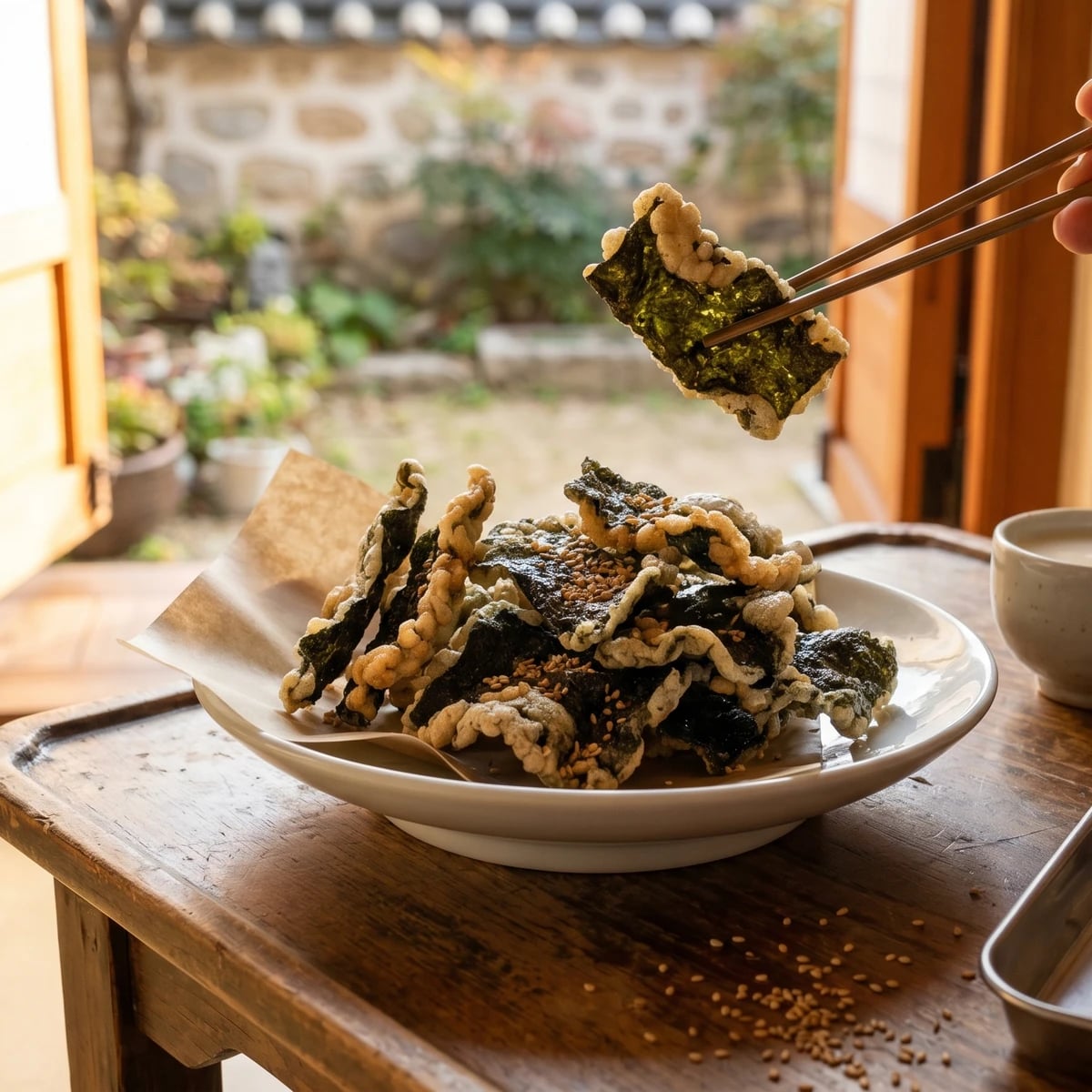
Gim-bugak (Fried Seaweed Crisps)
Created by Chef Jeong-sun
Plain gim brushed with salted glutinous rice paste, dried until stiff, then fried for a few seconds into light, crackling crisps that belong beside tea, makgeolli, or a rice table.
Gim-bugak lives or dies before it ever reaches the oil. The rice paste must be thin enough to brush, thick enough to cling, and the coated gim must dry all the way through. Rush that drying and the oil will spit at you. Dry it properly and the pieces puff in seconds, light as paper but with enough rice body to bite cleanly.
My teacher made bugak when students thought snacks were too small to measure. She did not scold. She put three trays in front of us: one with paste too thick, one too thin, one correct. 눈동냥, 귀동냥. Borrowing with the eyes and ears. The correct sheet dried flat, not heavy, and when fried it curled at the edges without turning greasy. That was the lesson.
This is a humble Korean snack, also an anju (food for drinking), and temple kitchens have long understood its value because seaweed carries savor without meat. Use plain unseasoned gim, not the oiled and salted sheets meant for eating with rice. Measure the paste, season lightly, and let the seaweed taste like the seaweed. The hard work tonight is patience, not strength.
Ingredients
plain unseasoned gim (dried laver)
Quantity
8 large sheets
kept dry and flat
glutinous rice flour (chapssalgaru)
Quantity
1/2 cup
water
Quantity
1 cup
divided
| Ingredient | Quantity |
|---|---|
| plain unseasoned gim (dried laver)kept dry and flat | 8 large sheets |
| glutinous rice flour (chapssalgaru) | 1/2 cup |
| waterdivided | 1 cup |
Where cooking meets culture.
Culinary guides, cultural storytelling, and the editorial depth that makes cooking meaningful.
Discover Culinary Explorer