Chef Jeong-sun
Amjuk (Dried-Grain Weaning Porridge)
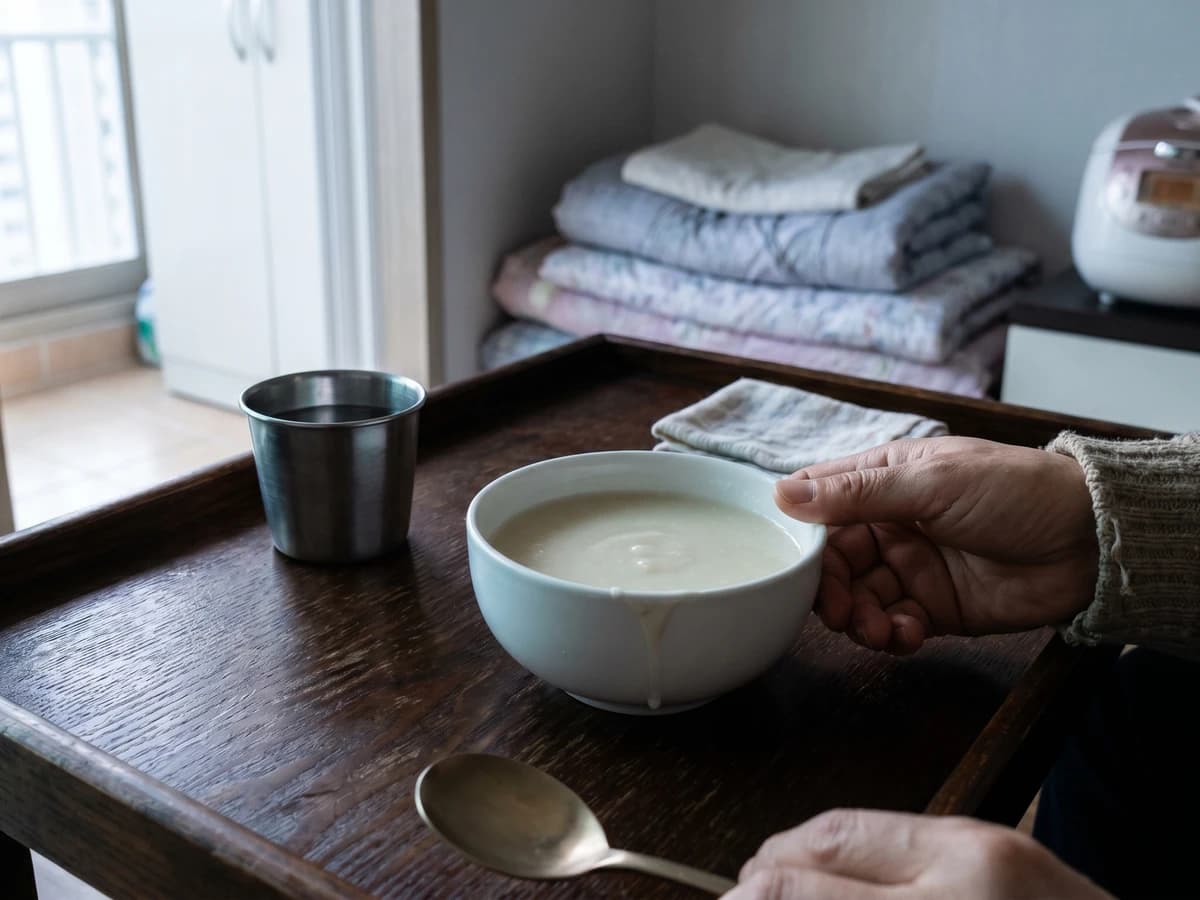
Powdered rice or dried baekseolgi cooked thin in cloudy rice water, an old Korean first-spoon porridge that asks for patience at the sieve and gentleness at the stove.
A cooking platform built around craft, culture, and the stories behind what we eat.

Created by
The pot Koreans reach for when someone needs quiet food: whole chicken simmered into broth, its meat shredded back into rice cooked soft and seasoned with restraint.
Dak-juk belongs to the room where someone is resting. My mother made it when a child had fever, when an elder had no appetite, or when the house needed food that did not ask too much of the body. It is breakfast if you need it to be, supper if the day has been long. The table goes quiet around it, and that is part of the dish.
Do not start with boneless chicken breast and wonder why the bowl tastes thin. The broth is the porridge. A small whole chicken gives bone, skin, and meat in one pot, and the rice cooks in that broth until the grains loosen and thicken the liquid. You are not making rice with soup poured over it. You are letting the rice surrender into the stock.
Season lightly. Salt, a little soup soy sauce if you want depth, scallion, sesame oil at the end. The chicken should still taste like chicken and the rice should taste clean. Write it down. Memory is a borrowed bowl. The next time someone in your house needs this, you should not have to guess.
Juk, Korean rice porridge, appears throughout old Korean household and medical food records as food for children, elders, travelers, and anyone recovering strength. Chicken juk developed from the same practical home logic as samgyetang and baeksuk: simmer a bird for broth, then stretch its nourishment through rice. It remains an everyday comfort dish rather than a ceremonial one, especially common after illness or whenever the stomach needs something gentle.
Quantity
1 cup
rinsed until the water runs mostly clear
Quantity
1, about 1.2kg
excess fat trimmed
Quantity
10 cups
Quantity
8 large
lightly crushed
Quantity
1/2 medium
peeled
Quantity
2
cut into 3-inch lengths
Quantity
1 piece, about 3 inches square
Quantity
1 teaspoon, plus more to adjust
Quantity
1 tablespoon
Quantity
1/4 teaspoon
freshly ground
Quantity
2
thinly sliced, for serving
Quantity
2 teaspoons, divided
for serving
Quantity
2 teaspoons
for serving
Quantity
thin strips
for serving
| Ingredient | Quantity |
|---|---|
| short-grain white ricerinsed until the water runs mostly clear | 1 cup |
| small whole chickenexcess fat trimmed | 1, about 1.2kg |
| water | 10 cups |
| garlic cloveslightly crushed | 8 large |
| onionpeeled | 1/2 medium |
| scallion whitescut into 3-inch lengths | 2 |
| dried kelp (dasima) (optional) | 1 piece, about 3 inches square |
| kosher salt | 1 teaspoon, plus more to adjust |
| soup soy sauce (guk-ganjang) (optional) | 1 tablespoon |
| black pepperfreshly ground | 1/4 teaspoon |
| scallionsthinly sliced, for serving | 2 |
| toasted sesame oilfor serving | 2 teaspoons, divided |
| toasted sesame seedsfor serving | 2 teaspoons |
| gim (roasted seaweed) (optional)for serving | thin strips |
Rinse the rice in several changes of cold water until the water runs mostly clear, then drain it in a sieve while you start the chicken. Clean rice gives the porridge a soft body instead of a gluey one. If you have 30 minutes, soak the drained rice in fresh water, then drain again before cooking; the grains open more evenly.
Put the chicken in a heavy pot with 10 cups water, garlic, onion, scallion whites, and kelp if using. Bring it slowly to a bare boil over medium heat. As foam rises, skim it off with a spoon. Pull the kelp out as soon as the water begins to bubble at the edges, because kelp left too long gives the broth a dull, slick taste.
Lower the heat and simmer gently, partly covered, for 45 to 55 minutes, until the thigh meat pulls away easily and the juices run clear. Hard boiling makes a cloudy, rough broth and tight meat. A quiet simmer gives you clean stock and chicken that shreds without fighting.
Lift the chicken to a tray and let it cool just until you can handle it. Strain the broth through a fine sieve and discard the onion and scallion. Measure 7 cups broth back into the pot; if you have less, add water to make 7 cups. Pull the meat from the bones and shred it into bite-size pieces, keeping the pieces soft and uneven, not chopped into cubes.
Add the drained rice to the 7 cups broth and bring it to a gentle simmer. Cook uncovered for 30 to 35 minutes, stirring often and scraping the bottom so the rice does not catch. The grains should swell, split, and thicken the broth until the spoon leaves a slow path through the pot. If it tightens too much, add hot water 1/2 cup at a time.
Stir in 2 cups shredded chicken, the salt, soup soy sauce if using, and black pepper. Simmer 5 more minutes so the meat warms through and gives itself back to the rice. Taste before adding more salt. For a sick-day bowl, keep it gentle; for a breakfast table, another 1/4 teaspoon salt may be right.
Ladle the juk into warm bowls. Top each serving with sliced scallion, 1/2 teaspoon sesame oil, sesame seeds, and gim if you like. Serve salt and soup soy sauce at the table, not because the recipe is unfinished, but because each body asks for a different amount when it is tired.
1 serving (about 700g)
Culinary guides, cultural storytelling, and the editorial depth that makes cooking meaningful.
Discover Culinary ExplorerChef Jeong-sun
Powdered rice or dried baekseolgi cooked thin in cloudy rice water, an old Korean first-spoon porridge that asks for patience at the sieve and gentleness at the stove.

Chef Jeong-sun
A soft summer rice porridge of kneaded mallow greens, dried shrimp, and careful doenjang broth, plain enough for breakfast and exact enough to keep the grit and bitterness out.
Chef Jeong-sun
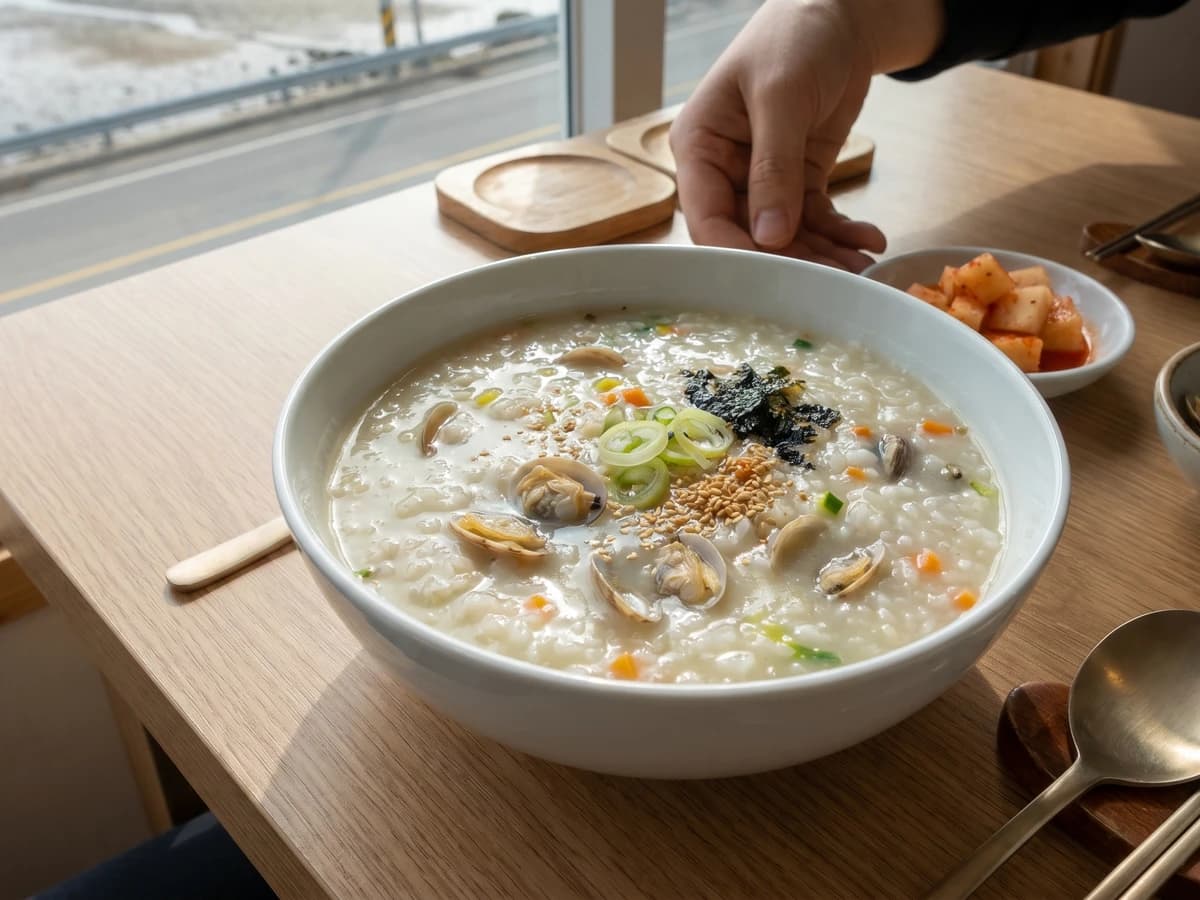
A west-coast clam porridge from Buan's tidal flats: live bajirak opened for their liquor, sesame-slicked rice toasted in the pot, and vegetables cut small enough to comfort without hiding the clams.

Chef Jeong-sun
An autumn juk of boiled chestnuts and soaked short-grain rice, simmered low until smooth and softly sweet, the kind of bowl you set before an elder, a child, or yourself.