
Chef Dimitra
Aegean Island Chtapodi me Kritharaki (Χταπόδι με Κριθαράκι)
Aegean island octopus, tomato, red wine, and toasted kritharaki share one pot, so the pasta drinks the briny sauce and stays glossy instead of turning heavy.
A cooking platform built around craft, culture, and the stories behind what we eat.
Created by
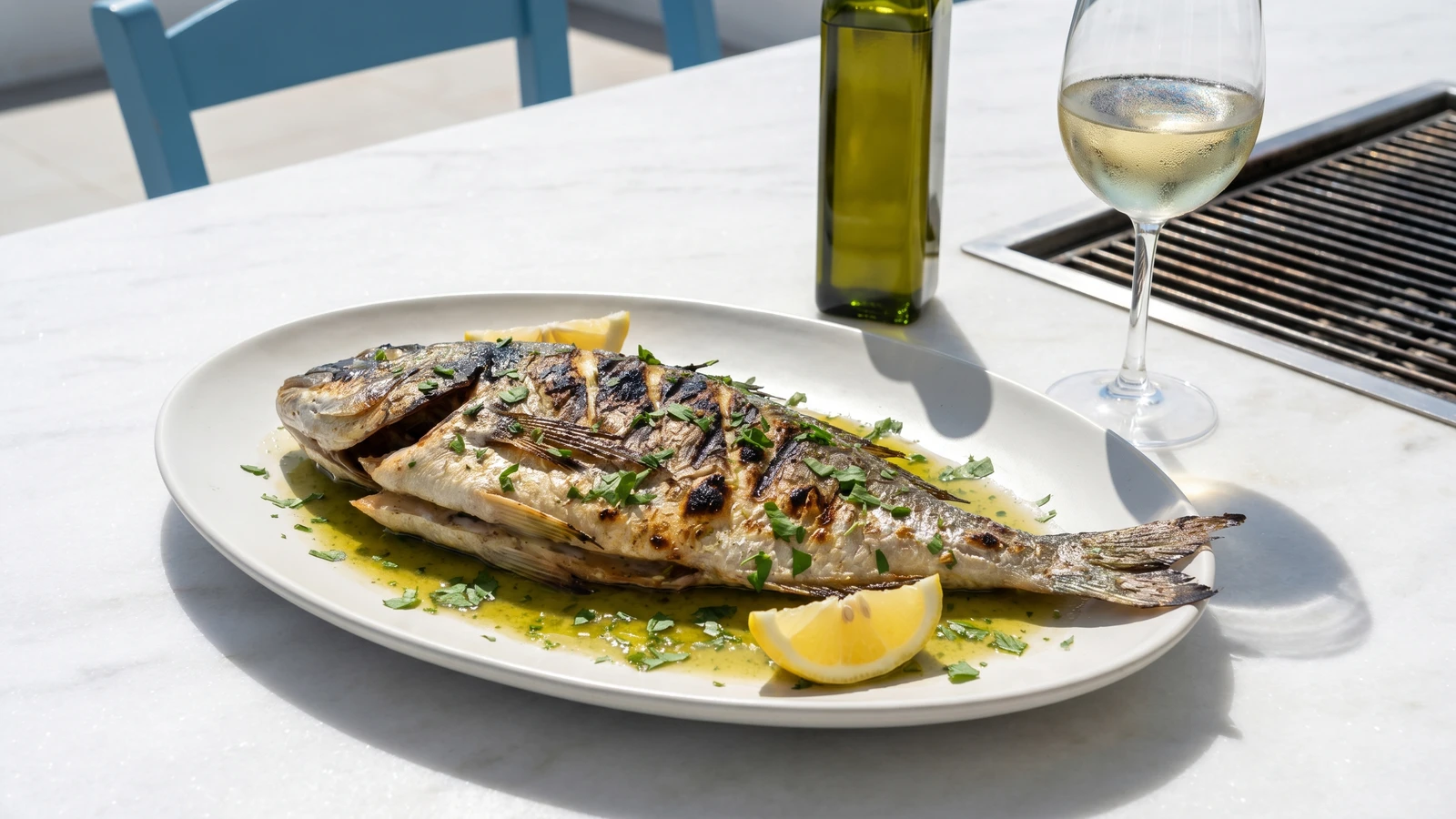
Cycladic grilled whole fish is sea bream or bass over coals, finished with sharp ladolemono while the skin is hot enough to drink it in.
Cycladic psari sti schara is whole fish grilled over coals, then dressed with ladolemono, the beaten olive oil and lemon sauce of the islands. Sea bream, sea bass, fagri if the fishmonger has been kind. The fish stays whole because the bones protect the flesh, and the skin takes the char that tells you it has met real fire.
The whole dish rests on restraint. Dry the fish well, heat the grate hard, and don't fuss with it once it lands on the metal. Skin needs time to set before it releases. Turn it too soon and you leave half the best part behind, a small tragedy, but still a tragedy.
Whisk the ladolemono until it thickens and turns pale, then spoon it over the fish while the skin is hot. It should cling, not drown. This is island cooking at its cleanest: fresh fish, salt, lemon, oregano, good olive oil, and patience. Λίγα και καλά.
On Thassos, I watched a cook judge the fish with two fingers near the backbone, not with drama, just habit. I wrote the timing down later for the home cook who doesn't grill fish every day. Your grandmother cooked by eye because she'd made it a thousand times. Here are the numbers until you have.
Whole grilled fish belongs to the Aegean islands and the Greek coast before it belongs to any restaurant menu. In the 4th century BCE, the poet Archestratus wrote about fish with a simplicity a Cycladic cook would still recognize: good fish, fire, salt, and little interference. Ladolemono is the later household companion, a practical sauce that uses the two island constants, olive oil and lemon, to season the fish after the fire has done its work.
Quantity
2 fish, about 500g each
scaled and gutted
Quantity
2 teaspoons
Quantity
1 teaspoon
Quantity
2 tablespoons
for rubbing the fish
Quantity
1
thinly sliced
Quantity
4
Quantity
90ml
for ladolemono
Quantity
45ml
Quantity
1 teaspoon
for helping the sauce hold
Quantity
1 small
finely grated
Quantity
1/2 teaspoon
for ladolemono
Quantity
1 tablespoon
chopped
Quantity
as needed
for serving
| Ingredient | Quantity |
|---|---|
| whole sea bream or sea bassscaled and gutted | 2 fish, about 500g each |
| fine sea salt | 2 teaspoons |
| dried Greek oregano | 1 teaspoon |
| extra virgin Koroneiki olive oilfor rubbing the fish | 2 tablespoons |
| lemonthinly sliced | 1 |
| parsley stems | 4 |
| extra virgin Koroneiki olive oilfor ladolemono | 90ml |
| fresh lemon juice | 45ml |
| Dijon mustard (optional)for helping the sauce hold | 1 teaspoon |
| garlic clovefinely grated | 1 small |
| fine sea saltfor ladolemono | 1/2 teaspoon |
| flat-leaf parsleychopped | 1 tablespoon |
| lemon wedges (optional)for serving | as needed |
Pat the fish very dry inside and out, then make two shallow diagonal cuts on each side. Salt the skin and the cavity, rub with the 2 tablespoons olive oil, and sprinkle with oregano. Put lemon slices and parsley stems inside each belly. Let the fish stand while the coals settle, about 15 minutes.
Heat a charcoal grill until the coals are covered with white ash and the grill grate is very hot. Brush the grate clean and oil it well. This is the step that decides the dish: dry fish, hot metal, and no nervous moving. If the skin sets before you touch it, it releases cleanly. If you poke too early, it tears.
Lay the fish on the hot grate and leave it alone for 5 to 6 minutes, depending on thickness. The skin should be browned, blistered in places, and pulling away from the grate at the edges.
Slide a wide fish spatula under each fish and turn gently. Grill the second side for 4 to 6 minutes, until the thickest part near the backbone is just opaque and the flesh flakes with a small pull. A 500g fish usually needs 10 to 12 minutes total.
While the fish cooks, whisk the 90ml olive oil, lemon juice, mustard if using, grated garlic, and 1/2 teaspoon salt until thick and cloudy. Ladolemono, oil-lemon sauce, must be beaten hard so it clings to hot skin instead of running straight onto the plate.
Move the fish to a warm platter and spoon the ladolemono over it while the skin is still hot. Scatter with parsley and serve at once with lemon wedges. The sauce will settle around the fish, glossy and sharp, exactly where the bread wants to go.
1 serving (about 190g)
Culinary guides, cultural storytelling, and the editorial depth that makes cooking meaningful.
Discover Culinary ExplorerChef Dimitra
Aegean island octopus, tomato, red wine, and toasted kritharaki share one pot, so the pasta drinks the briny sauce and stays glossy instead of turning heavy.

Chef Dimitra
Aegean coast psari plaki is the quiet whole-fish bake: onions and tomato softened first, fish laid on top, and olive oil doing its slow work until the bones release cleanly.

Chef Dimitra
Astakomakaronada is the Aegean islands' celebration pasta: spiny lobster, tomato, olive oil, and long noodles cooked in the shell broth, never drowned in cream or cheese.

Chef Dimitra
Aegean Easter goat on the spit, lean and full-flavored, turned slowly over charcoal and basted with lemon, oregano, garlic, and good olive oil.