
Chef Dimitra
Aegean Island Chtapodi me Kritharaki (Χταπόδι με Κριθαράκι)
Aegean island octopus, tomato, red wine, and toasted kritharaki share one pot, so the pasta drinks the briny sauce and stays glossy instead of turning heavy.
A cooking platform built around craft, culture, and the stories behind what we eat.
Created by
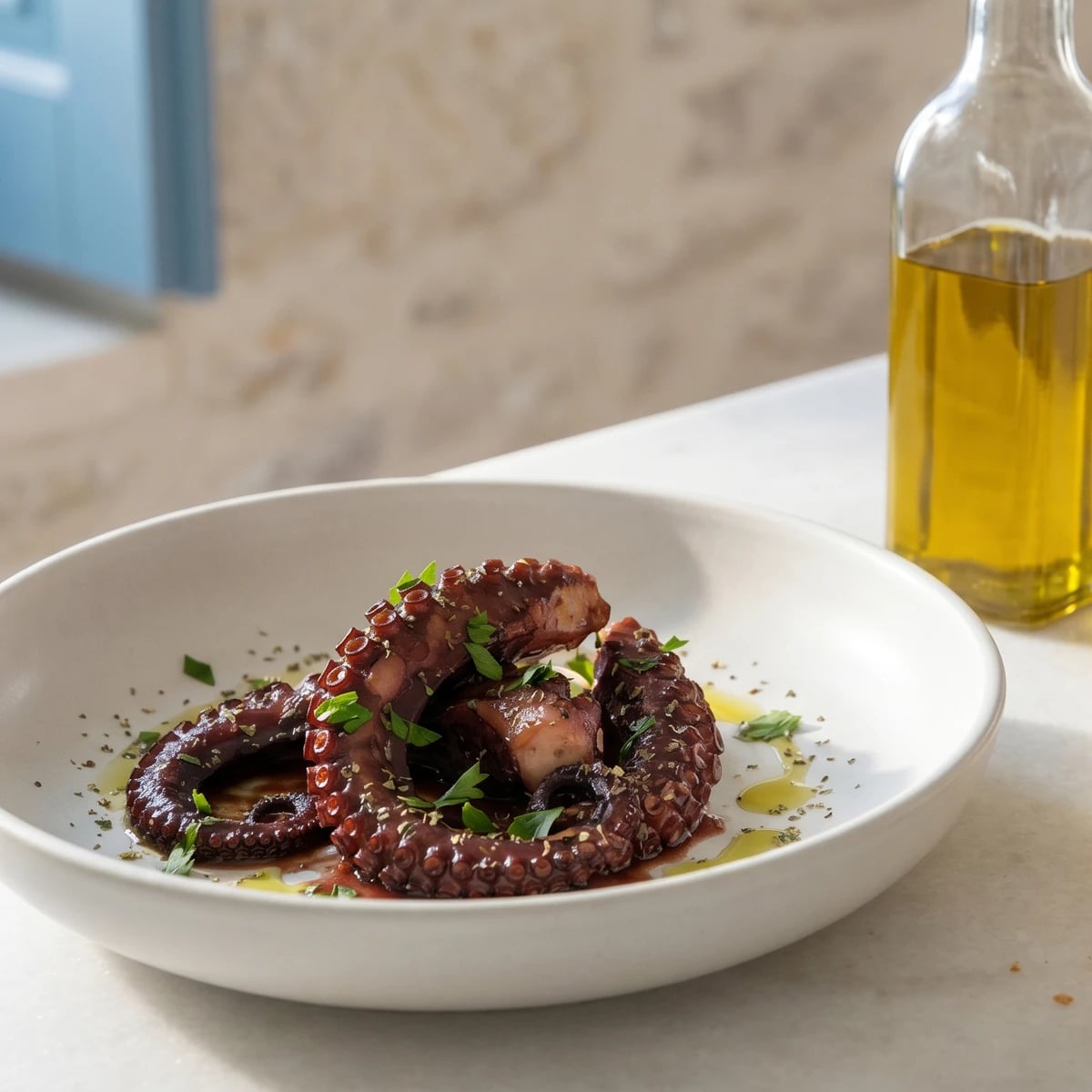
Cycladic chtapodi krasato is octopus cooked first in its own liquor, then slowly braised with red wine, bay, vinegar, and olive oil until the sauce turns dark and clings.
Cycladic chtapodi krasato is octopus braised in red wine until the sauce goes dark, glossy, and almost syrupy. On the islands it belongs beside bread and a small glass, the kind of dish that looks modest until you taste how much sea, wine, and patience can do.
Wine-braised octopus belongs to the Aegean islands, where octopus was traditionally dried briefly in the sun and wind before being cooked, a practice that concentrated flavor and helped tenderize the flesh. In the Orthodox fasting calendar, octopus and other bloodless sea foods could appear on nistisima tables, especially on days when wine and oil were permitted. The Cycladic version keeps the seasoning spare: red wine, bay, vinegar, onion, olive oil, and the octopus's own liquor.
Quantity
1.2kg
fresh or fully thawed
Quantity
120g
finely sliced
Quantity
3
lightly crushed
Quantity
80ml
Quantity
250ml
Quantity
30ml
Quantity
2
Quantity
1
Quantity
1 teaspoon
Quantity
1 teaspoon
lightly cracked
Quantity
1 teaspoon
Quantity
1 tablespoon
chopped, for finishing
Quantity
as needed
for serving
Quantity
as needed
only at the end
| Ingredient | Quantity |
|---|---|
| cleaned octopus (chtapodi)fresh or fully thawed | 1.2kg |
| yellow onionfinely sliced | 120g |
| garlic cloveslightly crushed | 3 |
| extra virgin Koroneiki olive oil | 80ml |
| dry red wine | 250ml |
| red wine vinegar | 30ml |
| bay leaves | 2 |
| small cinnamon stick (optional) | 1 |
| tomato paste | 1 teaspoon |
| black peppercornslightly cracked | 1 teaspoon |
| dried Greek oregano | 1 teaspoon |
| flat-leaf parsleychopped, for finishing | 1 tablespoon |
| lemon wedges (optional)for serving | as needed |
| sea saltonly at the end | as needed |
Rinse the octopus well and check the head cavity for any grit. Cut the tentacles apart and slice the head into large pieces. Pat it dry. Don't salt it now. Octopus carries its own salt, and the sauce will reduce.
Put the octopus in a heavy pot with no water, no oil, and no wine. Cover and set over medium-low heat for 20 to 25 minutes, turning once or twice, until it releases a purple-red liquor and the pieces begin to firm. This is the step that decides the dish. If you add water first, you dilute the sea out of it. Let the octopus give you its own cooking liquid, then build the wine sauce from there.
Lift the octopus to a plate and keep every drop of liquid in the pot. Add the olive oil and sliced onion to that same pot. Cook over medium heat for 8 to 10 minutes, until the onion softens and takes on the color of the octopus liquor. Stir in the garlic and tomato paste for 1 minute.
Return the octopus to the pot. Add the red wine, vinegar, bay leaves, cinnamon if using, and cracked peppercorns. Bring to a quiet bubble, then cover and cook over low heat for 35 to 45 minutes, until a knife slips into the thickest part of a tentacle with only a little resistance.
Uncover the pot and simmer for 10 to 15 minutes more, turning the octopus now and then, until the sauce is dark, glossy, and thick enough to coat a spoon. Pull out the bay leaves and cinnamon stick. Taste before salting. Often it needs none.
Cut the tentacles into generous pieces or leave them whole for the table. Sprinkle with oregano and parsley, then spoon the wine sauce over everything. Serve warm or at room temperature with country bread, fried potatoes, rice, or plain chickpeas if the table is fasting. Good olive oil, and patience. That is all it asks.
1 serving (about 220g)
Culinary guides, cultural storytelling, and the editorial depth that makes cooking meaningful.
Discover Culinary Explorer
Chef Dimitra
Aegean island octopus, tomato, red wine, and toasted kritharaki share one pot, so the pasta drinks the briny sauce and stays glossy instead of turning heavy.

Chef Dimitra
Aegean coast psari plaki is the quiet whole-fish bake: onions and tomato softened first, fish laid on top, and olive oil doing its slow work until the bones release cleanly.

Chef Dimitra
Astakomakaronada is the Aegean islands' celebration pasta: spiny lobster, tomato, olive oil, and long noodles cooked in the shell broth, never drowned in cream or cheese.

Chef Dimitra
Aegean island octopus, simmered tender in its own juices, then marked hard on the grill and finished with oil, vinegar, oregano, and lemon.