
Chef Dimitra
Aegean Island Chtapodi me Kritharaki (Χταπόδι με Κριθαράκι)
Aegean island octopus, tomato, red wine, and toasted kritharaki share one pot, so the pasta drinks the briny sauce and stays glossy instead of turning heavy.
A cooking platform built around craft, culture, and the stories behind what we eat.
Created by
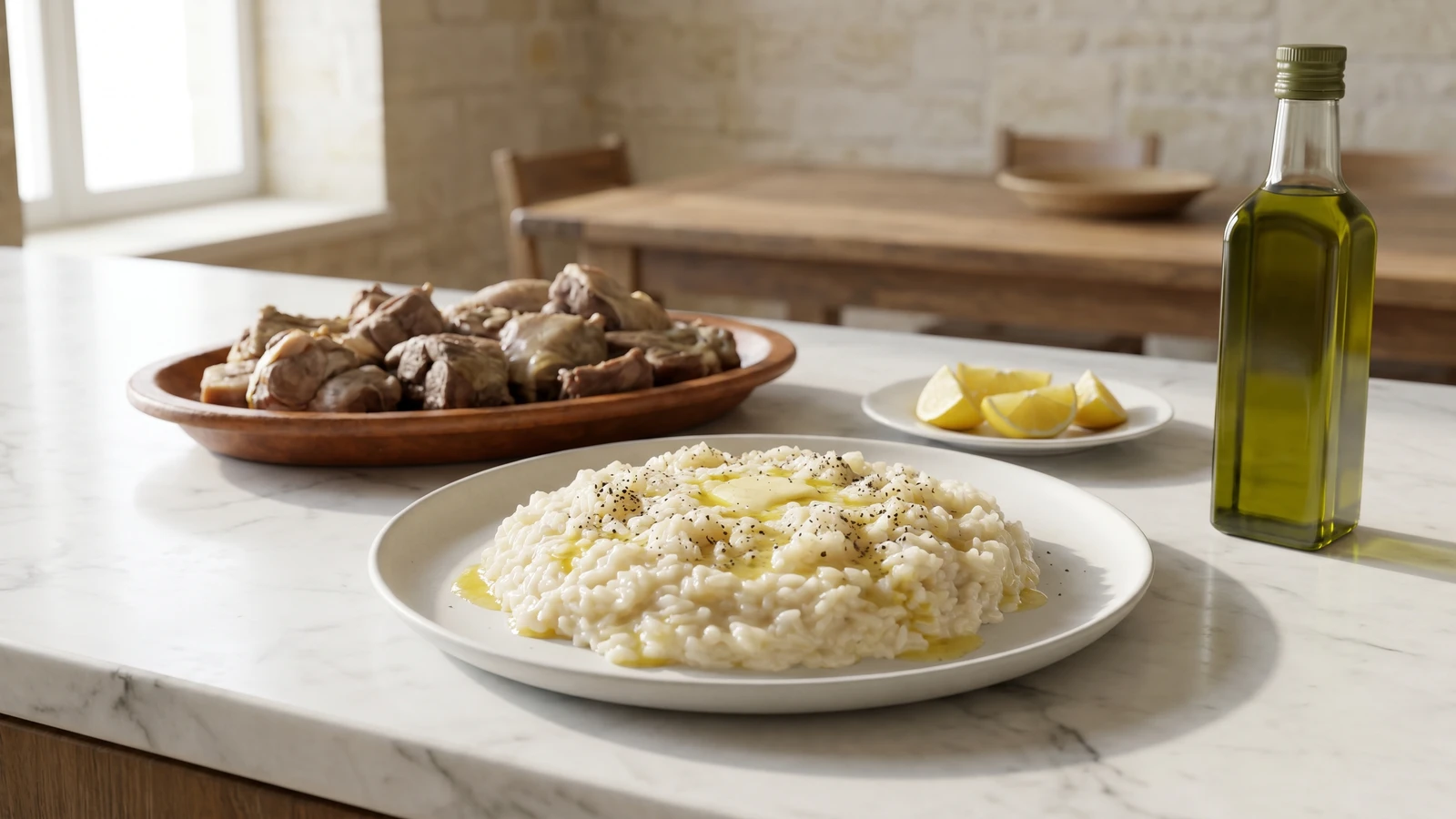
Gamopilafo is Crete's wedding pilaf: rice cooked in the meat's own broth, loosened with lemon, and finished with staka until glossy and rich.
Gamopilafo belongs to Crete, and the name tells you the occasion: gamos is the wedding, pilafi is the rice. It is not a side dish pretending to be polite. It is the plate that carries the feast, white rice swollen with the broth of goat and lamb, brightened with lemon, and finished with staka, the Cretan cream butter that makes the grains shine.
The method that decides it is simple and non-negotiable: cook the rice in the strained meat broth, never in plain water. The rice has no sauce to hide behind, so the broth must be deep, salted correctly, and tasted before the grains go in. If the broth is thin, the gamopilafo is thin. Good meat, good stock, good staka. Λίγα και καλά.
Keep the rice loose and creamy, not dry like a parade pilaf and not soupy like risotto. Let it rest a few minutes, then spoon it out while it still moves softly on the plate. I write this one down with care because feast food is often trusted to memory, and memory is a risky pantry. A recipe written down is a recipe saved.
Gamopilafo is the wedding pilaf of Crete, especially associated with large village celebrations where goat, lamb, or kid were boiled in great pots to feed many guests. The word pilafi entered Greek through Turkish pilav, but the Cretan version is marked by local animal husbandry and by staka, the island's rich sheep or goat cream butter. In older feasts, the boiled meat was served beside or before the rice, so nothing from the pot was wasted.
Quantity
1.2kg
cut into large pieces
Quantity
800g
cut into large pieces
Quantity
3.2L
Quantity
1 medium
peeled and halved
Quantity
2
Quantity
12
Quantity
22g
plus more to taste
Quantity
500g
Quantity
80ml
Quantity
120g
Quantity
to serve
| Ingredient | Quantity |
|---|---|
| bone-in goat shoulder or kidcut into large pieces | 1.2kg |
| bone-in lamb shoulder or neckcut into large pieces | 800g |
| cold water | 3.2L |
| onionpeeled and halved | 1 medium |
| bay leaves | 2 |
| black peppercorns | 12 |
| fine sea saltplus more to taste | 22g |
| short-grain rice, preferably Carolina or Greek glace rice | 500g |
| fresh lemon juice | 80ml |
| staka or Cretan stakovoutyro | 120g |
| freshly ground black pepper (optional) | to serve |
Put the goat, lamb, cold water, onion, bay leaves, peppercorns, and salt in a large heavy pot. Bring it slowly to a bare simmer, skimming the gray foam as it rises. Keep the surface gentle. A hard boil clouds the broth and tightens the meat before it has given you what you need.
Simmer uncovered for 2 to 2 1/2 hours, until the meat pulls easily from the bone. Add a little hot water only if the meat is no longer covered. Taste the broth near the end. It should be savory enough to season the rice, because the rice is going to drink it.
Lift the meat onto a platter and cover it loosely. Strain the broth through a fine sieve and discard the onion, bay, and peppercorns. Measure 1.8L broth for the rice. If you have more, simmer it down until stronger. If you have less, add hot water, but only enough to reach the measure.
Bring the 1.8L strained broth to a boil in a wide pot. Stir in the rice, lower the heat, and simmer for 15 to 18 minutes, stirring now and then, until the grains are tender and the mixture is loose and creamy. Do not rinse this rice. The surface starch helps the gamopilafo hold together softly.
Stir in the lemon juice and taste. The lemon should lift the richness without making the rice sharp. If the broth was salted properly, you may need only a small pinch more salt here.
Warm the staka gently in a small pan until fluid and glossy, then stir most of it through the rice. Keep a little back for spooning over the top. Let the gamopilafo rest off the heat for 5 minutes, covered. It should settle, not stiffen.
Spoon the gamopilafo onto a warm platter and gloss it with the remaining staka. Serve with the boiled meat alongside, black pepper at the table, and lemon wedges if your Cretan aunt insists. Eat it hot, while the grains are still soft and moving.
1 serving (about 380g)
Culinary guides, cultural storytelling, and the editorial depth that makes cooking meaningful.
Discover Culinary ExplorerChef Dimitra
Aegean island octopus, tomato, red wine, and toasted kritharaki share one pot, so the pasta drinks the briny sauce and stays glossy instead of turning heavy.

Chef Dimitra
Aegean coast psari plaki is the quiet whole-fish bake: onions and tomato softened first, fish laid on top, and olive oil doing its slow work until the bones release cleanly.

Chef Dimitra
Astakomakaronada is the Aegean islands' celebration pasta: spiny lobster, tomato, olive oil, and long noodles cooked in the shell broth, never drowned in cream or cheese.

Chef Dimitra
Aegean Easter goat on the spit, lean and full-flavored, turned slowly over charcoal and basted with lemon, oregano, garlic, and good olive oil.