
Chef Dimitra
Aegean Island Chtapodi me Kritharaki (Χταπόδι με Κριθαράκι)
Aegean island octopus, tomato, red wine, and toasted kritharaki share one pot, so the pasta drinks the briny sauce and stays glossy instead of turning heavy.
A cooking platform built around craft, culture, and the stories behind what we eat.
Created by
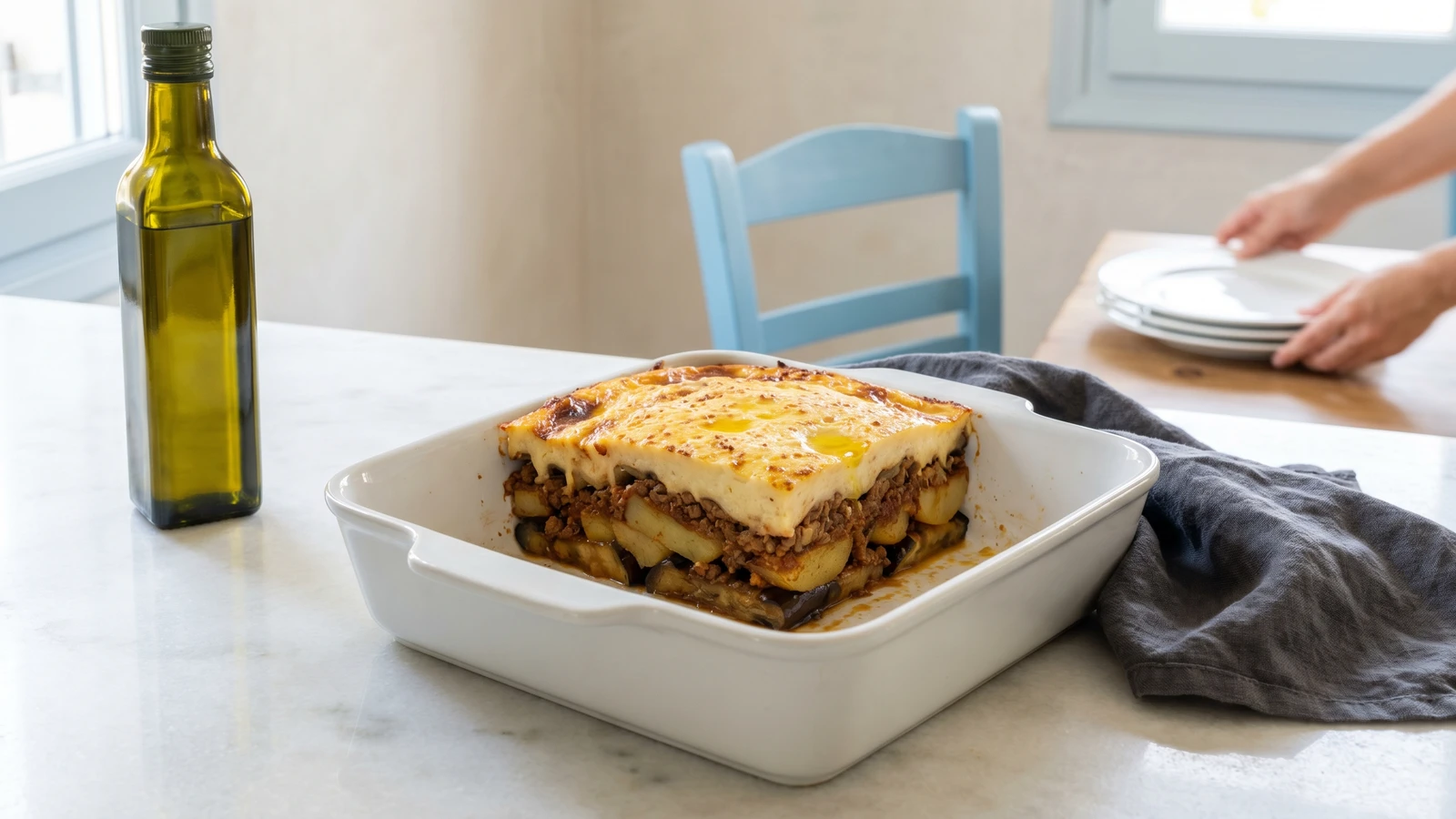
Athens moussaka is the great urban tray: potato, eggplant, cinnamon-scented meat, and a thick bechamel cap that browns gold and slices clean.
Athens moussaka is the layered casserole of the city table: potato below, eggplant through the middle, cinnamon-scented minced meat, and a tall bechamel lid browned until it freckles. This is the version most Greeks recognize now, the Sunday and name-day tray that feeds a crowd and still cuts into square portions if you let it rest.
The eggplant decides whether the dish sings or sulks. Salt it first, let the moisture come out, then dry it well before oil touches it. Do that, and the slices brown with a clean vegetable sweetness. Skip it and the pan gives you oil wearing an eggplant costume. I won't defend that.
Use ripe tomatoes in season, or good canned tomatoes when the calendar says no. The meat sauce should be thick, the bechamel warm and steady, the tray rested long enough to gather itself. Your grandmother cooked by eye because she'd made it a thousand times. Here are the numbers until you have.
Layered eggplant dishes called musakka circulated through Ottoman kitchens before the Athenian tray took its present form. In the early twentieth century, Nikolaos Tselementes, the Sifnos-born cook whose books shaped urban Greek cooking, helped fix the now-familiar Greek version with a thick bechamel cap and a cinnamon-scented minced-meat layer. Potato at the base became common in Athens and mainland home kitchens, where it made the dish sturdier for serving in clean squares.
Quantity
1.2kg
sliced lengthwise 1cm thick
Quantity
700g
peeled and sliced 5mm thick
Quantity
18g
for drawing moisture from the eggplant, plus more to season
Quantity
180ml
plus more as needed
Quantity
1
finely chopped
Quantity
2
minced
Quantity
750g
Quantity
120ml
Quantity
500g
grated, or use 400g canned crushed tomatoes
Quantity
40g
Quantity
1
Quantity
1
Quantity
1/4 teaspoon
Quantity
1/2 teaspoon
Quantity
1 teaspoon
only if the tomatoes are sharp
Quantity
60g
Quantity
65g
Quantity
750ml
warmed
Quantity
1/4 teaspoon
Quantity
2
Quantity
70g
Quantity
to taste
| Ingredient | Quantity |
|---|---|
| eggplantssliced lengthwise 1cm thick | 1.2kg |
| potatoespeeled and sliced 5mm thick | 700g |
| fine sea saltfor drawing moisture from the eggplant, plus more to season | 18g |
| extra virgin Koroneiki olive oilplus more as needed | 180ml |
| large onionfinely chopped | 1 |
| garlic clovesminced | 2 |
| minced beef or half beef and half lamb | 750g |
| dry red wine | 120ml |
| ripe tomatoesgrated, or use 400g canned crushed tomatoes | 500g |
| tomato paste | 40g |
| bay leaf | 1 |
| small cinnamon stick | 1 |
| ground allspice | 1/4 teaspoon |
| dried Greek oregano | 1/2 teaspoon |
| sugar (optional)only if the tomatoes are sharp | 1 teaspoon |
| unsalted butter | 60g |
| plain flour | 65g |
| whole milkwarmed | 750ml |
| freshly grated nutmeg | 1/4 teaspoon |
| large eggs | 2 |
| grated kefalotyri or graviera cheese | 70g |
| freshly ground black pepper | to taste |
Lay the eggplant slices on trays and sprinkle them with the 18g salt. Leave them for 35 to 45 minutes, until beads of moisture stand on the surface. Rinse quickly and pat very dry. This is the step that decides the dish: unsalted eggplant drinks oil and turns heavy, while drained eggplant browns cleanly and still tastes like itself.
Heat the oven to 220C. Brush the potato slices and dried eggplant slices with olive oil on both sides, lay them on lined trays, and roast until patched gold and tender, 20 to 30 minutes, turning once. A little char at the edges is welcome. They should bend without breaking, not collapse.
Warm 2 tablespoons of olive oil in a wide pan over medium heat. Add the onion with a pinch of salt and cook until soft and pale gold, about 8 minutes. Stir in the garlic for 30 seconds, then add the mince and cook until it loses its raw color and begins to catch in browned bits.
Add the wine and let it bubble until almost gone. Stir in the grated tomatoes, tomato paste, bay leaf, cinnamon stick, allspice, oregano, black pepper, and sugar if needed. Simmer uncovered for 25 to 30 minutes, until the sauce is thick enough that a spoon dragged through it leaves a brief path. Remove the bay and cinnamon. A wet meat sauce makes the tray weep.
Melt the butter in a saucepan over medium heat, whisk in the flour, and cook for 2 minutes without browning. Add the warm milk a little at a time, whisking until smooth after each addition. Cook until thick and glossy, 6 to 8 minutes. Season with salt, pepper, and nutmeg, then take it off the heat and let it stand for 5 minutes.
Whisk the eggs in a bowl. Whisk in a ladle of the warm bechamel, then return that mixture to the saucepan and whisk until smooth. Stir in half the grated cheese. The bechamel should be thick enough to mound softly on a spoon, because it must bake into a tall lid, not run into the meat.
Lower the oven to 180C. Oil a 33 x 23cm baking dish. Lay the potatoes in the bottom, slightly overlapping, then add half the eggplant. Spread all the meat sauce over it, press lightly to level, and cover with the remaining eggplant. Pour the bechamel over the top and smooth it to the edges. Scatter over the remaining cheese.
Bake for 45 to 55 minutes, until the top is deep gold with darker freckles and the edges are bubbling. Rest the moussaka for at least 30 minutes before cutting. If you rush it, it will taste good and fall apart. If you wait, it slices into proper squares. Patience is an ingredient here.
1 serving (about 465g)
Culinary guides, cultural storytelling, and the editorial depth that makes cooking meaningful.
Discover Culinary ExplorerChef Dimitra
Aegean island octopus, tomato, red wine, and toasted kritharaki share one pot, so the pasta drinks the briny sauce and stays glossy instead of turning heavy.

Chef Dimitra
Aegean coast psari plaki is the quiet whole-fish bake: onions and tomato softened first, fish laid on top, and olive oil doing its slow work until the bones release cleanly.

Chef Dimitra
Astakomakaronada is the Aegean islands' celebration pasta: spiny lobster, tomato, olive oil, and long noodles cooked in the shell broth, never drowned in cream or cheese.

Chef Dimitra
Aegean Easter goat on the spit, lean and full-flavored, turned slowly over charcoal and basted with lemon, oregano, garlic, and good olive oil.