
Chef Thomas
Baked Onions with Cream and Thyme
Whole onions surrendered to a low oven with cream and thyme until they collapse into something golden, sweet and yielding, the kind of side dish that quietly upstages everything else on the table.
A cooking platform built around craft, culture, and the stories behind what we eat.
Created by Chef Thomas
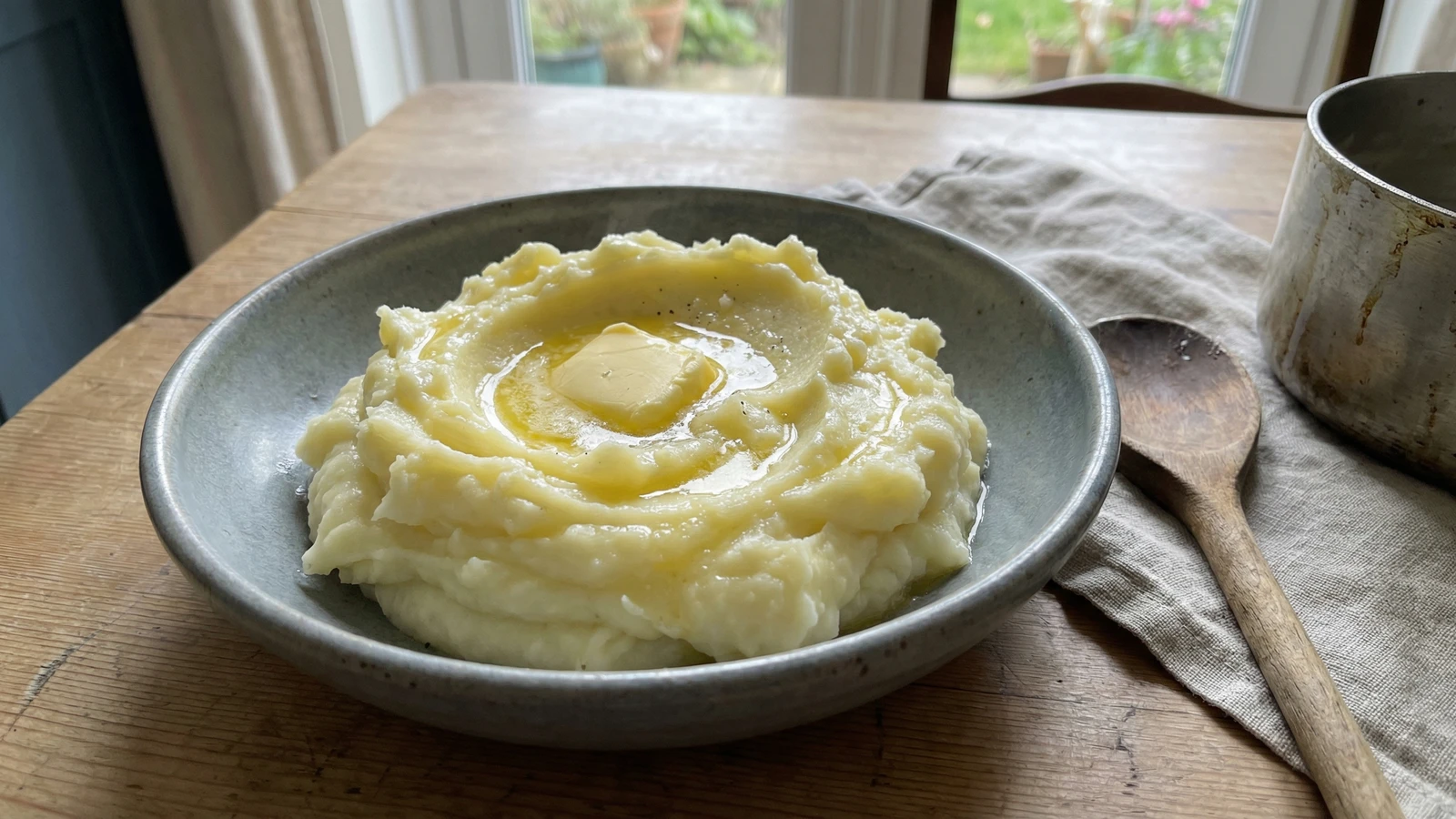
Potatoes mashed with good butter and warm milk into something so yielding and quiet that it makes everything else on the plate feel at home.
The kitchen smells of boiled potatoes and butter. That's it. That's the whole promise. On a cold evening, when the windows are dark by five and the heating has only just kicked in, there are few things more useful than a pan of mashed potato.
I don't know when mashed potato became something people felt they needed a recipe for. It's potatoes, butter, milk, salt. Four ingredients and a bit of elbow work. But the difference between mash that's merely fine and mash that makes someone close their eyes for half a second is entirely in the details: the type of potato, the amount of butter, the warmth of the milk, the patience to season properly. These aren't techniques. They're acts of attention.
More butter than you think. That's the only instruction that really matters. When you've added what seems like enough, add a bit more. The butter is what turns cooked potatoes into something worth writing down. I keep coming back to the same note in the notebook: "Mash. Tuesday. Too dark to see the garden. Enough butter this time." That last line tells you everything.
A recipe is a conversation, not a contract. If you want it looser, add more milk. If you want it richer, add more butter. Your kitchen, your rules. We're only making dinner.
Quantity
1kg
peeled and cut into even chunks
Quantity
75g
cold, cut into cubes
Quantity
100-150ml
warmed
Quantity
to taste
Quantity
to taste
| Ingredient | Quantity |
|---|---|
| floury potatoes (Maris Piper or King Edward)peeled and cut into even chunks | 1kg |
| unsalted buttercold, cut into cubes | 75g |
| whole milkwarmed | 100-150ml |
| fine sea salt | to taste |
| white pepper | to taste |
Put the potatoes into a large pan of cold, well-salted water. Cold water, not hot. They need to heat through at the same pace, all the way to the centre, or you'll get a floury outside and a hard core. Bring to a steady boil, then turn down to a gentle simmer. Cook for fifteen to twenty minutes, until a knife slides through a chunk with no resistance at all. Not almost. Completely.
Drain the potatoes thoroughly and return them to the hot pan. Set it back over a low heat for a minute or two, shaking the pan gently. The potatoes will go chalky and dry at the edges, and any lingering water will steam away. This matters. Wet potatoes make gluey mash, and there's no recovering from that.
Take the pan off the heat and mash the potatoes until smooth. A simple masher is fine, worked with a bit of conviction. When there are no lumps left, add the cold butter, all of it, and stir it through. The residual heat of the potatoes will melt it slowly, and as it does, the mash turns glossy and rich. You'll think it's too much butter. It isn't.
Pour in the warm milk gradually, beating with a wooden spoon after each addition. You might not need all of it. Stop when the mash is smooth and yielding, when it falls slowly off the spoon rather than dropping in a lump. Season with salt and white pepper. Taste it. It will need more salt than you expect. Taste it again. When it tastes like something you'd want to eat on its own, with just a spoon, it's ready.
1 serving (about 300g)
Culinary guides, cultural storytelling, and the editorial depth that makes cooking meaningful.
Discover Culinary ExplorerChef Thomas
Whole onions surrendered to a low oven with cream and thyme until they collapse into something golden, sweet and yielding, the kind of side dish that quietly upstages everything else on the table.

Chef Thomas
Celery braised long and slow in butter and good stock until it turns soft, silky, and almost sweet, the kind of quiet side dish that makes people ask what you did to it.

Chef Thomas
Leeks surrendered to butter and cream until they turn silky, sweet and yielding, the kind of side dish that quietly becomes the reason you sat down to dinner in the first place.

Chef Thomas
Peas braised in butter with wilted lettuce and spring onions, a dish that is entirely French in spirit and entirely at home on an English table in late May when the garden finally delivers.