
Chef Graziella
Abbacchio a Scottadito
Roman lamb chops grilled over scorching heat, seasoned with nothing but salt, rosemary, and fire. You eat them with your hands, straight from the grill, burning your fingers because you cannot wait.
A cooking platform built around craft, culture, and the stories behind what we eat.
Created by
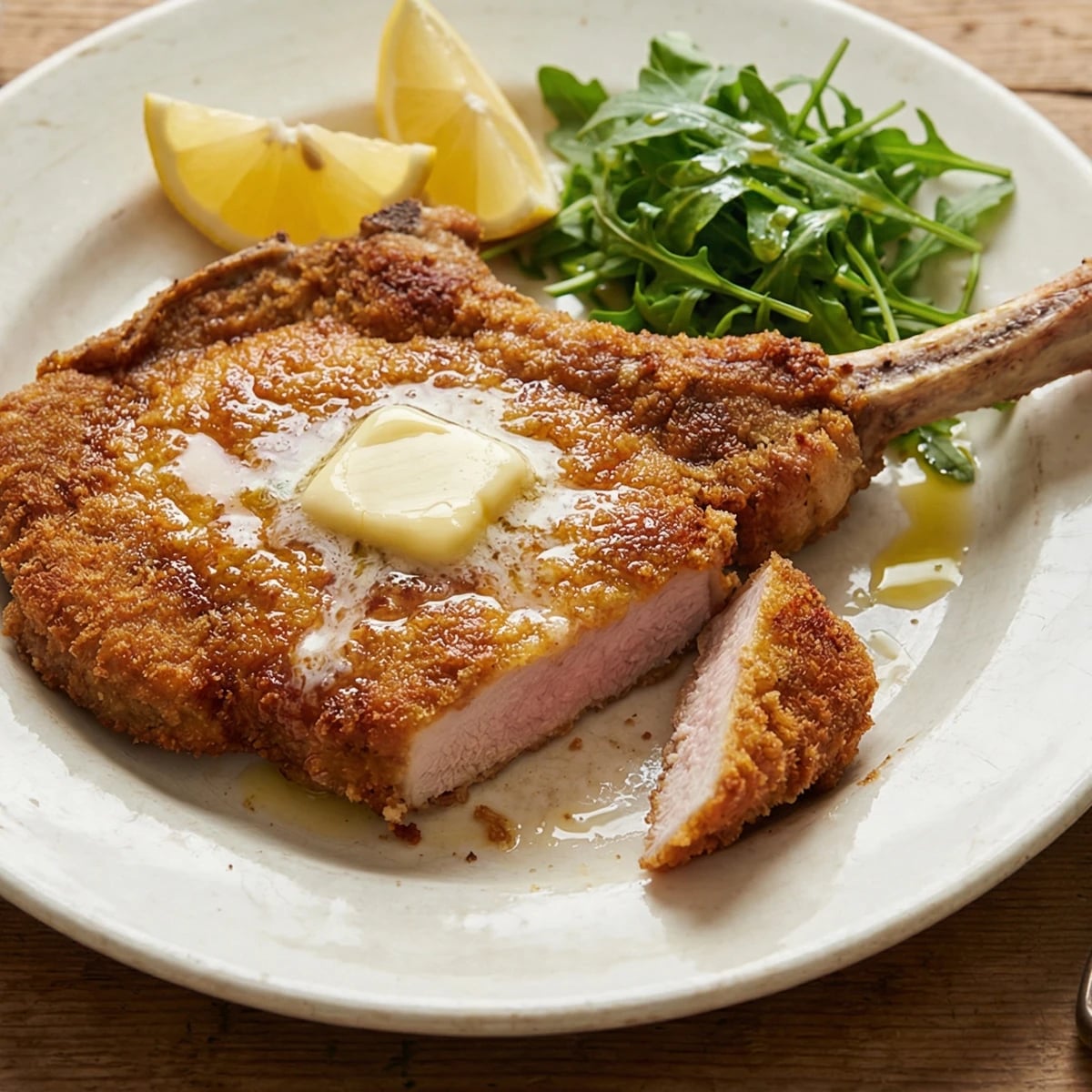
The original bone-in veal cutlet of Milan, pounded thin and fried in clarified butter until the crust shatters and the meat stays juicy. The Viennese borrowed this dish. The Milanese perfected it.
There is a bone. This is the first thing you must understand. A boneless breaded cutlet is a fine thing, but it is not cotoletta alla Milanese. The bone transforms the experience. It is your handle, your proof of authenticity, your connection to the Milanese who have eaten this dish exactly this way for at least five hundred years.
The meat is veal from the rib, pounded thin enough to cook quickly while the breading turns golden but thick enough to remain juicy inside. The coating is flour, egg, and fine dry breadcrumbs, nothing more. The cooking medium is butter, clarified so it can reach proper frying temperature without burning. Americans want to use oil. They are wrong. The Milanese know what they are doing.
What you keep out matters here as much as anywhere. No herbs in the breading. No garlic. No Parmesan mixed into the crumbs. These additions betray a fundamental misunderstanding. The cotoletta is about the interplay between crisp golden crust and tender pink veal, the richness of butter, the brightness of lemon. It does not need improvement. It needs only proper execution.
A document from 1134 describes a feast at the Basilica of Sant'Ambrogio in Milan that included 'lombos cum panitio,' loins with breading. When Austrian Field Marshal Radetzky occupied Milan in the 1850s, he reportedly sent the recipe back to Vienna, where it became Wiener Schnitzel. The Viennese made it boneless and used pork or chicken. The Milanese consider this corruption.
Quantity
4, about 1 inch thick (10-12 ounces each)
Quantity
1 cup
Quantity
3
Quantity
2 cups
Quantity
8 tablespoons (1 stick)
clarified
Quantity
4 tablespoons
for finishing
Quantity
to taste
Quantity
2
cut into wedges
| Ingredient | Quantity |
|---|---|
| bone-in veal rib chops | 4, about 1 inch thick (10-12 ounces each) |
| all-purpose flour | 1 cup |
| large eggs | 3 |
| fine dry breadcrumbs | 2 cups |
| unsalted butterclarified | 8 tablespoons (1 stick) |
| unsalted butterfor finishing | 4 tablespoons |
| kosher salt | to taste |
| lemonscut into wedges | 2 |
Place each veal chop between two sheets of plastic wrap. Using a meat mallet, pound the meat (not the bone) to an even thickness of about one-quarter inch. The meat will spread dramatically. This is correct. The bone remains thick; it becomes your handle for eating. Work outward from the center with firm, even strokes. Do not tear the meat.
Arrange three shallow dishes in a row. Place the flour in the first, seasoned generously with salt. Beat the eggs in the second until completely uniform. Place the breadcrumbs in the third. The breadcrumbs must be fine and dry. Fresh breadcrumbs create a soggy coating. If your breadcrumbs are coarse, pulse them in a food processor until fine.
Season the pounded veal on both sides with salt. Dredge each cutlet through the flour, shaking off all excess. The coating should be invisible. Dip into the beaten egg, letting the excess drip away. Press firmly into the breadcrumbs, coating both sides completely. Press the crumbs into the meat with your palm. Set aside on a rack for 10 minutes to let the coating adhere.
Melt the butter in a small saucepan over low heat. Let it simmer gently until the milk solids sink to the bottom and the butter becomes clear and golden. This takes about 10 minutes. Skim any foam from the surface. Carefully pour the clear golden fat into a clean container, leaving the white solids behind. Clarified butter can reach higher temperatures without burning.
Pour the clarified butter into a large heavy skillet to a depth of about one-quarter inch. Heat over medium-high until the butter shimmers and a breadcrumb sizzles immediately when dropped in. The temperature should be around 350 degrees. Carefully slide one or two cutlets into the pan. Do not crowd them. Fry until the underside is deeply golden, 3 to 4 minutes. The crust should be the color of old gold, not pale yellow.
Turn the cutlets carefully using a spatula and tongs. Fry the second side until equally golden, another 3 to 4 minutes. The coating should be crisp throughout with no pale spots. If the butter begins to darken excessively, reduce the heat. Transfer to a rack set over a sheet pan. Season immediately with salt while hot. Repeat with remaining cutlets, adding more clarified butter if needed.
Place each cotoletta on a warm plate. Top with a tablespoon of fresh butter and let it melt across the hot crust. Serve with lemon wedges. The traditional accompaniment is nothing at all, perhaps some arugula dressed with lemon and oil. Milanese might add fried potatoes. Never, under any circumstances, serve this with tomato sauce or cheese. Pick up the bone and eat with your hands. This is correct. This is how the Milanese have always done it.
1 serving (about 350g)
Culinary guides, cultural storytelling, and the editorial depth that makes cooking meaningful.
Discover Culinary Explorer
Chef Graziella
Roman lamb chops grilled over scorching heat, seasoned with nothing but salt, rosemary, and fire. You eat them with your hands, straight from the grill, burning your fingers because you cannot wait.

Chef Graziella
Roman milk-fed lamb cut like a chicken, braised with wine, rosemary, and anchovy until the meat surrenders to the fork. The anchovy disappears. The flavor does not.

Chef Graziella
The Sunday lamb of Puglia, roasted with potatoes until they absorb every precious drop of rendered fat. In this dish, the potatoes become the reason you came to the table.

Chef Graziella
The grand boiled dinner of Piedmont, where seven cuts of meat surrender slowly to the poaching liquid, emerging tender enough to cut with a fork. This is a dish for the table you set when everyone comes home.