
Chef Graziella
Agnolotti del Plin
The pinched pasta of Piedmont, each tiny parcel sealed with thumb and forefinger, filled with braised meat that has surrendered to hours of slow cooking. Butter or broth. Nothing more.
A cooking platform built around craft, culture, and the stories behind what we eat.

Created by
The grand boiled dinner of Piedmont, where seven cuts of meat surrender slowly to the poaching liquid, emerging tender enough to cut with a fork. This is a dish for the table you set when everyone comes home.
Bollito misto is not dinner. It is an occasion. In Piedmont, this is the dish for Christmas, for New Year's, for the Sunday when the whole family gathers and you need to feed fifteen people from one pot. The meats poach together for hours, filling the house with the smell of something important happening.
The first useful thing to know is that bollito, though it means boiled, must never actually boil. A vigorous boil toughens the meat and clouds the broth. You want the water to tremble, to shiver, to show only an occasional bubble breaking the surface. This requires attention. You cannot start this dish and leave it.
Americans find boiled meat suspicious. They have been ruined by overcooked pot roasts and cafeteria steam tables. But meat poached properly, at the gentlest simmer, in liquid seasoned as carefully as any sauce, emerges silky and succulent. The tongue melts. The brisket falls apart. The chicken absorbs the flavors of everything around it. What you keep out, the violent boiling, the short-cuts, is as significant as what you put in.
The sauces matter as much as the meat. Salsa verde, that vivid green puree of parsley and anchovy and caper, cuts through the richness. Bagnet ross, the red sauce of Piedmont, adds brightness and acidity. Mostarda, fruit suspended in mustard-spiked syrup, provides the sweet heat that makes each bite interesting again. Without all three, you have only boiled meat. With them, you have bollito misto.
Bollito misto emerged from the wealthy farmhouses and noble tables of Piedmont and Emilia-Romagna in the 18th and 19th centuries, when serving seven different cuts of meat demonstrated abundance and generosity. The tradition of il gran bollito dei sette tagli, the great boiled dinner of seven cuts, became the centerpiece of Christmas celebrations. Each region claims its own version, and each family guards its own proportions, but the principle remains constant: slow heat, gentle water, and patience measured in hours, not minutes.
Quantity
2 pounds
Quantity
2 pounds
Quantity
1 whole (about 3 pounds)
Quantity
2 pounds
Quantity
1 (about 1 pound)
Quantity
1 (about 4 pounds)
Quantity
3 large
peeled and left whole
Quantity
4
with leaves
Quantity
2 large
halved
Quantity
1
halved crosswise
Quantity
8
Quantity
4
Quantity
1 bunch
Quantity
as needed
Quantity
2 cups packed
Quantity
4
rinsed
Quantity
3 tablespoons
rinsed and drained
Quantity
1 small
Quantity
2 tablespoons
Quantity
1 cup
Quantity
1
Quantity
to taste
Quantity
to taste
freshly ground
Quantity
1 can (14 ounces)
whole peeled
Quantity
1 medium
minced fine
Quantity
1 medium
minced fine
Quantity
1
minced fine
Quantity
3 tablespoons
Quantity
1 tablespoon
Quantity
pinch
Quantity
for serving
| Ingredient | Quantity |
|---|---|
| beef brisket | 2 pounds |
| beef chuck roast | 2 pounds |
| beef tongue | 1 whole (about 3 pounds) |
| veal breast | 2 pounds |
| cotechino sausage | 1 (about 1 pound) |
| whole chicken or capon | 1 (about 4 pounds) |
| carrotspeeled and left whole | 3 large |
| celery stalkswith leaves | 4 |
| yellow onionshalved | 2 large |
| head of garlichalved crosswise | 1 |
| black peppercorns | 8 |
| bay leaves | 4 |
| flat-leaf parsley stems | 1 bunch |
| coarse sea salt | as needed |
| flat-leaf parsley leaves | 2 cups packed |
| anchovy filletsrinsed | 4 |
| capersrinsed and drained | 3 tablespoons |
| garlic clove | 1 small |
| red wine vinegar | 2 tablespoons |
| extra virgin olive oil | 1 cup |
| hard-boiled egg yolk | 1 |
| kosher salt | to taste |
| black pepperfreshly ground | to taste |
| San Marzano tomatoeswhole peeled | 1 can (14 ounces) |
| yellow onionminced fine | 1 medium |
| carrotminced fine | 1 medium |
| celery stalkminced fine | 1 |
| extra virgin olive oil | 3 tablespoons |
| red wine vinegar | 1 tablespoon |
| sugar | pinch |
| mostarda di Cremona | for serving |
The tongue requires a head start. Place it in a large pot, cover with cold water, and bring to a boil. Skim the foam that rises. Reduce to a gentle simmer and cook for one hour before the other meats join it. The tongue is ready when a fork slides in easily near the base, which takes three to four hours total. You will peel it later.
After the tongue has simmered one hour, add the carrots, celery, halved onions, garlic, peppercorns, bay leaves, and parsley stems to the pot. Add enough cold water to cover everything by four inches. Bring back to a simmer. Season with two tablespoons of coarse salt. The liquid should taste pleasantly seasoned, like a good broth.
Lower the brisket and chuck into the simmering liquid. Do not let the water boil vigorously at any point. A bollito that boils is a bollito ruined. The surface should barely tremble, with only occasional bubbles breaking through. Simmer for two hours, skimming any foam that rises.
Add the veal breast and the whole chicken to the pot. The chicken needs only one hour to cook through; the veal needs closer to ninety minutes. Continue at the gentlest simmer. The pot will be crowded. This is correct. Add more hot water if needed to keep everything submerged.
The cotechino must cook in its own pot. Pierce it in several places with a fork, place it in cold water, and bring to a gentle simmer. Cook for two hours. The casing bursts if you rush it. Keep it warm in its cooking liquid until ready to serve.
While the meats simmer, prepare the sauces. For salsa verde: combine the parsley leaves, anchovies, capers, garlic, and egg yolk in a food processor. Pulse until coarsely chopped. With the machine running, pour in the olive oil in a thin stream. Add the vinegar and pulse twice more. Season with salt and pepper. The sauce should be thick but pourable, bright green, pungent with parsley and the salt-brine of capers and anchovy. If too thick, thin with a tablespoon of the meat broth.
For the red sauce: heat the olive oil in a saucepan over medium heat. Add the minced onion, carrot, and celery. Cook slowly until completely soft, about fifteen minutes. Crush the tomatoes by hand and add them with their juices. Simmer uncovered for thirty minutes, stirring occasionally, until thickened. Stir in the vinegar and sugar. Season with salt and pepper. Pass through a food mill or blend until smooth. This sauce should be bright, slightly sweet, with gentle acidity.
The meats are done when a fork slides in and out with no resistance. The brisket and chuck need three hours total. The veal needs ninety minutes. The chicken needs one hour. The tongue needs three to four hours. If one cut finishes before the others, transfer it to a cutting board, cover loosely with foil, and let it rest in a warm place.
When the tongue is tender, transfer it to a cutting board. While still hot, peel away the thick outer skin. It should come off in sheets. If it resists, the tongue needs more time. Trim any glands or gristle from the base. Return the peeled tongue to the warm broth until ready to slice.
Transfer all meats to a very large cutting board. Slice the brisket, chuck, veal, and tongue against the grain into pieces about half an inch thick. Carve the chicken into serving pieces. Slice the cotechino into thick rounds. Arrange everything on one or two large warmed platters. Moisten with a ladleful of the hot broth. Serve immediately with the salsa verde, bagnet ross, and mostarda in separate bowls. The broth itself becomes soup for the next day, with pastina or tortellini.
1 serving (about 450g)
Culinary guides, cultural storytelling, and the editorial depth that makes cooking meaningful.
Discover Culinary ExplorerChef Graziella
The pinched pasta of Piedmont, each tiny parcel sealed with thumb and forefinger, filled with braised meat that has surrendered to hours of slow cooking. Butter or broth. Nothing more.

Chef Graziella
The tiny pinched parcels of Piedmont, filled with braised meat and sealed with a gesture that has passed from grandmother to granddaughter for centuries. The pinch is both technique and signature.
Chef Graziella
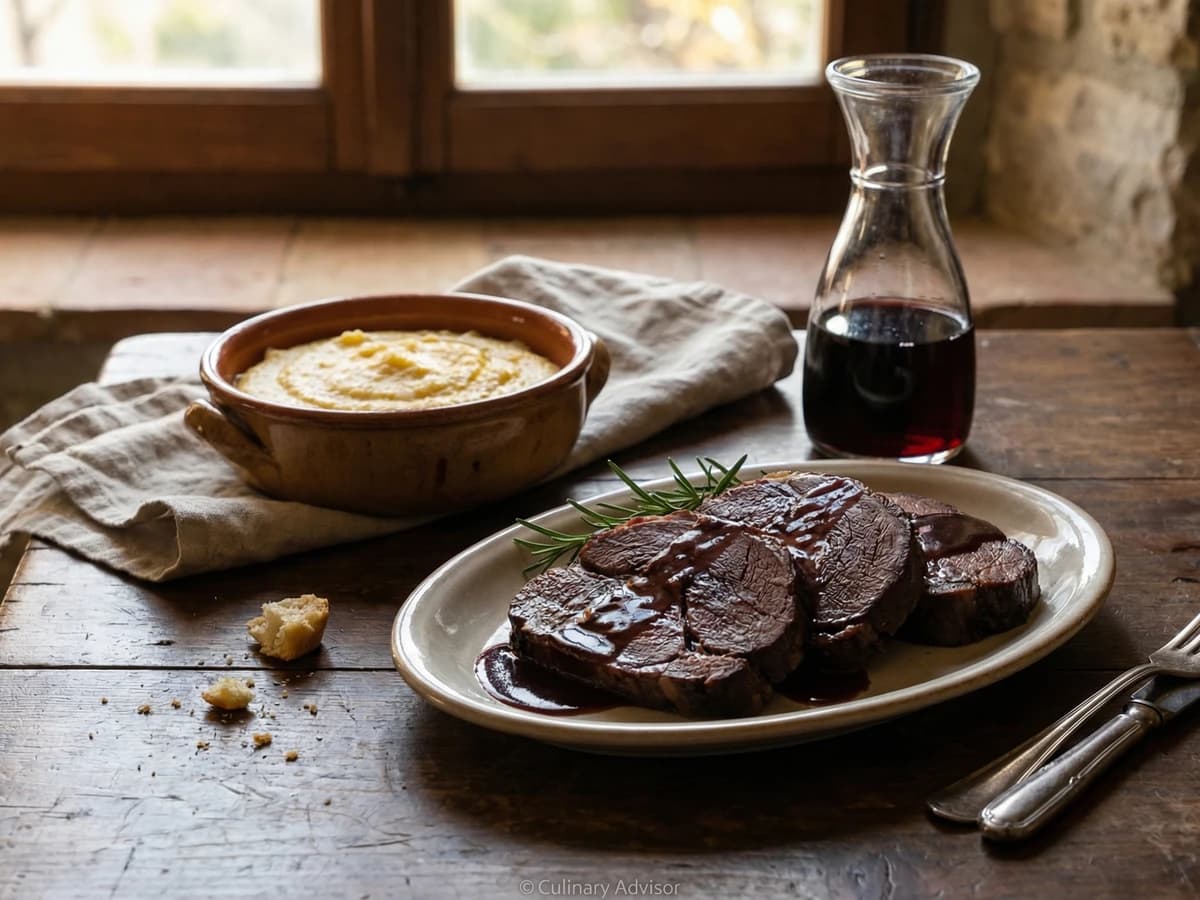
Piedmont's great celebration braise, where beef surrenders to a full bottle of Barolo over 24 hours of marinating and 4 hours of gentle heat. The wine of kings becomes the sauce itself.
Chef Graziella
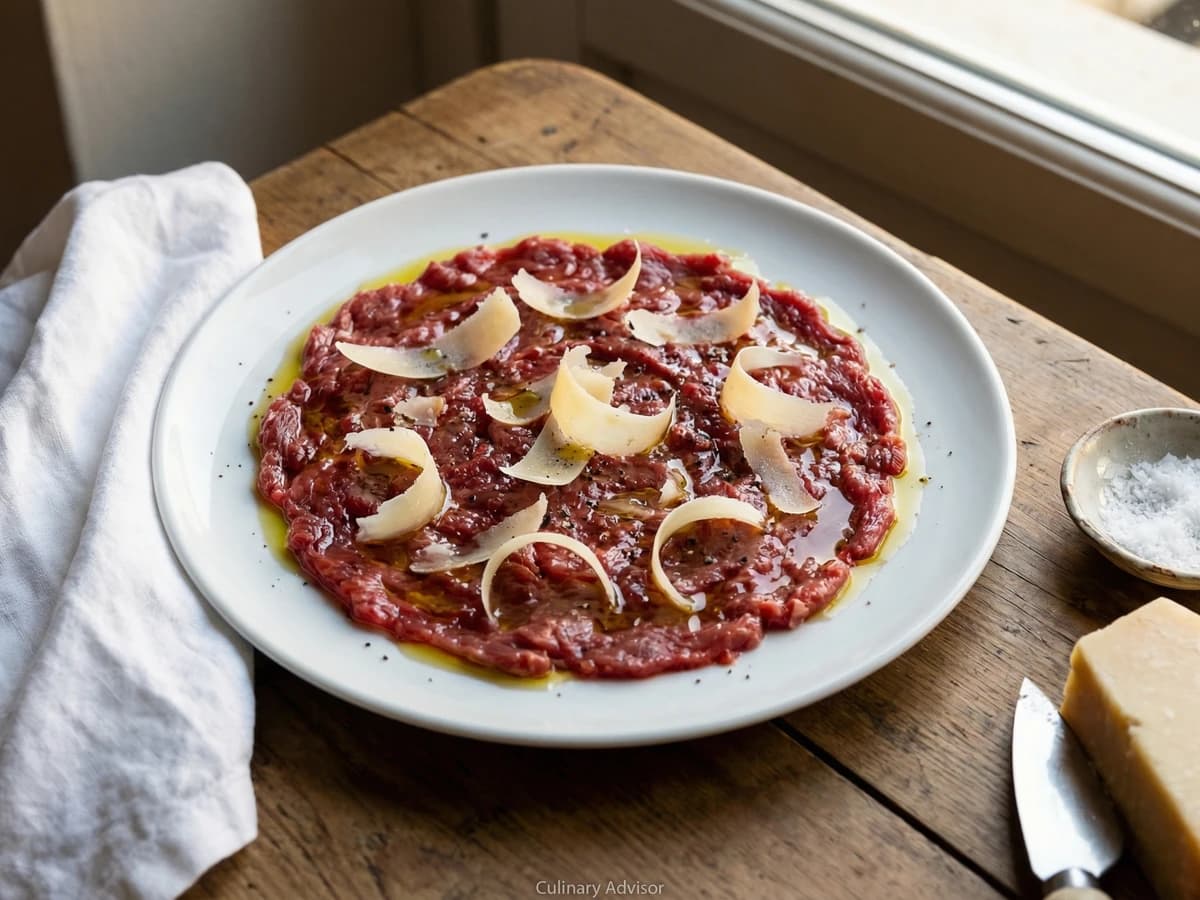
The refined raw beef of Alba, where hand-chopped meat meets nothing but lemon, olive oil, and shaved cheese. This is not French tartare. This is Piedmontese restraint at its most eloquent.