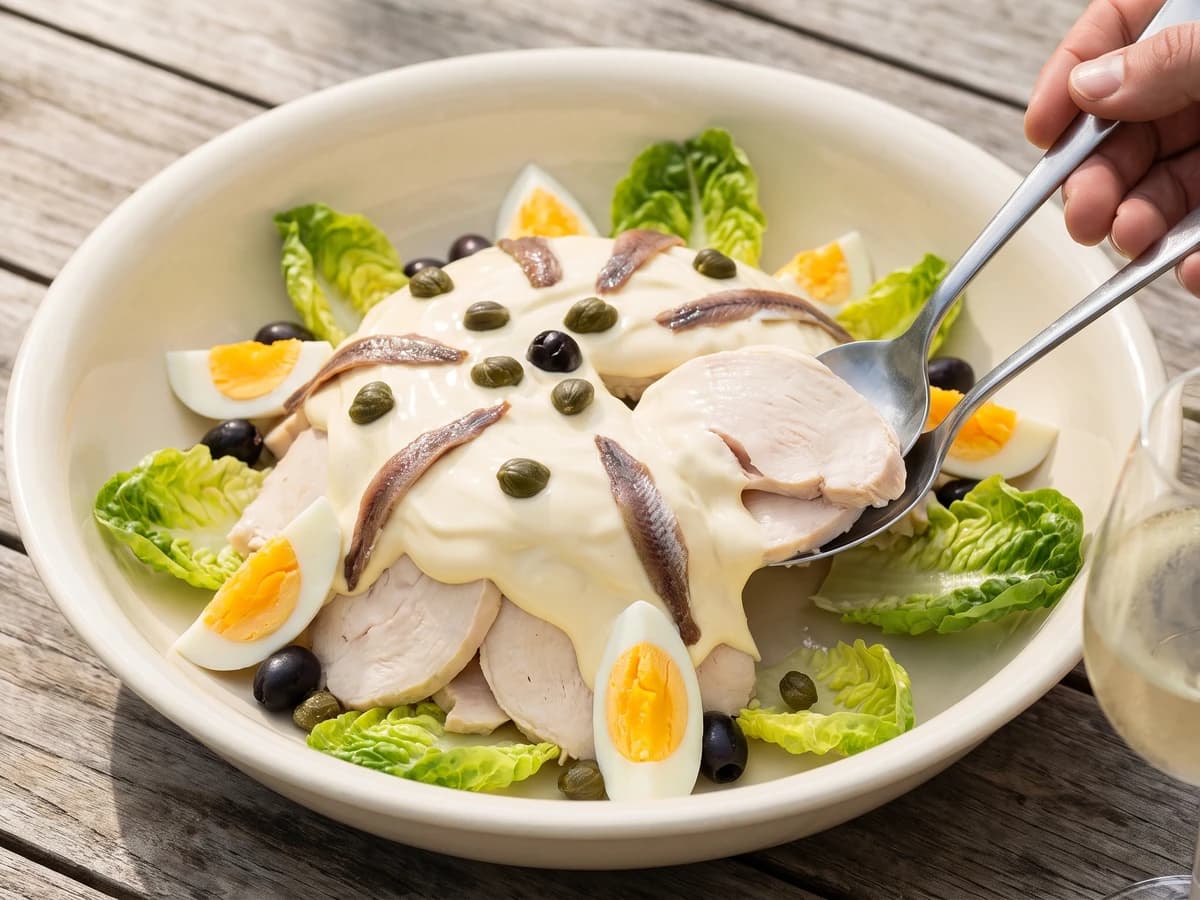
A verdant mountain of hand-chopped parsley and mint, studded with juicy tomatoes and the gentlest whisper of bulgur, dressed in bright lemon and fruity olive oil. This is the tabbouleh of Beirut grandmothers, not the grain-heavy imitation.
Salads
Lebanese
Potluck
45 min
Active Time
0 min cook•45 min total
Yield6 servings
Americans have been making tabbouleh wrong for decades. Walk into most restaurants and you'll find a bulgur salad with some parsley scattered on top. That's not tabbouleh. Authentic Lebanese tabbouleh is a parsley salad, gloriously green, with bulgur playing the smallest supporting role. The ratio matters more than anything else I can teach you.
I first encountered proper tabbouleh at a Lebanese restaurant in Detroit, a city blessed with one of the finest Middle Eastern food scenes in America. The owner watched me eat the first bite and laughed at my expression. 'You've never had it right before,' she said. She was correct. The parsley was the dish, not a garnish. The lemon sang. The mint whispered. The bulgur provided texture without competing for attention.
This salad demands fresh ingredients and careful knife work. The parsley must be bone dry before chopping, the tomatoes ripe but firm, the lemon juice squeezed minutes before dressing. There are no shortcuts. But the result is one of the most refreshing, healthful, and genuinely delicious salads in any cuisine. Pack it for a potluck and watch it disappear first.
The technique, the tradition, and the story behind every dish.
green onions (scallions)white and light green parts, thinly sliced
4
extra virgin olive oil
1/3 cup
fine sea salt
1 teaspoon, plus more to taste
freshly ground black pepper
1/4 teaspoon
romaine lettuce (optional)leaves separated
1 small head
Equipment Needed
•Salad spinner
•Large sharp chef's knife
•Large mixing bowl
•Small whisk
Instructions
1
Soak the bulgur
Place the bulgur in a small bowl and pour three tablespoons of the lemon juice over it. Toss to combine and let stand while you prepare everything else, at least twenty minutes. The acid softens the grain without making it mushy. Do not cook the bulgur. Do not add water. The lemon juice does all the work.
Fine bulgur (#1) is essential. Coarse bulgur creates an entirely different dish. Look for it at Middle Eastern grocers or in the international aisle.
2
Wash and dry the parsley
Fill a large bowl with cold water. Submerge the parsley bunches and swish vigorously to dislodge any grit. Lift out, drain the bowl, and repeat until no sand remains at the bottom. Spin the parsley in a salad spinner until completely dry, then spread on clean kitchen towels and blot thoroughly. Wet parsley makes soggy tabbouleh.
3
Chop the herbs finely
Strip the parsley leaves from the stems, discarding any thick woody pieces. Gather the leaves into a tight pile and chop with a sharp knife using a rocking motion, going over the pile repeatedly until very finely minced. You want confetti, not chunks. Stack the mint leaves, roll them into a tight cylinder, and slice into thin ribbons, then cross-cut into fine pieces. Transfer both herbs to your largest mixing bowl.
A sharp knife bruises herbs less than a dull one. Bruised parsley turns dark and bitter. If your tabbouleh looks muddy, blame the knife.
4
Prepare the tomatoes
Cut the tomatoes in half crosswise. Squeeze gently over the sink to release the seeds and excess liquid. Dice the flesh into pieces no larger than a quarter inch. The tomatoes should be small enough to cling to the herbs, not chunky enough to dominate. Add them to the bowl with the herbs.
5
Build the dressing
In a small bowl, combine the remaining lemon juice with the salt and pepper. Whisk until the salt dissolves completely. This step matters: salt dissolved in acid distributes evenly and seasons every leaf. Now add the olive oil in a slow stream, whisking constantly until the dressing looks slightly creamy and unified. Taste it. The lemon should be bright and assertive, the oil fruity and rich.
Proper emulsification means the oil and lemon become one rather than separating on the plate. Whisking the salt into the lemon first helps the emulsion hold together.
6
Combine and season
Add the scallions and the soaked bulgur (including any unabsorbed lemon juice) to the herbs and tomatoes. Pour the dressing over everything and toss gently but thoroughly, using your hands if necessary to distribute the dressing into every crevice. The salad should glisten but not swim. Taste and adjust with more lemon juice, salt, or pepper as needed.
7
Rest and serve
Let the tabbouleh rest at room temperature for fifteen to thirty minutes before serving. This resting period allows the flavors to marry and the bulgur to finish softening. Transfer to a serving platter and surround with romaine leaves for scooping. In Lebanon, you eat tabbouleh with lettuce as your utensil, bringing the salad to your mouth in crisp green cups.
Chef Tips
•The parsley-to-bulgur ratio defines authentic tabbouleh. If you can see more grain than green, you've made a different dish. Start with the amount specified and resist the urge to add more bulgur.
•Seek out Lebanese or Middle Eastern olive oil if you can find it. The flavor profile differs from Italian or Spanish oils in ways that complement this dish beautifully.
•Summer tomatoes at peak ripeness transform this salad. In winter, cherry tomatoes often have better flavor than out-of-season beefsteaks. Use what tastes best.
•Romaine is traditional for serving, but little gem lettuce or crisp inner leaves of butter lettuce work beautifully as scoops.
Advance Preparation
•The parsley and mint can be washed and dried up to one day ahead. Store wrapped in dry paper towels inside a plastic bag in the refrigerator.
•Tabbouleh improves with thirty minutes of resting time but begins to decline after four hours as the tomatoes release liquid. For a potluck, transport the undressed salad and dressing separately, combining just before serving.
•The dressed salad keeps reasonably well refrigerated for up to one day, though it will soften. Bring to room temperature and taste for seasoning before serving leftovers.
Frequently Asked Questions
Nutrition Information
1 serving (about 48g)
Calories
150 calories
Total Fat
13 g
Saturated Fat
2 g
Trans Fat
0 g
Unsaturated Fat
11 g
Cholesterol
0 mg
Sodium
290 mg
Total Carbohydrates
8 g
Dietary Fiber
3 g
Sugars
1 g
Protein
2 g
Where cooking meets culture.
Culinary guides, cultural storytelling, and the editorial depth that makes cooking meaningful.