
Chef Graziella
Calamari Ripieni in Umido
Squid stuffed with their own tentacles and braised in tomato until the flesh turns silky and yielding. This is the home cooking of the Ligurian coast, where nothing goes to waste and patience is rewarded.
A cooking platform built around craft, culture, and the stories behind what we eat.

Created by
Genoa's great stuffed veal, sewn shut and poached until the filling sets into a mosaic of eggs, peas, and pine nuts. Served cold, sliced thin, it rewards every moment of effort.
Cima alla Genovese is not a dish you make on a Tuesday because you feel like it. This is a production. You must find a butcher who understands what you need. You must sew meat. You must poach for hours and press overnight. And at the end of all this, you serve it cold, sliced thin, to people who understand what you have done.
The Genoese make cima for Easter, for Christmas, for weddings and baptisms. It is celebration food, the kind that announces: someone has gone to trouble for you. Inside that pale veal casing lies a mosaic of flavors and textures: the sweet pop of peas, the richness of pine nuts, the surprise of hard-boiled egg running through the center like a golden seam.
Liguria is not a region that shows off. The cooking is restrained, built on herbs rather than heavy sauces, on technique rather than expensive ingredients. Cima represents this philosophy at its most ambitious. What you keep out matters as much as what you put in. There is no sauce to mask mistakes, no garnish to distract. The cold slices must stand on their own, and when made properly, they do.
Cima has anchored Ligurian feast tables since at least the Renaissance, when wealthy Genoese merchants adapted the concept of stuffed meats from their trading partners across the Mediterranean. The dish became a marker of celebration precisely because of the labor it required. In an era before refrigeration, serving cold sliced meat demonstrated both skill and the means to keep food properly chilled.
Quantity
1 (about 4 pounds)
Quantity
8 ounces
Quantity
4 ounces
Quantity
4 ounces
blanched and diced
Quantity
1 cup
Quantity
1/4 cup
Quantity
4
Quantity
2
hard-boiled and peeled
Quantity
1/2 cup
freshly grated
Quantity
2 tablespoons
chopped
Quantity
1/4 teaspoon
freshly grated
Quantity
1 thick slice
crusts removed
Quantity
1/2 cup
Quantity
to taste
Quantity
to taste
freshly ground
Quantity
1 medium
halved
Quantity
2
cut into large pieces
Quantity
2
cut into large pieces
Quantity
1
Quantity
6
Quantity
for broth
| Ingredient | Quantity |
|---|---|
| veal breast with pocket | 1 (about 4 pounds) |
| ground veal | 8 ounces |
| ground pork | 4 ounces |
| sweetbreads (optional)blanched and diced | 4 ounces |
| fresh or frozen peas | 1 cup |
| pine nuts | 1/4 cup |
| large eggs | 4 |
| large eggshard-boiled and peeled | 2 |
| Parmigiano-Reggianofreshly grated | 1/2 cup |
| fresh marjoram leaveschopped | 2 tablespoons |
| nutmegfreshly grated | 1/4 teaspoon |
| day-old breadcrusts removed | 1 thick slice |
| whole milk | 1/2 cup |
| fine sea salt | to taste |
| white pepperfreshly ground | to taste |
| onionhalved | 1 medium |
| carrotscut into large pieces | 2 |
| celery stalkscut into large pieces | 2 |
| bay leaf | 1 |
| black peppercorns | 6 |
| kosher salt | for broth |
Examine the veal breast your butcher has prepared. There should be a deep pocket cut between the meat and the bone, large enough to hold a generous stuffing. If the butcher has not done this, you must do it yourself with a sharp boning knife, working carefully to create a cavity without piercing the outer walls. Trim any excess fat. Season the inside of the pocket lightly with fine sea salt and white pepper.
Place the bread in a small bowl and pour the milk over it. Let it soak until completely saturated, about 10 minutes. Squeeze out the excess milk firmly with your hands. The bread should be moist but not dripping. Set aside.
If using fresh peas, blanch them in boiling salted water for 2 minutes, then plunge into ice water and drain well. Frozen peas should be thawed and patted dry. The peas must be dry or they will make the filling wet.
In a large bowl, combine the ground veal, ground pork, and diced sweetbreads if using. Add the squeezed bread, the four raw eggs, the Parmigiano-Reggiano, marjoram, and nutmeg. Season with one teaspoon of fine sea salt and a generous grinding of white pepper. Mix thoroughly with your hands until the filling is completely uniform. Then fold in the peas and pine nuts, distributing them evenly. The filling should be cohesive but not dense.
Lay the veal breast flat, pocket opening facing you. Spoon half the filling into the pocket, spreading it evenly. Place the two hard-boiled eggs end to end along the center of the filling. Cover with the remaining filling, pressing gently to eliminate air pockets. The pocket should be full but not stretched. Leave about an inch at the opening free for sewing.
Thread a large needle with kitchen twine. Sew the opening closed using a simple overcast stitch, pulling the thread snug but not tight enough to tear the meat. Space your stitches about half an inch apart. Tie off securely. Then use more twine to tie the cima in three or four places along its length, shaping it into a compact cylinder. This helps it hold its shape during cooking.
Fill a pot large enough to hold the cima comfortably with cold water. Add the onion, carrots, celery, bay leaf, peppercorns, and a generous amount of salt. The water should taste pleasantly seasoned. Bring to a simmer.
Lower the cima gently into the simmering broth. The liquid should cover it by at least two inches. Add more water if needed. When the liquid returns to a simmer, reduce the heat to maintain the gentlest possible bubble. A rolling boil will toughen the meat and burst the casing. Poach for approximately 2 and a half to 3 hours, until an instant-read thermometer inserted into the center reads 160 degrees Fahrenheit.
Carefully lift the cima from the broth and place it on a rimmed baking sheet. While still warm, place another baking sheet on top and weight it with heavy cans or a cast-iron skillet. The weight should be significant but not crushing, about five pounds. Refrigerate overnight. The pressing compacts the filling and makes clean slicing possible.
Remove the twine carefully. Using a very sharp knife, slice the cima into rounds about one-third inch thick. Each slice should reveal a mosaic: the pale meat studded with green peas, golden pine nuts, and the yellow and white of the eggs running through the center. Arrange the slices on a platter, overlapping slightly. Serve cold or at cool room temperature. No sauce is needed or wanted.
1 serving (about 200g)
Culinary guides, cultural storytelling, and the editorial depth that makes cooking meaningful.
Discover Culinary ExplorerChef Graziella
Squid stuffed with their own tentacles and braised in tomato until the flesh turns silky and yielding. This is the home cooking of the Ligurian coast, where nothing goes to waste and patience is rewarded.
Chef Graziella
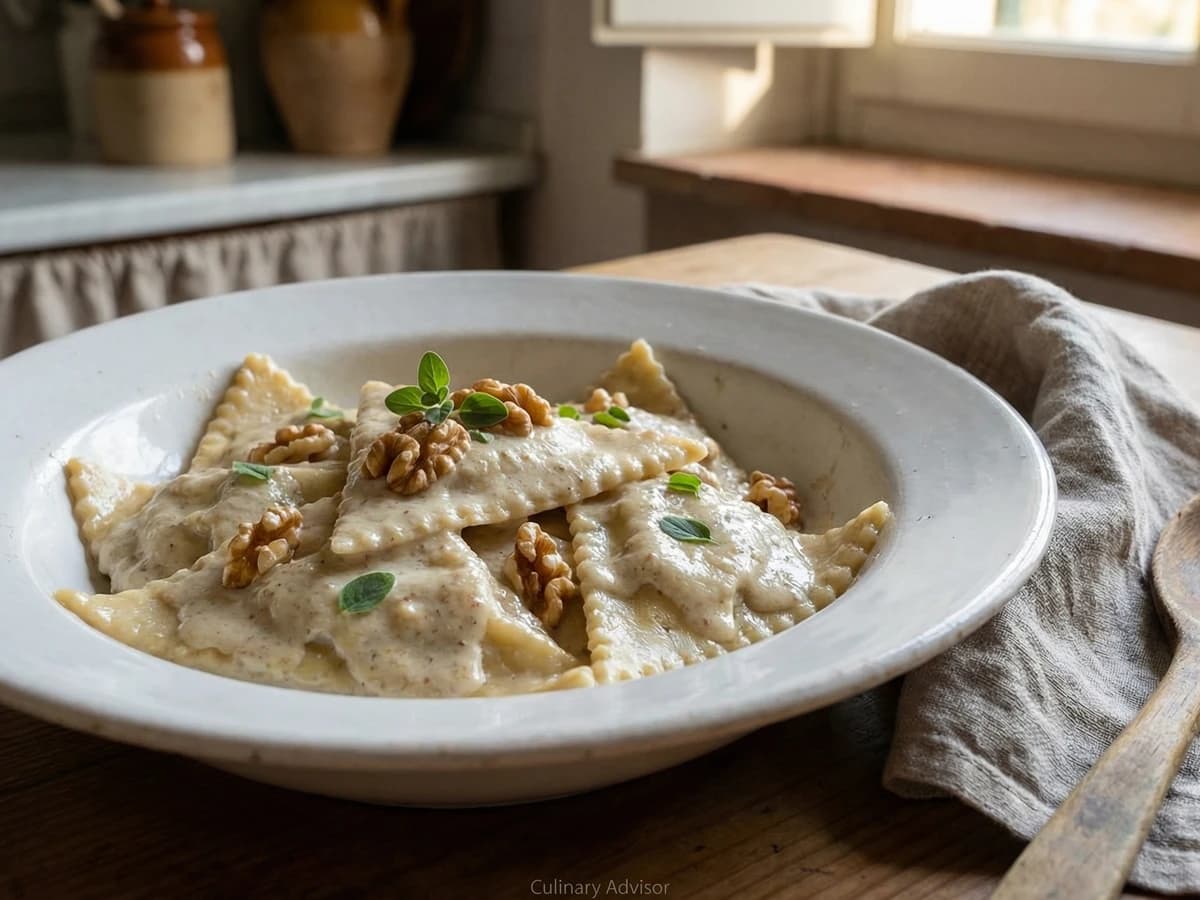
The treasure of the Ligurian coast, where wild herbs wrapped in delicate pasta meet a sauce of pounded walnuts. No cream, no shortcuts, only the patient work of hands that understand restraint.

Chef Graziella
From the terraced hillsides above the Ligurian coast, where small black olives and wild herbs grow in the same salt-tinged air. Chicken braised with the restraint that defines this narrow stretch of Italy.
Chef Graziella
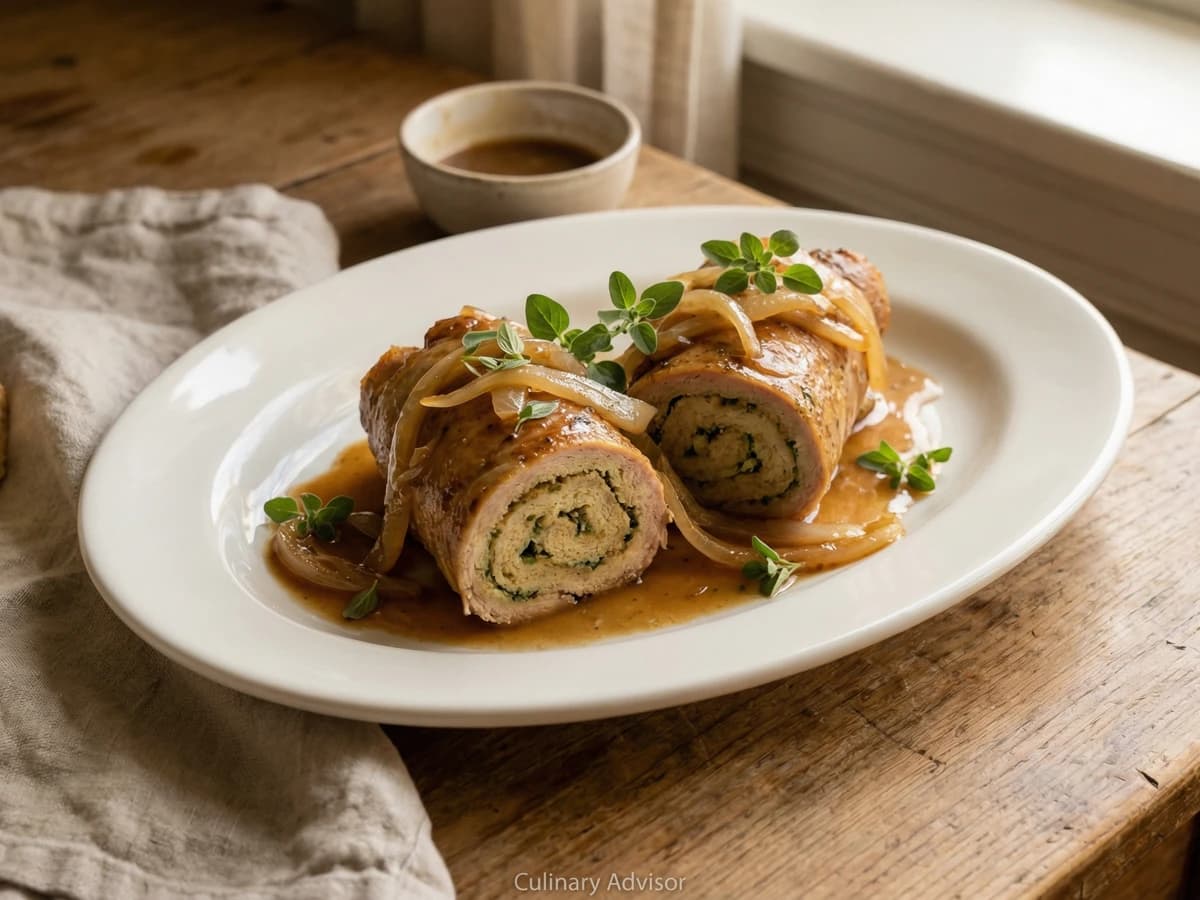
Genoese veal rolls stuffed with bread, cheese, and marjoram, then braised in white wine until tender. A dish that proves frugality and elegance are not opposites.