
Chef Jeong-sun
Aehobak-bokkeum (Korean Stir-Fried Zucchini)
Tender Korean zucchini half-moons cooked quickly over real heat, seasoned with salted shrimp so the squash tastes deeper than oil and still clean enough for a weeknight table.
A cooking platform built around craft, culture, and the stories behind what we eat.
Created by
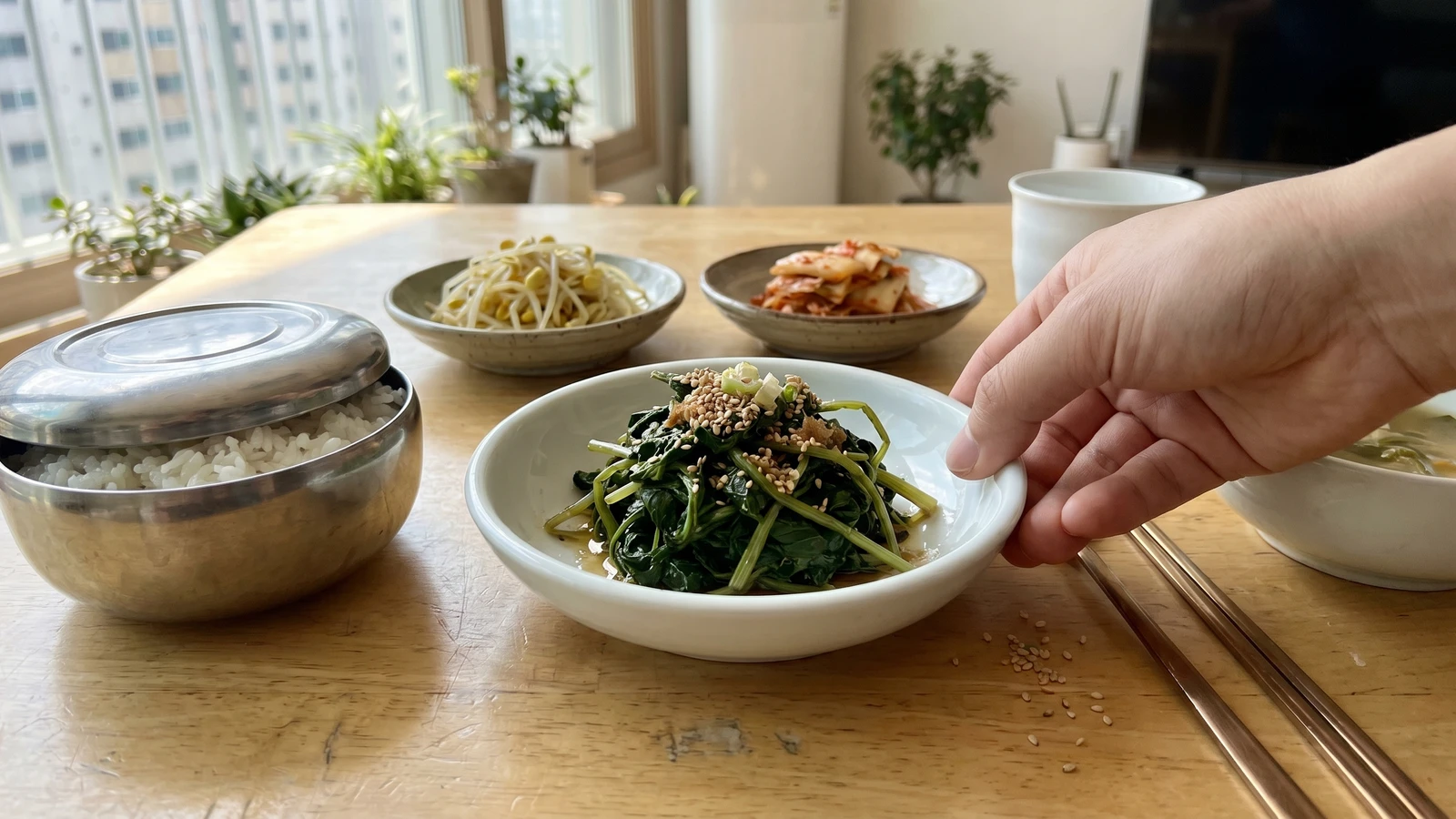
The king of spring mountain greens, blanched just until tender, squeezed dry, and dressed with doenjang and sesame so its clean bitterness still speaks.
Chwinamul belongs to spring markets, when the baskets of san-namul (mountain greens) arrive with soil still caught near the stems. Buy it when the leaves are lively and the stems snap, not when they hang tired over the edge of the basket. Cook the month you're standing in. In April and May, make this with fresh greens. In winter, use dried chwinamul and give it time, because dried mountain greens won't forgive impatience.
Chwinamul refers to several edible wild asters gathered as san-namul, with Aster scaber especially common in Korean markets and home cooking. Mountain greens became important in Korea because they filled the table before cultivated spring vegetables were abundant, and dried chwinamul allowed that spring flavor to be carried into winter and holiday meals. It is often called one of the leading san-namul, not because it is grand, but because its bitterness, aroma, and chew make a small bowl of rice feel complete.
Quantity
300g
tough stems trimmed
Quantity
1 tablespoon
for blanching water
Quantity
1 tablespoon
Quantity
1 teaspoon
Quantity
1 tablespoon
Quantity
1 tablespoon
Quantity
1 teaspoon maesil-cheong or 1/2 teaspoon sugar
Quantity
1 small clove
finely minced
Quantity
1 tablespoon
finely chopped
Quantity
2 teaspoons
lightly crushed
Quantity
1 to 2 teaspoons
| Ingredient | Quantity |
|---|---|
| fresh chwinamul (aster scaber greens)tough stems trimmed | 300g |
| coarse sea saltfor blanching water | 1 tablespoon |
| doenjang (Korean fermented soybean paste) | 1 tablespoon |
| gochujang (Korean red chili paste) (optional) | 1 teaspoon |
| soup soy sauce (guk-ganjang) or regular soy sauce | 1 tablespoon |
| toasted sesame oil | 1 tablespoon |
| maesil-cheong (green plum syrup) or sugar | 1 teaspoon maesil-cheong or 1/2 teaspoon sugar |
| garlicfinely minced | 1 small clove |
| scallionfinely chopped | 1 tablespoon |
| toasted sesame seedslightly crushed | 2 teaspoons |
| water or blanching liquid (optional) | 1 to 2 teaspoons |
Pick through the chwinamul and remove yellow leaves, thick woody stems, and any gritty ends. Keep tender stems; they give the dish its chew. Rinse in two or three changes of cold water until no sand settles at the bottom of the bowl. Mountain greens carry dirt honestly, so don't rush this part.
Bring 2 liters of water to a strong boil and add 1 tablespoon coarse sea salt. Add the greens stem ends first, then press the leaves under the water. Blanch 45 to 60 seconds for young spring chwinamul, or up to 90 seconds if the stems are thicker. The leaves should darken and soften, but the stems should still have life in them.
Lift the greens into cold water and swish once to stop the cooking. Drain, gather them into a bundle, and squeeze firmly with both hands. You want damp greens, not wet greens. Too much water thins the seasoning and makes the doenjang taste muddy. After squeezing, you should have about 180g cooked greens.
Lay the squeezed bundle on a board and cut it into 5cm lengths. Loosen the clumps with your fingers before seasoning. This is a banchan eaten with rice, so every chopstickful should be easy to lift and chew.
In a mixing bowl, stir together the doenjang, optional gochujang, soup soy sauce, sesame oil, maesil-cheong, garlic, scallion, and crushed sesame seeds. Use only 1 teaspoon gochujang if you use it at all. Chwinamul has its own clean bitterness, and burying it under chili paste is wasteful.
Add the cut greens to the bowl and mix by hand, rubbing the seasoning lightly through the leaves and stems until every piece is coated. If the doenjang is very stiff, add 1 teaspoon water or reserved blanching liquid, no more at first. Taste one stem. It should be savory, nutty, and faintly bitter, with the sesame oil shining at the end.
Let the seasoned greens sit 10 minutes at room temperature, then taste again. Doenjang opens as it sits. Add a few drops more sesame oil only if the greens taste flat, or a pinch more crushed sesame if they need roundness. Serve in a small banchan dish with rice, soup, and one clean kimchi.
1 serving (about 70g)
Culinary guides, cultural storytelling, and the editorial depth that makes cooking meaningful.
Discover Culinary ExplorerChef Jeong-sun
Tender Korean zucchini half-moons cooked quickly over real heat, seasoned with salted shrimp so the squash tastes deeper than oil and still clean enough for a weeknight table.

Chef Jeong-sun
Tender Korean summer zucchini softened gently in the pan with saeujeot for salt and depth, finished with sesame so the vegetable stays sweet, green, and plainly itself.

Chef Jeong-sun
A bittersweet spring green from the southern shore, blanched just until pliant, then seasoned lightly so its clean coastal bitterness stays alive on the rice table.

Chef Jeong-sun
Torn king oyster or shiitake mushrooms, browned until their own water disappears, then finished with soy, garlic, sesame oil, and onion for a quiet banchan that earns its place.