
Chef Lupita
Aporreadillo Michoacano con Huevo
Michoacán's Tierra Caliente almuerzo, where salted beef is softened, pounded, fried in lard, folded with egg and chile perón salsa, then served beside morisqueta like a proper working table.
A cooking platform built around craft, culture, and the stories behind what we eat.
Created by
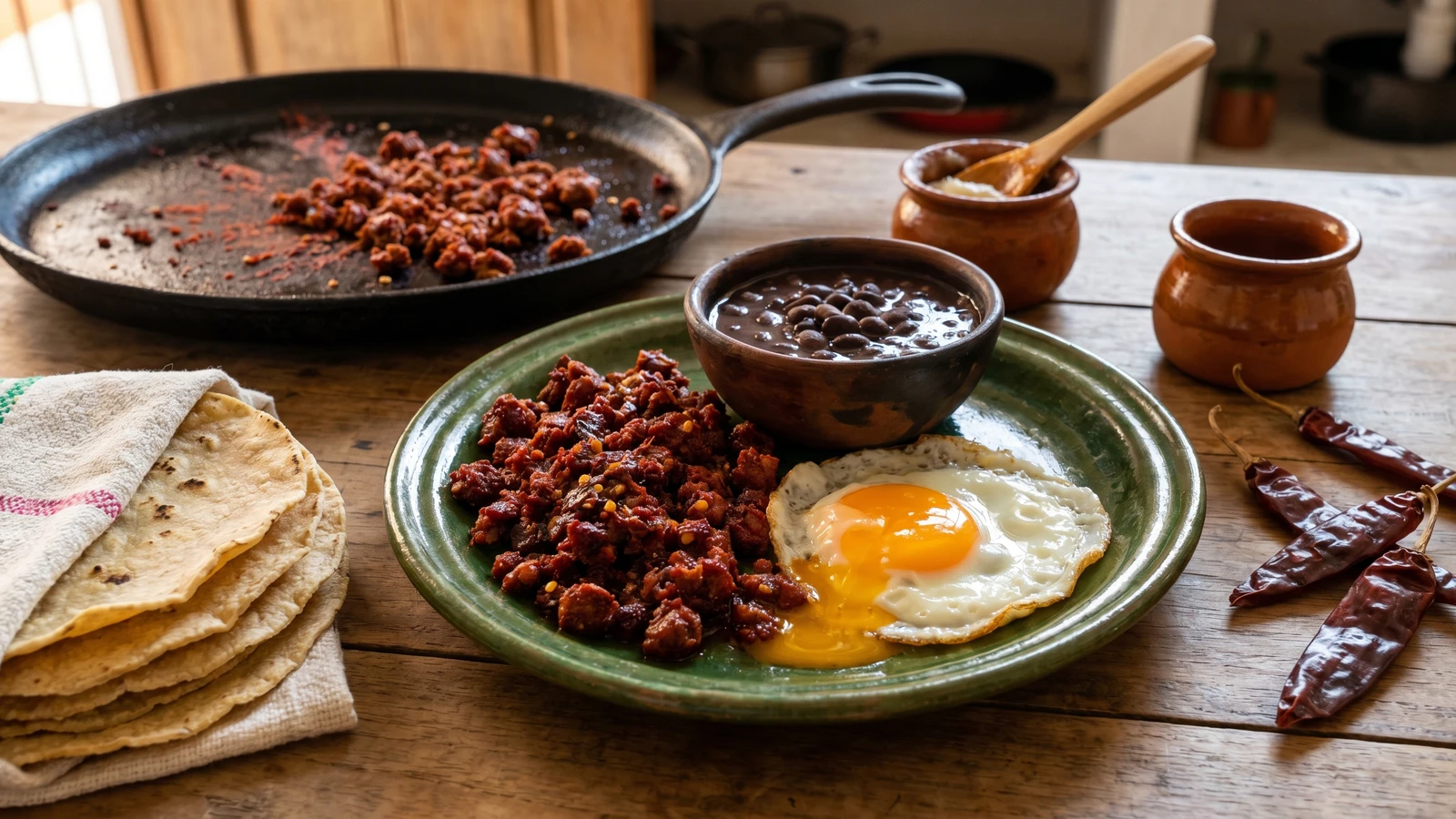
Oaxaca's homemade pork chorizo, ground with toasted guajillo and ancho chiles, vinegar, garlic, clove, and oregano, bound with asiento and cured overnight before it hits a hot comal at dawn.
This is Oaxacan chorizo. Not the Toluca version, which is green and herbaceous. Not the supermarket tube, which is mostly paprika and filler. This is the deep-red chorizo of the Valles Centrales, the one you buy by the kilo in the Mercado 20 de Noviembre or the Central de Abastos in Oaxaca de Juarez, wrapped in butcher paper and still soft from the cure.
The color comes from guajillo and ancho, toasted on a comal until the kitchen smells like the chile aisle of any Oaxacan market at six in the morning. The body comes from coarsely ground pork shoulder with enough fat left on it to matter. And the soul comes from asiento, that dark, caramelized sediment left at the bottom of the pot when manteca is rendered. Asiento is to Oaxacan cooking what the fond is to a French pan sauce, except nobody in Oaxaca needed the French to teach them that. The senoras at the market sell it by the spoonful from clay jars. It tastes like pork memory.
My mother did not make Oaxacan chorizo. She was jalisciense. But I have a page in her notebook, written in someone else's handwriting, a woman from Etla she met at a church gathering in 1991. The recipe says: 'mas vinagre del que crees.' More vinegar than you think. She was right. The vinegar does three things: it cures the meat, it pulls the chile paste into every fiber, and it gives the chorizo that sharp bite that cuts through the fat when you fry it on a hot comal at breakfast. Saber cocinar es saber vivir.
This is a batch recipe. You make two and a half pounds at once, cure it overnight, and freeze what you don't cook in the morning. Recetas probadas y garantizadas.
Chorizo arrived in Mexico with Spanish colonists in the 16th century, but the Iberian original, a cured sausage made with smoked paprika (pimenton), was immediately transformed by the local chile varieties that grew nowhere else on earth. Oaxacan chorizo replaced paprika entirely with dried guajillo and ancho chiles, added the indigenous herb oregano mexicano, and incorporated asiento, the dark residue of rendered pork lard that was a byproduct of pre-existing Mesoamerican fat-rendering techniques adapted to the Spanish pig. Unlike the cased, smoked chorizos of Spain, Oaxacan chorizo was never stuffed into casings for home use; it was mixed, cured in bulk, and crumbled fresh onto the comal, a preparation method that reflects the corn-tortilla culture of southern Mexico where loose, fryable fillings are the practical standard.
Quantity
2 1/2 pounds
deboned and coarsely ground or hand-chopped
Quantity
6
stemmed and seeded
Quantity
3
stemmed and seeded
Quantity
3/4 cup
Quantity
6
peeled
Quantity
1 tablespoon
Quantity
6
Quantity
1 teaspoon
Quantity
1 teaspoon
Quantity
1 stick, about 2 inches
Quantity
2
crumbled
Quantity
2 tablespoons
Quantity
1 tablespoon
Quantity
1 teaspoon
grated
Quantity
for serving
warmed
Quantity
for serving
Quantity
for serving
| Ingredient | Quantity |
|---|---|
| bone-in pork shoulder with fat capdeboned and coarsely ground or hand-chopped | 2 1/2 pounds |
| dried chile guajillostemmed and seeded | 6 |
| dried chile anchostemmed and seeded | 3 |
| apple cider vinegar | 3/4 cup |
| garlic clovespeeled | 6 |
| dried Mexican oregano | 1 tablespoon |
| whole cloves | 6 |
| whole black peppercorns | 1 teaspoon |
| cumin seeds | 1 teaspoon |
| Mexican cinnamon (canela) | 1 stick, about 2 inches |
| bay leavescrumbled | 2 |
| asiento (dark pork lard residue) | 2 tablespoons |
| kosher salt | 1 tablespoon |
| piloncillo or dark brown sugargrated | 1 teaspoon |
| hand-pressed corn tortillas (optional)warmed | for serving |
| fried eggs (optional) | for serving |
| frijoles negros de olla (optional) | for serving |
Heat a dry comal or heavy cast iron skillet over medium. Toast the guajillo and ancho chiles one or two at a time, pressing them flat with a spatula, about 30 seconds per side. They should puff, darken slightly, and release a warm, rounded smell that fills the kitchen. Do not blacken them. Burned chile makes bitter chorizo and there is no fixing it. Set them aside.
Place the toasted chiles in a heatproof bowl and cover with hot tap water. Hot water, not boiling. Boiling cooks the skin and gives the paste a harsh, acrid edge. Let them soak for 20 minutes until they are soft and pliable. Drain and discard the soaking water.
On the same dry comal, toast the cloves, peppercorns, cumin seeds, and canela stick over medium-low heat for about 90 seconds, shaking the pan once or twice, until the cumin darkens a shade and the kitchen smells like the spice stalls at the Central de Abastos. Transfer to a spice grinder or molcajete and grind to a fine powder. Add the crumbled bay leaves and the dried oregano to the grinder and pulse twice to combine. Do not over-grind the oregano. You want it broken, not dust.
Combine the drained chiles, vinegar, garlic, ground spice mixture, salt, and grated piloncillo in a blender. Blend on high until you have a smooth, deep red paste. It will be thick. If the blender stalls, add vinegar a tablespoon at a time, just enough to get the blade moving. You want a paste, not a sauce. Taste it. It should be sharp from the vinegar, earthy from the chiles, and warm from the clove and canela. The sharpness will mellow overnight. Trust the cure.
Place the ground pork in a large bowl. If you are hand-chopping, cut the shoulder into small dice first, then mince it with two heavy knives until the texture is coarse but uniform, like a rough grind. Spoon the asiento over the meat. Add the chile paste. Mix with your hands for three to four minutes, squeezing and folding, until the paste is evenly distributed and the meat has turned a uniform deep red with no white streaks. La manteca es el sabor. The asiento carries the flavor into the fat and binds the paste to the meat in a way that plain oil never will.
Cover the bowl tightly with plastic wrap pressed directly against the surface of the meat. Refrigerate for at least 12 hours and up to 48. The vinegar cures the pork, the chile paste stains it through, and the spices deepen. This is not optional. Freshly mixed chorizo tastes raw and sharp. Cured chorizo tastes like chorizo. Overnight is the minimum. Two days is better. No me vengas con atajos.
When you are ready to cook, heat a comal or cast iron skillet over medium-high. Pinch off the amount of chorizo you need for breakfast, about a quarter pound per person for a generous serving. Crumble it onto the hot, dry surface. No oil. The asiento and the fat in the pork will render as it cooks. Spread the meat into a thin layer and let it fry without stirring for two minutes until the edges crisp and darken. Then stir, break up any clumps, and cook another three to four minutes until the fat has rendered out and the chorizo is deeply browned and slightly crisp at the edges. The comal should be stained red. That is how you know it is right.
Slide the chorizo onto a warm plate or straight into a tortilla. Serve it with fried eggs, frijoles negros de olla, and a stack of warm corn tortillas. In Oaxaca, this is Tuesday morning. Cada estado, su propia cocina.
1 serving (about 100g)
Culinary guides, cultural storytelling, and the editorial depth that makes cooking meaningful.
Discover Culinary ExplorerChef Lupita
Michoacán's Tierra Caliente almuerzo, where salted beef is softened, pounded, fried in lard, folded with egg and chile perón salsa, then served beside morisqueta like a proper working table.

Chef Lupita
Guerrero's Costa Grande aporreado is salted cecina pounded soft, scrambled with egg, and finished in a red guajillo and chile de árbol salsa loud with garlic and cilantro.

Chef Lupita
Los Altos de Chiapas turns two-night fermented white corn into a tart-sweet atole, cooked with canela and piloncillo, then poured hot into jícaras for desayuno.

Chef Lupita
Oaxaca's Mixteca region ferments nixtamalized masa for days until it turns tart and alive, then simmers it with piloncillo and canela into a thick, warm atole served at first light in clay.