
Chef Lupita
Arroz a la Oaxaqueña
Oaxaca's red rice, stained with tomato and fried in lard, steamed with carrots, ejotes, black beans, and epazote. The side that anchors a Oaxacan family meal and earns its place beside the main.
A cooking platform built around craft, culture, and the stories behind what we eat.
Created by
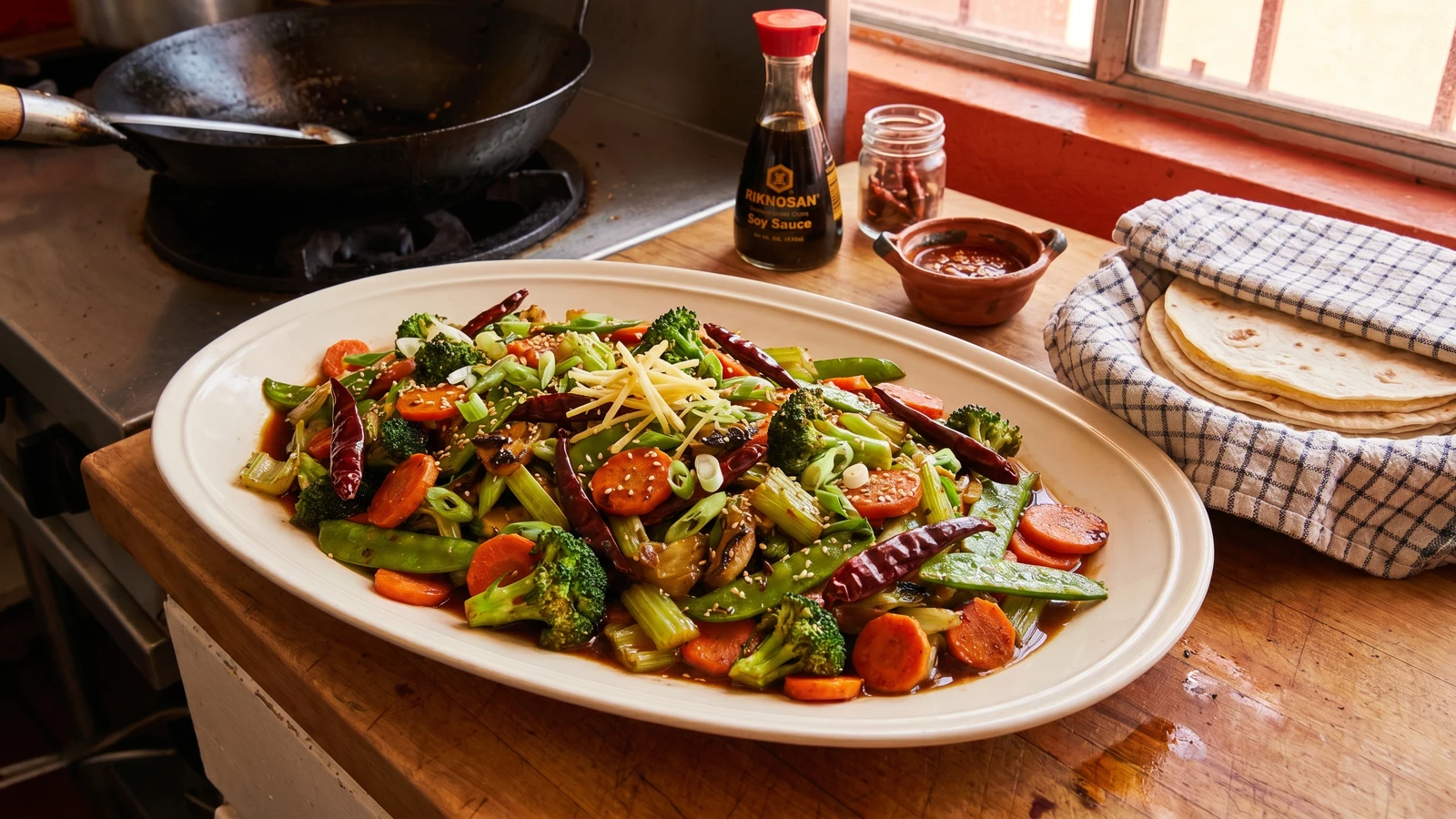
Mexicali's wok-tossed vegetables, born in La Chinesca, where soy sauce and chile de arbol share a wok and the breath of high heat finishes the dish in under ten minutes.
This is a Mexicali dish. Specifically, it is from La Chinesca, the Chinatown of Mexicali, Baja California, which at one point in the early 20th century held the largest Chinese population in Mexico. The Cantonese laborers who came to dig the irrigation canals of the Valle de Mexicali stayed, opened restaurants, married into local families, and built a cuisine that belongs nowhere else on earth. This is not fusion. Fusion is a marketing word. This is what people have been cooking and eating in Mexicali for more than a hundred years.
The technique is Cantonese: a screaming-hot wok, high oil, fast hands, vegetables that finish with a snap. The ingredients shift into Baja: chile de arbol toasted whole in the oil, manteca de cerdo as often as peanut oil, flour tortillas on the side because this is the north and corn is not the bread of Mexicali. The soy sauce is the same soy sauce the Chinese grocers on Avenida Reforma have been importing since the 1920s. The chile is local. The plate is mestizo in the truest sense.
Do not call this chop suey from a chain restaurant. Mexicalense chop suey has its own grammar. The vegetables stay crisp. The sauce is not gloppy, it glazes. The chile de arbol perfumes the oil at the start and stays whole in the dish, a warning to whoever bites one. My notebook from a trip to Mexicali in 2014 has the line, written in pencil by a senora named Esperanza Wong who ran a cocina economica on Calle Altamirano: 'manteca, ajo, chile, soya, fuego.' Five words. That is the recipe. Cada estado, su propia cocina, and Baja California has this one.
Chinese migration to Mexicali began in earnest in the 1900s and 1910s, when the Colorado River Land Company recruited Cantonese laborers to build the irrigation infrastructure of the Valle de Mexicali; by 1919, Mexicali's Chinese population outnumbered its Mexican population, and La Chinesca became the largest concentrated Chinatown in Latin America. The Chinese-Mexican cuisine that developed there is recognized by Mexican culinary scholars as one of the country's youngest regional traditions, distinct from both Cantonese cooking and from Mexican cooking elsewhere, and it predates by decades the so-called fusion cuisines that emerged in California and Texas. The dish carries no chocolate, no cumin, no oregano; it is a Cantonese stir-fry adopted by a Mexican border city and now belongs to that city absolutely.
Quantity
3 tablespoons
Quantity
4
smashed and roughly chopped
Quantity
1 inch
peeled and julienned
Quantity
4
stemmed, left whole
Quantity
1 medium
sliced into thick half-moons
Quantity
2 ribs
cut on the bias into 1/4-inch pieces
Quantity
1 medium
peeled and sliced on the bias into thin coins
Quantity
1 small
cored and sliced into 1/2-inch strips
Quantity
1 cup
cut bite-sized
Quantity
1 cup
strings removed, cut into 2-inch pieces
Quantity
1 cup
Quantity
4 ounces
cut into 1-inch ribbons
Quantity
1/4 cup
Quantity
2 teaspoons
Quantity
1 teaspoon
Quantity
1/2 teaspoon
Quantity
1/2 cup
Quantity
1 teaspoon cornstarch dissolved in 1 tablespoon cold water
Quantity
2
sliced on the bias
Quantity
for finishing
Quantity
for serving
warmed
Quantity
for the table
| Ingredient | Quantity |
|---|---|
| manteca de cerdo or refined peanut oil | 3 tablespoons |
| garlic clovessmashed and roughly chopped | 4 |
| fresh gingerpeeled and julienned | 1 inch |
| dried chile de arbolstemmed, left whole | 4 |
| white onionsliced into thick half-moons | 1 medium |
| celerycut on the bias into 1/4-inch pieces | 2 ribs |
| carrotpeeled and sliced on the bias into thin coins | 1 medium |
| green bell peppercored and sliced into 1/2-inch strips | 1 small |
| broccoli floretscut bite-sized | 1 cup |
| snow peas or ejotesstrings removed, cut into 2-inch pieces | 1 cup |
| mung bean sprouts (germinado de soya) | 1 cup |
| napa cabbage or green cabbagecut into 1-inch ribbons | 4 ounces |
| soy sauce (salsa de soya, light) | 1/4 cup |
| oyster sauce | 2 teaspoons |
| rice vinegar | 1 teaspoon |
| sugar | 1/2 teaspoon |
| chicken broth or water | 1/2 cup |
| cornstarch slurry | 1 teaspoon cornstarch dissolved in 1 tablespoon cold water |
| green onionssliced on the bias | 2 |
| toasted sesame seeds (optional) | for finishing |
| flour tortillas (optional)warmed | for serving |
| salsa de chile de arbol or salsa macha (optional) | for the table |
Cut every vegetable before you turn on the burner. Once the wok is hot, you have eight minutes from start to finish and no time to chop. Line up the vegetables in the order you will add them: garlic and ginger first, then the dense ones (onion, celery, carrot), then medium (bell pepper, broccoli), then quick (snow peas, cabbage), then last-second (sprouts, green onion). The Chinese cooks of La Chinesca call this mise en place by another name, but the principle is the same. No me vengas con atajos.
In a small bowl, stir together the soy sauce, oyster sauce, rice vinegar, sugar, and broth. Set the cornstarch slurry next to it in a separate cup. Two bowls, ready to pour. The sauce goes in hot and fast at the end and there is no time to measure once the wok is screaming.
Set a carbon steel wok or a wide heavy skillet over the highest heat your stove can give. Wait until you see a thin wisp lift off the dry surface, that is the wok ready. Add the manteca or peanut oil and swirl it around the sides. The fat should shimmer and move like water within two seconds. If the oil sits still, the wok is not hot enough. Pull it off and wait.
Throw in the garlic, ginger, and whole chiles de arbol. Toss constantly for about 15 seconds. The garlic should turn pale gold and the chiles should darken at the edges and perfume the kitchen. If the garlic goes brown, the wok is too hot and you start over. The chile de arbol from Yahualica or Sinaloa is what you want here, dry, brittle, deep red. This is the chile that bridges the Cantonese and the Mexicano on the same plate.
Add the onion, celery, and carrot. Toss with a spatula or by jerking the wok. Cook 90 seconds. You want the edges to take on a little char without the centers softening. The Cantonese call this the breath of the wok. The vegetables should still snap when you bite them at the end.
Add the bell pepper and broccoli. Toss for one more minute. Keep the heat on the highest setting. If you see steam pooling at the bottom of the wok, the vegetables are releasing water faster than the heat can evaporate it. Spread them out and let the wok catch up.
Add the snow peas and cabbage. Toss for 30 seconds. Pour the sauce mixture in along the rim of the wok, not into the center. The sauce hits the hot metal first and caramelizes on contact, which is where the depth comes from. Toss everything to coat. Stir the cornstarch slurry one more time and pour it in. The sauce will thicken and glaze every vegetable in about 20 seconds.
Add the bean sprouts and green onion. Toss exactly five times. The sprouts should warm through but stay crisp. Pull the wok off the heat immediately. Slide everything onto a wide platter. Scatter the toasted sesame seeds across the top. Bring it to the table with warm flour tortillas and a small dish of salsa de chile de arbol. In Mexicali, you wrap a few spoonfuls into a tortilla and eat it like a taco. Asi se hace y punto.
1 serving (about 195g)
Culinary guides, cultural storytelling, and the editorial depth that makes cooking meaningful.
Discover Culinary ExplorerChef Lupita
Oaxaca's red rice, stained with tomato and fried in lard, steamed with carrots, ejotes, black beans, and epazote. The side that anchors a Oaxacan family meal and earns its place beside the main.
Chef Lupita
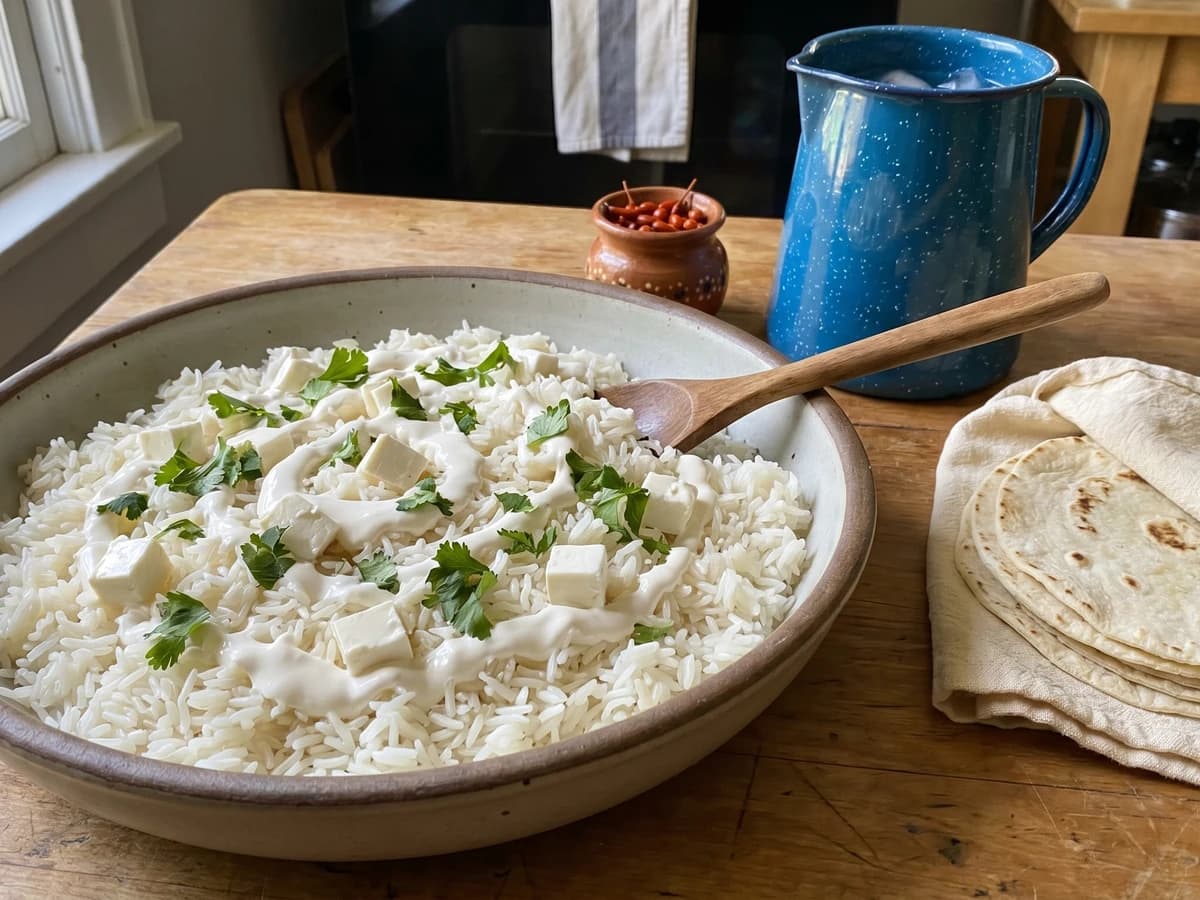
Sinaloa's home-cook white rice topped with cold cubes of cream cheese that soften into the warm grain, finished with crema and a sprinkle of chiltepin at the table. The trick that makes a side dish feel like a small luxury.
Chef Lupita
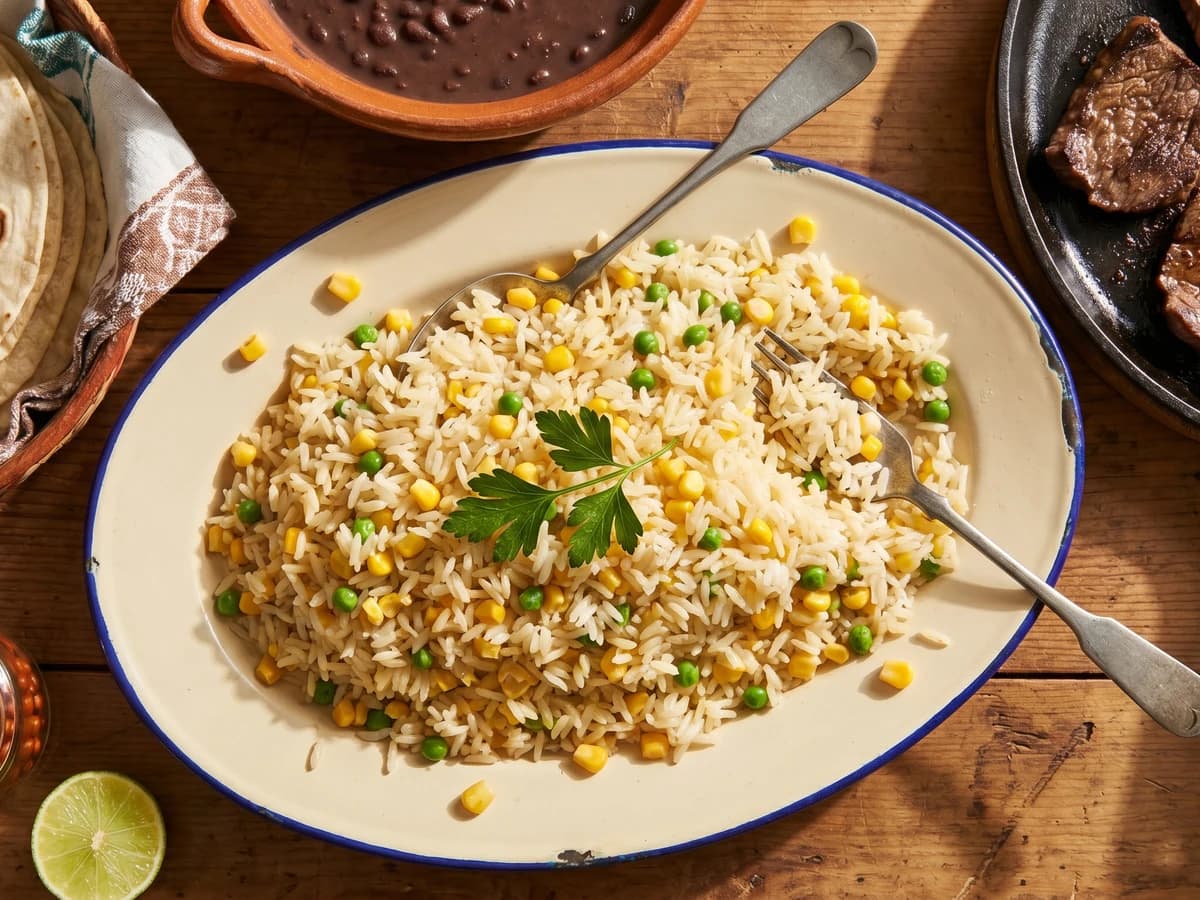
Sonora's white rice, toasted in butter and steamed with sweet corn and tender peas. The clean, quiet partner to a plate of carne asada, not the red rice of central Mexico.

Chef Lupita
Yucatán's white rice with sweet corn kernels, toasted in lard with garlic and onion. The quiet base that holds up against the peninsula's bold achiote-stained stews.