
Chef Ally
Apricot Flaugnarde
A golden custard that puffs and billows around halved summer apricots, then settles into something tender and barely sweet, the kind of dessert that reminds you fruit is the point.
A cooking platform built around craft, culture, and the stories behind what we eat.
Created by
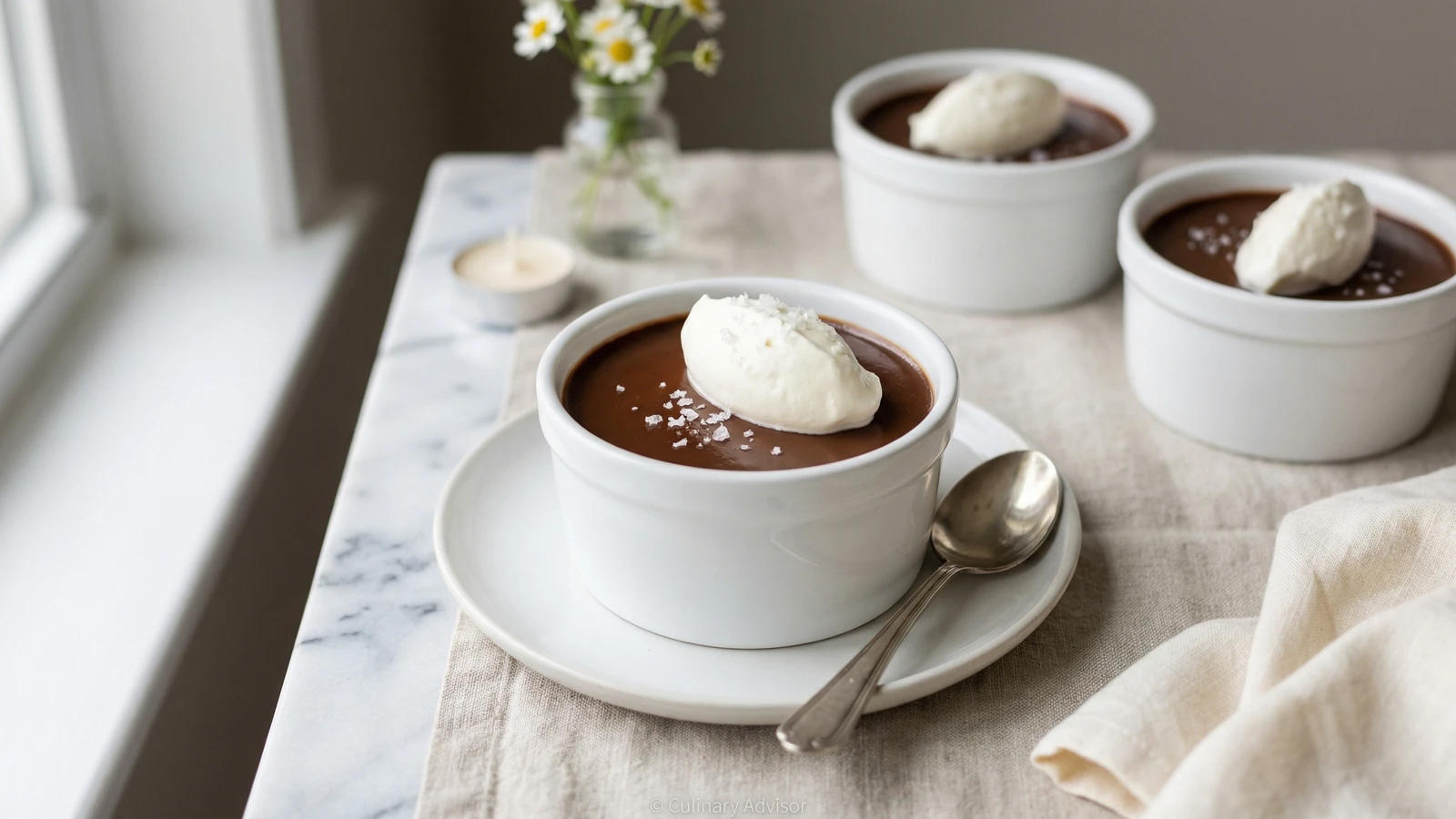
Impossibly silky French chocolate custard that trembles on the spoon, deeply flavored and unapologetically rich, requiring nothing more than good chocolate, fresh cream, and a little patience to master.
There exists a category of dessert that the French call petit pot, small vessels filled with custard so refined they require only a few spoonfuls to satisfy. Pots de crème occupies the throne of this kingdom. Richer than mousse, denser than pudding, more honest than those overwrought chocolate cakes that dominate restaurant menus.
This is a dessert of restraint that somehow delivers excess. The ingredient list is short. The technique is forgiving. Yet what emerges from your oven is a custard so luxuriously smooth it seems to have been conjured rather than cooked. The secret is patience at every stage: tempering the eggs slowly, baking gently in a water bath, and allowing proper time to chill.
I've served these at dinner parties for forty years. They never fail to impress, and they never require the anxiety that soufflés or tarts demand. Make them the day before. Forget about them. Pull them from the refrigerator when dessert is called for, add a cloud of cream, and accept the compliments with appropriate modesty.
Home cooks often fear custards, convinced they'll curdle or crack. But pots de crème forgives small errors. The chocolate helps mask any imperfections, and the low oven temperature provides a generous margin for success. If you can melt chocolate and whisk eggs, you can make this dessert.
Quantity
6 ounces
finely chopped
Quantity
2 cups
Quantity
1/2 cup
Quantity
1/2 cup (100g)
divided
Quantity
1/4 teaspoon
Quantity
5
Quantity
1 teaspoon
Quantity
for serving
Quantity
for finishing
| Ingredient | Quantity |
|---|---|
| bittersweet chocolate (60-70% cacao)finely chopped | 6 ounces |
| heavy cream | 2 cups |
| whole milk | 1/2 cup |
| granulated sugardivided | 1/2 cup (100g) |
| fine sea salt | 1/4 teaspoon |
| large egg yolks | 5 |
| pure vanilla extract | 1 teaspoon |
| lightly sweetened whipped cream | for serving |
| flaky sea salt (optional) | for finishing |
Position a rack in the center of your oven and preheat to 300°F. Arrange six 4-ounce ramekins or custard cups in a deep baking dish or roasting pan. Bring a kettle of water to a boil, then set it aside. The gentle heat of a water bath is what transforms these custards from scrambled eggs into silk.
Place the finely chopped chocolate in a large heatproof bowl. Chopping matters here because smaller pieces melt evenly without seizing. Set the bowl near your stovetop where it can wait for the hot cream.
Combine the heavy cream, milk, half of the sugar (1/4 cup), and the fine sea salt in a medium saucepan. Set over medium heat and stir occasionally until the mixture just begins to steam and small bubbles form around the edges. Do not let it boil. The temperature should reach about 180°F if you're measuring, but the visual cues are reliable enough.
Pour the hot cream mixture over the chopped chocolate. Let it sit undisturbed for one full minute. This pause allows the heat to penetrate each piece of chocolate evenly. Then whisk slowly from the center outward in expanding circles until the chocolate melts completely and the mixture becomes glossy and uniform. Set aside to cool slightly while you prepare the eggs.
In a medium bowl, whisk the egg yolks with the remaining 1/4 cup sugar until slightly thickened and pale, about one minute. The sugar helps stabilize the yolks and prevents them from curdling when you add the warm chocolate. Add the vanilla extract and whisk to combine.
Here is where patience protects you from scrambled chocolate soup. Slowly drizzle about half a cup of the warm chocolate mixture into the egg yolks while whisking constantly. This raises their temperature gradually. Then pour the tempered yolks back into the remaining chocolate, whisking steadily. The custard should be perfectly smooth, the color of dark coffee with cream.
Pour the custard through a fine-mesh strainer into a clean bowl or large measuring cup with a spout. Press gently with a spatula to push through any reluctant bits. This step removes any chalazae from the eggs and ensures a texture so smooth it seems impossible.
Divide the custard evenly among the prepared ramekins, filling each about three-quarters full. Tap each ramekin gently on the counter to release any trapped air bubbles. If bubbles persist on the surface, pop them with a toothpick or the tip of a knife.
Pull the oven rack out slightly and place the baking dish on it. Carefully pour the hot water from your kettle into the baking dish until it reaches halfway up the sides of the ramekins. Work slowly. Splashing water into the custards means starting over.
Bake for 35 to 45 minutes, checking at the 35-minute mark. The custards are done when the edges are set but the centers still wobble like gelatin when you gently shake the pan. They should jiggle as a unit, not ripple like liquid. The carryover cooking will finish them. Overbaking creates a dense, less silky texture.
Carefully remove the ramekins from the water bath using tongs or a folded kitchen towel. Place them on a wire rack and let cool to room temperature, about 30 minutes. The surface will lose its sheen and develop a thin, satiny skin. Cover each ramekin with plastic wrap, pressing it gently against the surface to prevent a thicker skin from forming, and refrigerate for at least 4 hours or overnight.
Remove from refrigerator 15 minutes before serving to take the chill off. Top each pot de crème with a generous dollop of lightly sweetened whipped cream and, if you're feeling bold, a few flakes of good sea salt. The salt against the deep chocolate is a revelation. Serve with small spoons and watch your guests close their eyes at the first taste.
1 serving (about 175g)
Culinary guides, cultural storytelling, and the editorial depth that makes cooking meaningful.
Discover Culinary ExplorerChef Ally
A golden custard that puffs and billows around halved summer apricots, then settles into something tender and barely sweet, the kind of dessert that reminds you fruit is the point.

Chef Ally
A custard of browned butter and dark sugar, baked until barely trembling and chilled until impossibly silky. The kind of dessert that makes a room go quiet, spoons scraping ramekins for every last bit.

Chef Ally
Winter citrus transformed into glistening confections, the bitter pith turned sweet through patience, then kissed with dark chocolate. A recipe that proves the best parts of the fruit are the ones most people throw away.

Chef Dean
Billowing clouds of pure chocolate, impossibly light yet deeply satisfying, made with nothing more than chocolate, eggs, cream, and the patience to fold properly. This is the dessert that proves French technique belongs in every American kitchen.