Culinary Explorer

A cooking platform built around craft, culture, and the stories behind what we eat.
Discover Culinary Explorer
Chiltomate Yucateco

Chiltomate Yucateco

Created by

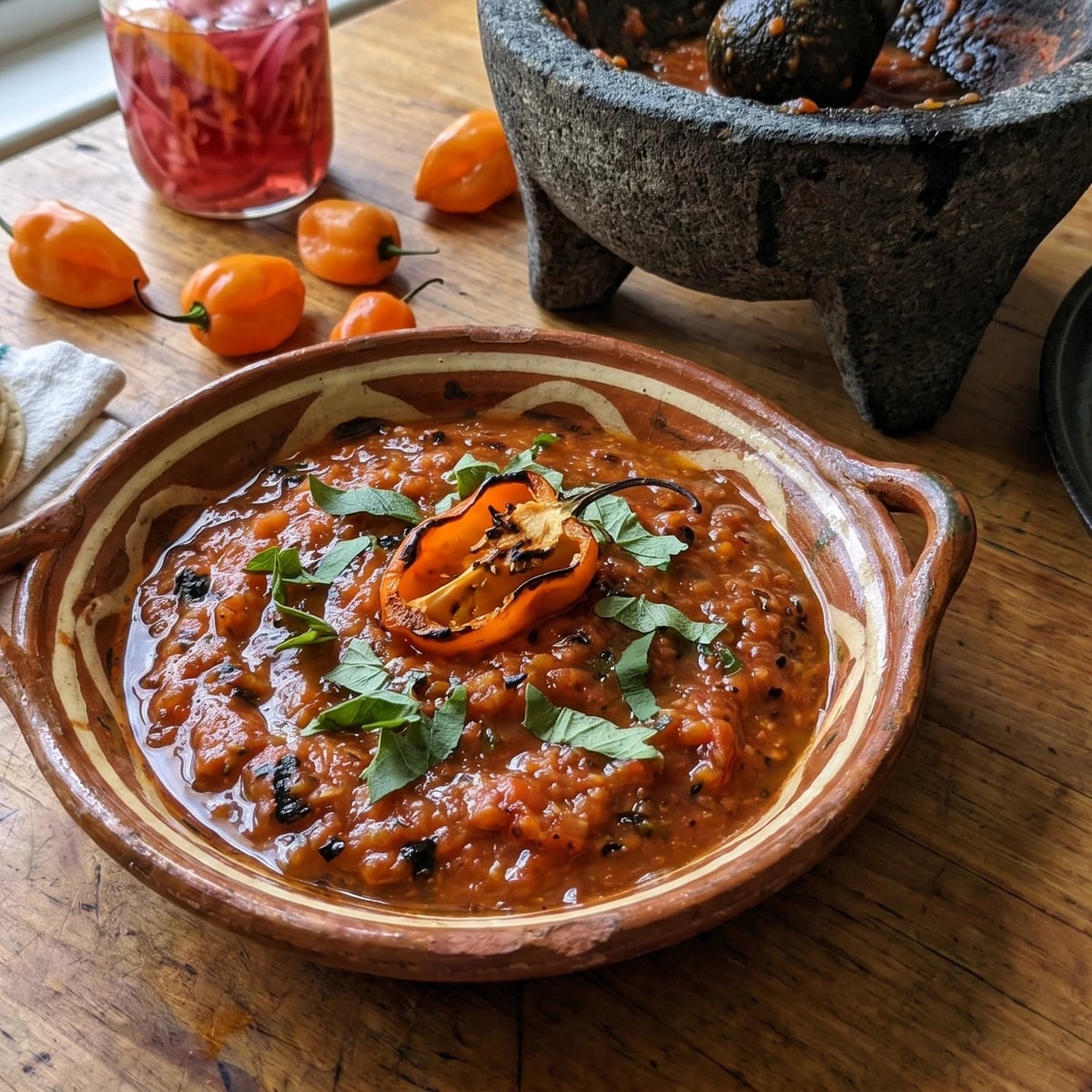
Yucatan's daily tomato salsa. Tomatoes and habanero charred on the comal, ground rough in the molcajete, fried in manteca. The sauce that crowns codzitos, panuchos, and a fried egg on a quiet morning.

Appetizers & Snacks
Mexican
Make Ahead
Quick Meal
Batch Cooking
10 min
Active Time
20 min cook30 min total
YieldAbout 2 cups, enough for 6 servings

Chiltomate is from the Yucatan Peninsula. Yucatan, Campeche, Quintana Roo, the three states that share a culinary grammar older than the rest of Mexico's. This sauce is a daily one. You will find it in Merida cantinas spooned over codzitos, in Campeche home kitchens crowning a plate of huevos motulenos, in roadside cocinas economicas next to the pickled red onions and the bowl of pure habanero salsa for the brave.

The technique is simple and unforgiving. Char the tomatoes on a comal until the skins blacken in patches. Char the habanero whole, stem and all. Do not boil the tomatoes. Do not blanch them. Do not peel them. The black spots on the skin are the flavor. That is the Peninsula method, and it is the difference between chiltomate and a generic tomato salsa.

The chile is habanero, not jalapeno, not serrano. The Peninsula's chile is habanero and the salsa is built around it. The fat is manteca de cerdo, not oil. The acid is naranja agria, the sour orange that grows in courtyards across Yucatan and gives this whole regional cuisine its distinct sour edge. If you cannot find sour orange, mix regular orange and lime. It is a compromise. Lupita is telling you it is a compromise.

My mother kept a page in her notebook from a senora she met in Valladolid in 1992. The note in the margin says: "manteca, no aceite, y nada de licuadora fina." Lard, not oil, and nothing of the fine blender. The senora was right. A chiltomate ground rough in a molcajete tastes different than one pureed smooth, and the difference is the whole point. Cada estado, su propia cocina.

Chiltomate is a direct descendant of pre-Columbian Maya sauce technique, in which tomatoes and chiles were charred on a comal over wood fires and ground on a stone metate to make a daily condiment called chiltomak, recorded in colonial Yucatecan documents as early as the 16th century. The dish predates Spanish contact in everything but the lard, which was added after the introduction of European pigs and transformed the texture and keeping qualities of the sauce. The Yucatecan cuisine of which chiltomate is a foundation was inscribed in 2010 within UNESCO's recognition of Traditional Mexican Cuisine as Intangible Cultural Heritage, with specific reference to the Peninsula's distinctive use of recados, naranja agria, achiote, and the technique of cooking buried underground in a pib.

The technique, the tradition, and the story behind every dish.

Discover Culinary Explorer

Ingredients

ripe Roma tomatoes

Quantity

2 pounds (about 8 medium)

chile habanero

Quantity

2

whole, stems on

white onion (for charring)

Quantity

1/2 medium

peeled and left in one piece

garlic cloves

Quantity

3

unpeeled

manteca de cerdo (pork lard)

Quantity

2 tablespoons

white onion (for the sofrito)

Quantity

1/2 medium

finely chopped

kosher salt

Quantity

1 teaspoon, plus more to taste

naranja agria juice

Quantity

1 tablespoon

or 2 teaspoons lime juice mixed with 1 teaspoon orange juice

fresh epazote leaves (optional)

Quantity

a small handful

for finishing

Equipment Needed

  • Cast iron comal or heavy skillet for charring
  • Volcanic stone molcajete for grinding
  • Tongs for turning the vegetables on the comal
  • Small clay cazuela or heavy skillet for frying the salsa

Instructions

  1. 1

    Heat the comal

    Set a cast iron comal or heavy skillet over medium-high heat. Let it get hot, five or six minutes, until a drop of water dances and disappears in a second. A cold comal will steam the tomatoes instead of charring them, and a steamed tomato is not chiltomate. You want black spots on the skin, not red juice in the pan.

    If you have a gas burner and a wire rack, you can char directly over the open flame. That is how it is done over wood fires in the rural Yucatan. The comal is the household version.
  2. 2

    Char the tomatoes, chiles, onion, and garlic

    Place the whole tomatoes, the two habaneros, the onion half, and the unpeeled garlic on the dry comal. Do not crowd them. Turn each piece every two or three minutes with tongs as the skins blister and blacken in patches. The tomatoes take 10 to 12 minutes and should collapse softly when you press them. The habaneros take 4 to 5 minutes, the garlic about 6, the onion about 8. Pull each one off when its skin is mottled black and the flesh underneath has gone tender. The kitchen will smell sharp and a little smoky. That smoke is the salsa.

  3. 3

    Peel the garlic, leave the rest

    Let the charred vegetables rest on a plate for five minutes until they are cool enough to handle. Slip the papery skins off the garlic and discard them. Leave the blackened skins on the tomatoes, onion, and habaneros. Those black spots are flavor. The cooks in Merida do not peel the tomatoes for chiltomate. They want the smoke in the sauce.

  4. 4

    Grind, do not puree

    Transfer the tomatoes, charred onion half, garlic, and one habanero to a molcajete and grind to a rough, chunky sauce. You want texture: visible pieces of tomato, flecks of skin, the salsa should look like food, not like soup. If you do not have a molcajete, pulse in a blender three or four times only. No me vengas con atajos: a puree is not chiltomate. Taste the salsa now and decide on the second habanero. The Peninsula likes it hot. Add the second chile, chopped fine, if you want a true Yucateco bite. Stir, do not blend again.

    Wash your hands twice with soap after handling habanero, and do not touch your face for an hour. The oils get into everything. The senoras at the Mercado Lucas de Galvez will tell you the same.
  5. 5

    Fry the salsa in lard

    Heat the lard in a heavy skillet or small cazuela over medium until it shimmers. Add the finely chopped onion and cook, stirring, for three to four minutes until soft and translucent. Pour in the ground tomato mixture. It will sputter. Stir, lower the heat to medium-low, and let it cook for eight to ten minutes. The salsa will darken, thicken, and the fat will start to separate at the edges. That is how you know it is done. La manteca es el sabor. A chiltomate cooked in oil tastes like a different sauce.

  6. 6

    Finish with sour orange and salt

    Stir in the salt and the naranja agria juice. If you have fresh epazote, tear a few leaves and drop them in for the last minute of cooking. Taste. The salsa should taste of smoke, of ripe tomato, of the bright sourness of the Peninsula, with the habanero heat sitting just behind. Adjust salt. Pull it off the heat and let it rest for five minutes before serving. Asi se hace y punto.

  7. 7

    Serve at the table

    Spoon the chiltomate warm over codzitos, panuchos, salbutes, huevos motulenos, or simply onto a warm corn tortilla. In Yucateco homes it sits on the table in a clay cazuelita next to the pickled red onions and the bowl of habanero salsa. Recetas probadas y garantizadas.

Chef Tips

  • The tomatoes have to be ripe. A pale supermarket tomato will give you a thin, sour chiltomate no matter how long you char it. If the only good tomatoes you can find are smaller cherry or campari tomatoes in winter, use those. Mexican grandmothers cook with what the mercado is selling today, not what looks good in January.
  • Naranja agria is the sour orange of the Peninsula. You can find it at Latin markets that serve a Caribbean or Yucatecan clientele, often labeled as bitter orange or seville orange. If you cannot find it, mix two parts lime juice with one part regular orange juice. It is a compromise, not an upgrade.
  • Chiltomate keeps in the refrigerator for four days and the flavor only deepens. It does not freeze well because the texture suffers, but it reheats beautifully in a small cazuela with a fresh splash of sour orange at the end.

Advance Preparation

  • The salsa can be made up to three days ahead and kept refrigerated in a covered glass jar. Reheat gently in a small skillet with a teaspoon of lard before serving.
  • The vegetables can be charred one day ahead and held in the refrigerator, then ground and fried on serving day. Some Yucateco cooks prefer this two-step method because the charred tomatoes deepen overnight.

Frequently Asked Questions

Nutrition Information

1 serving (about 80g)

Calories
75 calories
Total Fat
5 g
Saturated Fat
2 g
Trans Fat
0 g
Unsaturated Fat
3 g
Cholesterol
5 mg
Sodium
320 mg
Total Carbohydrates
8 g
Dietary Fiber
2 g
Sugars
4 g
Protein
1 g

Note: Chef personas and recipes are created with AI assistance. Cook with care: follow safe food-handling practices, check doneness with a thermometer when needed, and adapt for allergies and your kitchen.

Where cooking meets culture.

Culinary guides, cultural storytelling, and the editorial depth that makes cooking meaningful.

Discover Culinary Explorer

More from Yucatecan Appetizers & Snacks

Browse the full collection