
Chef Lupita
Arroz a la Oaxaqueña
Oaxaca's red rice, stained with tomato and fried in lard, steamed with carrots, ejotes, black beans, and epazote. The side that anchors a Oaxacan family meal and earns its place beside the main.
A cooking platform built around craft, culture, and the stories behind what we eat.

Created by
The obligatory side at every northern Mexican parrillada. Whole jalapeños bruised by hand and blistered in lard with white onion, finished with lime and a splash of soy sauce. Eaten whole between bites of carne asada.
This is a dish from the Noroeste, from the parrilladas of Sonora, Nuevo Leon, and Chihuahua, where the carne asada is the center of every Sunday gathering and the chiles toreados are the side that never leaves the table. You will see them on a platter beside the meat at every ranch, every backyard, every steakhouse from Hermosillo to Monterrey. They are not optional. They are the rhythm of the meal.
The name comes from the verb torear, to bullfight. You roll the whole chile firmly against the cutting board, bruising the flesh inside without breaking the skin. That motion wakes the heat and changes the chile. A jalapeño that has been toreado is hotter, more aggressive, more alive than one that has not. Skip that step and you have a roasted chile. Do it right and you have the dish.
The soy sauce in the pan is not fusion and it is not a trend. Northern Mexico has been seasoning its grilled food with salsa de soya, Worcestershire, and Maggi for generations. The bottles sit on the parrilla shelf next to the lime and the salt. The lard belongs there too, because manteca de cerdo or rendered beef tallow is what carries the flavor of the carne asada into the chiles cooking beside it.
You eat a chile toreado whole. By the stem, bite by bite, between bites of arrachera folded into a flour tortilla. The flour tortilla matters. This is wheat country, not corn country. The north has its own way and it does not need to apologize for it. Saber cocinar es saber vivir.
The verb 'torear' in Mexican cooking refers specifically to the practice of rolling a fresh chile under pressure to bruise the internal membranes and release more capsaicin, a technique documented in northern Mexican home cooking since at least the early 20th century. Wheat agriculture and cattle ranching established by Jesuit missionaries and later Mormon colonists in Sonora and Chihuahua during the 17th through 19th centuries shaped the Noroeste's culinary identity as fundamentally distinct from central and southern Mexico, with flour tortillas, beef, and grilled rather than stewed preparations becoming regional markers. The use of soy sauce and Maggi-style seasonings in northern parrillada cooking traces in part to the late 19th and early 20th century Chinese immigration to Sonora and Baja California, whose influence on northwestern Mexican pantries is older and deeper than most outside the region recognize.
Quantity
12
whole, with stems intact
Quantity
1
sliced into thick half-moons
Quantity
3 tablespoons
Quantity
2 tablespoons
Quantity
3 tablespoons (about 2 limes)
Quantity
1 teaspoon, plus more to taste
Quantity
for serving
Quantity
for serving
warmed on the comal
Quantity
for serving
| Ingredient | Quantity |
|---|---|
| fresh chile jalapeñowhole, with stems intact | 12 |
| large white onionsliced into thick half-moons | 1 |
| manteca de cerdo (pork lard) | 3 tablespoons |
| soy sauce (salsa de soya) | 2 tablespoons |
| fresh lime juice | 3 tablespoons (about 2 limes) |
| kosher salt | 1 teaspoon, plus more to taste |
| lime halves (optional) | for serving |
| flour tortillas (optional)warmed on the comal | for serving |
| carne asada (optional) | for serving |
Wash and dry the jalapeños completely. Leave them whole. Stems on, no slits, no seeding. The whole point of a chile toreado is that it stays intact and you eat it in bites between bites of meat. Roll each chile firmly under the heel of your hand against the cutting board for a few seconds. That is the torear, the bullfighting motion that bruises the flesh inside the skin and wakes the heat. This is where the dish gets its name. No me vengas con atajos. If you skip this step you have a roasted chile, not a chile toreado.
Set a heavy cast iron skillet or comal over medium-high heat. Let it get hot, two to three minutes. Add the manteca. It should melt immediately and shimmer across the surface. La manteca es el sabor. The vendors at the parrilladas in Monterrey will use beef tallow if they have it, lard if they do not, but never neutral oil. The fat carries the flavor that ties the chiles to the carne asada cooking beside them on the grill.
Lower the whole jalapeños into the hot lard in a single layer. They will sputter and pop. Let them sit undisturbed for two minutes, until the skin on the underside blackens and blisters. Turn them with tongs and blister the other side, another two minutes. Keep turning until the chiles are charred in patches all around and the skin is wrinkled and loose. You want dark spots, not full carbonization. Eight to ten minutes total.
Push the chiles to one side of the skillet and add the white onion half-moons to the open space. Let them sit in the chile-stained lard without stirring for two minutes so the edges char. Then toss them with the chiles. The onion should soften and pick up dark spots but stay crisp at the center. Cada estado, su propia cocina, and the north cooks its onions hot and fast, never to mush.
Pull the skillet off the heat. Sprinkle the salt over the chiles and onions. Pour in the soy sauce. It will hiss against the hot lard. Toss everything together so every chile and onion catches a coat of the salty-fat mixture. Squeeze the lime juice over the top last, off the heat. The lime is bright and you do not want to cook it. Taste a piece of onion. Adjust salt if needed.
Slide everything, chiles, onions, and the dark pan juices, into a shallow enamelware platter or a cazuela. Set it on the table next to the carne asada and the flour tortillas. Each person grabs a chile by the stem and eats it whole, biting from the tip down, between bites of meat in a tortilla. The pan juices get spooned onto the tortilla too. Recetas probadas y garantizadas.
1 serving (about 70g)
Culinary guides, cultural storytelling, and the editorial depth that makes cooking meaningful.
Discover Culinary ExplorerChef Lupita
Oaxaca's red rice, stained with tomato and fried in lard, steamed with carrots, ejotes, black beans, and epazote. The side that anchors a Oaxacan family meal and earns its place beside the main.
Chef Lupita
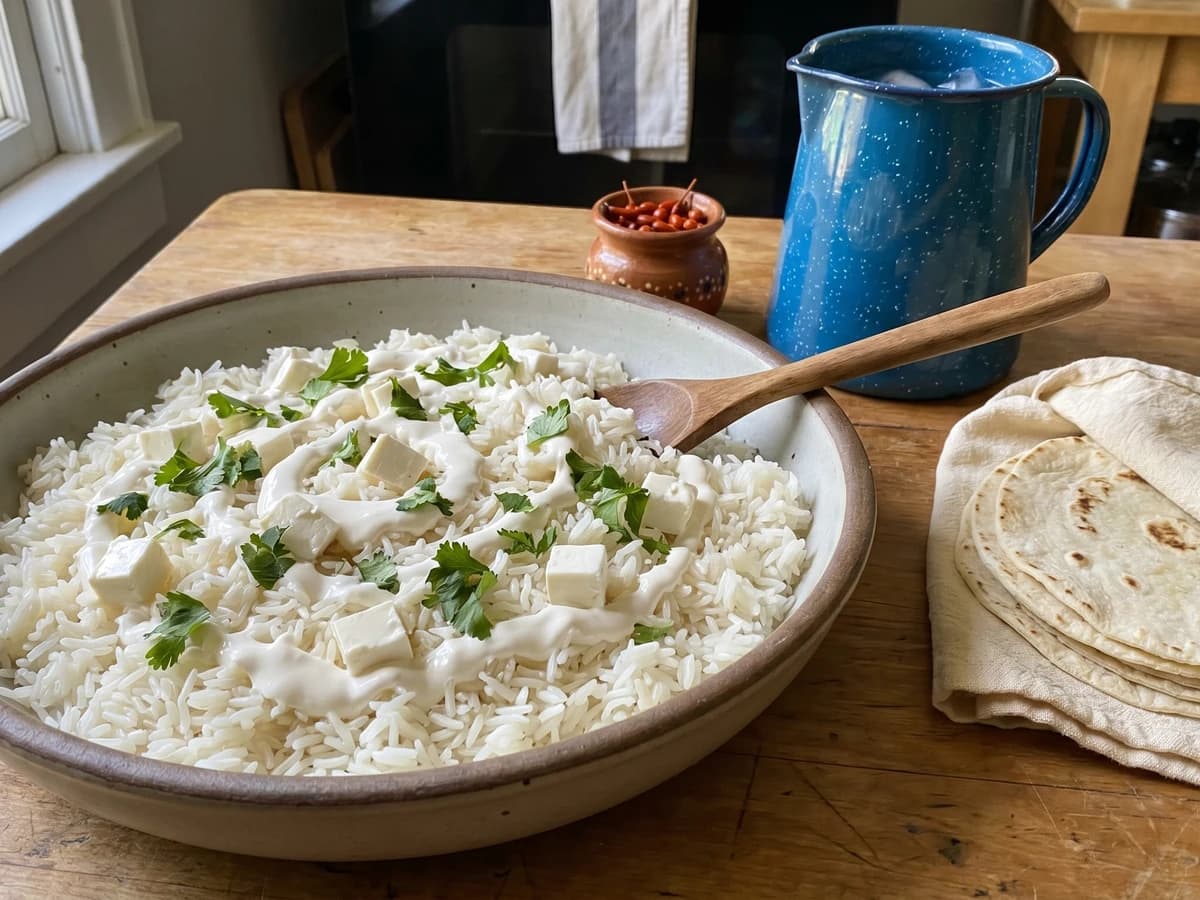
Sinaloa's home-cook white rice topped with cold cubes of cream cheese that soften into the warm grain, finished with crema and a sprinkle of chiltepin at the table. The trick that makes a side dish feel like a small luxury.
Chef Lupita
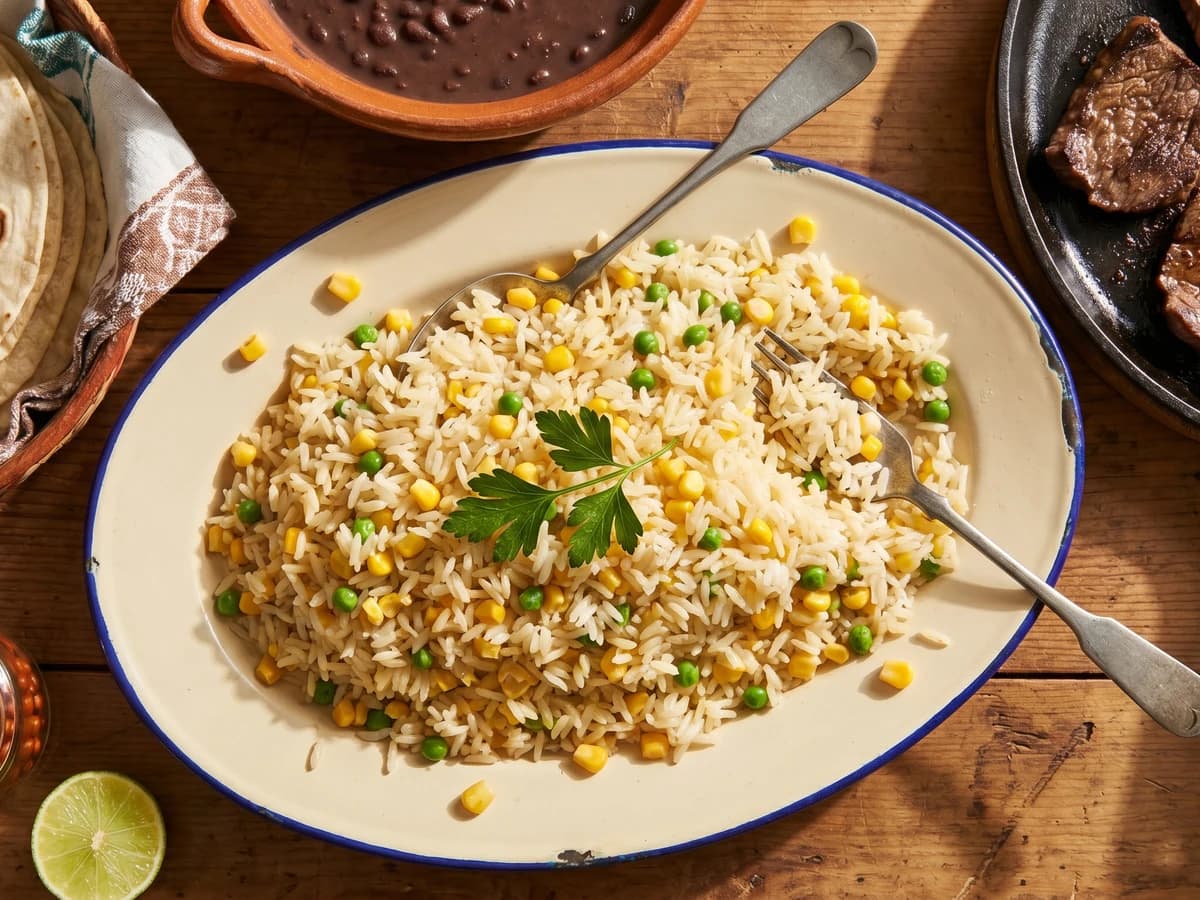
Sonora's white rice, toasted in butter and steamed with sweet corn and tender peas. The clean, quiet partner to a plate of carne asada, not the red rice of central Mexico.

Chef Lupita
Yucatán's white rice with sweet corn kernels, toasted in lard with garlic and onion. The quiet base that holds up against the peninsula's bold achiote-stained stews.