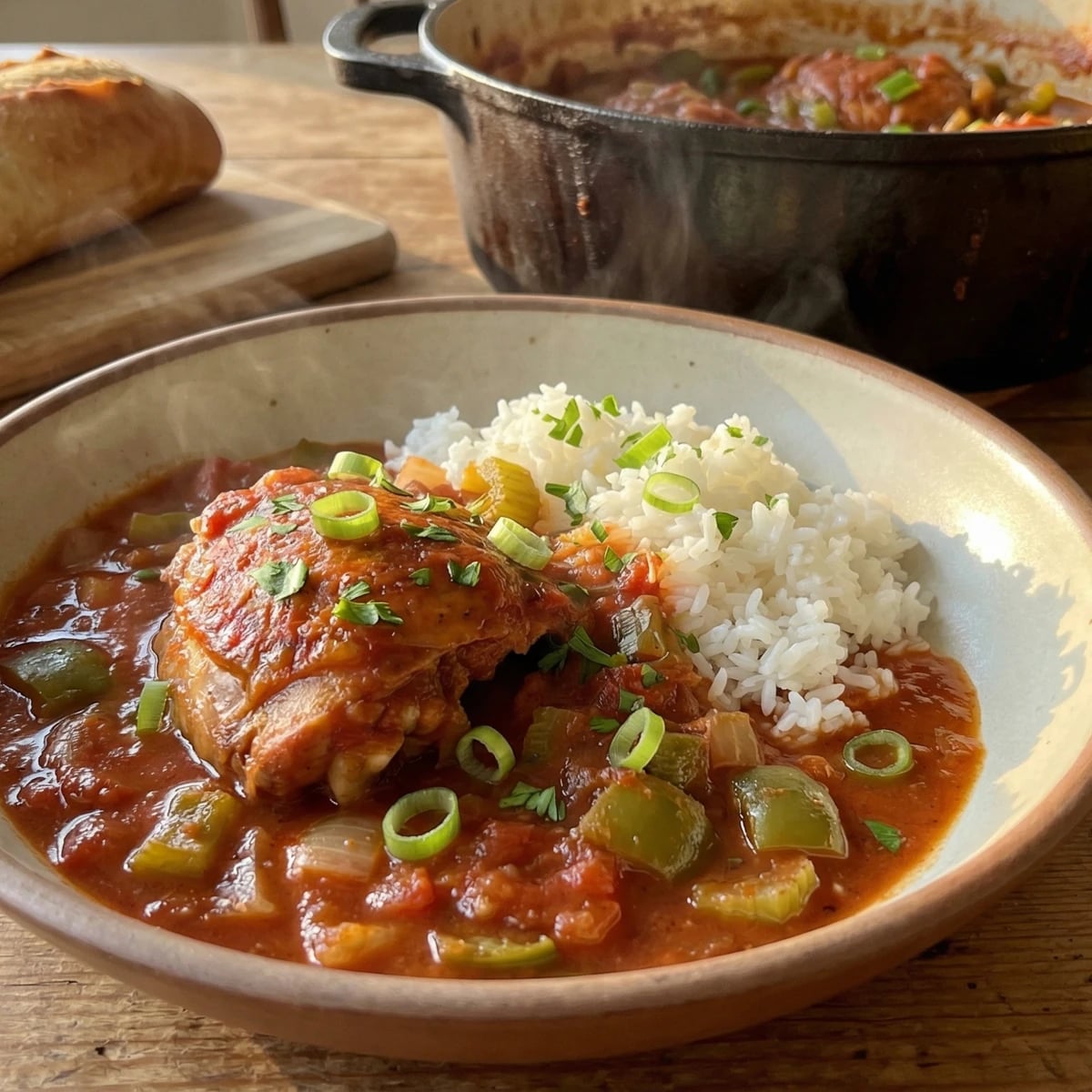
Bone-in chicken braised in a brick-red tomato sauce loaded with cayenne, the holy trinity, and enough Louisiana fire to make you reach for the sweet tea, spooned generously over steaming white rice.
Main Dishes
Cajun
Dinner Party
Comfort Food
Make Ahead
30 min
Active Time
1 hr 30 min cook•2 hr total
Yield6 servings
Sauce piquante is Cajun cooking at its most honest. No fancy techniques, no imported ingredients, just a heavy pot, good chicken, and enough cayenne to let you know you're alive. The name tells you everything: piquante means sharp, biting, a sauce that wakes up your mouth and keeps it interested.
My grandmother Evangeline made this dish when the weather turned cool and the family gathered. She'd start early in the morning, browning chicken in her cast iron Dutch oven, building that roux until it smelled like roasted pecans. By suppertime, the whole house smelled like tomatoes and spice, and you could hear stomachs growling from the next room.
The secret is layering your heat. You season the chicken before it hits the pan. You bloom cayenne in the roux. You let it all simmer together until the flavors marry and the chicken falls off the bone. At Lagniappe, we serve this over rice with crusty French bread on the side for sopping up every last drop of that sauce. That's the bayou way: nothing goes to waste, especially not something this good.
The technique, the tradition, and the story behind every dish.
bone-in, skin-on chicken piecesthighs and drumsticks
3 1/2 pounds
Cajun seasoningdivided
2 tablespoons
vegetable oil
1/4 cup
all-purpose flour
1/4 cup
yellow oniondiced
1 large
celery stalksdiced
2
green bell pepperdiced
1 large
garlicminced
6 cloves
crushed tomatoes
1 can (28 ounces)
tomato paste
2 tablespoons
chicken stock
2 cups
cayenne pepper
2 teaspoons, plus more to taste
smoked paprika
1 teaspoon
dried thyme
1 teaspoon
bay leaves
2
kosher salt
1 teaspoon, plus more to taste
black pepperfreshly cracked
1/2 teaspoon
Worcestershire sauce
1 tablespoon
hot sauceLouisiana-style
1 tablespoon
green onionssliced thin
4
fresh parsleychopped
2 tablespoons
cooked white rice
for serving
Equipment Needed
•Large Dutch oven or heavy-bottomed pot (5-6 quart)
•Wooden spoon or flat-edged spatula
•Tongs for turning chicken
Instructions
1
Season the chicken
Pat the chicken pieces dry with paper towels. Season generously on all sides with one tablespoon of the Cajun seasoning, working it into the meat with your fingers. Let the chicken sit at room temperature while you prepare your other ingredients, at least fifteen minutes. This is where flavor begins: seasoning the protein before anything else hits the pan.
Dry chicken browns better. Wet skin steams instead of crisping, and you lose that beautiful fond on the bottom of the pot.
2
Brown the chicken
Heat a large Dutch oven or heavy-bottomed pot over medium-high heat. Add two tablespoons of the oil. When it shimmers and just starts to smoke, add the chicken pieces skin-side down in a single layer. Work in batches if needed, never crowd the pot. Let the chicken cook undisturbed for four to five minutes until the skin is deeply golden and releases easily from the pot. Flip and brown the other side for three minutes. Transfer to a plate and set aside.
Listen for that aggressive sizzle when the chicken hits the oil. If it sounds quiet and polite, your pot isn't hot enough.
3
Build the roux
Reduce heat to medium. Add the remaining two tablespoons of oil to the pot along with the flour. Stir constantly with a wooden spoon or flat-edged spatula, scraping up the browned bits from the chicken. Cook the roux for eight to ten minutes, stirring without stopping, until it reaches a peanut butter color and smells like toasted nuts. This is lighter than a gumbo roux but darker than gravy. The color tells you the flavor is there.
4
Cook the holy trinity
Add the onion, celery, and bell pepper to the roux. The vegetables will sizzle and protest. That's good. Stir to coat everything in the roux and cook for six to eight minutes until the onions turn translucent and the vegetables soften. The mixture will look glossy and smell sweet. Add the garlic and cook one minute more until fragrant, stirring constantly so it doesn't burn.
5
Add the tomatoes and spices
Stir in the tomato paste and cook for one minute, letting it darken slightly. Add the crushed tomatoes, cayenne, smoked paprika, dried thyme, remaining tablespoon of Cajun seasoning, salt, and black pepper. Stir to combine. The cayenne will bloom in the heat, releasing its fire into the sauce. This is when the kitchen starts smelling like Louisiana.
6
Simmer the sauce
Pour in the chicken stock and add the bay leaves. Bring to a simmer, scraping any remaining fond from the bottom of the pot. The sauce should be brick-red and slightly thick. Taste it now. Adjust the salt and add more cayenne if you want more heat. Remember: the chicken will absorb some of that fire as it braises, so season the sauce a touch bolder than you think.
Taste, taste, taste. This is the bayou way. Your palate is smarter than any recipe.
7
Braise the chicken
Nestle the browned chicken pieces into the sauce, skin-side up, spooning some sauce over the tops. Reduce heat to low, cover the pot with a tight-fitting lid, and simmer for forty-five minutes to one hour. The chicken is done when it's tender enough that a fork slides through with no resistance and the meat wants to pull away from the bone. Check occasionally and adjust heat to maintain a gentle bubble.
8
Finish and serve
Remove the bay leaves. Stir in the Worcestershire sauce and hot sauce. Taste one more time and adjust seasoning. The sauce should be slightly thick, clinging to a spoon, with layers of heat that build as you eat. Scatter the green onions and parsley over the top. Serve in shallow bowls over hot white rice, making sure everyone gets plenty of that sauce.
Set a bottle of extra hot sauce on the table for those who want to push the heat further. Some folks can't help themselves, and that's their right.
Chef Tips
•Bone-in, skin-on chicken is essential. The bones add body to the sauce and the skin provides fat for browning. Boneless breasts will leave you with a thin, apologetic dish.
•If you can't find Cajun seasoning you trust, make your own: equal parts paprika, garlic powder, and onion powder, with half parts cayenne, black pepper, dried thyme, and dried oregano. Mix it fresh and taste it before you commit.
•The heat level is personal. Start with two teaspoons of cayenne and work up from there. At Lagniappe, we make it with four teaspoons, but we've been eating this way our whole lives.
•This dish is better the next day after the flavors have had time to deepen. Make it ahead for a dinner party and reheat gently before serving.
Advance Preparation
•The complete dish can be made up to three days ahead and refrigerated. The flavors improve dramatically overnight as the spices meld together.
•Reheat gently over medium-low heat, adding a splash of stock if the sauce has thickened too much.
•Freezes beautifully for up to three months. Thaw overnight in the refrigerator before reheating.
Frequently Asked Questions
Nutrition Information
1 serving (about 350g)
Calories
450 calories
Total Fat
28 g
Saturated Fat
8 g
Trans Fat
0 g
Unsaturated Fat
18 g
Cholesterol
125 mg
Sodium
1450 mg
Total Carbohydrates
18 g
Dietary Fiber
3 g
Sugars
7 g
Protein
32 g
Where cooking meets culture.
Culinary guides, cultural storytelling, and the editorial depth that makes cooking meaningful.