
Chef Lupita
Arroz a la Oaxaqueña
Oaxaca's red rice, stained with tomato and fried in lard, steamed with carrots, ejotes, black beans, and epazote. The side that anchors a Oaxacan family meal and earns its place beside the main.
A cooking platform built around craft, culture, and the stories behind what we eat.

Created by
Los Altos de Chiapas in a clay cazuela: rain-season mushrooms, hoja santa called momo, epazote, tomato, and chile simojovel cooked quickly in lard until the forest smell comes forward.
This comes from Los Altos de Chiapas, from the markets around San Cristobal de las Casas, San Juan Chamula, and Zinacantan, where the rains bring baskets of wild mushrooms down from the pine-oak forests. The women selling them know which ones are good today, which ones need a longer cook, and which ones you leave alone. Preguntale a las senoras del mercado. With mushrooms, pride is not enough. Knowledge keeps you alive.
Hoja santa is called momo in much of Chiapas, and that leaf is the identity of the dish. It smells of anise, pepper, and wet earth, but it does not behave like parsley or cilantro. You do not throw it in raw at the end like decoration. You tear it and let it soften in the hot lard and mushroom juices so it perfumes the whole cazuela. Epazote is sharper and more direct. Together they tell you this is southern Mexico, not a generic mushroom saute.
The fat is manteca de cerdo. Use it. The mushrooms are lean, the herbs are strong, and the lard carries the flavor across the pan. If you use a neutral oil, the dish will still be edible. It will not taste like the highland kitchens where I learned it. La manteca es el sabor, and this is a 32-state cuisine.
Serve these hongos with thick hand-pressed corn tortillas, not flour tortillas. Flour tortillas belong to the north. In Chiapas, the tortilla is corn, hot from the comal, ready to carry the mushrooms and their green, herbal juices. Cada estado, su propia cocina.
In the Chiapas highlands, Tzotzil and Tzeltal communities have long gathered edible wild mushrooms during the summer rainy season, especially in the pine and oak forests above San Cristobal de las Casas. Hoja santa, known locally as momo or mumo, is native to Mesoamerica and appears across southern Mexican cooking, from Chiapas tamales to Veracruz fish preparations, but its use with wild mushrooms is tied to the humid forest and milpa table of the Maya south. Chile simojovel, named for Simojovel in northern Chiapas, is one of the state's regional chiles and gives heat without turning the dish into the lazy idea that all Mexican food must be hot.
Quantity
1 1/2 pounds
cleaned and torn into large pieces
Quantity
3 tablespoons
Quantity
1 medium
thinly sliced
Quantity
3
finely chopped
Quantity
2 ripe
chopped
Quantity
2
stemmed and finely chopped
Quantity
6 large leaves
center ribs removed and leaves torn
Quantity
2 sprigs
leaves stripped and chopped
Quantity
1 teaspoon, plus more to taste
Quantity
1/4 teaspoon
Quantity
1/2 cup
only if the pan dries out
Quantity
for serving
warmed
Quantity
for serving
| Ingredient | Quantity |
|---|---|
| mixed wild mushrooms or cultivated oyster mushroomscleaned and torn into large pieces | 1 1/2 pounds |
| manteca de cerdo (pork lard) | 3 tablespoons |
| white onionthinly sliced | 1 medium |
| garlic clovesfinely chopped | 3 |
| Roma tomatoeschopped | 2 ripe |
| fresh chile simojovelstemmed and finely chopped | 2 |
| hoja santa leaves (momo)center ribs removed and leaves torn | 6 large leaves |
| fresh epazoteleaves stripped and chopped | 2 sprigs |
| kosher salt | 1 teaspoon, plus more to taste |
| freshly ground black pepper | 1/4 teaspoon |
| water or light chicken broth (optional)only if the pan dries out | 1/2 cup |
| hand-pressed corn tortillas (optional)warmed | for serving |
| lime halves (optional) | for serving |
Brush the mushrooms clean with a dry cloth or soft brush. Trim tough stems. Tear large mushrooms by hand into pieces about the size of two fingers. Do not soak them in water. Mushrooms drink water quickly, and then they stew before they brown. If they came from a trusted forager, inspect them one by one. If you do not know the mushroom, you do not cook the mushroom. Asi se hace y punto.
Set a wide clay cazuela or heavy skillet over medium heat for two minutes. Add the manteca de cerdo and let it melt until it shines across the bottom. The pan should be hot enough that onion sizzles when it touches the fat, but not so hot that the lard smokes. Clay holds heat gently. That matters for mushrooms.
Add the sliced white onion and cook for 4 to 5 minutes, stirring often, until the edges turn translucent and sweet. Add the garlic and chile simojovel. Cook for 1 minute more. The garlic should smell warm, not sharp. The chile should perfume the fat without burning. This dish is not about punishing heat. It is about the forest, the leaf, and the pan.
Add the chopped Roma tomatoes and the salt. Cook for 4 minutes, crushing the tomato lightly with the back of a spoon, until it collapses into the onion and the lard turns orange at the edges. You are not making a wet sauce. You are building a base that will cling to the mushrooms.
Raise the heat to medium-high and add the mushrooms in a wide layer. Let them sit for 2 minutes before stirring so they meet the hot fat properly. Then cook, stirring every minute or so, for 6 to 8 minutes. They will release liquid first, then the liquid will reduce and the mushrooms will darken at the edges. That is the moment you want. If the pan dries before the mushrooms soften, add a splash of water or light chicken broth, not a flood.
Lower the heat to medium. Add the torn hoja santa and chopped epazote. Fold them through the mushrooms for 2 minutes, just until the hoja santa softens and turns darker green. Do not cook it to death. Momo should perfume the cazuela, not disappear into mud.
Taste for salt and add black pepper. The finished mushrooms should be juicy, glossy from the lard, and strongly scented with hoja santa and epazote. Spoon them into a warm clay cazuela and take them to the table with hot hand-pressed corn tortillas and lime halves. Eat them while the tortilla is still soft from the comal. Saber cocinar es saber vivir.
1 serving (about 200g)
Culinary guides, cultural storytelling, and the editorial depth that makes cooking meaningful.
Discover Culinary ExplorerChef Lupita
Oaxaca's red rice, stained with tomato and fried in lard, steamed with carrots, ejotes, black beans, and epazote. The side that anchors a Oaxacan family meal and earns its place beside the main.
Chef Lupita
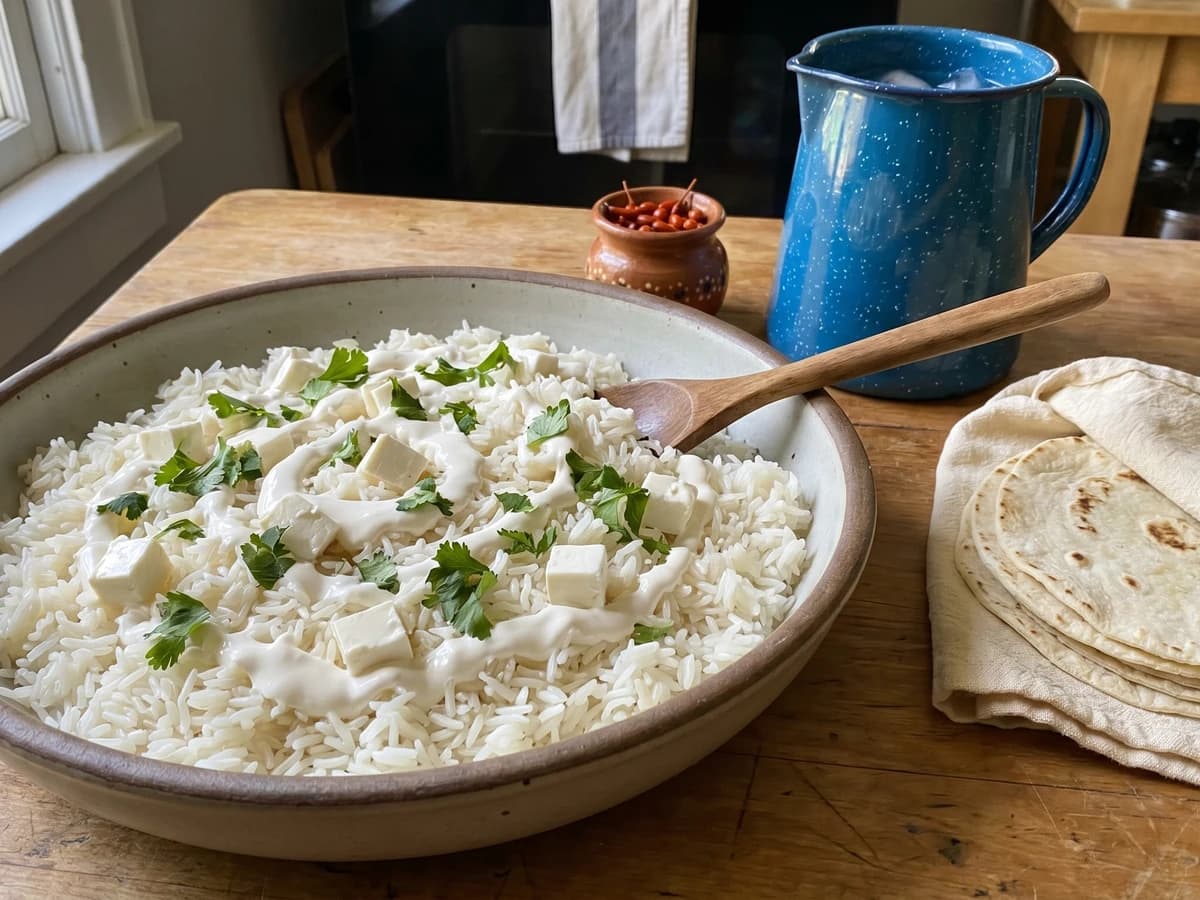
Sinaloa's home-cook white rice topped with cold cubes of cream cheese that soften into the warm grain, finished with crema and a sprinkle of chiltepin at the table. The trick that makes a side dish feel like a small luxury.
Chef Lupita
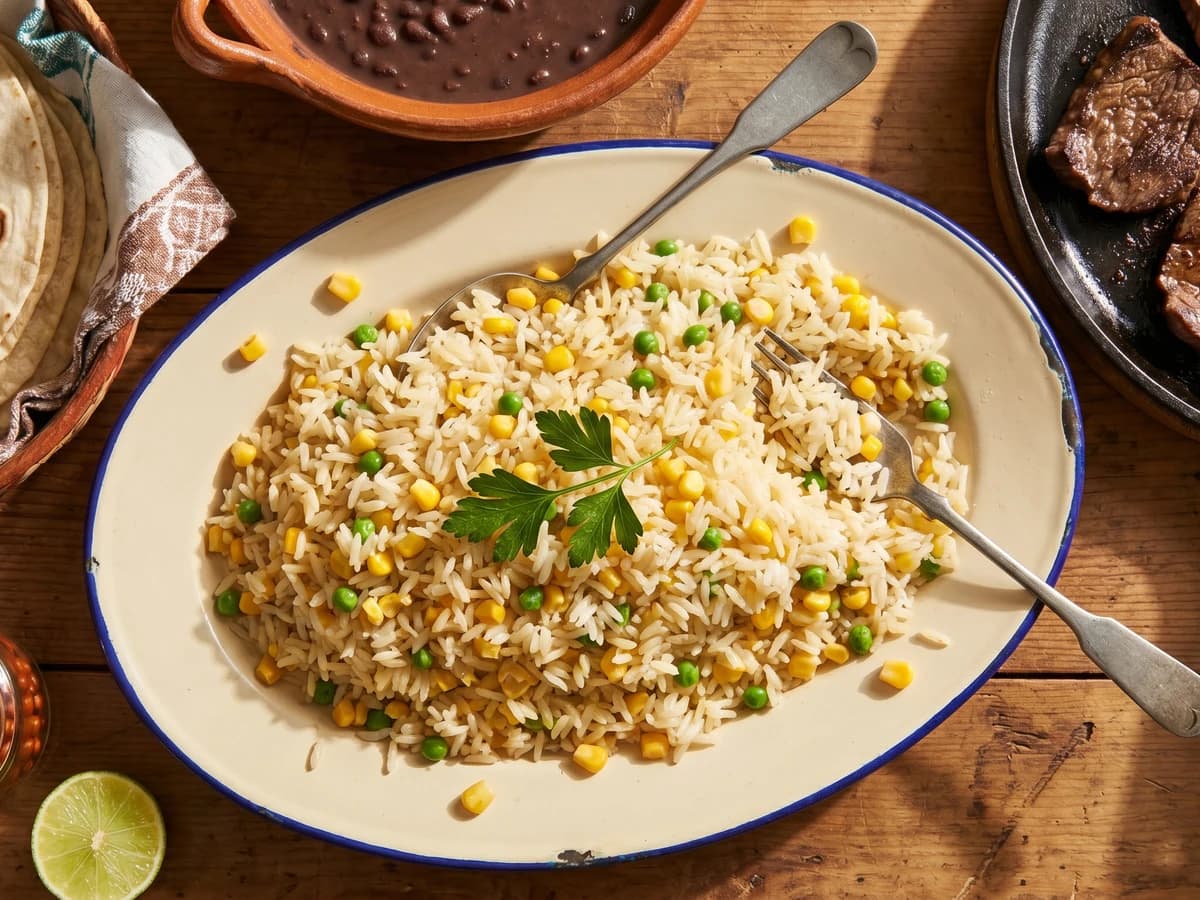
Sonora's white rice, toasted in butter and steamed with sweet corn and tender peas. The clean, quiet partner to a plate of carne asada, not the red rice of central Mexico.

Chef Lupita
Yucatán's white rice with sweet corn kernels, toasted in lard with garlic and onion. The quiet base that holds up against the peninsula's bold achiote-stained stews.