
Chef Lupita
Chimbo de Chiapa de Corzo
Chiapas's soaked marquesote cake from Chiapa de Corzo, firm egg sponge drenched in piloncillo syrup scented with Mexican cinnamon, clove, and star anise.
A cooking platform built around craft, culture, and the stories behind what we eat.
Created by
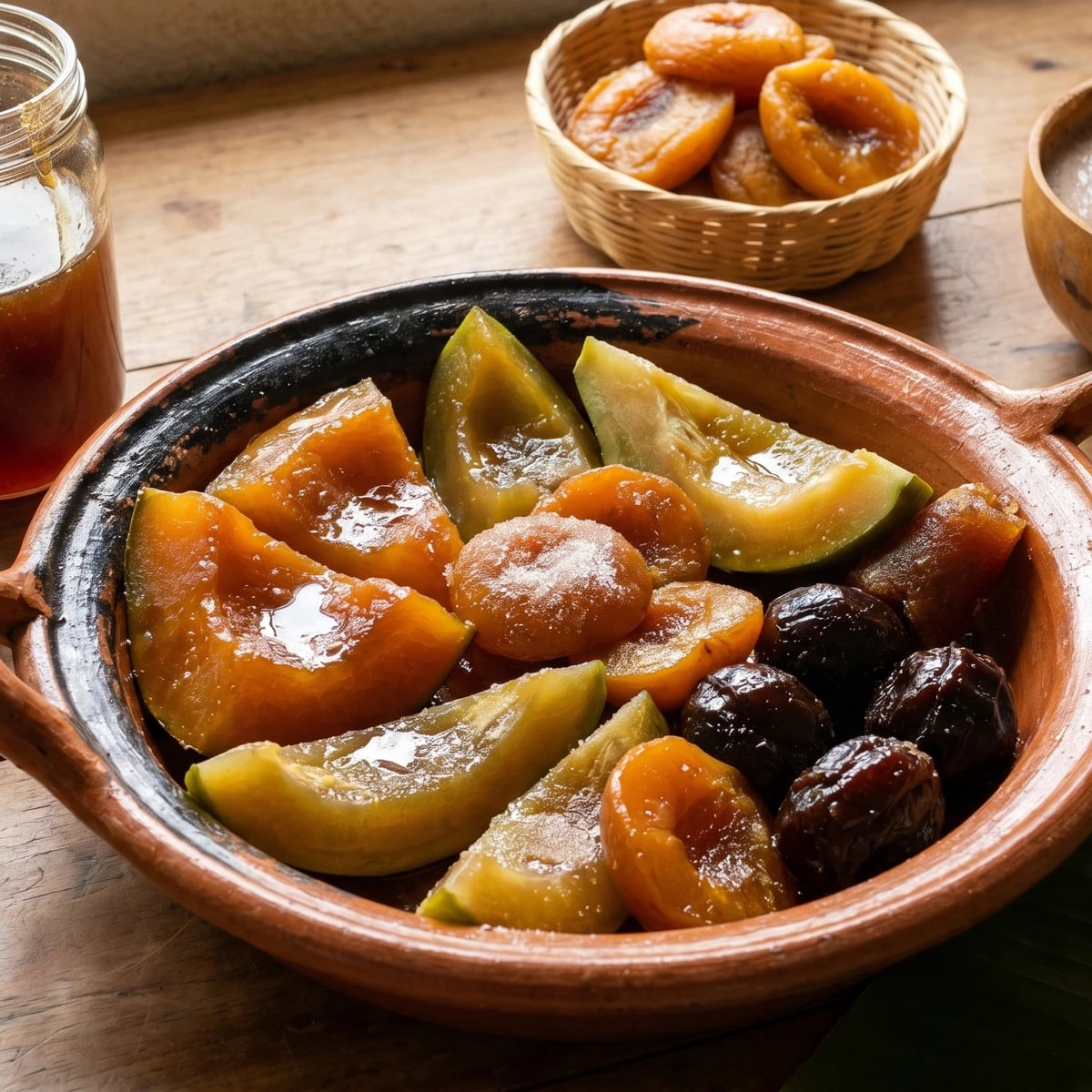
Los Altos de Chiapas preserves fruit the patient way: cal-firmed papaya, calabaza, duraznos, and ciruelas cooked and rested in syrup until each piece shines like market candy.
Chiapas, especially Los Altos around San Cristóbal de las Casas, knows these fruits as dulce coleto. You see them in market stalls stacked in palm baskets and glass jars: duraznos prensados, ciruelas, papaya verde, calabaza de Castilla, each one firm, glossy, and heavy with syrup. This is not pastry-shop candy. This belongs to the dulceras who learned to preserve what the highland orchards and milpas gave them.
The technique is patience. First the fruit rests in water with cal, food-grade calcium hydroxide, so the outside firms and doesn't collapse in the syrup. Then you cook it gently, rest it overnight, cook it again, and let the sugar enter slowly. No me vengas con atajos. If you boil hard on the first day, the fruit wrinkles outside and stays watery inside. You didn't crystallize it. You punished it.
There are no chiles here because not all Mexican food is chile and fire. This is a 32-state cuisine. Chiapas gives you cacao, pozol, marquesote, tropical fruit, highland peaches, and sweets that sit on the table during Fiesta Grande and family visits. My mother used to say that preserving fruit teaches restraint. She was right. Saber cocinar es saber vivir.
Frutas cristalizadas in Mexico grew from colonial sugar-conserving techniques applied to local and regional fruit, especially after sugar production expanded in New Spain during the 16th and 17th centuries. In Chiapas, the tradition became tied to Los Altos and the market culture of San Cristóbal de las Casas, where dulces coletos include crystallized fruit, gaznates, cocadas, and calabaza en tacha. The use of cal to firm fruit connects this confection to older Mesoamerican lime-treatment knowledge, the same alkaline principle that made nixtamal possible.
Quantity
1 pound
firm ripe, halved and pitted
Quantity
1 pound
firm, pricked all over with a toothpick
Quantity
1 pound
peeled, seeded, and cut into 2-inch strips
Quantity
1 pound
peeled and cut into 2-inch chunks
Quantity
2 tablespoons
Quantity
3 quarts
Quantity
8 cups
Quantity
4 cups
Quantity
2 cones, about 8 ounces total
chopped
Quantity
1
Quantity
4
Quantity
2 strips
white pith removed
Quantity
1 tablespoon
| Ingredient | Quantity |
|---|---|
| duraznos criollos or small peachesfirm ripe, halved and pitted | 1 pound |
| ciruelasfirm, pricked all over with a toothpick | 1 pound |
| green papayapeeled, seeded, and cut into 2-inch strips | 1 pound |
| calabaza de Castillapeeled and cut into 2-inch chunks | 1 pound |
| food-grade cal (calcium hydroxide) | 2 tablespoons |
| cold water for cal soak | 3 quarts |
| granulated sugar | 8 cups |
| water for syrup | 4 cups |
| piloncillochopped | 2 cones, about 8 ounces total |
| Mexican cinnamon stick (canela) | 1 |
| whole cloves | 4 |
| orange peelwhite pith removed | 2 strips |
| fresh lime juice | 1 tablespoon |
Choose fruit that is firm and fragrant, not soft. Halve the duraznos and remove the pits. Prick the ciruelas all over so syrup can enter without splitting them. Cut the green papaya and calabaza de Castilla into pieces large enough to survive three days of cooking. Small pieces turn to jam. That is not this dulce.
In a nonreactive bowl, dissolve the food-grade cal in 3 quarts cold water. Let the cloudy water settle for 5 minutes, then add the fruit without scraping up any heavy sediment from the bottom. Soak for 3 hours, turning the fruit once. The cal firms the surface so the fruit keeps its shape when the syrup starts doing its work.
Lift the fruit out of the cal water and rinse under running water until the surface no longer feels slippery. Soak in fresh cold water for 20 minutes, drain, and rinse again. Do this properly. Cal left on the fruit gives a chalky taste and nobody at a dulce coleto stand would forgive that.
Combine the granulated sugar, 4 cups water, chopped piloncillo, canela, cloves, orange peel, and lime juice in a wide cazuela or heavy pot. Bring to a gentle simmer, stirring until the sugar dissolves. The syrup should look amber from the piloncillo and smell of canela, not burned sugar.
Add the fruit to the syrup in a single crowded layer if possible. Simmer gently for 25 minutes, spooning syrup over the pieces. Do not boil hard. The fruit should turn glossy at the edges while the centers still look opaque. Turn off the heat, cover with a clean kitchen towel and a lid, and let the fruit rest in the syrup overnight.
The next day, uncover the pot. The syrup will be thinner because the fruit has released water. Bring it back to a gentle simmer and cook for 35 to 45 minutes, moving the fruit carefully with a wooden spoon. The papaya should look translucent at the edges, the calabaza should hold its corners, and the duraznos should look pressed and shiny. Rest overnight again.
On the third day, simmer the fruit until the syrup is thick enough to coat a spoon and the pieces look glassy all the way through, 45 to 60 minutes. If one fruit finishes early, lift it out to a rack and let the others continue. Cada fruta tiene su carácter. A ciruela does not obey the same clock as calabaza.
Set a wire rack over a tray. Lift the fruit from the syrup and let it drain until tacky, 4 to 6 hours. For a drier crystallized finish, leave it uncovered in a clean, airy place overnight, then roll lightly in granulated sugar if you want the market-stall sparkle. Store in glass jars with a little syrup for soft dulce, or between sheets of waxed paper for firmer pieces. Recetas probadas y garantizadas.
1 serving (about 57g)
Culinary guides, cultural storytelling, and the editorial depth that makes cooking meaningful.
Discover Culinary Explorer
Chef Lupita
Chiapas's soaked marquesote cake from Chiapa de Corzo, firm egg sponge drenched in piloncillo syrup scented with Mexican cinnamon, clove, and star anise.

Chef Lupita
Tabasco's celebration pudding of day-old panetela, dark piloncillo syrup, canela, eggs, and salty queso de bola de Ocosingo, baked until the edges turn caramel-dark and the center stays tender.

Chef Lupita
Chiapas's coastal coconut candy, cooked slowly with milk, piloncillo, sugar, and canela until the fresh coconut turns chewy, glossy, and honey-brown.

Chef Lupita
Tabasco's coastal cocoplum preserve, whole firm icacos cooked slowly in piloncillo claro syrup until the fruit turns pale pink, tender at the skin, and still intact in the jar.