
Chef Lupita
Acitrón de Cidra Conventual
Puebla's convent-style acitrón, made from cidra peel instead of endangered biznaga, built through repeated syrup soakings until the cubes turn firm, translucent, and ready for rosca or chiles en nogada.
A cooking platform built around craft, culture, and the stories behind what we eat.
Created by
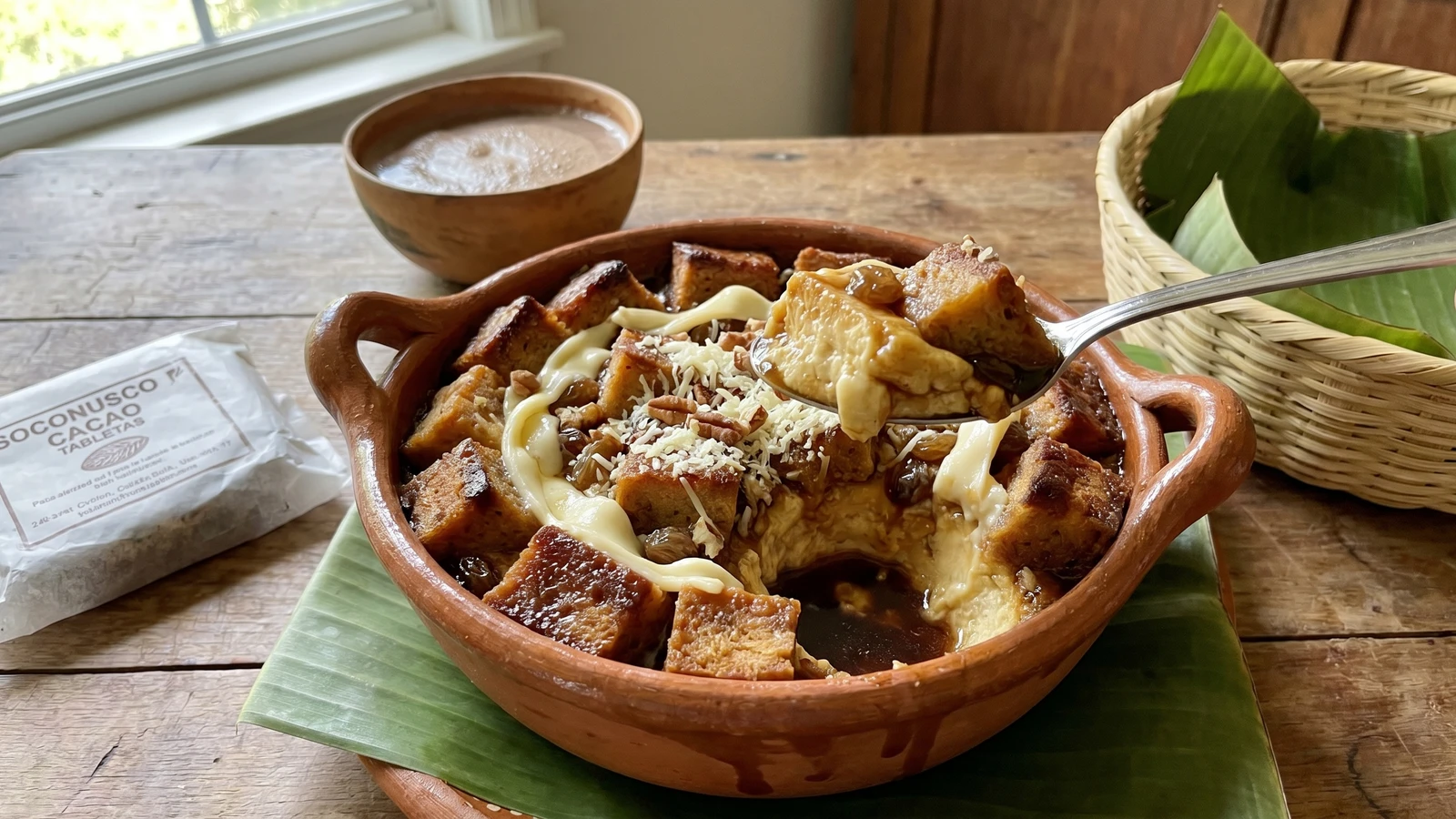
Tabasco's celebration pudding of day-old panetela, dark piloncillo syrup, canela, eggs, and salty queso de bola de Ocosingo, baked until the edges turn caramel-dark and the center stays tender.
Tabasco, especially the Chontalpa and Villahermosa kitchens along the Grijalva, keeps this dessert in the family table category: sweet, practical, and made from bread that refuses to be wasted. Chongo tabasqueño is not chongos zamoranos from Michoacán. Those are milk curds. This is a soaked panetela pudding, dark with piloncillo, scented with canela, and sharpened by cheese. Cada estado, su propia cocina.
The important ingredient is queso de bola de Ocosingo. Yes, Ocosingo is in Chiapas, but the southern markets talk to each other. Tabasco, Chiapas, Campeche, and Yucatán have always traded flavor across rivers, roads, and family visits. That salty cheese melting into the sweet crumb is what keeps the pudding from becoming candy. Use a firm, salty queso de bola if you can get it. If your vendor has the real Ocosingo cheese, buy it and don't argue.
I learned a version of this from a woman in Villahermosa who baked it in a clay cazuela darkened by years of piloncillo syrup. She told me the panetela had to be dry enough to drink the syrup without collapsing. That is the lesson. Old bread becomes dessert when the cook understands moisture, patience, and heat. Saber cocinar es saber vivir.
Chongo tabasqueño belongs to the southern Mexican family of bread puddings that developed after wheat breads, dairy, and refined sugar entered colonial kitchens, then were adapted with local sweeteners such as piloncillo. In Tabasco, the use of panetela reflects the Gulf and Maya south preference for sponge-like celebration breads that absorb syrup cleanly, while queso de bola traveled through regional trade networks from Chiapas and the Caribbean-facing southeast. The dish is often confused with chongos zamoranos from Michoacán, but the two share a name more than a method: one is a baked bread pudding, the other is curdled milk cooked in syrup.
Quantity
10 ounces
cut into 1-inch cubes
Quantity
8 ounces
chopped
Quantity
2 cups
Quantity
1
Quantity
3
Quantity
1 strip
Quantity
1/4 teaspoon
Quantity
4
Quantity
1 cup
Quantity
1/2 cup
Quantity
3 tablespoons, plus more for the dish
melted
Quantity
5 ounces
grated
Quantity
1/2 cup
Quantity
1/3 cup
| Ingredient | Quantity |
|---|---|
| day-old panetela or firm sponge cakecut into 1-inch cubes | 10 ounces |
| piloncillochopped | 8 ounces |
| water | 2 cups |
| Mexican cinnamon stick (canela) | 1 |
| whole cloves | 3 |
| orange peel | 1 strip |
| kosher salt | 1/4 teaspoon |
| large eggs | 4 |
| whole milk | 1 cup |
| evaporated milk | 1/2 cup |
| unsalted buttermelted | 3 tablespoons, plus more for the dish |
| queso de bola de Ocosingo or firm salty queso de bolagrated | 5 ounces |
| raisins | 1/2 cup |
| chopped pecans or Tabasco criollo cacao nibs (optional) | 1/3 cup |
Spread the panetela cubes on a sheet pan and let them sit uncovered while you prepare the syrup. If the cake is very fresh, bake it at 300F for 10 to 12 minutes, just until the outside feels dry. Do not toast it dark. You want a thirsty crumb, not croutons.
Combine the piloncillo, water, canela, cloves, orange peel, and salt in a saucepan. Bring to a simmer over medium heat and cook for 18 to 22 minutes, stirring until the piloncillo dissolves and the syrup darkens to the color of wet clay. It should coat a spoon lightly, not turn into candy. Strain out the spices and peel.
Whisk the eggs in a large bowl until smooth. Whisk in the whole milk, evaporated milk, and melted butter. Slowly pour in 1 cup of the warm piloncillo syrup while whisking constantly. This keeps the eggs from scrambling. Then whisk in the rest of the syrup. The custard should smell of canela and dark sugar.
Butter a 2-quart clay cazuela or baking dish. Layer in half the panetela, half the grated queso de bola de Ocosingo, and half the raisins. Repeat with the remaining panetela, cheese, and raisins. Pour the piloncillo custard evenly over the top. Press gently with your palm so every piece drinks. Let it stand 20 minutes. This waiting is not decoration. It is how the center becomes pudding instead of dry cake.
Heat the oven to 350F. Scatter the pecans or cacao nibs over the top if using. Bake for 45 to 55 minutes, until the edges are caramel-dark, the top is set, and the center trembles slightly when you move the dish. A knife inserted near the center should come out moist but not liquid. If the top browns too fast, cover it loosely with foil.
Let the chongo rest at least 25 minutes before spooning it out. Hot from the oven it will collapse into syrup. Warm, it holds its shape and the cheese pulls softly through the crumb. Serve from the cazuela at the table. Así se hace y punto.
1 serving (about 200g)
Culinary guides, cultural storytelling, and the editorial depth that makes cooking meaningful.
Discover Culinary ExplorerChef Lupita
Puebla's convent-style acitrón, made from cidra peel instead of endangered biznaga, built through repeated syrup soakings until the cubes turn firm, translucent, and ready for rosca or chiles en nogada.

Chef Lupita
Ciudad de México's Tulyehualco alegría is popped huautli folded into piloncillo honey, pressed with peanuts, pepitas, and raisins, then cut into the rectangular bars that built a pueblo's identity.

Chef Lupita
Oaxaca's pre-Columbian amaranth bar, popped on a hot comal and bound with piloncillo, honey, and the sacred Zapotec grain that the Spanish tried, and failed, to outlaw.

Chef Lupita
Querétaro's mercado candy of popped amaranto pressed with dark piloncillo syrup, pepitas, pecans, and cacahuate, a Bajío sweet that respects the seed before it decorates the table.