
Chef Lupita
Acitrón de Cidra Conventual
Puebla's convent-style acitrón, made from cidra peel instead of endangered biznaga, built through repeated syrup soakings until the cubes turn firm, translucent, and ready for rosca or chiles en nogada.
A cooking platform built around craft, culture, and the stories behind what we eat.
Created by
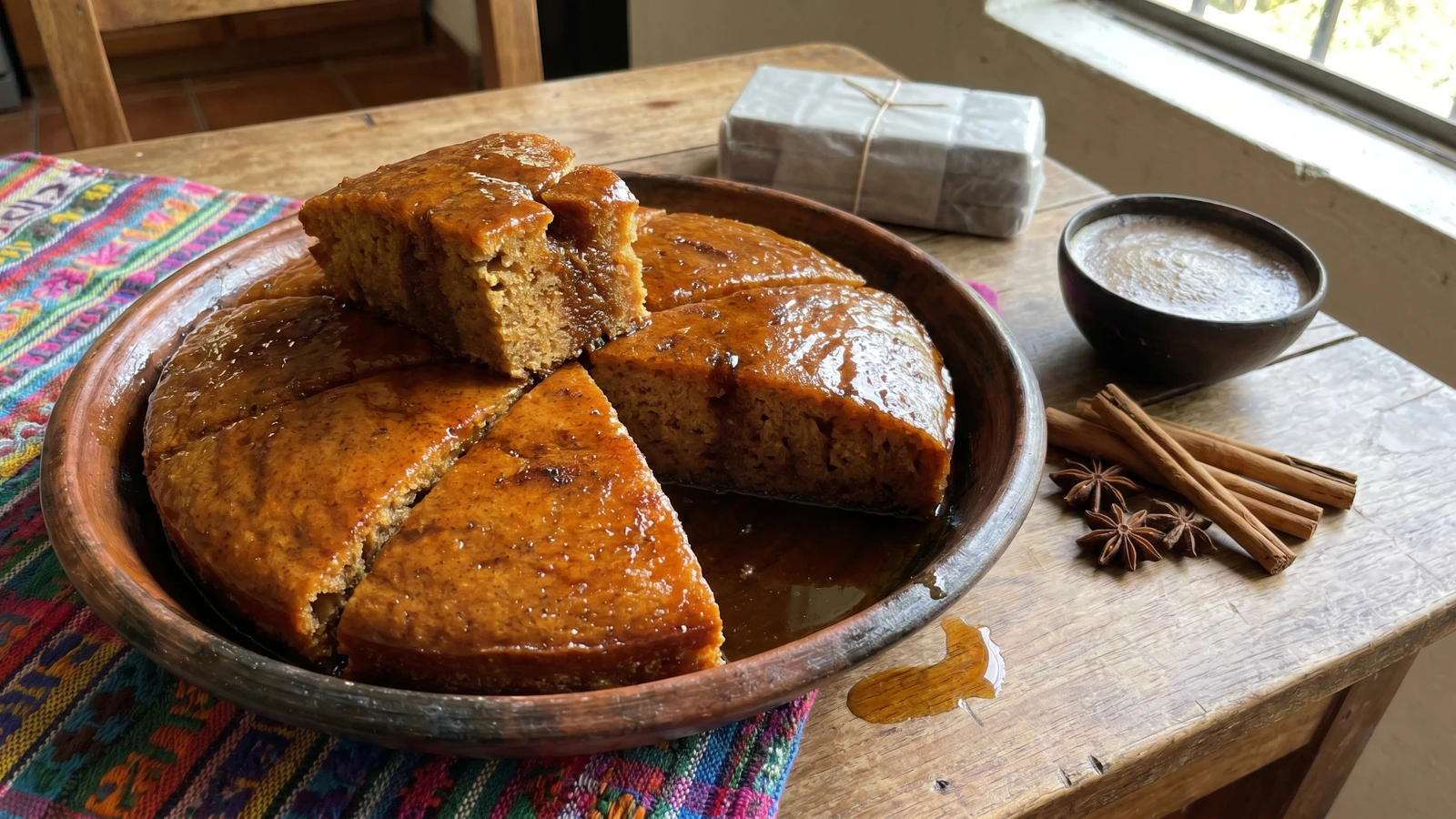
Chiapas's soaked marquesote cake from Chiapa de Corzo, firm egg sponge drenched in piloncillo syrup scented with Mexican cinnamon, clove, and star anise.
Chiapas, the central Grijalva region, Chiapa de Corzo. That is where this chimbo lives. You see it at Fiesta Grande in January, on market tables in Tuxtla, and in family kitchens where the marquesote is baked dry on purpose because it must drink syrup without falling apart.
The cake is not frosted. No fondant. No pastry-shop nonsense. It is an egg sponge, firm and plain, made to receive piloncillo syrup with canela mexicana, clavo de olor, and anis estrella. The sweetness belongs to the syrup, not to a decoration. La cocina no es decoración, es trabajo.
I learned this version from a señora in Chiapa de Corzo who cut the marquesote into thick rectangles and let them rest uncovered before soaking. She told me, 'si está tierno, se deshace,' if it is too tender, it falls apart. She was right. Make the cake, let it dry, bathe it patiently, and serve it in barro or on a wooden board. Cada estado, su propia cocina.
Marquesote entered southern Mexican convent and household cooking during the colonial period as an egg-rich sponge related to Iberian bizcochos, then local cooks adapted it into festival sweets by soaking it in piloncillo syrups. In Chiapas, chimbo became tied to Chiapa de Corzo and the central valley fairs, especially Fiesta Grande, where preserved fruits, turuletes, suspiros, and syruped breads are part of the public dulcería tradition. The use of piloncillo, canela mexicana, and anis estrella reflects Chiapas's position between highland, river valley, and trade-route kitchens, not a generic national dessert.
Quantity
10
separated, at room temperature
Quantity
1 cup
Quantity
1 1/2 cups
sifted twice
Quantity
1/2 cup
sifted
Quantity
1 teaspoon
Quantity
1/2 teaspoon
Quantity
1 teaspoon
Quantity
for greasing the pan
Quantity
2 tablespoons
for dusting the pan
Quantity
12 ounces
chopped
Quantity
4 cups
Quantity
2 sticks
Quantity
3
Quantity
2
Quantity
1 strip
white pith removed
| Ingredient | Quantity |
|---|---|
| large eggsseparated, at room temperature | 10 |
| granulated sugar | 1 cup |
| all-purpose floursifted twice | 1 1/2 cups |
| cornstarchsifted | 1/2 cup |
| baking powder | 1 teaspoon |
| fine sea salt | 1/2 teaspoon |
| Mexican vanilla extract | 1 teaspoon |
| unsalted butter | for greasing the pan |
| all-purpose flourfor dusting the pan | 2 tablespoons |
| piloncillochopped | 12 ounces |
| water | 4 cups |
| canela mexicana | 2 sticks |
| whole cloves | 3 |
| whole star anise pods | 2 |
| fresh orange peelwhite pith removed | 1 strip |
Heat the oven to 350F. Butter a 9-by-13-inch metal baking pan and dust it with flour, tapping out the excess. Do this cleanly. Marquesote sticks when the pan is treated carelessly, and then people blame the recipe.
Beat the egg yolks with half the sugar until thick, pale, and ribboning from the whisk, about 5 minutes with a mixer. Add the Mexican vanilla and beat 30 seconds more. This gives the cake body before the whites do their lifting.
In a clean bowl, beat the egg whites with the salt until foamy. Add the remaining sugar slowly and keep beating until the whites hold glossy medium peaks. Not dry peaks. Dry whites leave pockets in the crumb, and chimbo needs an even sponge so the syrup enters properly.
Sift the flour, cornstarch, and baking powder together. Fold one third of the whites into the yolks to loosen them. Fold in half the dry mixture, then another third of the whites, then the remaining dry mixture, then the last whites. Use a wide spatula and turn the bowl. You are keeping air in the batter, not stirring atole.
Spread the batter into the prepared pan and smooth the top. Bake 28 to 35 minutes, until the cake is golden, pulling slightly from the sides, and springs back when pressed in the center. Let it cool completely in the pan. The crumb should be firm and a little dry. That is correct.
Turn the cake out and cut it into 12 rectangles. Set them on a rack, uncovered, for at least 4 hours, or overnight if your kitchen is humid. Fresh soft cake collapses in syrup. A rested marquesote drinks like it was taught to behave.
Combine the chopped piloncillo, water, canela mexicana, cloves, star anise, and orange peel in a wide clay cazuela or heavy saucepan. Bring to a simmer and cook 25 to 30 minutes, until the piloncillo dissolves and the syrup smells of cinnamon and anise. It should be glossy and lightly thickened, not candy. Strain out the spices.
Lower the cake rectangles into the warm syrup in batches. Spoon syrup over the tops for 2 to 3 minutes, turning once with care, until each piece is saturated but still holds its edges. No me vengas con atajos. Pouring syrup over the whole pan unevenly gives you dry corners and mushy centers.
Arrange the soaked pieces in a shallow clay dish and spoon a little extra syrup over them. Rest 30 minutes before serving so the syrup settles through the crumb. Serve at room temperature. The texture should be tender, syrup-heavy, and still sliceable. Recetas probadas y garantizadas.
1 serving (about 155g)
Culinary guides, cultural storytelling, and the editorial depth that makes cooking meaningful.
Discover Culinary ExplorerChef Lupita
Puebla's convent-style acitrón, made from cidra peel instead of endangered biznaga, built through repeated syrup soakings until the cubes turn firm, translucent, and ready for rosca or chiles en nogada.

Chef Lupita
Ciudad de México's Tulyehualco alegría is popped huautli folded into piloncillo honey, pressed with peanuts, pepitas, and raisins, then cut into the rectangular bars that built a pueblo's identity.

Chef Lupita
Oaxaca's pre-Columbian amaranth bar, popped on a hot comal and bound with piloncillo, honey, and the sacred Zapotec grain that the Spanish tried, and failed, to outlaw.

Chef Lupita
Querétaro's mercado candy of popped amaranto pressed with dark piloncillo syrup, pepitas, pecans, and cacahuate, a Bajío sweet that respects the seed before it decorates the table.