Culinary Explorer

A cooking platform built around craft, culture, and the stories behind what we eat.
Discover Culinary Explorer
Cheese and Pickle Sandwich

Cheese and Pickle Sandwich

Created by Chef Thomas

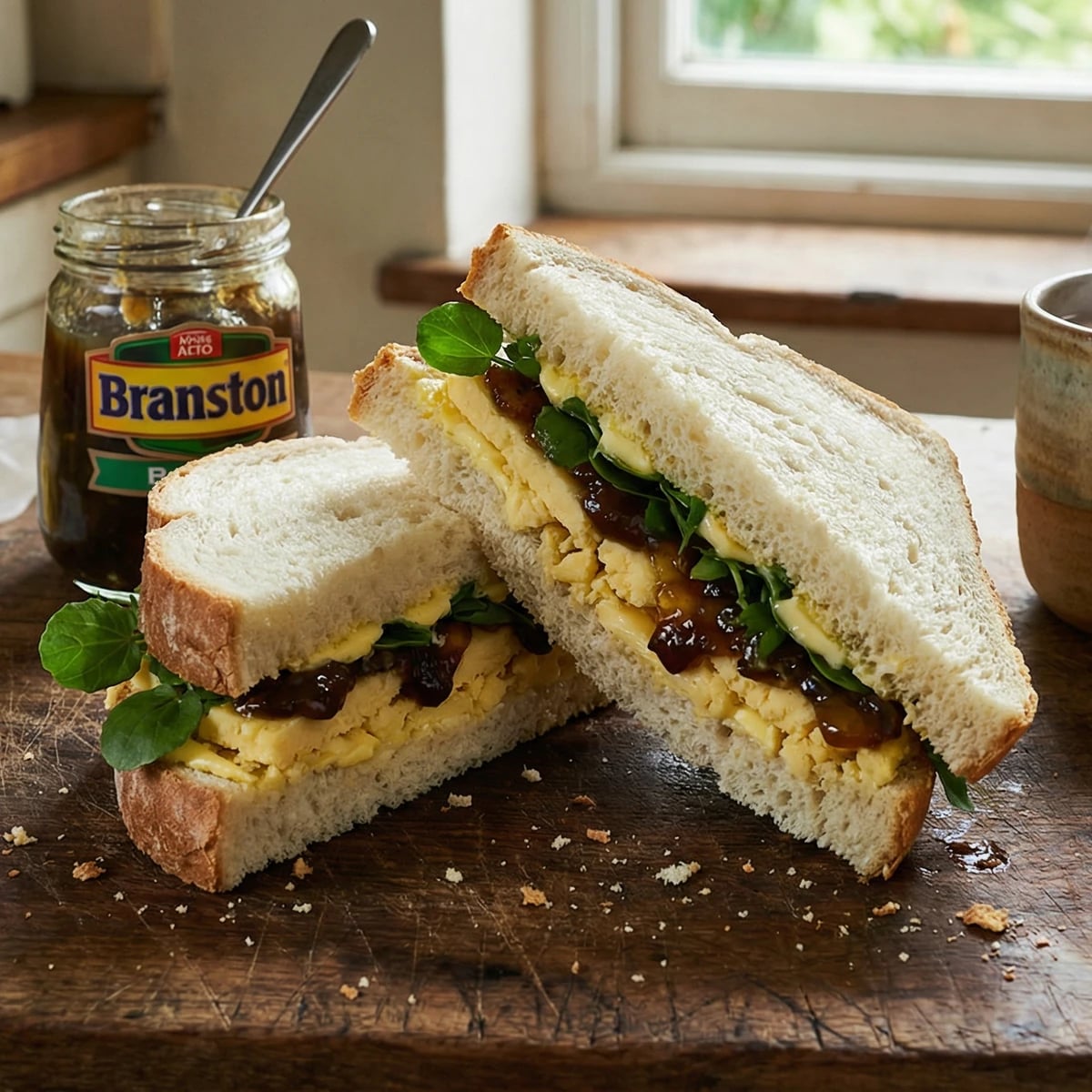
Thick bread, real butter, a slab of mature cheddar and a generous spoonful of Branston pickle. Five minutes between the thought and the eating, and every one of them worth it.

Sandwiches & Wraps
British
Quick Meal
Picnic
10 min
Active Time
0 min cook10 min total
Yield1 sandwich

Some days the best thing you can do for yourself is make a sandwich. Not a project. Not a meal that needs planning or a pan on the hob. Just bread, butter, cheese, pickle. Five minutes between the thought and the eating.

I've been making this sandwich for as long as I can remember. The bread changes, the cheese gets better as I get older and more particular, but the shape of the thing stays the same. Thick-cut bread, properly buttered. A generous slab of cheddar, the kind that crumbles slightly when you try to slice it because it's been aged long enough to have some character. A good spoonful of pickle, sweet and sharp and dark, spread over the cheese so it catches in every bite. The combination is so good, so completely right, that trying to improve it feels like an insult.

There's no technique here. No skill required beyond knowing what good cheese tastes like and being willing to butter bread to the edges. A recipe is a conversation, not a contract, and this one is barely a conversation. It's a nod across the kitchen. You already know what to do.

I wrote it down in the notebook once, though I'm not sure why. Two words: cheese, pickle. Underneath, in smaller writing: Tuesday. Rain. That was enough to bring the whole thing back. The smell of the bread. The cold tang of the pickle against the warm, fatty richness of the cheddar. The particular satisfaction of eating something so simple that it feels like a small, private rebellion against every overwrought meal you've ever been served.

The technique, the tradition, and the story behind every dish.

Discover Culinary Explorer

Ingredients

good bread

Quantity

2 thick slices

from a proper loaf, not pre-sliced

unsalted butter

Quantity

generous amount

softened

mature cheddar cheese

Quantity

100g

thickly sliced or crumbled in rough pieces

Branston pickle

Quantity

2 generous tablespoons

watercress (optional)

Quantity

a few sprigs

Equipment Needed

  • Bread knife
  • Butter knife

Instructions

  1. 1

    Cut the bread

    Cut two thick slices from a decent loaf. Not dainty. You want slices that can hold their cargo without collapsing, about the width of your little finger. A white farmhouse loaf is traditional, but a good wholemeal with some grain in it works just as well. The bread should taste of something on its own. If it doesn't, find a better loaf.

  2. 2

    Butter to the edges

    Butter both slices generously with softened butter, right to the edges and into the corners. This is not the place to be cautious. The butter isn't just there for richness, it's the barrier between bread and pickle, and the layer that makes everything slide together properly. Cold butter tears the bread, so leave it out of the fridge for a while before you start.

    Real butter. Salted or unsalted is your business, but it should be butter. This is a sandwich of three ingredients and a bit of bread. Each one is exposed.
  3. 3

    Layer the cheese

    Lay the cheddar over one slice of bread. Thick slabs if you can cut them cleanly, rough crumbles if the cheese is properly mature and won't behave. Either way is fine. You want enough cheese that it feels substantial in every bite, not a polite suggestion of cheddar hiding under the pickle. Cover the bread. Be generous. This is the backbone of the whole thing.

  4. 4

    Spoon on the pickle

    Spoon the pickle over the cheese in a thick, uneven layer. Branston, from the jar, is what you want here. That sweet, sharp, malty tang with its chunks of swede and carrot is the whole point. Don't spread it thin and tidy. Let it sit in spoonfuls so you get bursts of it as you eat. If a few leaves of watercress are to hand, lay them over the pickle for a peppery bite that cuts through the sweetness. Close the sandwich with the second slice, press it down gently, and cut it in half. Corner to corner, if you're that way inclined. Straight across the middle is also perfectly respectable.

Chef Tips

  • The cheese is everything. Find a mature cheddar with some bite to it, something that's been aged for at least twelve months and tastes sharp and complex, not just salty. A proper farmhouse cheddar from a cheesemonger will be a different thing entirely from the block in the supermarket chiller. This is a sandwich of three ingredients. If the cheese is dull, the sandwich is dull.
  • Branston pickle, from the jar. I know there are other pickles, and some of them are very good, but this sandwich wants Branston. That particular sweet, vinegary, spiced darkness with chunks of vegetable through it is what makes the combination work. It's been the right answer for a long time and I see no reason to argue with it.
  • The bread is the frame. A thick slice from a proper bakery loaf, white or wholemeal, with enough structure to hold the filling without going soggy. Supermarket sliced will do at a push, but a sandwich this simple deserves bread that was baked by someone who cared about it.
  • Make it for a flask of tea and a walk, or for lunch at the kitchen table with the radio on. There are few better feelings than sitting down to a cheese and pickle sandwich you've made with attention, even if that attention only took five minutes.

Advance Preparation

  • A cheese and pickle sandwich travels well, wrapped in greaseproof paper or foil, for a packed lunch or a picnic. Make it in the morning, eat it at noon. The pickle will soften the bread a little by then, which some people prefer.
  • Slice the cheese ahead if you like, but this is a ten-minute job from start to finish. There is not much to prepare in advance, and that is rather the point.

Frequently Asked Questions

Nutrition Information

1 serving (about 260g)

Calories
795 calories
Total Fat
48 g
Saturated Fat
29 g
Trans Fat
1 g
Unsaturated Fat
18 g
Cholesterol
135 mg
Sodium
1400 mg
Total Carbohydrates
56 g
Dietary Fiber
3 g
Sugars
17 g
Protein
32 g

Note: Chef personas and recipes are created with AI assistance. Cook with care: follow safe food-handling practices, check doneness with a thermometer when needed, and adapt for allergies and your kitchen.

Where cooking meets culture.

Culinary guides, cultural storytelling, and the editorial depth that makes cooking meaningful.

Discover Culinary Explorer

More from British Sandwiches & Things on Toast

Browse the full collection