
Chef Lupita
Arroz a la Oaxaqueña
Oaxaca's red rice, stained with tomato and fried in lard, steamed with carrots, ejotes, black beans, and epazote. The side that anchors a Oaxacan family meal and earns its place beside the main.
A cooking platform built around craft, culture, and the stories behind what we eat.
Created by
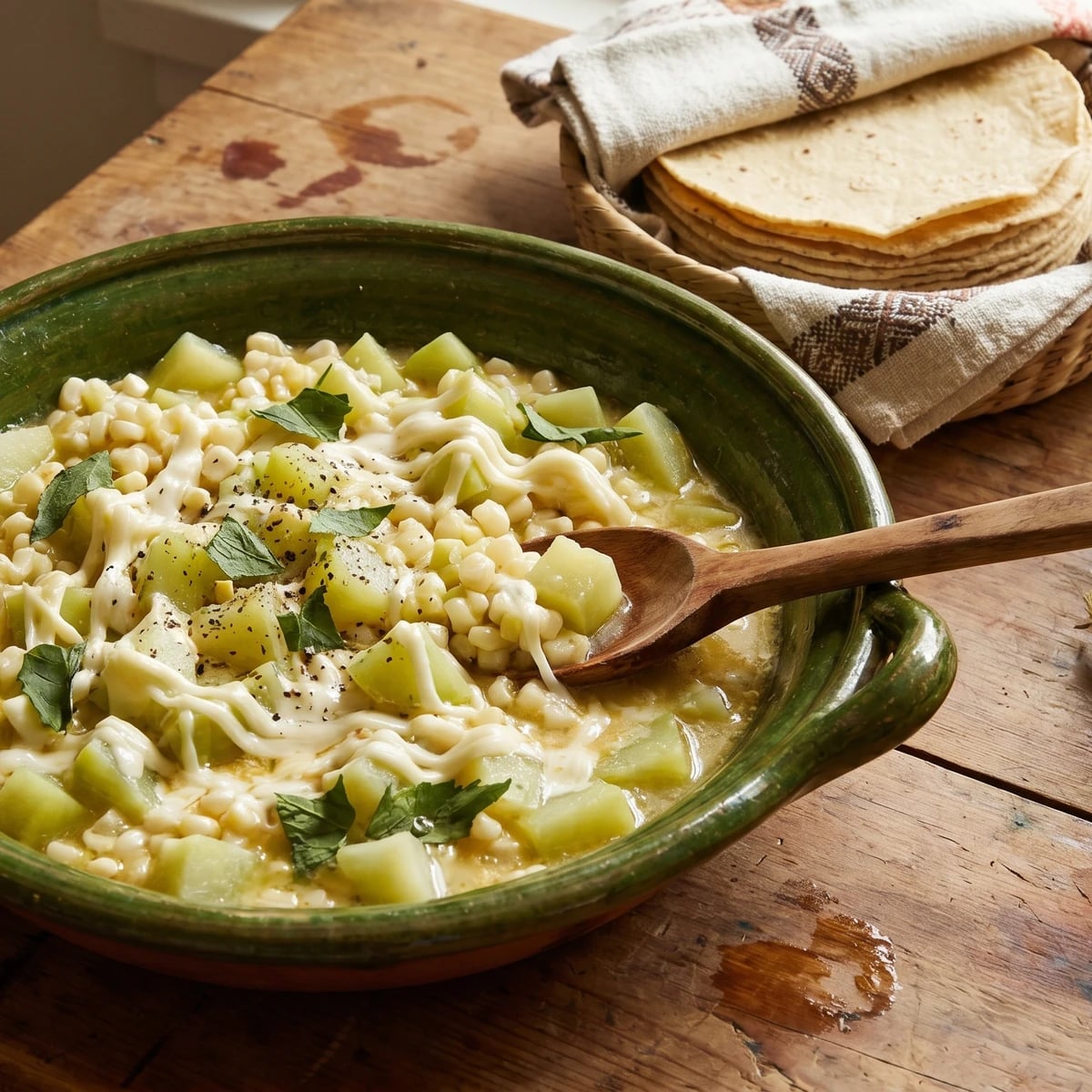
Oaxaca's summer side of cubed chayote and fresh white corn cooked in lard with epazote, finished with crema and a fistful of quesillo pulled into strands.
This dish is from Oaxaca. From the Valles Centrales, where the chayote vines climb the back walls of every casa with a patio and the white corn comes in by the burlap sack from the milpas outside Tlacolula. It is a side dish, plain and weekday, the kind of thing a senora makes on a Tuesday because the chayotes are heavy and the corn is sweet and the quesillo was bought that morning at the mercado.
Three things make this Oaxacan and not generic. The quesillo, pulled into strands by hand, never the pre-shredded mozzarella that some people try to pass off. The epazote, with its mineral bite that cuts through the cream and the corn. And the lard. Yes, the lard. Vegetable oil will cook the chayote. It will not season it. La manteca es el sabor and Oaxaca knows this better than most.
My mother's notebook does not have this recipe. She was Jalisciense and chayote was a stewing vegetable to her, never a star. I learned this dish from a senora named Rosa who sells quesillo at the Mercado de Abastos in Oaxaca City. She made it for me on a hot plate behind her stall while she explained that you do not boil the chayote, you saute it, and you do not melt the quesillo into a sauce, you let it slump on top and pull it with a spoon. Cada estado, su propia cocina.
The chayote (Sechium edule) is a domesticated cucurbit indigenous to Mesoamerica, cultivated in central and southern Mexico for at least three thousand years before the conquest, and its Nahuatl name 'chayotli' survives in modern Spanish almost unchanged. Quesillo, the pulled string cheese now synonymous with Oaxaca, is a relatively recent invention: it was developed in 1885 in the town of Reyes Etla by a young cheesemaker named Leobarda Castellanos Garcia, who is said to have over-acidified a batch of curds and saved the result by stretching them in hot water, accidentally creating a cheese that pulled into strands. The pairing of chayote, white corn, and quesillo is a 20th-century home-cooking development that became standard across the Valles Centrales as quesillo spread from Etla into the rest of Oaxacan kitchens.
Quantity
3 (about 1 1/2 pounds)
peeled and cut into 1/2-inch cubes
Quantity
3 (about 2 1/2 cups kernels)
kernels cut from the cob
Quantity
2 tablespoons
Quantity
1
finely chopped
Quantity
3
finely minced
Quantity
1
finely chopped, seeds and all
Quantity
2 sprigs
leaves only, roughly chopped
Quantity
1 teaspoon, plus more to taste
Quantity
1/3 cup
Quantity
6 ounces
pulled into thin strands
Quantity
to taste
Quantity
for serving
warmed
| Ingredient | Quantity |
|---|---|
| medium chayotespeeled and cut into 1/2-inch cubes | 3 (about 1 1/2 pounds) |
| ears fresh white cornkernels cut from the cob | 3 (about 2 1/2 cups kernels) |
| manteca de cerdo (pork lard) | 2 tablespoons |
| small white onionfinely chopped | 1 |
| garlic clovesfinely minced | 3 |
| fresh chile serranofinely chopped, seeds and all | 1 |
| fresh epazoteleaves only, roughly chopped | 2 sprigs |
| kosher salt | 1 teaspoon, plus more to taste |
| Mexican crema | 1/3 cup |
| quesillo de Oaxacapulled into thin strands | 6 ounces |
| freshly ground black pepper | to taste |
| hand-pressed corn tortillas (optional)warmed | for serving |
Peel the chayotes under cold running water. The skin secretes a sticky sap that will leave your fingers tight if you peel them dry. Cut each one in half, remove the flat seed at the center, and cut the flesh into half-inch cubes. Keep the cubes uniform. They need to cook at the same rate or you will get half raw and half mush.
Stand each ear of corn on its wide end inside a large bowl. Run a sharp knife straight down the cob to release the kernels. Then run the back of the knife down the bare cob to scrape out the milky liquid that holds the corn flavor. That liquid is half the dish. Do not skip it. Use white corn if you can find it. Yellow works, but Oaxacan cooks reach for the white ear first.
Heat the manteca in a wide cazuela or heavy skillet over medium heat until it shimmers. Add the chopped onion and a pinch of salt. Cook for 4 to 5 minutes, stirring, until the onion turns translucent and the edges begin to gild. Add the garlic and chile serrano. Cook another minute, just until you can smell the garlic. La manteca es el sabor. Vegetable oil will get the job done. It will not give you the same dish.
Add the chayote cubes and the teaspoon of salt. Stir to coat in the seasoned fat. Cook over medium heat for about 8 minutes, stirring every minute or two. The chayote will release some water and the cubes will turn from chalk-white to faintly translucent at the edges. You want them tender but still with a clean bite. Mushy chayote ruins this dish.
Stir in the corn kernels along with the milky liquid you scraped from the cobs. Add the chopped epazote leaves. Cook for 5 to 6 minutes more, stirring, until the corn turns from raw and pale to bright and sweet. The kitchen will smell like the corner of a Oaxacan mercado where the women sell esquites. Taste for salt now. The vegetables need it.
Reduce the heat to low. Pour the crema over the vegetables and stir gently to coat. Scatter the pulled quesillo across the top. Cover the pan for one minute, no more. The quesillo should slump and stretch but not disappear into a sauce. You want strands you can lift with a spoon. Crack black pepper over the top, taste once more for salt, and serve directly from the cazuela at the table.
1 serving (about 235g)
Culinary guides, cultural storytelling, and the editorial depth that makes cooking meaningful.
Discover Culinary Explorer
Chef Lupita
Oaxaca's red rice, stained with tomato and fried in lard, steamed with carrots, ejotes, black beans, and epazote. The side that anchors a Oaxacan family meal and earns its place beside the main.

Chef Lupita
Veracruz white rice steamed with a whole hoja santa leaf laid across the top, the anise-and-pepper perfume of the leaf settling directly into the grains. The rice that belongs next to chichilo and coastal pescados.

Chef Lupita
Oaxaca's white rice, toasted in lard with onion and garlic, finished at the table with sliced ripe plátano. The strangest, simplest, most beloved side dish in the Valles Centrales.

Chef Lupita
A Oaxacan rainy-season corn pudding built on fresh white corn ground coarse, layered with charred poblano rajas and quesillo, and baked in clay until the top cracks golden and the cheese pulls in long strands.