Culinary Explorer

A cooking platform built around craft, culture, and the stories behind what we eat.
Discover Culinary Explorer
Chanfana

Chanfana

Created by

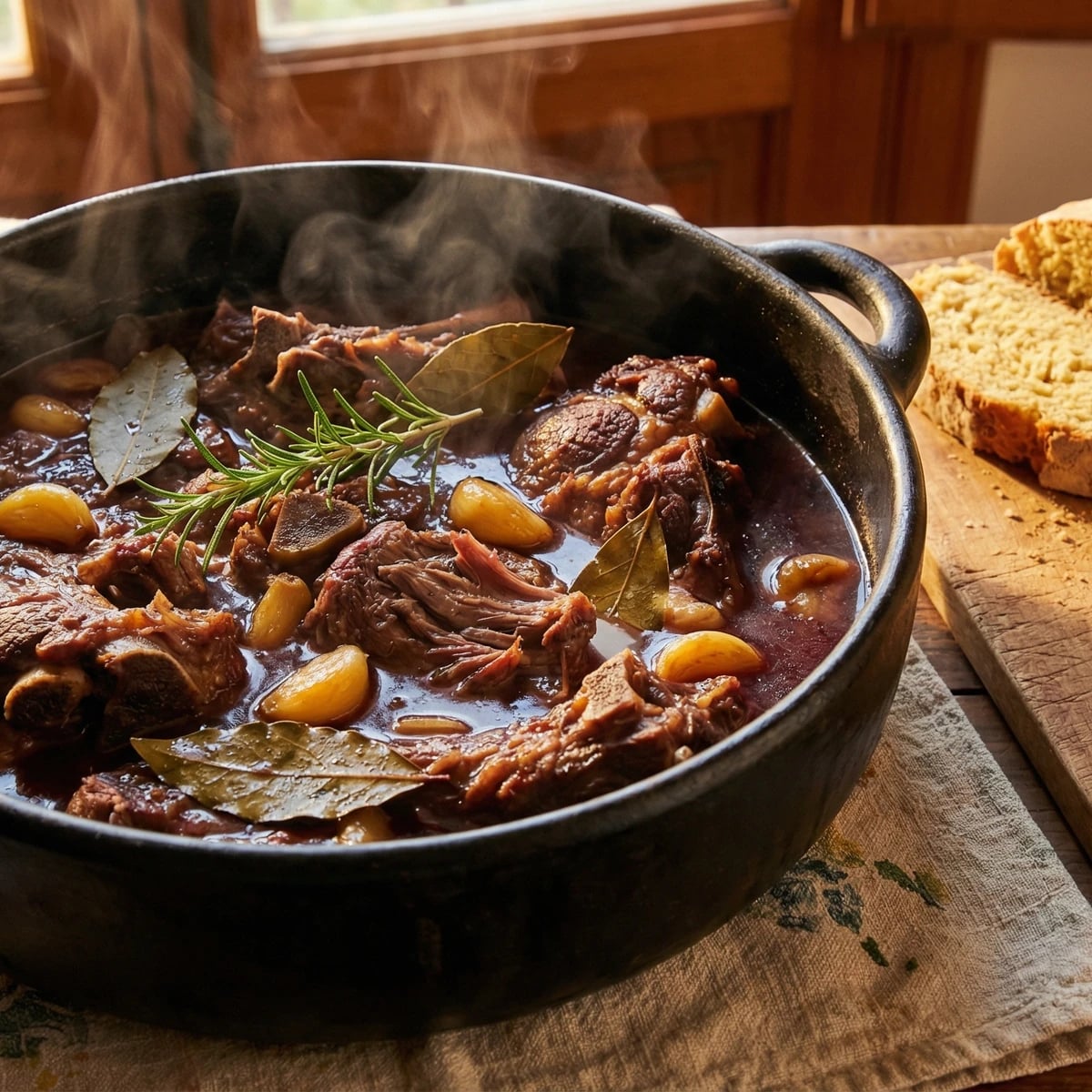
The mountain braise of Beira, where old goats meet robust wine and black clay pots, cooked for hours until the meat surrenders. Convent cooking, peasant wisdom, patience rewarded.

Main Dishes
Portuguese, Beira
Special Occasion
Slow Cooker
30 min
Active Time
3 hr 30 min cook4 hr total
Yield6 servings

Some dishes exist because of abundance. Chanfana exists because of scarcity and genius.

In the mountains of Beira, families kept goats for milk and cheese. When a goat grew too old to produce, it went into the pot. But old goat is tough, stringy, the kind of meat that fights back. The solution? Drown it in wine. Seal it in black clay. Let time and heat do what knives cannot.

I first tasted proper chanfana in Miranda do Corvo, at a restaurant that still cooks in wood-fired ovens, the caçoilas sealed with flour paste so nothing escapes. The meat fell from the bone. The wine had reduced into something almost syrupy, dark and rich. I understood immediately why this dish has survived centuries.

At Mesa da Avó, we serve chanfana in autumn and winter. It's not a summer dish. It demands cold weather, a table full of people, bread to soak up the sauce, and wine from the same region that flavors the pot. This is communal cooking. This is what happens when you give simple ingredients enough time to become extraordinary.

Chanfana originated in the monasteries around Coimbra, particularly the Convento de Santa Clara, where nuns created the dish to tenderize donated old goats. The black clay pots (caçoilas) from Vila Nova de Poiares became inseparable from the recipe, their porous clay absorbing wine and fat over generations of use. The dish remains central to festas and family gatherings throughout Beira Litoral.

The technique, the tradition, and the story behind every dish.

Discover Culinary Explorer

Ingredients

goat or lamb shoulder

Quantity

1.5 kg

cut into large pieces on the bone

robust red wine (Dão or Bairrada)

Quantity

1 bottle (750ml)

extra virgin olive oil (azeite)

Quantity

1/4 cup

garlic

Quantity

2 heads

cloves separated and peeled

bay leaves

Quantity

4

sweet paprika (colorau doce)

Quantity

1 tablespoon

hot paprika or piri-piri flakes

Quantity

1 teaspoon

coarse sea salt

Quantity

1 tablespoon

black pepper

Quantity

1 teaspoon

freshly ground

fresh rosemary

Quantity

2 sprigs

cinnamon stick

Quantity

1

lard or olive oil

Quantity

2 tablespoons

for greasing the pot

Equipment Needed

  • Black clay pot (caçoila) from Poiares or heavy Dutch oven with tight-fitting lid
  • Large bowl for marinating
  • Aluminum foil (optional, for extra seal)

Instructions

  1. 1

    Marinate the meat

    In a large bowl, combine the meat with the wine, olive oil, garlic cloves, bay leaves, both paprikas, salt, pepper, rosemary, and cinnamon stick. Turn the meat to coat every piece. Cover and refrigerate for at least 4 hours, preferably overnight. The wine begins the tenderizing before the pot ever sees heat.

    Overnight marination makes a difference you can taste. The meat absorbs the wine, the paprika stains it red, and the garlic perfumes everything. Don't skip this.
  2. 2

    Prepare the pot

    Preheat your oven to 160°C (320°F). Grease the inside of a clay pot or heavy Dutch oven with lard or olive oil. If using a new clay pot, soak it in water for 30 minutes first. Remove the meat from the marinade, shaking off excess liquid. Reserve all the marinade.

  3. 3

    Arrange the braise

    Layer the meat pieces in the pot, tucking the garlic cloves from the marinade between the pieces. Pour the reserved wine marinade over everything. The liquid should come at least three-quarters up the meat. Add more wine if needed. Tuck the bay leaves, rosemary, and cinnamon around the meat.

    Traditional cooks seal their clay pots with a flour-and-water paste to trap every drop of steam. If using a Dutch oven, a tight-fitting lid works, but consider placing foil under the lid for extra seal.
  4. 4

    Slow braise

    Cover the pot tightly. Place in the oven and cook for 3 to 3.5 hours. Do not open the pot for the first 2.5 hours. You're building pressure and steam that tenderizes the meat. After 2.5 hours, check: the meat should be falling from the bone, the sauce reduced and dark. If the meat is still firm, cover and continue for another 30 minutes.

  5. 5

    Rest and serve

    Remove from the oven and let the pot rest, still covered, for 15 minutes. The juices will settle, the meat will relax. Serve directly from the clay pot at the table, the way it's done in Beira. Spoon the wine sauce generously over each portion. Have bread ready. You'll need it.

    In Miranda do Corvo, chanfana is served with batatas a murro (punched potatoes), roasted until the skins split. The potatoes drink the sauce the way bread does. Both are correct.

Chef Tips

  • The wine matters. Use a robust red from Dão or Bairrada. Don't use anything you wouldn't drink. The meat absorbs it all, and cheap wine makes cheap chanfana.
  • Goat is traditional, but lamb shoulder works beautifully. If you can find goat, use it. The flavor is gamier, more complex, more honest to the dish's origins.
  • A proper caçoila from Poiares is worth seeking out. The black clay, seasoned over generations, adds something no other pot can. But a heavy Dutch oven with a tight lid will still produce excellent results.
  • Chanfana improves the next day. Make it a day ahead, refrigerate, and reheat gently. The flavors deepen as they rest.
  • Don't reduce the sauce separately. It should be pourable, not thick like gravy. The bread and potatoes absorb it. That's the point.

Advance Preparation

  • The meat must marinate at least 4 hours, preferably overnight. Plan accordingly.
  • Chanfana can be made a day ahead and refrigerated. Reheat gently, covered, in a 150°C oven for 45 minutes.
  • Leftover chanfana makes extraordinary filling for empadas or served over rice.

Frequently Asked Questions

Nutrition Information

1 serving (about 220g)

Calories
590 calories
Total Fat
42 g
Saturated Fat
15 g
Trans Fat
0 g
Unsaturated Fat
24 g
Cholesterol
150 mg
Sodium
1170 mg
Total Carbohydrates
6 g
Dietary Fiber
1 g
Sugars
2 g
Protein
44 g

Note: Chef personas and recipes are created with AI assistance. Cook with care: follow safe food-handling practices, check doneness with a thermometer when needed, and adapt for allergies and your kitchen.

Where cooking meets culture.

Culinary guides, cultural storytelling, and the editorial depth that makes cooking meaningful.

Discover Culinary Explorer

More from Chef Margarida's Main Dishes

Browse the full collection