
Chef Lupita
Agua de Alfalfa
Ciudad de México's highland market agua fresca, fresh alfalfa blended with pineapple and lime until bright green, strained clean, and poured cold from the vitrolero.
A cooking platform built around craft, culture, and the stories behind what we eat.
Created by
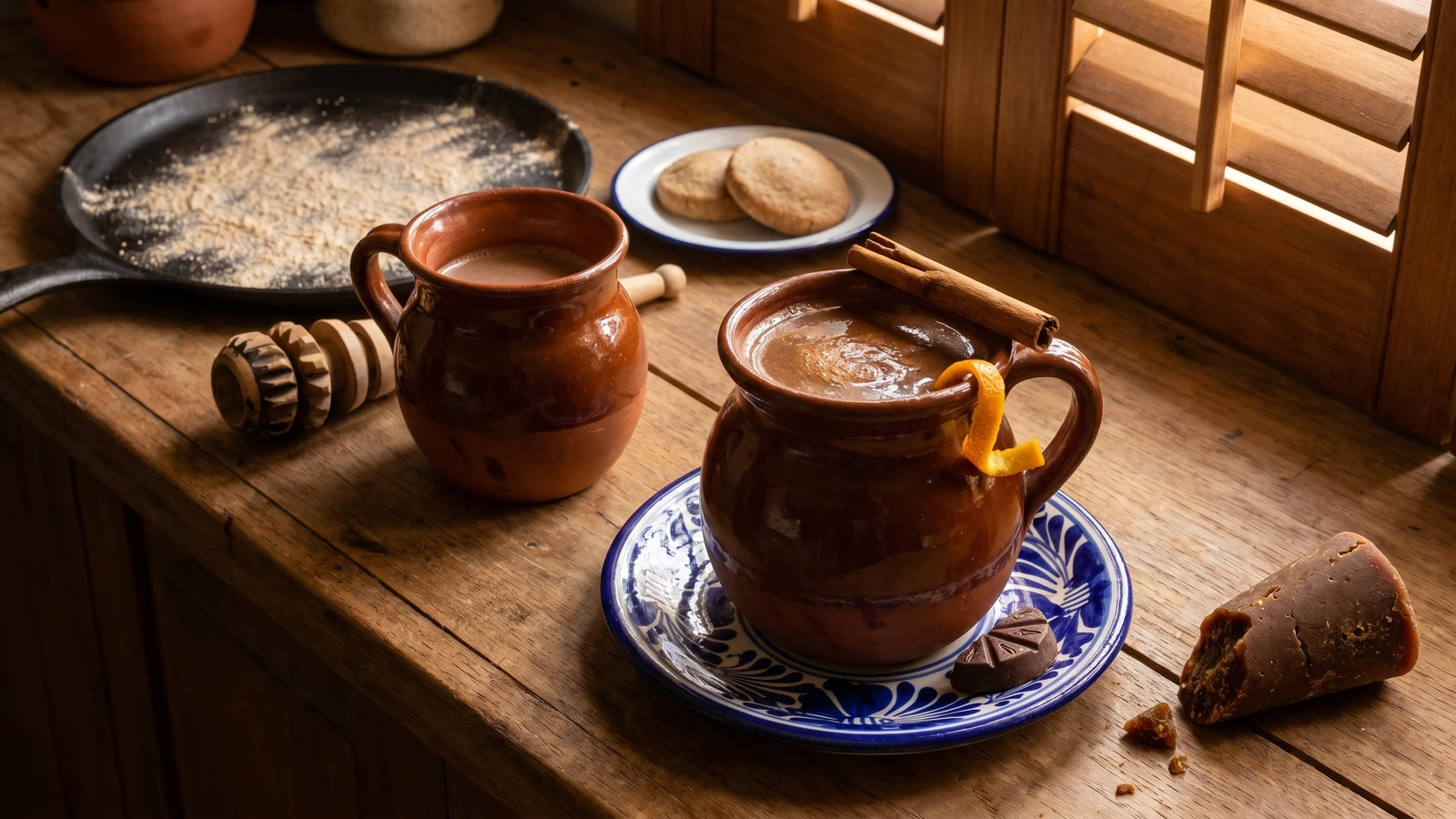
Sonora's champurrado built on toasted whole wheat flour instead of corn masa, finished with Mexican chocolate, piloncillo, canela, and orange peel. The hot drink of the wheat country on a cold desert morning.
This is from Sonora. Specifically from the wheat belt that runs through the Yaqui and Mayo valleys, the same country that gave Mexico the flour tortilla. Down south, champurrado is built on corn masa. Up here, in the only state where wheat unseated corn as the daily grain, the champurrado is made with toasted wheat flour and it tastes like nothing else in the country.
Sonora became wheat country in the late 1800s, when the irrigation projects of the Yaqui valley turned the desert into one of the most productive grain regions in the Americas. The Jesuit missions had planted the first wheat two centuries earlier, but it was the canals and the railroad that made flour the daily flour of the sonorense kitchen. Tortillas de harina, coyotas, semitas, empanadas de calabaza, and this champurrado: all of them are wheat dishes from a state that decided corn was for somewhere else.
The technique is the whole recipe. You toast the whole wheat flour on a comal until it turns the color of a desert sunset, then you slurry it with cold water and stream it into hot milk steeped with piloncillo, canela, orange peel, and Mexican chocolate. The toasting is the step nobody skips. Raw flour gives you wallpaper paste. Properly toasted flour gives you a drink that tastes nutty and deep and slightly smoky, with the chocolate sitting on top of the wheat instead of fighting it. Cada estado, su propia cocina, and this is Sonora's.
My mother's notebook does not have this recipe. She was from Jalisco and she made the masa version. I learned this one in Ures, from a senora named Adelina who toasted her flour in a comal that had belonged to her mother and her mother before her. She told me, plant your feet at the stove and do not move until the flour is the right color. Recetas probadas y garantizadas.
Champurrado descends from pre-Columbian chocolate atoles consumed across Mesoamerica, where ground maize and cacao were blended with water and whisked into a frothy hot drink, but the Sonoran wheat-flour version represents a regional inversion almost unique in Mexico. Jesuit missionaries introduced wheat cultivation to northwestern Mexico in the 17th century, and the irrigation of the Rio Yaqui and Rio Mayo valleys in the late 19th and early 20th centuries transformed Sonora into the country's wheat heartland, displacing corn as the staple grain in the northern kitchen. The use of toasted wheat flour as the thickener for champurrado, rather than the masa or maize flour used everywhere from Michoacan south, reflects the same agricultural shift that produced Sonora's flour tortillas, coyotas, and pan semita, and is one of the clearest markers of how completely the cuisine of the northwest broke from the corn-based traditions of central and southern Mexico.
Quantity
1 cup
Quantity
6 cups
Quantity
2 cups
Quantity
1 cone (about 8 ounces)
chopped, or 1 cup packed dark brown sugar
Quantity
2 tablets (about 6 ounces total)
broken into pieces
Quantity
1 stick, about 4 inches
Quantity
from 1 orange
in long strips, white pith removed
Quantity
1
Sonoran sierra version
Quantity
1/4 teaspoon
Quantity
1 teaspoon
| Ingredient | Quantity |
|---|---|
| harina de trigo integral (whole wheat flour) | 1 cup |
| whole milk | 6 cups |
| water | 2 cups |
| piloncillochopped, or 1 cup packed dark brown sugar | 1 cone (about 8 ounces) |
| Mexican chocolate (Ibarra or Abuelita)broken into pieces | 2 tablets (about 6 ounces total) |
| canela (true Mexican cinnamon) | 1 stick, about 4 inches |
| orange peelin long strips, white pith removed | from 1 orange |
| star anise (optional)Sonoran sierra version | 1 |
| kosher salt | 1/4 teaspoon |
| Mexican vanilla extract | 1 teaspoon |
Heat a dry comal or heavy skillet over medium-low heat. Add the whole wheat flour in a single layer and toast it, stirring constantly with a wooden spoon for 8 to 10 minutes. The flour will move through three colors: pale beige, then sandy gold, then the color of toasted almond skins. Do not walk away. This is the step that makes Sonoran champurrado what it is. Untoasted flour tastes like paste. Toasted flour tastes like the wheat country it came from.
Scrape the toasted flour into a bowl and let it cool for five minutes. Whisk in the two cups of water slowly until you have a smooth slurry with no lumps. Cold water on hot flour makes pebbles. Warm flour into cool water makes silk. Asi se hace y punto.
In a heavy 4-quart pot, combine the milk, piloncillo, canela stick, orange peel, star anise if using, and salt. Bring to a gentle simmer over medium heat, stirring until the piloncillo dissolves completely. Lower the heat and let the spices infuse for 5 minutes. The kitchen will smell like a Hermosillo kitchen on Nochebuena.
Drop the broken Mexican chocolate into the warm milk. Stir until it melts completely. Mexican chocolate is grainy by design, ground with sugar and canela, so do not worry if the texture is not perfectly smooth at this stage. The wheat flour will round everything out in a minute.
Pour the toasted wheat slurry into the pot in a thin steady stream, whisking constantly. Keep whisking for the first two minutes. The champurrado will thicken visibly as the toasted flour swells in the hot milk. This is where the texture is built. Stop whisking and you will find lumps on the bottom that no amount of fussing will fix later.
Reduce the heat to low. Simmer the champurrado for 15 to 20 minutes, stirring with a wooden spoon across the bottom of the pot every minute or so. The drink should coat the back of the spoon and hold a clean line when you drag your finger through it. If it is too thick, loosen with a splash of warm milk. If it is too thin, give it five more minutes. The texture is non-negotiable. A champurrado you can see through is not champurrado.
Pull the pot off the heat. Stir in the vanilla. Fish out the canela stick, orange peel, and star anise. Taste for sweetness, the piloncillo varies cone to cone, and add a little more if your pot is shy. Pour into heavy clay jarritos or thick ceramic mugs. Serve with coyotas, semitas, or a piece of pan de mujer if you are in Sonora. Saber cocinar es saber vivir.
1 serving (about 365g)
Culinary guides, cultural storytelling, and the editorial depth that makes cooking meaningful.
Discover Culinary ExplorerChef Lupita
Ciudad de México's highland market agua fresca, fresh alfalfa blended with pineapple and lime until bright green, strained clean, and poured cold from the vitrolero.

Chef Lupita
Aguascalientes' Lenten agua fresca, jewel-red from cooked beet and full of apple, banana, orange, lettuce, and ground peanuts, served cold when Holy Week meets the Feria de San Marcos.

Chef Lupita
Sonora and Sinaloa's creamy malted barley water, built on toasted cebada perla, Mexican canela, vanilla from Papantla, and evaporated milk. Pink-beige, rich, and served cold over heavy ice in a heavy glass tumbler. Liquid cookie comfort the northwest way.

Chef Lupita
Yucatán's everyday tonic of boiled chaya leaves blended with lima agria, sugar, and ice. The bright green jarra that sits on every Peninsula table from Mérida to Valladolid.