Culinary Explorer

A cooking platform built around craft, culture, and the stories behind what we eat.
Discover Culinary Explorer
Champurrado Michoacano con Pinole

Champurrado Michoacano con Pinole

Created by

From Michoacán's Meseta P'urhépecha and Lago de Pátzcuaro, this champurrado thickens with fresh masa and toasted pinole, darkens with metate chocolate, and belongs beside corundas at a cold Christmas dawn.

Beverages
Mexican
Christmas
Holiday
Comfort Food
20 min
Active Time
35 min cook55 min total
Yield6 large jarros

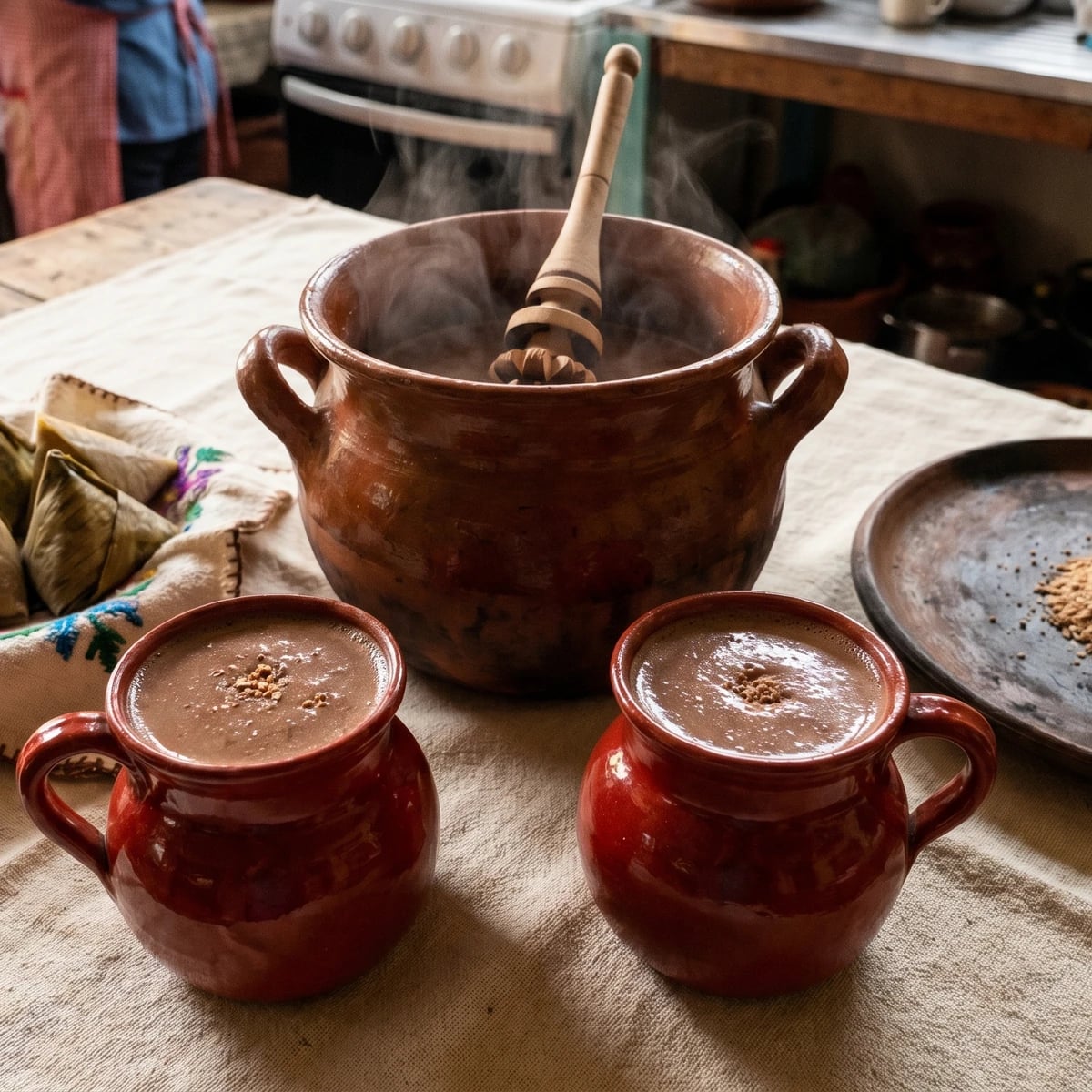
Michoacán, in the cold belt between the Meseta P'urhépecha and the Lago de Pátzcuaro basin, is where this champurrado belongs. I think of Tzintzuntzan at dawn, Patamban clay on the table, and an olla set near the leña while corundas wait under a servilleta. The first lesson is geography: corn from the highlands, chocolate worked on the metate, piloncillo, and canela, all beaten until the drink moves slowly from the ladle.

The pinole is the signal. Not cocoa powder. Not instant mix. Pinole is corn toasted on a comal and ground fine, and in this pot it gives the champurrado a roasted body that masa alone cannot give. The masa thickens; the pinole speaks. If you don't know that smell, pregúntale a las señoras del mercado.

Among P'urhépecha cooks, atole is kamáta; kamáta urápiti is the white one, and chaqueta or nurite have their own names and rules. This recipe is champurrado with pinole, related to that world but not pretending to be every drink at once. Cada estado, su propia cocina, and in Michoacán names matter.

The technique is patience, not decoration. Dissolve the masa cold so it doesn't lump, wake the pinole on a dry comal, keep the spoon moving once corn meets the pot. A señora near Pátzcuaro corrected me years ago: "If it sticks, you left it alone." She was right. Recetas probadas y garantizadas.

Atole is one of Mexico's oldest corn drinks; the Nahuatl word is 'atolli,' and in P'urhépecha communities of the Meseta and the Lago de Pátzcuaro basin, atole belongs to the kamáta family, with kamáta urápiti naming white atole in many towns. Pinole comes from Nahuatl 'pinolli,' toasted ground corn carried because it kept well and could become food with only water; adding chocolate, piloncillo, and canela reflects the colonial-era joining of cacao traditions with cane sugar and imported cinnamon. Michoacán's related atoles, including chaqueta and the herb-scented nurite, show that these beverages are regional corn architecture, not sweet drinks thickened as an afterthought.

The technique, the tradition, and the story behind every dish.

Discover Culinary Explorer

Ingredients

unsweetened pinole

Quantity

3/4 cup

sifted, preferably made from toasted maíz criollo

fresh nixtamal masa for tortillas

Quantity

1 cup

preferably white corn masa from a tortillería

water

Quantity

6 cups

divided

whole milk

Quantity

2 cups

Mexican canela

Quantity

1 large stick

piloncillo

Quantity

5 ounces

chopped or grated

chocolate de metate or Mexican table chocolate

Quantity

4 ounces

chopped

fine sea salt

Quantity

1/4 teaspoon

corundas or pan de muerto (optional)

Quantity

for serving

Equipment Needed

  • Clay olla from Tzintzuntzan, Capula glazed earthenware pot, or heavy 4-quart saucepan
  • Dry comal or cast iron skillet
  • Molinillo or sturdy whisk
  • Wooden spoon with a flat edge for scraping the pot
  • Blender
  • Fine-mesh strainer
  • Clay jarros for serving

Instructions

  1. 1

    Wake the pinole

    Heat a dry comal or cast iron skillet over medium-low. Add the sifted pinole and stir constantly for 2 to 3 minutes, just until the smell turns deeper and nuttier. Do not walk away. Pinole is already toasted corn, and here you are waking it, not burning it. On leña, this happens at the edge of the fire. On a stove, keep the heat modest and your spoon moving.

    If your market pinole is already very dark, toast it for only 1 minute. Burned pinole tastes bitter and dusty. Throw it out and start again.
  2. 2

    Blend the masa

    Put the fresh masa in a blender with 2 cups cold water. Blend until completely smooth, then pass it through a fine-mesh strainer into a bowl. Cold water matters. Hot water grabs the masa and makes lumps. A señora in Pátzcuaro will not forgive lumps in champurrado, and neither should you.

  3. 3

    Make the sweet base

    In a clay olla or heavy 4-quart pot, combine 3 cups water, the canela, piloncillo, and salt. Bring to a gentle simmer over medium heat, stirring until the piloncillo dissolves. If you are using clay, heat it gradually. Clay holds heat beautifully, but it does not like being shocked.

  4. 4

    Melt the chocolate

    Add the chopped chocolate de metate to the pot. Beat with a molinillo or whisk until the chocolate melts into the piloncillo base and the surface turns dark and glossy. Keep the simmer gentle. This is not hot chocolate with corn added later. This is a corn drink that uses chocolate for depth.

  5. 5

    Cook the masa

    Lower the heat to medium-low. Pour the strained masa mixture into the pot in a slow stream while beating with the molinillo or stirring with a wooden spoon. Cook for 12 to 15 minutes, scraping the bottom often, until the raw masa smell disappears and the drink begins to coat the spoon. The corn needs time. No me vengas con atajos.

  6. 6

    Add the pinole

    In a bowl, whisk the toasted pinole with the remaining 1 cup water until it looks like a loose batter. Stir the milk into the pot, then add the pinole slurry in a thin stream while beating constantly. Cook 8 to 10 minutes more, until the champurrado moves slowly from the ladle and tiny flecks of toasted corn show through the chocolate. The masa gives body. The pinole gives the roasted flavor. Both are doing work.

  7. 7

    Adjust the thickness

    Taste for sweetness and salt. Remove the canela. If the champurrado is so thick it stands like tamal dough, loosen it with a little hot water or warm milk. If it runs like chocolate milk, cook it longer. The right texture coats the spoon, leaves a soft trail when stirred, and still drinks easily from a jarro.

  8. 8

    Serve in jarros

    Ladle the champurrado into clay jarros while it is hot and thick. Serve with corundas for a Michoacán table, or pan de muerto during the season. Stir the pot before each serving because corn settles. Así se hace y punto.

Chef Tips

  • Buy unsweetened pinole if you can. Many bags sold outside Mexico are already mixed with sugar and cinnamon. Read the label. If yours is sweetened, reduce the piloncillo by half. You are correcting a product, not improving the recipe.
  • Fresh masa from a tortillería gives the cleanest corn flavor. Masa harina works in a hard city with no tortillería, but hydrate 3/4 cup masa harina with 1 cup warm water for 20 minutes before blending. A substitution is a compromise, not an upgrade.
  • Use Mexican canela, the flaky Ceylon cinnamon sold in mercados. Hard cassia sticks give a rough, sharp flavor. The difference shows in a drink this plain.
  • Chocolate de metate should taste of cacao, sugar, and canela, not milk candy. If you use a commercial tablet like Abuelita or Ibarra, lower the piloncillo because those tablets are already sweet.
  • Do not use instant champurrado powder. That is flavored starch with a costume on. This drink is corn, chocolate, piloncillo, and work.

Advance Preparation

  • The pinole can be toasted up to 1 month ahead and stored airtight in a cool, dry place.
  • The piloncillo, canela, and water base can be made 2 days ahead. Refrigerate it, then rewarm before adding chocolate and masa.
  • Champurrado is best the day it is made. It thickens as it sits because the corn keeps drinking liquid. Reheat gently with a splash of water or milk and beat with a molinillo.
  • Do not freeze champurrado. The masa turns grainy and the texture suffers.

Frequently Asked Questions

Nutrition Information

1 serving (about 365g)

Calories
335 calories
Total Fat
6 g
Saturated Fat
3 g
Trans Fat
0 g
Unsaturated Fat
3 g
Cholesterol
8 mg
Sodium
135 mg
Total Carbohydrates
65 g
Dietary Fiber
3 g
Sugars
42 g
Protein
6 g

Note: Chef personas and recipes are created with AI assistance. Cook with care: follow safe food-handling practices, check doneness with a thermometer when needed, and adapt for allergies and your kitchen.

Where cooking meets culture.

Culinary guides, cultural storytelling, and the editorial depth that makes cooking meaningful.

Discover Culinary Explorer

More from Atole de Chaqueta, Kamáta Urápiti, Charanda & Ponche de Pátzcuaro

Browse the full collection