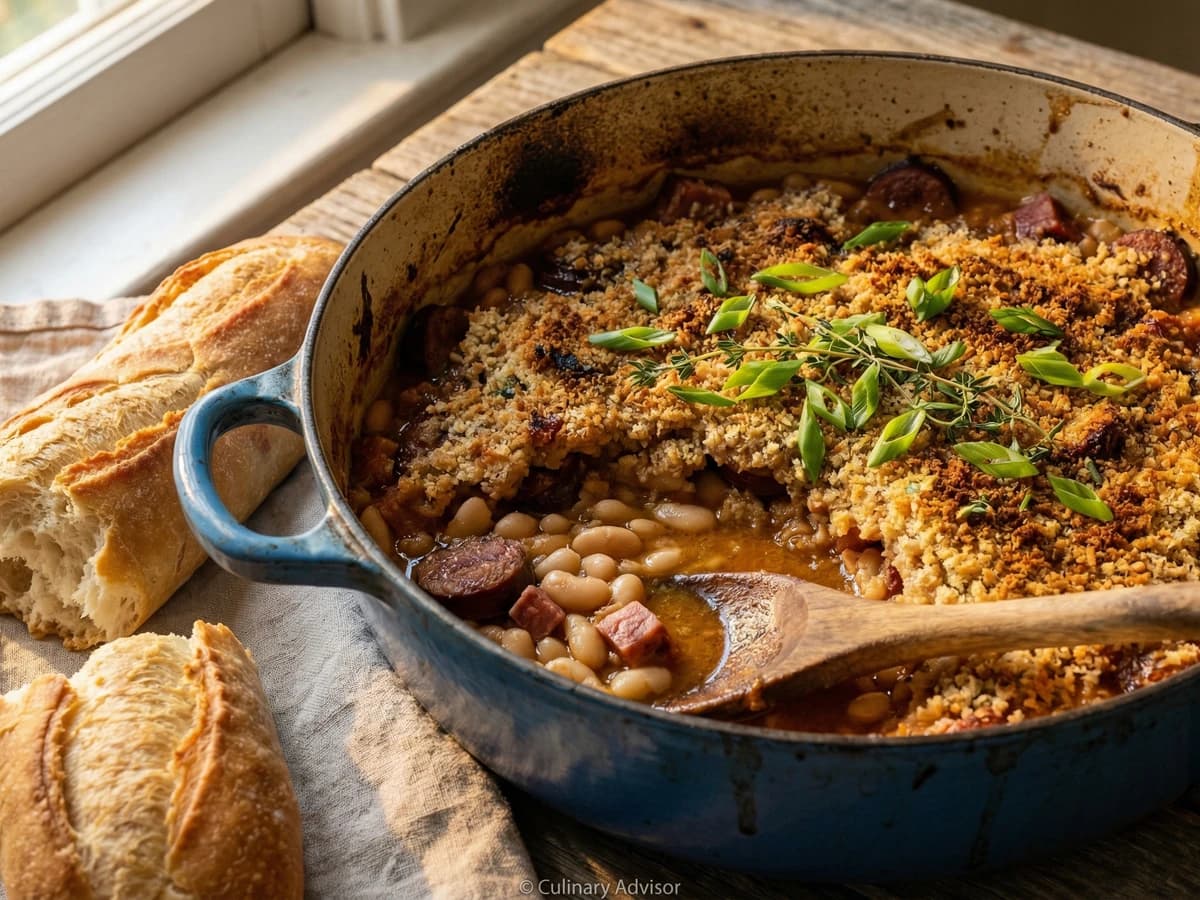
Tender catfish fillets swimming in a brick-red tomato gravy built on a dark roux and the holy trinity, spooned generously over steaming white rice, the kind of soul-warming bowl that proves simple ingredients cooked right can move mountains.
Main Dishes
Cajun
Weeknight
Comfort Food
Budget Friendly
25 min
Active Time
45 min cook•1 hr 10 min total
Yield6 servings
Court-bouillon is bayou cooking at its finest. Don't let the fancy French name fool you. This is country food, born from what folks had on hand: catfish from the pond, tomatoes from the garden, and a dark roux to bring it all together. My grandmother Evangeline made this every Friday, and the smell of that gravy simmering would pull us kids in from whatever mischief we'd found.
The secret lives in the roux. You want it dark, the color of milk chocolate, before those tomatoes go in. That deep, nutty flavor is the backbone of the whole dish. Then you build from there: the holy trinity sweating down until the onions turn sweet, canned tomatoes breaking apart into the gravy, and fish stock stretching everything into a proper stew.
Now here's what most recipes won't tell you: season the catfish before it goes in the pot. I'm talking about building flavor in layers. The fish gets its own seasoning, the gravy gets seasoned, and you taste and adjust at the end. That's the bayou way. At Lagniappe, we serve this on Fridays just like Grandma did, and folks line up for it. There's a reason this dish has survived four hundred years of Louisiana cooking. It works.
The technique, the tradition, and the story behind every dish.
•Large Dutch oven or heavy-bottomed pot (5-quart minimum)
•Flat-bottomed wooden spoon or roux whisk
•Ladle for serving
Instructions
1
Season the catfish
Pat the catfish pieces dry with paper towels. Sprinkle one tablespoon of Cajun seasoning over all sides of the fish, gently pressing it into the flesh. Set aside at room temperature while you build the gravy. This head start on seasoning means every bite of fish carries flavor, not just the gravy around it.
Farm-raised catfish has a milder, cleaner taste than wild-caught. Either works, but farm-raised is more consistent and easier to find.
2
Make the dark roux
Heat the oil in a large Dutch oven or heavy-bottomed pot over medium heat until shimmering. Whisk in the flour all at once and keep whisking. You're married to this pot now. Stir constantly, scraping the bottom and sides, for fifteen to twenty minutes. The roux will progress from blond to peanut butter to the color of milk chocolate. You'll smell it transform from raw flour to something nutty and deep. That's the backbone of your gravy.
If you see black specks, you've burned it. Throw it out and start over. Burned roux tastes bitter and cannot be saved. I've done it myself more times than I'd like to admit.
3
Add the holy trinity
The moment your roux reaches that chocolate color, add the onion, celery, and bell pepper all at once. The roux will seize and sizzle. Stir vigorously for five to seven minutes until the vegetables soften and the onions turn translucent. The roux will cling to everything. Add the garlic and the white parts of the green onions, cooking another minute until fragrant. Your kitchen should smell like Louisiana right about now.
4
Build the gravy
Pour in the diced tomatoes with their juice and the tomato sauce. Stir well, scraping up any fond from the bottom. The mixture will thicken immediately. Add the stock and water, stirring until smooth. Drop in the bay leaves, thyme, cayenne, salt, black pepper, and the remaining tablespoon of Cajun seasoning. Stir in the Worcestershire and hot sauce. Bring to a simmer.
Fish stock gives the most authentic flavor, but chicken stock works beautifully. In a pinch, you can use water with a splash more Worcestershire.
5
Simmer the gravy
Reduce heat to medium-low and let the gravy simmer uncovered for twenty minutes, stirring occasionally. The tomatoes will break down and the flavors will marry. The gravy should coat a spoon but still flow freely. If it gets too thick, add a splash of water. Taste it now. Adjust salt and cayenne. The gravy should be bold but not punishing. Heat should awaken your palate, not set it on fire.
6
Poach the catfish
Nestle the seasoned catfish pieces into the simmering gravy, pushing them gently below the surface. Don't stir from here on out, or you'll break up the fish. Cover the pot and reduce heat to low. Cook for ten to twelve minutes until the fish is opaque throughout and flakes easily when you press it with a spoon. The catfish should be tender but still hold its shape.
7
Finish and serve
Remove the bay leaves. Taste the gravy one final time and adjust seasoning if needed. Scatter the green onion tops and parsley over the surface. Ladle generous portions over mounds of hot white rice in deep bowls. Pass extra hot sauce at the table for those who want more heat. This is the kind of meal that deserves a second helping and a piece of French bread to sop up what's left in the bowl.
Chef Tips
•Court-bouillon tastes even better the next day after the flavors have had time to deepen. Make it ahead for a weeknight dinner that tastes like you worked all day.
•If you can't find catfish, this gravy works beautifully with redfish, drum, or any firm white fish. At Lagniappe, we've even done it with Gulf shrimp for a special occasion.
•The gravy freezes well for up to three months without the fish. Thaw it, bring to a simmer, and poach fresh fish when you're ready to serve.
•A splash of dry white wine added with the tomatoes brightens the gravy and adds complexity. Not traditional, but I won't tell if you don't.
Advance Preparation
•The gravy can be made through step 5 up to two days ahead and refrigerated. Reheat gently before adding the fish.
•Season the catfish up to four hours ahead and refrigerate, covered. Bring to room temperature for thirty minutes before cooking.
•Leftover court-bouillon keeps refrigerated for three days. Reheat gently over low heat to avoid breaking up the fish.
Frequently Asked Questions
Nutrition Information
1 serving (about 380g)
Calories
400 calories
Total Fat
23 g
Saturated Fat
4 g
Trans Fat
0 g
Unsaturated Fat
17 g
Cholesterol
90 mg
Sodium
1230 mg
Total Carbohydrates
20 g
Dietary Fiber
3 g
Sugars
5 g
Protein
29 g
Where cooking meets culture.
Culinary guides, cultural storytelling, and the editorial depth that makes cooking meaningful.