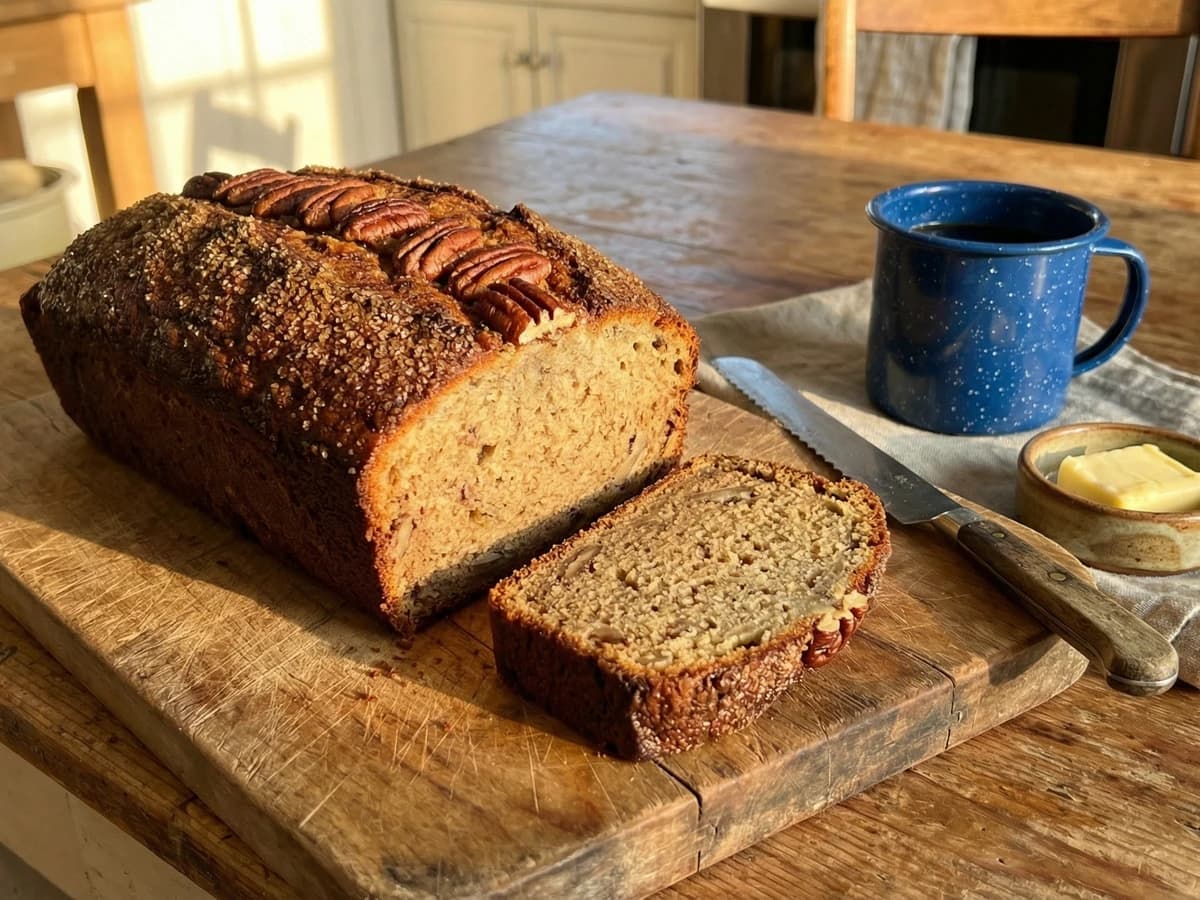
Screaming hot cast iron transforms simple batter into golden, crackling cornbread with a shatteringly crisp bottom crust and tender, tangy crumb, exactly the way four generations of Boudreaux cooks have made it every Sunday.
Breads
Cajun
Weeknight
Comfort Food
Potluck
10 min
Active Time
25 min cook•35 min total
Yield8 wedges
The cast iron skillet is the soul of cornbread. Without it, you are just baking corn-flavored cake. That sizzle when the batter hits the pan, the way the fat crisps the bottom into something almost lacey, the golden crust that forms while the inside stays tender and moist: this is the bayou way.
My grandmother Evangeline never measured a thing. She kept her cornmeal in a tin by the stove, her buttermilk in a crock by the back door, and her bacon drippings in a jar that never saw the inside of an icebox. Every Sunday morning, that skillet came out of the oven smoking hot, and we knew dinner was coming. The smell of cornbread baking meant family was gathering.
Now here is where I will lose some folks: no sugar. Real Southern cornbread has no business being sweet. That is cake masquerading as bread. The corn itself has natural sweetness that comes through when you use proper stone-ground meal. The buttermilk adds tang. A touch of cayenne, if you are feeling Louisiana about things, adds warmth without heat. This is honest bread for honest people.
The technique, the tradition, and the story behind every dish.
Set your 10-inch cast iron skillet in a cold oven, then turn the heat to 425F. The skillet heats alongside the oven, reaching a temperature that will make the batter sizzle the moment it hits the pan. This is the secret to that shatteringly crisp bottom crust. No cold skillet will ever give you proper cornbread.
A well-seasoned cast iron skillet is non-negotiable here. If yours sticks, this is the recipe that will cure it for good.
2
Combine dry ingredients
Whisk together the cornmeal, flour, baking powder, baking soda, salt, and cayenne if using in a large bowl. Stone-ground cornmeal has texture and character that the fine dusty stuff from the big mills cannot match. You want to feel the corn in every bite.
3
Mix wet ingredients
In a separate bowl, whisk together the buttermilk and eggs until smooth and uniform. The buttermilk provides tang and tenderness, reacting with the baking soda to give the bread lift. Room temperature ingredients incorporate better and produce an even crumb.
4
Melt fat in hot skillet
When the oven reaches temperature and the skillet has been heating for at least fifteen minutes, carefully remove it using heavy oven mitts. Add four tablespoons of bacon drippings to the screaming hot pan. It should shimmer and smoke lightly within seconds. Swirl to coat the bottom and sides completely.
Bacon drippings are traditional and give the cornbread a savory depth that butter cannot match. Save your drippings in a jar by the stove like your grandmother did.
5
Finish the batter
Pour the remaining two tablespoons of melted fat from the skillet into the buttermilk mixture. Work quickly now. Add the wet ingredients to the dry and stir with a wooden spoon just until combined. The batter will be slightly lumpy. That is correct. Overmixing makes tough cornbread, and nobody wants that.
6
Pour into hot skillet
Pour the batter into the sizzling hot skillet. You will hear it hiss and pop against the sides. This is the sound of crust forming. Do not be timid. Smooth the top gently with your spatula, but do not fuss. The heat is already doing its work from below.
7
Bake until golden
Transfer the skillet to the oven and bake for 22 to 25 minutes until the top is deeply golden and a toothpick inserted in the center comes out clean. The edges will pull away from the pan slightly, and the surface will have beautiful cracks running through it like a dry creek bed.
8
Rest and serve
Let the cornbread rest in the skillet for five minutes. This allows the structure to set so it will cut into clean wedges rather than crumbling apart. Run a knife around the edge, then flip the whole round onto a cutting board or serve directly from the iron. Slice into wedges and pass the butter.
Cornbread is best within the first hour. After that, the crust softens and the magic fades. Make it fresh, serve it hot.
Chef Tips
•Save your bacon drippings in a jar by the stove. At Lagniappe, we go through gallons of the stuff. It keeps for months at room temperature and adds depth to everything from cornbread to sauteed greens.
•Stone-ground cornmeal from a local mill makes all the difference. The industrial stuff has been stripped of its germ and character. You want cornmeal that smells like corn, not cardboard.
•If your buttermilk has separated in the fridge, give it a good shake before measuring. Those thick curds are pure flavor.
•The cayenne is subtle at a quarter teaspoon: more warmth than heat. At Lagniappe, we bump it to half a teaspoon, but build up to that level if you are new to the bayou way.
Advance Preparation
•Dry ingredients can be whisked together and stored in an airtight container for up to two weeks, making weeknight cornbread nearly instant.
•Cornbread does not store well. Make it fresh. Leftovers can be crumbled into cornbread dressing or toasted in butter the next morning, but that crisp crust is a one-time gift.
Frequently Asked Questions
Nutrition Information
1 serving (about 125g)
Calories
320 calories
Total Fat
14 g
Saturated Fat
5 g
Trans Fat
0 g
Unsaturated Fat
8 g
Cholesterol
57 mg
Sodium
595 mg
Total Carbohydrates
42 g
Dietary Fiber
3 g
Sugars
1 g
Protein
8 g
Where cooking meets culture.
Culinary guides, cultural storytelling, and the editorial depth that makes cooking meaningful.