Chef Lupita
Acúmara Tatemada al Comal
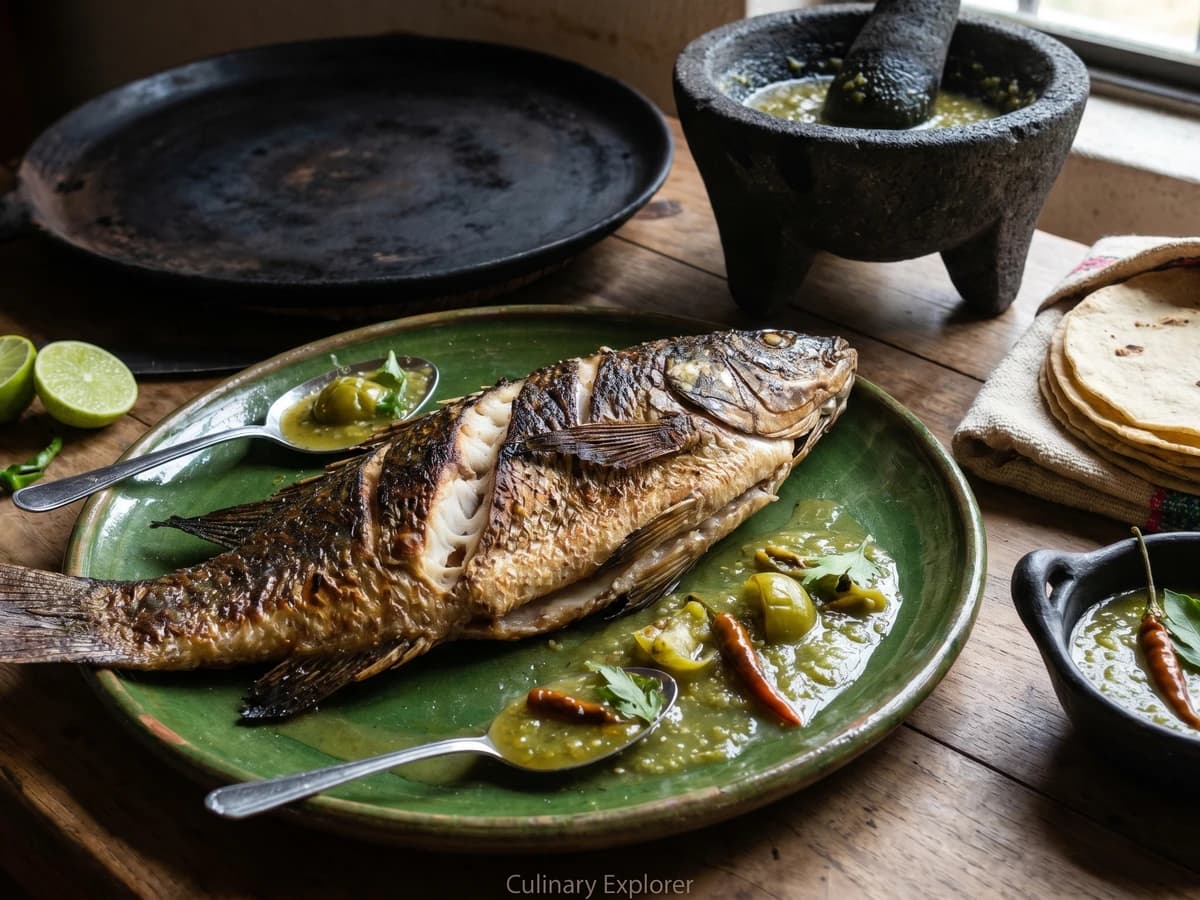
Michoacán's Lake Pátzcuaro acúmara, a whole kurucha from the lago tatemada on a comal de leña and served with chile perón atápakua, corn tortillas, and P'urhépecha discipline.
A cooking platform built around craft, culture, and the stories behind what we eat.

Created by
Yucatán's grilled-beef counterpart to poc chuc. Thin steaks stained brick-red with recado rojo and naranja agria, charred fast over hardwood coals, eaten with frijol colado, pickled red onion, and a few drops of habanero tatemado.
This is from Yucatán. Not from the north of Mexico, where carne asada means a thick steak from Sonora or Nuevo León over mesquite. The peninsular version is a different dish entirely, and confusing the two is how you end up with a recipe that satisfies nobody. In the north, the meat is the point. In Yucatán, the recado is the point and the meat is the canvas.
Recado rojo is a paste of achiote seed, garlic, sour orange, allspice, oregano yucateco, and black pepper. It is what makes cochinita pibil red. It is what stains the tikinxic. It is what turns a thin sirloin into something Mérida recognizes as its own. The achiote is not for color. It is for the earthy, slightly resinous flavor that holds the whole peninsula's cuisine together. Buy a real Yucatecan brand. El Yucateco and La Anita are reliable. If the only achiote you can find is in the Goma aisle of a chain supermarket, that is a compromise, not an upgrade.
The meat is pounded thin because the heat of the fire and the acid of the naranja agria do their work in seconds, not minutes. A thick steak with recado is a northern idea applied to a southern recipe. In Yucatán, the carne asada hits the parrilla, the edges blacken, the achiote crackles, and the meat is on the tortilla within four minutes of being marinated. Around the meat: frijol colado, the silky strained black beans of the peninsula, cebollas encurtidas pink with naranja agria and habanero, and the salsa tatemada that every house makes a little differently.
My mother did not cook Yucatecan food. She was jalisciense and she knew her territory. But the first time I went to Mérida, a señora named Doña Hortensia in the Lucas de Gálvez market sat me down at her comedor and showed me how a proper recado rojo is built in a molcajete, by hand, with the achiote crumbled fresh and the sour orange squeezed at the last moment. I wrote it all in the notebook that day. Cada estado, su propia cocina, and this one belongs to Yucatán.
Recado rojo, the achiote-based paste that defines Yucatecan cuisine, descends directly from pre-Hispanic Mayan cooking, where achiote (the seed of the Bixa orellana tree, called k'uxub in Yucatec Maya) was used both as a food coloring and as a body paint for ritual purposes. The Spanish introduction of sour orange (Citrus aurantium) in the colonial period gave Mayan cooks the acidic medium they needed to extend the achiote into a true marinade, and the addition of cumin, allspice, and black pepper reflects the later Caribbean and Mediterranean trade routes that passed through the port of Sisal. While cochinita pibil and pollo pibil are the recado rojo dishes that became internationally known, the grilled-beef version was historically a Sunday parrillada staple in Mérida households and a market-stall specialty in Valladolid, where it was eaten as a peninsular cousin to poc chuc rather than a substitute for it.
Quantity
2 pounds
pounded to 1/4 inch thick
Quantity
3 ounces
Quantity
1 cup
or 2/3 cup fresh orange juice mixed with 1/3 cup fresh lime juice
Quantity
6
peeled
Quantity
1 teaspoon
Quantity
1 teaspoon
Quantity
1/2 teaspoon
Quantity
1/2 teaspoon
Quantity
1 tablespoon
Quantity
2 tablespoons
melted
Quantity
1
sliced into thick rounds for grilling
Quantity
for serving
warmed
Quantity
for serving
Quantity
for serving
Quantity
for serving
Quantity
for serving
Quantity
for serving
| Ingredient | Quantity |
|---|---|
| beef sirloin or thin-cut round steakspounded to 1/4 inch thick | 2 pounds |
| recado rojo paste (achiote paste from Yucatán) | 3 ounces |
| fresh sour orange juice (naranja agria)or 2/3 cup fresh orange juice mixed with 1/3 cup fresh lime juice | 1 cup |
| garlic clovespeeled | 6 |
| whole black peppercorns | 1 teaspoon |
| dried Mexican oregano (preferably oregano yucateco) | 1 teaspoon |
| ground cumin | 1/2 teaspoon |
| ground allspice (pimienta gorda) | 1/2 teaspoon |
| kosher salt | 1 tablespoon |
| manteca de cerdo (pork lard)melted | 2 tablespoons |
| large white onionsliced into thick rounds for grilling | 1 |
| hand-pressed corn tortillas (optional)warmed | for serving |
| frijol colado (strained black beans) (optional) | for serving |
| cebollas encurtidas (pickled red onions with sour orange and habanero) (optional) | for serving |
| salsa de chile habanero tatemado (optional) | for serving |
| lime halves (optional) | for serving |
| fresh cilantro sprigs (optional) | for serving |
Lay each steak between two sheets of plastic wrap and pound with a heavy mallet or the flat of a cleaver until the meat is an even 1/4 inch thick. Yucatecan carne asada is not a thick steak with a pink center. It is a thin, fast-cooking cut that takes the smoke and the recado in seconds. If your steaks are thick, you have the wrong dish.
Crush the garlic, peppercorns, oregano yucateco, cumin, and allspice in a molcajete until you have a rough paste. Scrape it into a bowl. Crumble the recado rojo paste over it. Pour in the sour orange juice and the salt, and whisk until the achiote dissolves into a deep brick-red liquid. Whisk in the melted manteca last. The lard carries the flavor of the recado into the meat the way water cannot. La manteca es el sabor.
Lay the pounded steaks in a wide glass or ceramic dish. Pour the recado rojo marinade over them and turn each piece until both sides are stained red. Cover and refrigerate for at least four hours, preferably overnight. The achiote and the sour orange need time to penetrate the thin meat. The pieces should look like they bled red ochre.
Yucatecan carne asada belongs over coals, not gas. Build a hot fire with hardwood charcoal in a kettle grill or a simple parrilla. When the coals are covered in white ash and you cannot hold your hand four inches above the grate for more than two seconds, you are ready. The fire must be aggressive. Thin meat over a weak fire steams instead of chars, and a steamed carne asada is a sad carne asada.
Lay the thick onion rounds on the grate and char them hard on both sides, about three minutes per side, until they are dark on the edges and soft in the middle. Pull them off and pile them on a platter. They go alongside the meat at the table. In Yucatán, the grilled onion is not a garnish. It is part of the plate.
Lift each steak out of the marinade and let the excess drip back into the dish. Slap the meat onto the hot grate. You will hear it sizzle and smell the achiote and orange the second they hit the heat. Cook for 90 seconds, no more. Flip. Cook for another 60 to 90 seconds on the second side. The edges should char dark, almost black in spots, while the interior stays just past pink. Thin meat over a hot fire cooks fast. Stand there and pay attention. This is not a dish you walk away from.
Move the steaks to a wooden board and let them rest for three minutes. Slice across the grain into strips about half an inch wide, or leave them whole if your guests will cut at the table the way they do in Mérida. The juices that pool on the board are achiote-orange-lard and they belong on the next tortilla.
Pile the meat on a white porcelain platter with the grilled onions alongside. Set bowls of frijol colado, cebollas encurtidas, salsa de chile habanero tatemado, lime halves, and cilantro around it. Warm tortillas in a hand-woven servilleta. Each person builds their own taco: tortilla, beans, meat, onion, pickled onion, a few drops of habanero salsa, lime. That assembly is the dish. Recetas probadas y garantizadas.
1 serving (about 170g)
Culinary guides, cultural storytelling, and the editorial depth that makes cooking meaningful.
Discover Culinary ExplorerChef Lupita
Michoacán's Lake Pátzcuaro acúmara, a whole kurucha from the lago tatemada on a comal de leña and served with chile perón atápakua, corn tortillas, and P'urhépecha discipline.

Chef Lupita
Puebla's weekday adobo of pork shoulder braised in a thick guajillo and ancho sauce sharpened with vinegar, cumin, and clove. The deep red of a market spice stall, the dish a poblana cooks without thinking.

Chef Lupita
Loreto's pit-roasted clams, planted hinge-up in beach sand and tatemadas under a fast fire of dried romerillo brush, the resinous Baja desert shrub that gives this dish its smoke.

Chef Lupita
Oaxaca's eighth mole, the silky, almond-and-cinnamon almendrado, served over poached chicken. Mild, sweet, restrained, and a quiet rebuttal to anyone who thinks Mexican food has to be hot to be Mexican.