
Chef Lupita
Arroz a la Oaxaqueña
Oaxaca's red rice, stained with tomato and fried in lard, steamed with carrots, ejotes, black beans, and epazote. The side that anchors a Oaxacan family meal and earns its place beside the main.
A cooking platform built around craft, culture, and the stories behind what we eat.

Created by
Oaxaca's corn-forward vegetable side: diced calabacita and fresh elote sautéed in lard with charred poblano rajas, finished with melted strands of quesillo and a whisper of epazote.
This is Oaxaca's calabacitas. Not the central Mexican version with squash blossoms and a heavy hand of crema, not the northern version with cumin and cheddar, the Valles Centrales version, where the corn is the star and the quesillo is pulled into long strands at the end.
The calabacita itself is the small, pale-green Mexican squash, not the dark Italian zucchini that supermarkets sell as a substitute. If you can find calabacita criolla at a Mexican mercado or a Latin grocer, use it. If not, use the smallest, palest summer squash you can find. The flavor is sweeter, the flesh is firmer, and it does not turn to water in the pan.
The poblano rajas are charred over open flame until the skin lifts and the flesh underneath holds its shape. You peel them with your fingers, not under running water. Water washes the smoke down the drain. The corn goes in fresh, off the cob, never canned, never frozen if you can help it. And the quesillo, Oaxaca's pulled string cheese, goes in at the very end and melts off the heat into the long threads that are the visual signature of this dish.
My mother made calabacitas every summer in Mexico City with whatever the market gave her, but the Oaxacan version came into my notebook from a senora named Doña Margarita who sold quesillo at the Mercado Benito Juarez in Oaxaca de Juarez. She told me the secret is to add the cheese off the heat. "Si lo cocinas, se quema. Si lo apagas, se estira." If you cook it, it burns. If you turn off the heat, it stretches. Asi se hace y punto.
Calabacita, corn, and chile form part of the pre-Columbian Mesoamerican triad alongside beans, and dishes combining these three crops predate the Spanish conquest by millennia. The Oaxacan version of calabacitas con elote is distinguished by quesillo, the pulled-curd string cheese developed in the Etla Valley in the late 19th century by a young cheesemaker named Leobarda Castellanos García, whose accidental over-acidification of milk in 1885 produced the stretchy curd that became the state's signature cheese. Epazote, the wormseed herb that finishes the dish, was used by the Mexica as both a culinary seasoning and a digestive remedy for bean and corn dishes, a function it still serves in Oaxacan home kitchens today.
Quantity
3 medium (about 1 1/2 pounds)
diced into 1/2-inch cubes
Quantity
3
kernels cut from the cob (about 3 cups)
Quantity
3
Quantity
2 tablespoons
Quantity
1 small
finely diced
Quantity
3
finely chopped
Quantity
2 medium
finely diced
Quantity
1 sprig
leaves only, roughly chopped
Quantity
1 teaspoon, plus more to taste
Quantity
6 ounces
pulled into thin strands
Quantity
for serving
warmed
| Ingredient | Quantity |
|---|---|
| calabacitas (Mexican squash)diced into 1/2-inch cubes | 3 medium (about 1 1/2 pounds) |
| ears of fresh cornkernels cut from the cob (about 3 cups) | 3 |
| fresh chile poblano | 3 |
| manteca de cerdo (pork lard) | 2 tablespoons |
| white onionfinely diced | 1 small |
| garlic clovesfinely chopped | 3 |
| ripe tomatoesfinely diced | 2 medium |
| fresh epazoteleaves only, roughly chopped | 1 sprig |
| kosher salt | 1 teaspoon, plus more to taste |
| quesillo (Oaxacan string cheese)pulled into thin strands | 6 ounces |
| hand-pressed corn tortillas (optional)warmed | for serving |
Set the chiles poblanos directly over an open flame on the stove or on a hot comal. Turn them with tongs every minute or so until the skin is blistered and blackened on every side. The flesh underneath should still feel firm. Drop them into a bowl, cover with a plate, and let them sweat for ten minutes. The steam trapped under the plate is what loosens the skin.
Once the poblanos are cool enough to handle, peel off the blackened skin, pull out the stem, and tear the chile open to remove the seeds and the pale veins inside. Slice the cleaned flesh into strips about a quarter inch wide. These are your rajas. Set them aside. Do not skip the seeding. The seeds and veins carry a sharp heat that has no place in this dish.
Heat the manteca in a wide cazuela or heavy skillet over medium heat until it shimmers. Add the diced onion and cook for three minutes, stirring, until it turns translucent at the edges. Add the garlic and cook for thirty seconds more. The kitchen should smell sweet and garlicky, not browned. La manteca es el sabor. Vegetable oil will not give you the same depth here.
Add the diced tomato and the salt. Cook for five to seven minutes, stirring often, until the tomato has broken down into a loose sauce and the liquid has mostly evaporated. The tomato should look jammy, not soupy. If your tomatoes are watery, give it a few more minutes. You want concentrated flavor, not a wet pan.
Stir in the fresh corn kernels. Cook over medium heat for five minutes, stirring occasionally. The kernels should turn a deeper yellow and start to release their milky starch into the pan. This is the corn-forward part of the Oaxacan version. The corn is not a supporting ingredient here. It is the heart of the dish.
Add the diced calabacita and the poblano rajas to the pan. Stir to coat everything in the tomato base. Cover the pan and lower the heat to medium-low. Cook for eight to ten minutes, stirring once or twice, until the calabacita is tender but still has a little bite at the center. Calabacita falls apart fast. Watch it. Mushy squash is the death of this dish.
Uncover the pan and stir in the chopped epazote leaves. Cook for one more minute, just to wake up the herb. Taste and adjust the salt. Pull the pan off the heat and scatter the strands of quesillo across the top. Cover the pan again for two minutes. The residual heat will melt the cheese into long, pulling threads without breaking it. Serve immediately, family-style, with warm tortillas. Recetas probadas y garantizadas.
1 serving (about 360g)
Culinary guides, cultural storytelling, and the editorial depth that makes cooking meaningful.
Discover Culinary ExplorerChef Lupita
Oaxaca's red rice, stained with tomato and fried in lard, steamed with carrots, ejotes, black beans, and epazote. The side that anchors a Oaxacan family meal and earns its place beside the main.
Chef Lupita
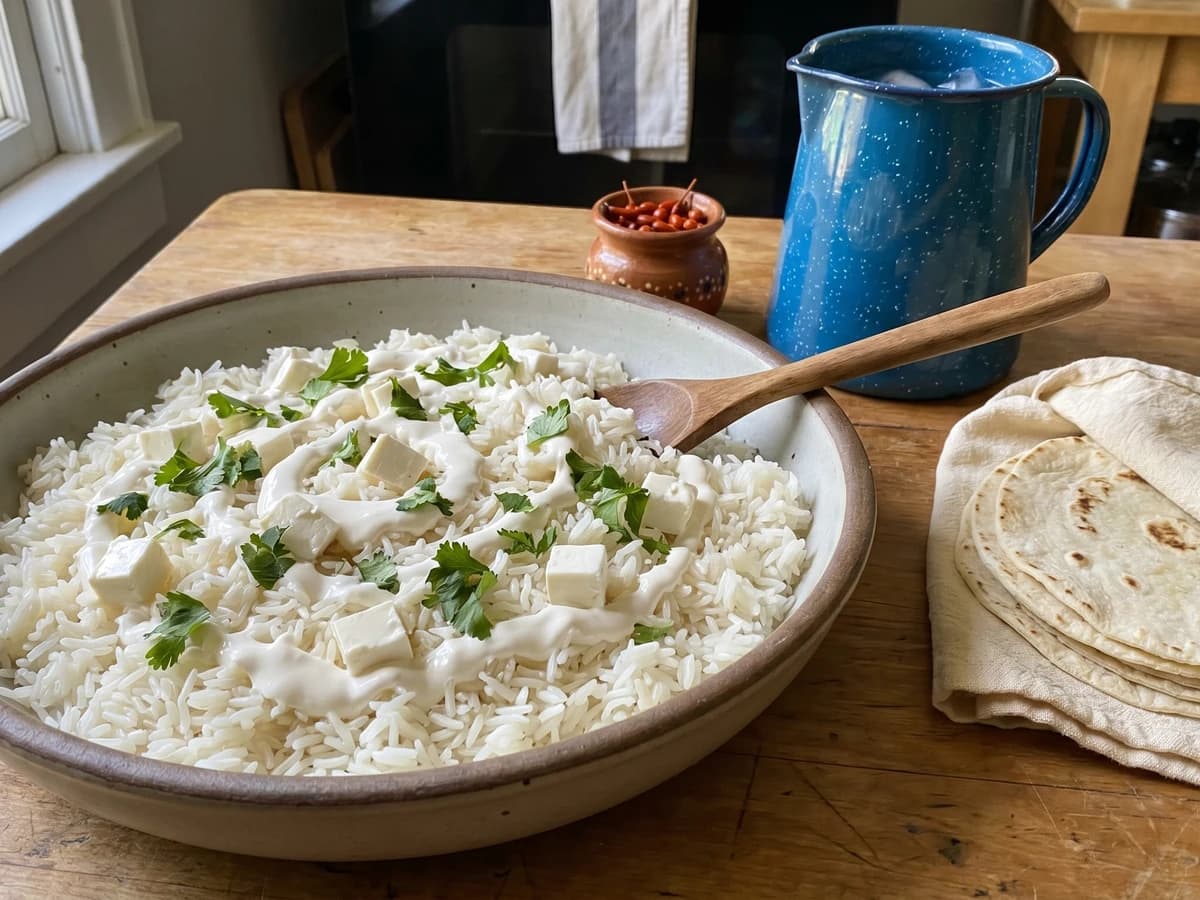
Sinaloa's home-cook white rice topped with cold cubes of cream cheese that soften into the warm grain, finished with crema and a sprinkle of chiltepin at the table. The trick that makes a side dish feel like a small luxury.
Chef Lupita
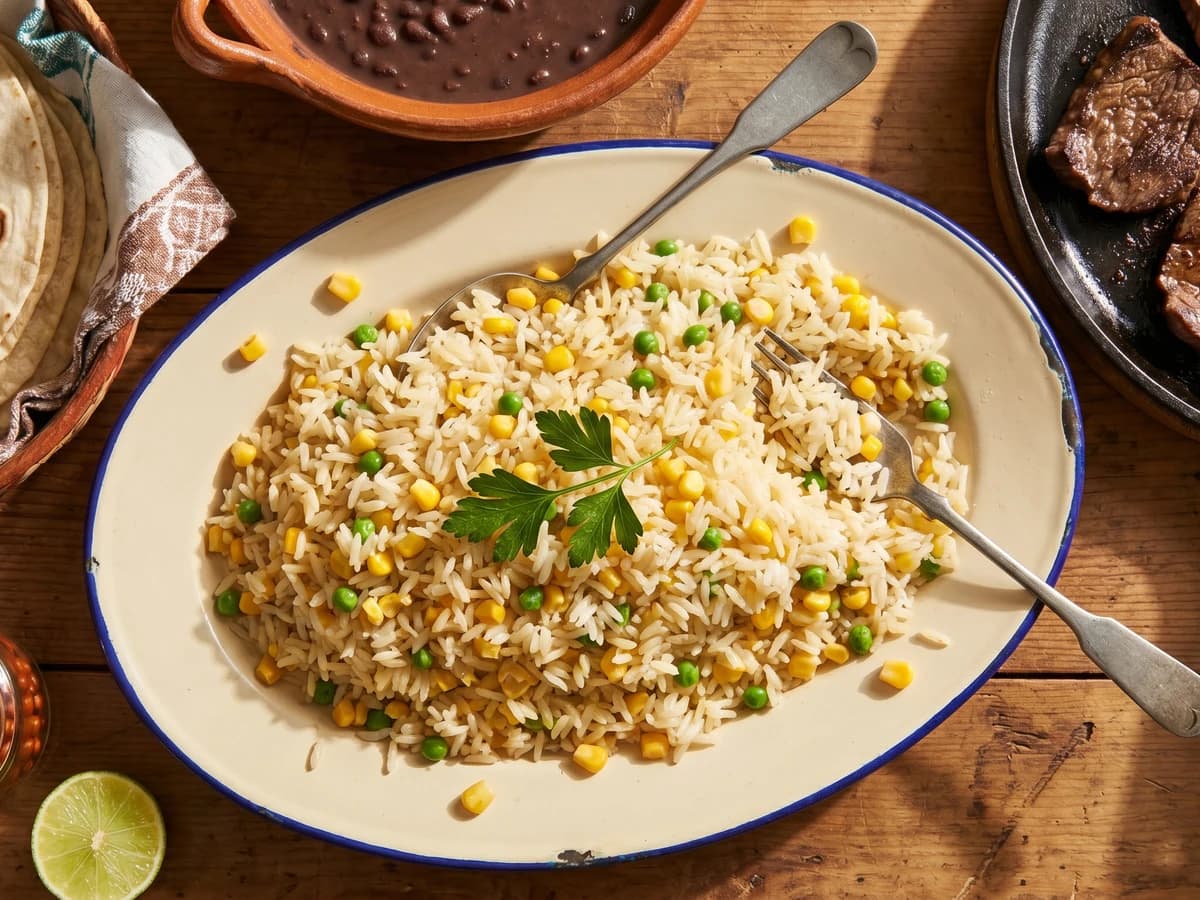
Sonora's white rice, toasted in butter and steamed with sweet corn and tender peas. The clean, quiet partner to a plate of carne asada, not the red rice of central Mexico.

Chef Lupita
Yucatán's white rice with sweet corn kernels, toasted in lard with garlic and onion. The quiet base that holds up against the peninsula's bold achiote-stained stews.