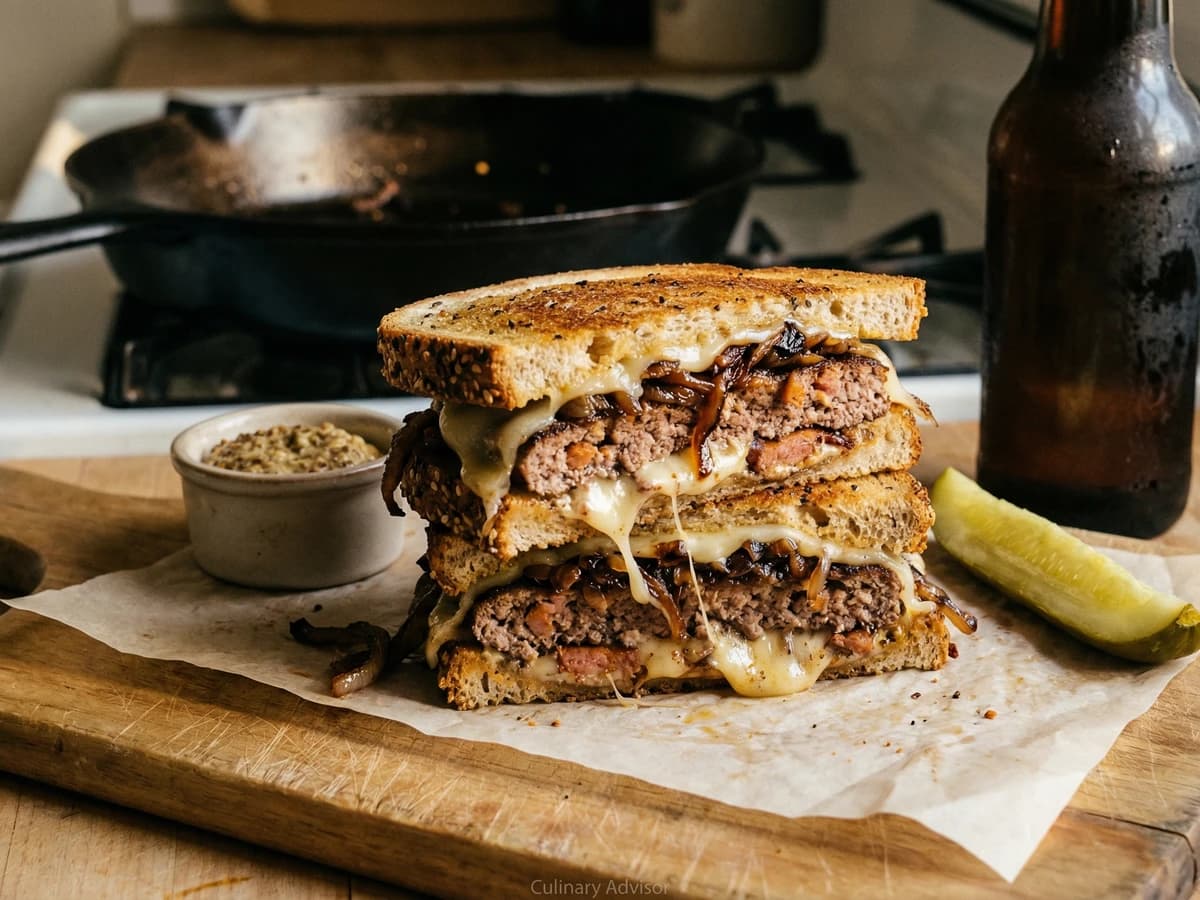
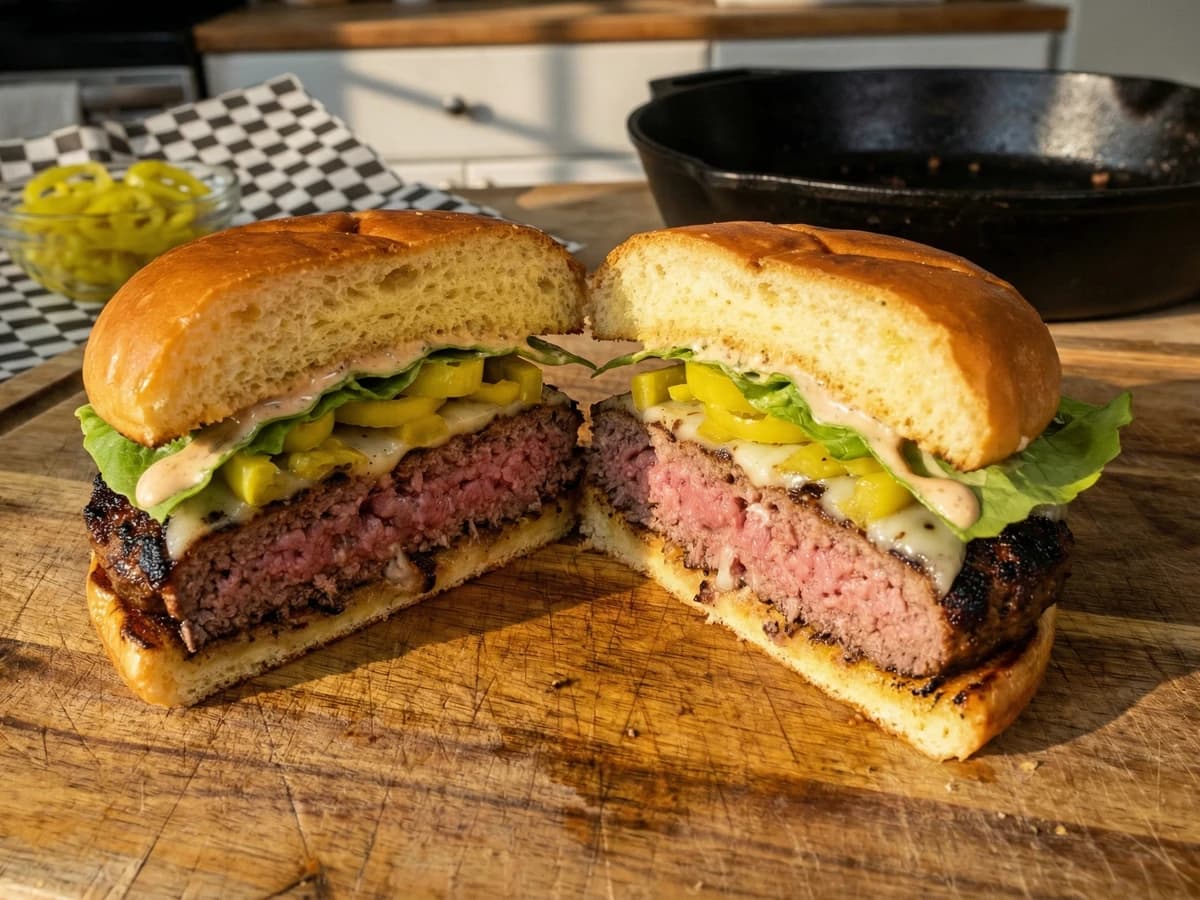
Two thin, aggressively seasoned beef patties smashed until crispy on screaming-hot cast iron, draped with melty pepper jack, and dressed with a spicy Creole sauce that reminds you where you are: Louisiana, where we don't do anything halfway.
Sandwiches & Wraps
Cajun
Quick Meal
Weeknight
Game Day
20 min
Active Time
15 min cook•35 min total
Yield4 burgers
Asmash burger is nothing but technique and confidence. You take a ball of seasoned beef, you press it flat against iron so hot it could brand cattle, and you let the Maillard reaction do its magic. Those craggy, lacey edges that get almost burnt? That's not a mistake. That's the whole point.
At Lagniappe, we started serving these on Friday nights about ten years back, when the smash burger craze was sweeping the country. But we couldn't just make a plain burger. That's not who we are. So we hit the beef with Cajun seasoning, built a Creole sauce with mustard and horseradish and a good hit of cayenne, and put pepper jack on top because Louisiana runs on heat. The regulars went wild. Now it's one of our best sellers.
The secret is building flavor at every step. Season the beef before you portion it. Season again when it hits the griddle. The Creole sauce brings acid and heat. The pepper jack brings richness and more heat. The pickles cut through the fat. By the time you take a bite, you've got five or six layers of flavor working together. That's what separates cooking from just making food.
You don't need fancy equipment. A cast iron skillet and a sturdy spatula will do just fine. What you need is heat, you need seasoned beef, and you need to commit to the smash. Press hard and don't second-guess yourself. Trust the process. When those edges go dark and crispy and the cheese starts melting down the sides, you'll know you did it right.
The technique, the tradition, and the story behind every dish.
•Burger press or second heavy skillet for smashing
Instructions
1
Make the Creole sauce
Whisk together the mayonnaise, Creole mustard, hot sauce, horseradish, Worcestershire, smoked paprika, garlic powder, and cayenne in a small bowl. Taste it. The sauce should have a kick that builds slowly, not a punch that knocks you down. Adjust the cayenne if you want more heat, add a splash more hot sauce for vinegar brightness. Set aside. This sauce gets better as it sits, so make it first and let those flavors get acquainted.
If you can find Zatarain's Creole mustard, use it. The horseradish bite and coarse grind are perfect here.
2
Season and portion the beef
Mix one tablespoon of Cajun seasoning and the kosher salt into the ground beef using your hands. Work it gently, just enough to distribute the spices. Overworking makes tough burgers. Divide the meat into eight equal portions, about two and a half ounces each. Roll each portion into a loose ball. Do not pack them tight. You want the beef relaxed, ready to smash flat without fighting back.
Cold beef smashes better. Keep those balls in the refrigerator until your griddle is screaming hot.
3
Heat your cooking surface
Set a large cast iron skillet or flat griddle over high heat for a full five minutes. This is not negotiable. You need the surface hot enough that a drop of water vaporizes on contact, not sizzles, but disappears instantly. That's the bayou way: screaming hot iron is what creates the lacey, crispy edges that make a smash burger worth eating.
4
Smash the patties
Place two beef balls on the hot surface, leaving plenty of space between them. Immediately press each one flat using a sturdy metal spatula or burger press. Push down hard and hold for ten seconds. You want those patties thin as a playing card, with craggy edges spreading outward. The meat should sizzle and pop the moment it hits the iron. Sprinkle the remaining Cajun seasoning over the tops of the patties while the bottoms develop their crust.
Use a sheet of parchment between your press and the beef to prevent sticking. Peel it off after smashing.
5
Build the crust and add cheese
Cook without moving for two to two and a half minutes. The edges will turn deep brown, almost black in spots, with lacy, crispy bits where the fat has rendered and crisped. This is what you want. When you see the crust creeping up the sides and the top surface losing its raw pink color, flip the patties. The underside should look like a beautiful, craggy moonscape of golden brown and char. Immediately lay a slice of pepper jack on each patty. The residual heat will start the melt.
6
Finish and rest briefly
Cook the second side for just sixty to ninety seconds. The patties are thin, so they cook fast. Remove to a plate and repeat with the remaining beef balls. While the second batch cooks, butter your bun halves and toast them in a clean spot on the griddle until golden, about thirty seconds.
7
Build the burger
Spread a generous tablespoon of Creole sauce on each bun half. Do not be shy. Layer shredded lettuce on the bottom bun, then stack two patties with their melted cheese. Top with pickle chips and thin onion slices. Crown with the top bun and press gently. The burger should compress slightly, the sauce mixing with the meat juices. Serve immediately while the cheese is still soft and the edges still have their crunch.
Chef Tips
•The 80/20 fat ratio is critical. Leaner beef makes dry, sad burgers. You need that fat to render and crisp those edges. This is not the time for health food.
•If your smoke alarm goes off, you're doing it right. Open a window, turn on the fan, and keep cooking. Good food makes noise and smoke sometimes.
•Make the Creole sauce up to three days ahead. It only gets better as the flavors marry in the refrigerator.
•For extra Louisiana authenticity, add a few slices of pickled jalapeño alongside the dill pickles. The vinegar heat plays beautifully with the creamy sauce.
Advance Preparation
•Creole sauce can be made up to 3 days ahead and refrigerated. The flavors improve with time.
•Beef can be seasoned and portioned into balls up to 4 hours ahead. Keep refrigerated until ready to cook.
•Once cooked, smash burgers do not hold well. The crispy edges soften. Make them to order and serve immediately.
Frequently Asked Questions
Nutrition Information
1 serving (about 340g)
Calories
1075 calories
Total Fat
75 g
Saturated Fat
28 g
Trans Fat
1 g
Unsaturated Fat
44 g
Cholesterol
230 mg
Sodium
2130 mg
Total Carbohydrates
49 g
Dietary Fiber
2 g
Sugars
9 g
Protein
43 g
Where cooking meets culture.
Culinary guides, cultural storytelling, and the editorial depth that makes cooking meaningful.