Culinary Explorer

A cooking platform built around craft, culture, and the stories behind what we eat.
Discover Culinary Explorer
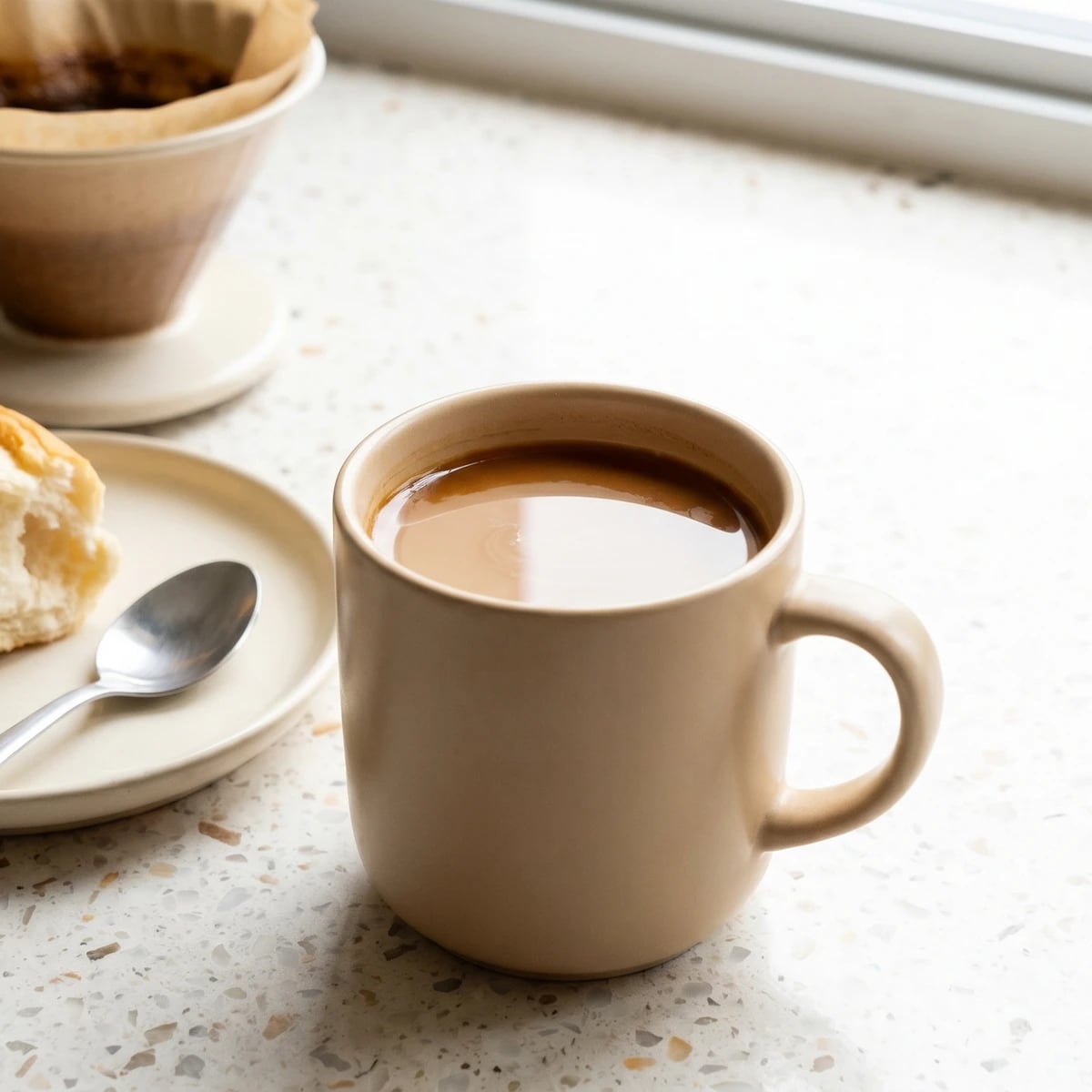
Café com Leite

Café com Leite

Created by

The first coffee a lot of us drank wasn't fancy: strong coado coffee softened with hot milk, sweet if you want, made for a piece of bread and a morning that needs mercy.

Beverages
Brazilian
Weeknight
Comfort Food
Budget Friendly
5 min
Active Time
7 min cook12 min total
Yield2 mugs

You might think this is too simple to teach. That's the little voice, isn't it? Isso não é pra mim, or worse, isso nem é receita. Pois anota aí: cooking begins exactly here, with the things so ordinary nobody bothered to explain them properly.

Café com leite is often the first coffee a Brazilian child tastes, not because anyone is trying to make a tiny adult, but because hot milk softens the bitterness and makes the morning feel fed. A piece of pão francês goes in, comes out soaked, and suddenly the kitchen smells like childhood, school shoes, and someone moving around before the house is fully awake.

The method matters because small things go wrong quietly. Weak coffee disappears in the milk. Boiled milk tastes tired and can catch on the pan. Powder pretending to be milk gives you sweetness and chalk, not comida de verdade. So a gente makes a strong coado coffee, heats real milk until it trembles at the edge, and mixes by color and taste.

This isn't the pê-efe, rice and beans and an egg or meat and something green. It comes before it, like the first line of the day. Learn this, and you learn the same lesson that saves dinner later: food doesn't need mystery. It needs a working method.

Coffee has grown in Brazil since the eighteenth century, but it became a daily national habit as plantations expanded through the Paraíba Valley and São Paulo in the nineteenth century. The phrase café com leite also became political shorthand during Brazil's First Republic, especially from 1898 to 1930, for the power arrangement between São Paulo coffee elites and Minas Gerais dairy and coffee interests. The drink stayed much more democratic than the politics: hot milk, strong coffee, bread, and breakfast on an ordinary table.

The technique, the tradition, and the story behind every dish.

Discover Culinary Explorer

Ingredients

water

Quantity

1 1/4 cups

ground coffee

Quantity

3 tablespoons

medium-fine, for coado coffee

whole milk

Quantity

2 cups

sugar (optional)

Quantity

2 teaspoons, plus more to taste

pão francês or another simple bread (optional)

Quantity

as much as the table asks for

for dunking

Equipment Needed

  • Coffee filter holder with paper or cloth filter
  • Small saucepan, about 1-liter capacity
  • Heatproof pitcher or coffee pot
  • 2 sturdy mugs

Instructions

  1. 1

    Set the filter

    Place a paper or cloth coffee filter in its holder over a heatproof pot or pitcher. Add the ground coffee and level it gently with a spoon. Don't press it down. A packed bed makes the water struggle through and can pull bitterness from the coffee instead of a clean, strong cup.

  2. 2

    Heat the water

    Bring the water just to a boil, then turn off the heat and wait about 30 seconds, until the furious bubbling calms. Pour a small splash over the grounds to wet them, then pour the rest slowly in circles. The coffee should drip dark and fragrant. We make it strong because the milk is coming, and weak coffee gets lost like a shy cousin at a festa.

    Don't squeeze the filter at the end. That last bitter drip is not thrift, it's punishment.
  3. 3

    Warm the milk

    Pour the milk into a small saucepan and warm it over medium heat, stirring now and then, until tiny bubbles gather at the edge and the surface looks glossy, about 4 to 5 minutes. Stop before it boils. Boiled milk tastes cooked, forms a skin, and can scorch on the bottom, and then that flavor follows you into the mug.

  4. 4

    Mix the mugs

    Divide the hot milk between two mugs, then pour in the strong coffee until the color turns warm beige, usually about 1/2 cup coffee per mug. Taste before sweetening. Milk softens bitterness, so sugar is a choice here, not a command from your childhood.

  5. 5

    Serve now

    Serve right away, with pão francês if you have it. Dunk the bread only long enough for the crumb to drink the café com leite and still hold together. Wait too long and you'll be fishing soggy bread from the bottom of the mug, which is not tragedy, but it is avoidable.

Chef Tips

  • Use real milk. Powdered milk has its place in emergencies, but don't let anyone sell it to you as the same breakfast. It tastes flatter, sweeter, and less like home.
  • The honest Tuesday shortcut is reheating yesterday's coado coffee gently before adding it to hot milk. It works. The cost is aroma, because coffee loses its perfume as it sits.
  • Make the coffee stronger than you would drink black. Café com leite needs backbone, or the milk turns the whole mug pale and sleepy.
  • Whole milk gives the roundest cup. If your house uses another milk every day, use it, but warm it gently and taste before adding sugar.
  • No machine is required. A paper filter, a kettle, and a mug are enough. Desgourmetizar breakfast is a public service.

Advance Preparation

  • You can brew the coffee up to 1 day ahead and keep it covered in the fridge, then reheat it gently. Fresh tastes better, but a Tuesday is a Tuesday.
  • Do not mix the milk and coffee ahead. The drink is best right after the milk is warmed, while the flavor is round and the coffee still smells alive.

Frequently Asked Questions

Nutrition Information

1 serving (about 365g)

Calories
165 calories
Total Fat
8 g
Saturated Fat
5 g
Trans Fat
0 g
Unsaturated Fat
3 g
Cholesterol
25 mg
Sodium
110 mg
Total Carbohydrates
17 g
Dietary Fiber
0 g
Sugars
17 g
Protein
8 g

Note: Chef personas and recipes are created with AI assistance. Cook with care: follow safe food-handling practices, check doneness with a thermometer when needed, and adapt for allergies and your kitchen.

Where cooking meets culture.

Culinary guides, cultural storytelling, and the editorial depth that makes cooking meaningful.

Discover Culinary Explorer

More from Bebidas Brasileiras

Browse the full collection