
Chef Juliette
Suet Dumpling
Boulettes au suif, poached beside salt beef, turn equal weights of flour and finely chopped suet into tender, rich dumplings. Keep the beef liquor at a bare tremble and the old garnish works beautifully at home.
A cooking platform built around craft, culture, and the stories behind what we eat.
Created by
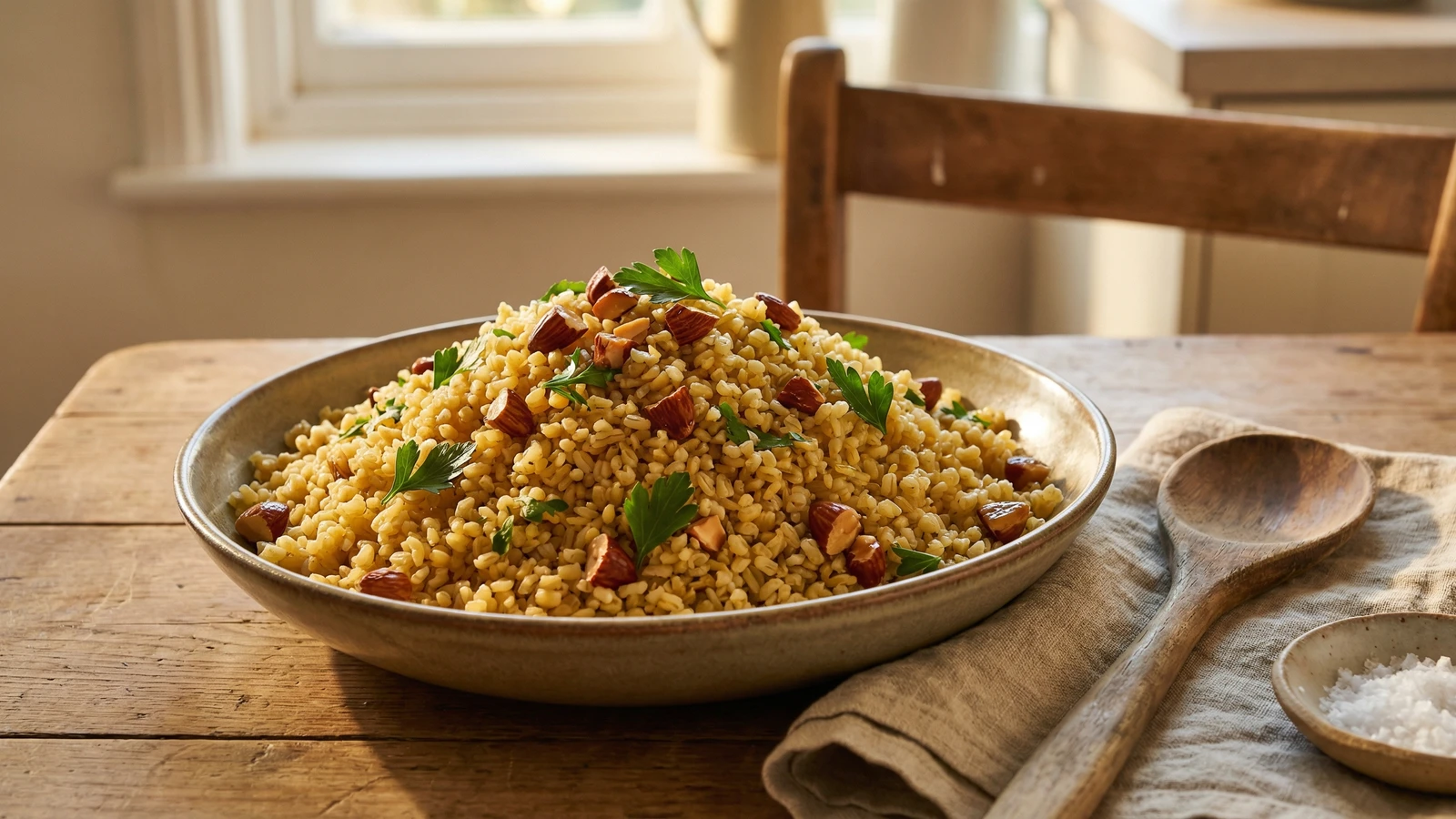
An ancient grain cooked the simplest way: toasted in butter, simmered in honest stock, and finished with crunchy almonds and bright parsley. The kind of side dish that quietly steals the show.
Bulgur is one of the oldest processed foods we have. For thousands of years, people in the eastern Mediterranean parboiled wheat berries, dried them in the sun, and cracked them into grains that cook quickly and keep for months. It is a whole grain that requires almost nothing from you. Good stock, a little butter, heat, and patience.
I think of bulgur as the overlooked cousin in the grain family. Rice gets all the attention, quinoa had its moment, but bulgur just sits there on the shelf, waiting for someone to remember how satisfying it is. The texture is nutty and chewy, with a subtle sweetness that takes well to butter and aromatics.
This pilaf is the kind of dish that rewards sourcing. Homemade stock transforms it. Fresh parsley, the kind with leaves that spring back when you touch them, makes all the difference. The almonds should be raw so you can toast them yourself and control the color. Every meal is a meaningful choice, and this one asks you to choose quality in the small things.
Quantity
1 1/2 cups
Quantity
3 tablespoons
divided
Quantity
1 medium
finely diced
Quantity
2 cloves
minced
Quantity
2 1/2 cups
warmed
Quantity
1
Quantity
3/4 teaspoon, plus more to taste
Quantity
1/2 cup
roughly chopped
Quantity
1/4 cup
chopped
Quantity
to taste
freshly cracked
Quantity
1 tablespoon
for finishing
| Ingredient | Quantity |
|---|---|
| coarse bulgur wheat | 1 1/2 cups |
| unsalted butterdivided | 3 tablespoons |
| yellow onionfinely diced | 1 medium |
| garlicminced | 2 cloves |
| chicken or vegetable stockwarmed | 2 1/2 cups |
| bay leaf | 1 |
| fine sea salt | 3/4 teaspoon, plus more to taste |
| raw almondsroughly chopped | 1/2 cup |
| fresh flat-leaf parsleychopped | 1/4 cup |
| black pepperfreshly cracked | to taste |
| extra-virgin olive oilfor finishing | 1 tablespoon |
Set a dry skillet over medium heat. Add the chopped almonds and shake the pan every thirty seconds or so until they turn golden and smell like a promise. This takes three to four minutes. The moment they are fragrant, transfer them to a small bowl. Almonds go from toasted to burned in seconds, and there is no saving them once they cross that line.
Melt two tablespoons of butter in a medium saucepan over medium heat. Add the diced onion and a pinch of salt. Cook, stirring occasionally, until the onion turns translucent and soft, about five minutes. You want no color here, just sweetness released. Add the garlic and stir for thirty seconds until fragrant.
Add the bulgur to the pot and stir to coat each grain with butter. Toast for two minutes, stirring often. The grains will turn slightly darker and begin to smell nutty, almost like popcorn. This step builds flavor that simmering alone cannot achieve.
Pour in the warm stock. It will sizzle and steam. Add the bay leaf and salt, then bring to a gentle boil. Reduce heat to low, cover tightly, and let the bulgur absorb the liquid for fifteen to eighteen minutes. Do not lift the lid. Do not stir. The steam does the work.
Remove the pot from heat and let it sit, still covered, for five minutes. This rest allows the last bit of moisture to distribute evenly. Remove the bay leaf. Add the remaining tablespoon of butter and fluff the grains with a fork, not a spoon. A fork separates without crushing.
Fold in the toasted almonds and most of the parsley, reserving a tablespoon for garnish. Drizzle with olive oil. Taste and adjust salt. The pilaf should taste of wheat and butter and the quiet sweetness of good stock. Transfer to a warm serving bowl, scatter the remaining parsley on top, and bring it to the table.
1 serving (about 150g)
Culinary guides, cultural storytelling, and the editorial depth that makes cooking meaningful.
Discover Culinary ExplorerChef Juliette
Boulettes au suif, poached beside salt beef, turn equal weights of flour and finely chopped suet into tender, rich dumplings. Keep the beef liquor at a bare tremble and the old garnish works beautifully at home.

Chef Juliette
Bread, flour, frangipane, and rice become four cool, supple panades for binding forcemeats, each changing body and flavor while preserving tenderness. The finest Mousselines need none, and knowing that distinction is the lesson.

Chef Juliette
Panade au pain is bread, milk, salt, heat, and attention: stir until the paste releases cleanly, butter it against a skin, and you have the quiet binder behind tender French farces.

Chef Juliette
Panade de farine teaches the drying stroke behind pâte à choux: flour meets boiling buttered water, then stays over the fire until the paste gathers, smooths, and quits the pan cleanly.