
Chef Zohra
Boulfaf (بولفاف)
Eid begins at the brazier with sheep liver kissed by coals, wrapped in caul fat, and shared fast with khobz while the house is still busy around the sacrifice.
A cooking platform built around craft, culture, and the stories behind what we eat.
Created by
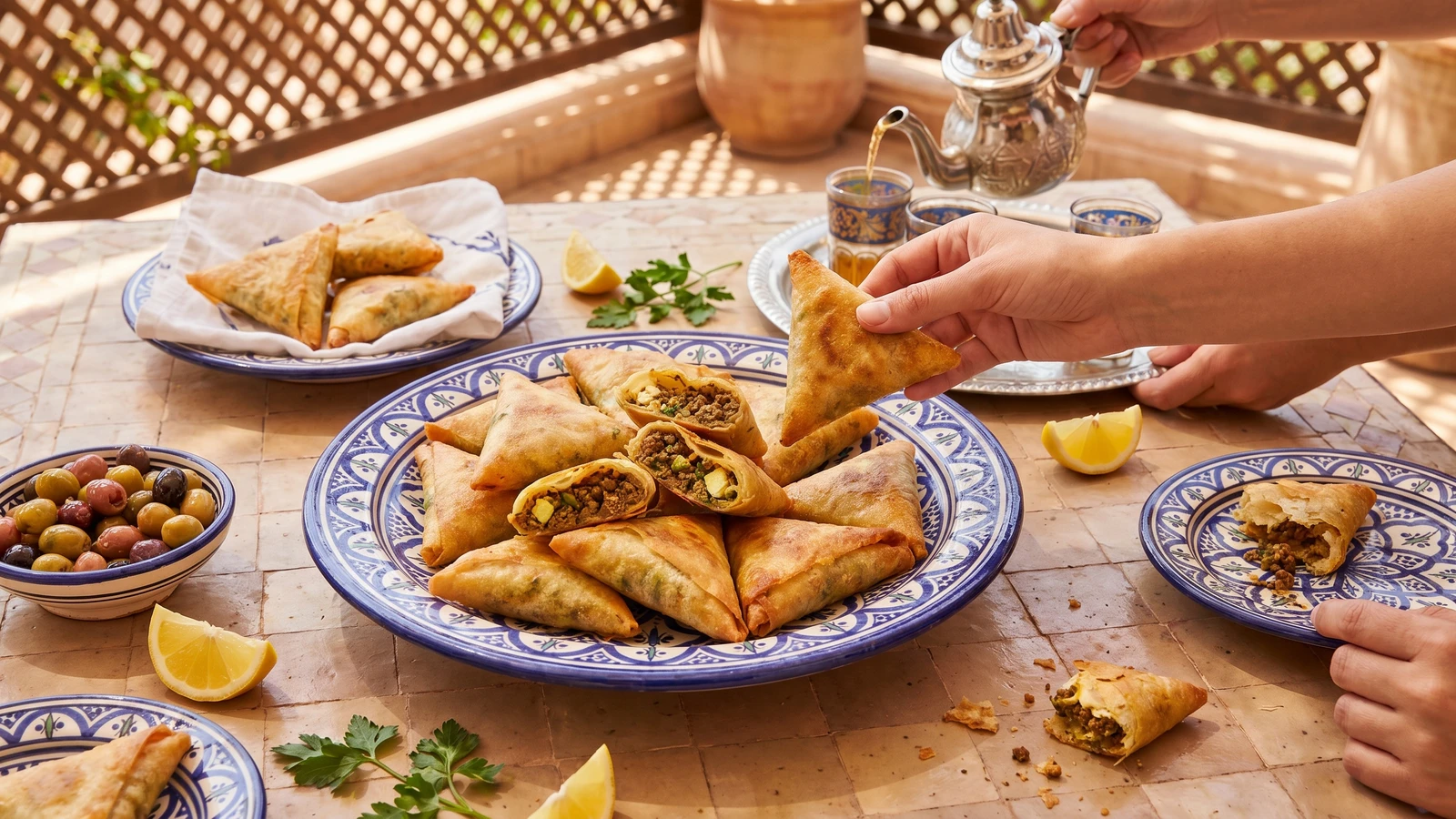
Golden triangles of warqa wrapped around spiced kefta, onion, herbs, and egg, made for Ramadan ftour and every table that needs one more warm plate.
At ftour, these are the little triangles that vanish before the harira bowl is empty. Briouates à la kefta are festive without being grand, a plate passed from hand to hand, crisp at the edges, warm with cumin, paprika, parsley, and coriander. You make more than you think you need. Someone will reach again.
The whole dish turns on dryness and sealing. Cook the kefta until the onion has given up its water and the pan looks almost dry, then let the filling cool before it touches the warqa. Hot, wet filling makes the pastry soften and the seams open in the oil. That's when the good work leaks away.
Fold patiently. Tuck each corner tight, seal the last flap with flour paste or egg, and fry until the pastry turns deep gold and crisp under the teeth. This is la cuisine du lien, the cooking of connection: a platter in the center, mint tea nearby, and one chair still waiting.
Briouates belong to the Moroccan family of filled warqa pastries, a citadin craft especially associated with Fez, Rabat, Tetouan, and the old Andalusi kitchens where thin pastry carried both sweet and savory fillings. The word is tied to small folded packets, and by the 19th and 20th centuries these pastries had become fixed in Ramadan ftour tables, wedding trays, and holiday cooking across many Moroccan regions. Kefta briouates are now common in homes and markets, but the exact dating of the meat-filled triangle is difficult to prove because the technique lived mostly in household practice, not written books.
Quantity
500g
not too lean
Quantity
1 medium
finely grated and squeezed lightly
Quantity
2 tbsp
Quantity
2 tbsp
chopped
Quantity
2 tbsp
chopped
Quantity
1 1/2 tsp
Quantity
1 tsp
Quantity
1/2 tsp
Quantity
1/4 tsp
Quantity
1/4 tsp
Quantity
1/2 tsp, plus more to taste
Quantity
2
beaten
Quantity
12 sheets
halved into long strips
Quantity
2 tbsp flour mixed with 2 tbsp water
for sealing
Quantity
for frying
Quantity
to serve
| Ingredient | Quantity |
|---|---|
| ground beef or lambnot too lean | 500g |
| onionfinely grated and squeezed lightly | 1 medium |
| olive oil | 2 tbsp |
| fresh parsleychopped | 2 tbsp |
| fresh corianderchopped | 2 tbsp |
| ground cumin | 1 1/2 tsp |
| sweet paprika | 1 tsp |
| ground ginger | 1/2 tsp |
| ground cinnamon | 1/4 tsp |
| black pepper | 1/4 tsp |
| sea salt | 1/2 tsp, plus more to taste |
| eggsbeaten | 2 |
| warqa or brick pastryhalved into long strips | 12 sheets |
| flour and water pastefor sealing | 2 tbsp flour mixed with 2 tbsp water |
| vegetable oil | for frying |
| lemon wedges (optional) | to serve |
Warm the olive oil in a wide pan over medium heat. Add the onion and cook until it softens and loses its sharp smell, then add the ground meat, cumin, paprika, ginger, cinnamon, black pepper, and salt. Break the meat up with a spoon and cook until no pink remains and the pan looks almost dry.
Lower the heat and stir in the beaten eggs, parsley, and coriander. Cook gently, stirring, until the eggs set into the meat and the mixture holds together without looking wet. Taste for salt. The herbs should smell fresh, not raw.
Spread the kefta filling on a plate or tray and let it cool completely. Don't fold with hot filling. Heat makes warqa fragile, and fragile pastry tears just when you need it to behave.
Lay one strip of warqa or brick pastry in front of you and keep the others covered with a towel so they don't dry out. Put a spoonful of filling near one end, fold one corner over to make a triangle, then keep folding from side to side like a flag, keeping the edges tight. Brush the final flap with flour paste and press to seal.
Heat 2 to 3 cm of vegetable oil in a heavy pan to 175°C. Fry the briouates in small batches, turning once, until both sides are deep gold and crisp, 2 to 3 minutes per batch. Drain on a rack or paper towels and keep them in a single layer so the pastry stays crisp.
Serve warm, with lemon wedges if your table likes them. Put the platter in the center and let people reach. Briouates are made for hands, conversation, and that first generous hour when everyone is hungry together.
1 serving (about 40g)
Culinary guides, cultural storytelling, and the editorial depth that makes cooking meaningful.
Discover Culinary ExplorerChef Zohra
Eid begins at the brazier with sheep liver kissed by coals, wrapped in caul fat, and shared fast with khobz while the house is still busy around the sacrifice.

Chef Zohra
The pastilla made small for passing hand to hand: crisp warqa around saffron chicken, softly set egg, toasted almonds, and the old Fassi sweet-savory dusting of sugar and cinnamon.

Chef Zohra
The Atlantic coast folded into a triangle: shrimp, calamari, herbs, and glass vermicelli tucked in warqa, fried until golden, and passed while hands are still reaching for the next one.

Chef Zohra
Minced lamb and beef kneaded with cumin, paprika, parsley, and coriander, then grilled fast over hot coals. Kefta brochettes are made for bread, salad, and one more chair.