
Chef Dean
Bacon Egg and Cheese on a Roll
The iconic New York bodega breakfast: shattering-crisp bacon, a golden-yolked fried egg, and molten American cheese tucked into a soft kaiser roll. This is the sandwich that built a city.
A cooking platform built around craft, culture, and the stories behind what we eat.
Created by
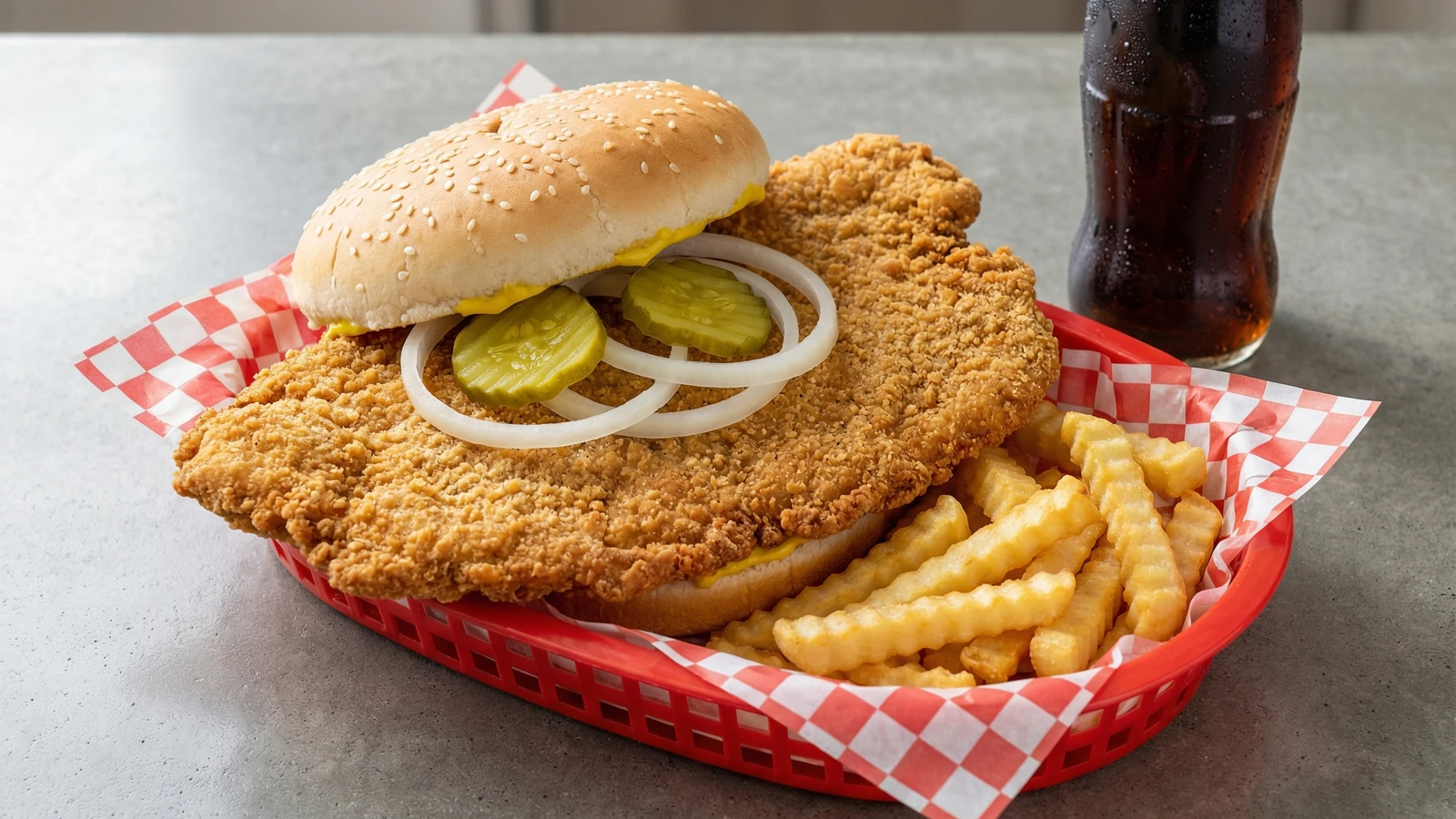
A pork cutlet pounded thin as a playing card, coated in seasoned cracker crumbs, and fried until it sprawls gloriously past the edges of its bun. This is Indiana on a plate.
The breaded pork tenderloin sandwich belongs to Indiana the way gumbo belongs to Louisiana. Drive through any small town between Fort Wayne and Evansville and you'll find one on every diner menu, each cook convinced their version is definitive. The cutlet hangs over the bun by several inches on all sides. This is not an accident. This is the point.
The dish traces back to Nick's Kitchen in Huntington, Indiana, where Nick Freienstein started serving them in 1908. German immigrants brought schnitzel traditions to the Midwest, and American ingenuity transformed them. Why pound the meat so thin? Tenderness, for one. Speed of cooking, for another. But mostly because a pork tenderloin that fits neatly on its bun is a pork tenderloin that has failed to understand the assignment.
The breading matters as much as the meat. Saltine crackers, crushed fine, give that distinctive sandy texture and golden color. Some cooks use breadcrumbs. Some use a mixture. I won't tell you they're wrong, but I will tell you the cracker coating fries crispier and clings better. The technique is simple: flour, egg, crumbs. Press firmly. Let it rest. Fry hot and fast.
Serve this on a soft bun that yields to the crispy cutlet. Pile on the pickles, the raw onion, the yellow mustard. A tenderloin sandwich without pickles is like a sentence without punctuation. It works, technically, but something essential is missing.
Quantity
1 pound
trimmed
Quantity
1 cup
Quantity
2
Quantity
2 tablespoons
Quantity
2 cups
finely crushed (about 60 crackers)
Quantity
1 teaspoon
Quantity
1/2 teaspoon
Quantity
1/2 teaspoon
Quantity
1/4 teaspoon
Quantity
about 1 cup
for frying
Quantity
4
Quantity
to taste
Quantity
1 small
thin-sliced
Quantity
to taste
Quantity
to taste
Quantity
4
Quantity
4
| Ingredient | Quantity |
|---|---|
| pork tenderlointrimmed | 1 pound |
| all-purpose flour | 1 cup |
| large eggs | 2 |
| whole milk | 2 tablespoons |
| saltine crackersfinely crushed (about 60 crackers) | 2 cups |
| kosher salt | 1 teaspoon |
| freshly ground black pepper | 1/2 teaspoon |
| garlic powder | 1/2 teaspoon |
| cayenne pepper | 1/4 teaspoon |
| vegetable oilfor frying | about 1 cup |
| soft hamburger buns or kaiser rolls | 4 |
| dill pickle slices | to taste |
| white onionthin-sliced | 1 small |
| yellow mustard | to taste |
| mayonnaise | to taste |
| iceberg lettuce leaves (optional) | 4 |
| tomato slices (optional) | 4 |
Cut the pork tenderloin crosswise into four equal portions, each about 4 ounces. These thick medallions will become your sandwich-sized cutlets after pounding. Trim any silverskin or excess fat as you go.
Place one medallion between two sheets of plastic wrap. Using a meat mallet or the bottom of a heavy skillet, pound from the center outward until the cutlet is about 1/4-inch thick and roughly 8 inches across. The meat should be nearly translucent in spots. This is correct. Repeat with remaining medallions. The pounding tenderizes the meat and creates that signature oversized cutlet.
Arrange three shallow dishes in a row. In the first, place the flour. In the second, whisk together the eggs and milk until smooth. In the third, combine the crushed crackers with the salt, pepper, garlic powder, and cayenne. Stir the crumb mixture to distribute the seasonings evenly. This assembly line is your path to crispy perfection.
Season the pounded cutlets lightly with salt on both sides. Dredge each cutlet in flour, shaking off the excess. Dip into the egg wash, letting any extra drip away. Press firmly into the seasoned cracker crumbs, coating both sides completely. The coating should feel secure, not patchy. Set the breaded cutlets on a wire rack and let them rest for 10 minutes. This waiting period helps the coating adhere during frying.
Pour vegetable oil into a 12-inch cast iron skillet to a depth of about 1/2 inch. Heat over medium-high until the oil reaches 350°F on an instant-read thermometer. Test readiness by dropping a pinch of breading into the oil. It should sizzle immediately and float to the surface. If it browns instantly, the oil is too hot. Reduce the heat and wait.
Carefully lower one or two cutlets into the hot oil, depending on your skillet size. Do not crowd the pan. Fry until the bottom is deep golden brown, about 2 to 3 minutes. The edges will curl slightly and the crackling sound will steady into a consistent sizzle. Flip carefully with tongs or a spatula and fry the second side until equally golden, another 2 to 3 minutes. The internal temperature should reach 145°F. Transfer to a wire rack set over a sheet pan. Resist the urge to drain on paper towels, which will steam the bottom and steal your crunch.
While the final cutlets drain, split the buns and toast them cut-side down in a dry skillet over medium heat until golden, about 1 minute. Alternatively, butter them lightly and toast under the broiler. A soft interior with a slightly crisp surface gives the bun enough structure to hold its cargo.
Spread mayonnaise on the top bun and yellow mustard on the bottom. Place a fried cutlet on the bottom bun, letting it overhang dramatically. Layer on the pickle slices and raw onion. Add lettuce and tomato if you wish, though purists may argue. Crown with the top bun and press gently. Serve immediately while the coating still shatters.
1 serving (about 450g)
Culinary guides, cultural storytelling, and the editorial depth that makes cooking meaningful.
Discover Culinary ExplorerChef Dean
The iconic New York bodega breakfast: shattering-crisp bacon, a golden-yolked fried egg, and molten American cheese tucked into a soft kaiser roll. This is the sandwich that built a city.

Chef Dean
Buffalo's proudest sandwich: silky rare roast beef mounded on a crusty roll showered with caraway and coarse salt, the top dipped in warm jus, the whole thing demanding horseradish and a cold beer.

Chef Dean
Shatteringly crisp beer-battered halibut piled on a buttery bun with tangy homemade tartar sauce and crunchy coleslaw. This is the Pacific Northwest on a plate, the kind of sandwich worth driving to the coast for.

Chef Dean
An all-beef frankfurter loaded with mustard, neon relish, onion, tomato, pickle, and fiery sport peppers on a steamed poppy seed bun. This is Chicago's gift to American street food, assembled with precision and eaten with pride.