Chef Graziella
Braciole alla Napoletana
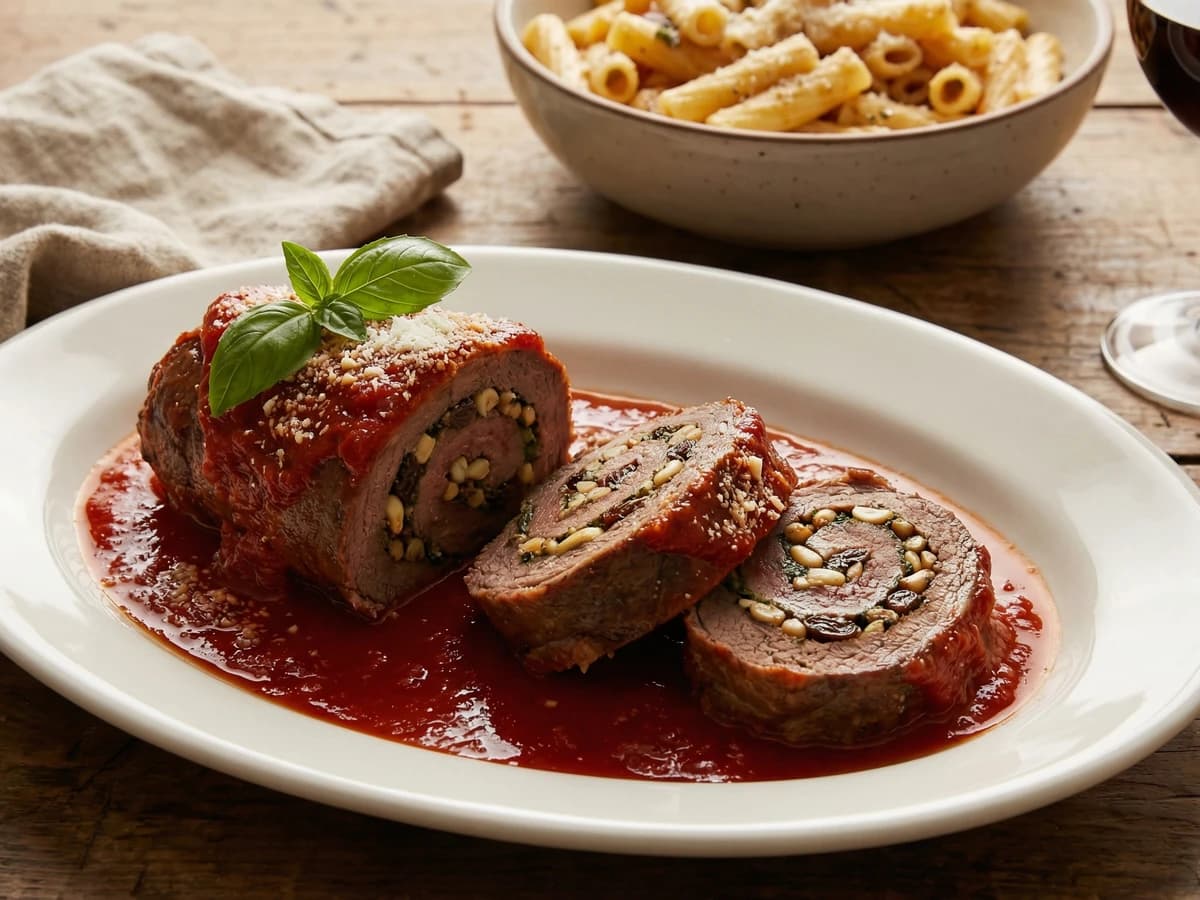
The Sunday ritual of Naples: beef rolls stuffed with pine nuts, raisins, and garlic, braised in tomato sauce until surrendering to tenderness. The sauce goes to the pasta. The meat comes second.
A cooking platform built around craft, culture, and the stories behind what we eat.
Created by
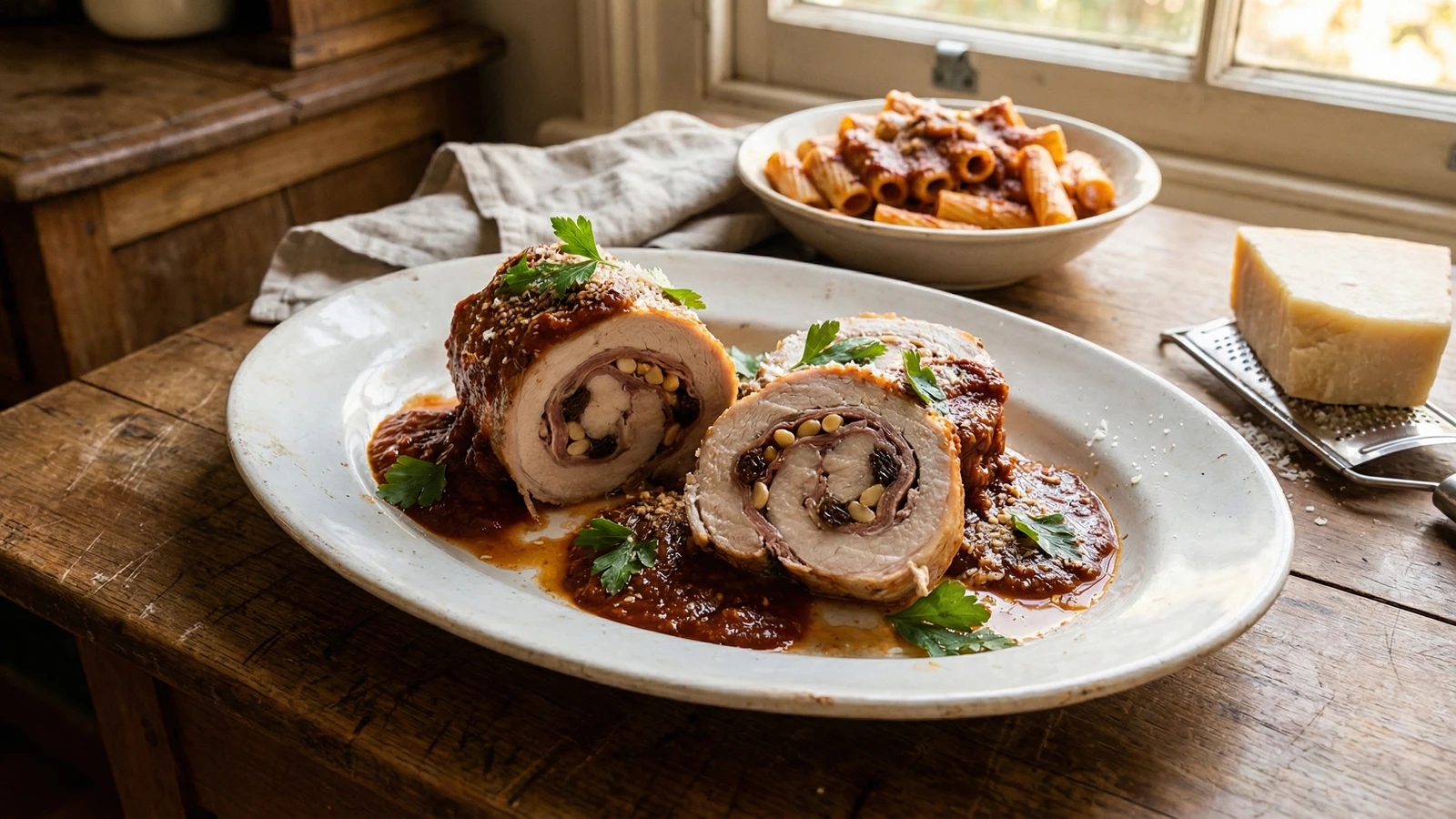
Pork rolls stuffed with pine nuts, raisins, and prosciutto, then braised slowly in tomato sauce until fork-tender. In Naples, the sauce dresses pasta for the first course, and the meat follows as the second.
In Naples, Sunday dinner is sacred, and braciole is its centerpiece. Thin slices of pork wrapped around a filling of prosciutto, pine nuts, raisins, and sharp Pecorino, simmered for hours in tomato sauce until the meat surrenders completely. The sauce absorbs the essence of the pork while the filling holds its shape inside each roll, a small surprise when you cut into it.
The combination of sweet raisins and salty prosciutto is not an accident. It reflects centuries of Neapolitan cooking, where Arab and Spanish influences left their mark on the cuisine. This is not a fusion experiment. This is tradition, the way it has been done in modest Neapolitan kitchens for generations.
You cannot rush braciole. The long braise breaks down the connective tissue in the pork until a fork meets no resistance. The sauce thickens and deepens, becoming something more than tomatoes. If you are not willing to give this two hours of patient simmering, make something else. But if you do it properly, you will understand why Neapolitan families have gathered around this dish every Sunday for as long as anyone can remember.
Braciole arrived in Naples through Spanish rule in the 16th and 17th centuries, when involtini-style rolled meats became fashionable among the aristocracy. The filling of pine nuts and raisins reflects earlier Arab influence on Mediterranean cooking. By the 19th century, braciole had descended from noble tables to working-class kitchens, where cooks discovered that long braising in tomato sauce transformed cheap cuts into something magnificent.
Quantity
2 pounds
sliced into 8 thin cutlets (about 1/4 inch)
Quantity
8 thin slices
Quantity
1/3 cup
Quantity
1/3 cup
soaked in warm water 15 minutes and drained
Quantity
1/2 cup
freshly grated
Quantity
1/4 cup
chopped
Quantity
2
minced fine
Quantity
to taste
Quantity
to taste
freshly ground
Quantity
1/4 cup
Quantity
1 medium
diced fine
Quantity
1/2 cup
Quantity
2 cans (28 ounces each)
crushed by hand
Quantity
1 pound
Quantity
for serving
freshly grated
| Ingredient | Quantity |
|---|---|
| pork loin or legsliced into 8 thin cutlets (about 1/4 inch) | 2 pounds |
| prosciutto di Parma | 8 thin slices |
| pine nuts | 1/3 cup |
| golden raisinssoaked in warm water 15 minutes and drained | 1/3 cup |
| Pecorino Romanofreshly grated | 1/2 cup |
| flat-leaf parsleychopped | 1/4 cup |
| garlic clovesminced fine | 2 |
| kosher salt | to taste |
| black pepperfreshly ground | to taste |
| extra virgin olive oil | 1/4 cup |
| yellow oniondiced fine | 1 medium |
| dry white wine | 1/2 cup |
| San Marzano tomatoescrushed by hand | 2 cans (28 ounces each) |
| rigatoni or ziti | 1 pound |
| Pecorino Romanofreshly grated | for serving |
Place each pork slice between two sheets of plastic wrap. Using a meat mallet or the bottom of a heavy pan, pound the cutlets to an even thickness of about 1/8 inch. They should be roughly 5 by 7 inches, thin enough to roll but not so thin they tear. Season both sides lightly with salt and pepper.
In a small bowl, combine the pine nuts, drained raisins, grated Pecorino, parsley, and minced garlic. Mix with your hands until evenly distributed. The filling should be loose, not packed. You will divide this among eight rolls.
Lay one pork cutlet flat on your work surface. Place one slice of prosciutto on top, leaving a half-inch border. Spoon about two tablespoons of filling in a line across the bottom third of the cutlet. Roll the cutlet up tightly from the bottom, tucking in the sides as you go. Secure with two toothpicks or tie with kitchen twine at both ends. Repeat with remaining cutlets.
In a heavy Dutch oven or braising pan, heat the olive oil over medium-high heat until it shimmers. Working in batches to avoid crowding, brown the braciole on all sides, turning them carefully with tongs. Each batch takes 6 to 8 minutes. The surface should develop a deep golden crust. Transfer browned rolls to a plate.
Reduce heat to medium. Add the diced onion to the pan and cook, stirring occasionally, until soft and translucent, about 8 minutes. Scrape the browned bits from the bottom of the pan as you stir. These are flavor. Pour in the white wine and let it bubble until nearly evaporated, about 2 minutes.
Add the crushed tomatoes and stir well. Season with salt. Return the braciole to the pot, nestling them into the sauce. The sauce should come about halfway up the rolls. Bring to a gentle simmer, then reduce heat to the lowest setting. Cover the pot with the lid slightly ajar.
Let the braciole simmer very gently for 2 to 2 1/2 hours, turning them once halfway through. The sauce should bubble lazily, not boil. The meat is done when a fork slides in and out with no resistance. If the sauce becomes too thick, add water by the quarter cup. If too thin, remove the lid entirely for the last 30 minutes.
Transfer the braciole to a cutting board and let them rest for 10 minutes. Remove the toothpicks or twine. The rolls should hold their shape on their own now. Taste the sauce and adjust salt as needed.
Cook the pasta in abundant salted water until al dente. Drain, reserving some pasta water. Toss the pasta with enough sauce to coat generously, adding pasta water if needed. Serve this as the first course with grated Pecorino. The braciole follow as the second course, either whole or sliced on the bias to reveal the filling, with a spoonful of sauce over each. This is how Sunday dinner works in Naples.
1 serving (about 530g)
Culinary guides, cultural storytelling, and the editorial depth that makes cooking meaningful.
Discover Culinary ExplorerChef Graziella
The Sunday ritual of Naples: beef rolls stuffed with pine nuts, raisins, and garlic, braised in tomato sauce until surrendering to tenderness. The sauce goes to the pasta. The meat comes second.
Chef Graziella
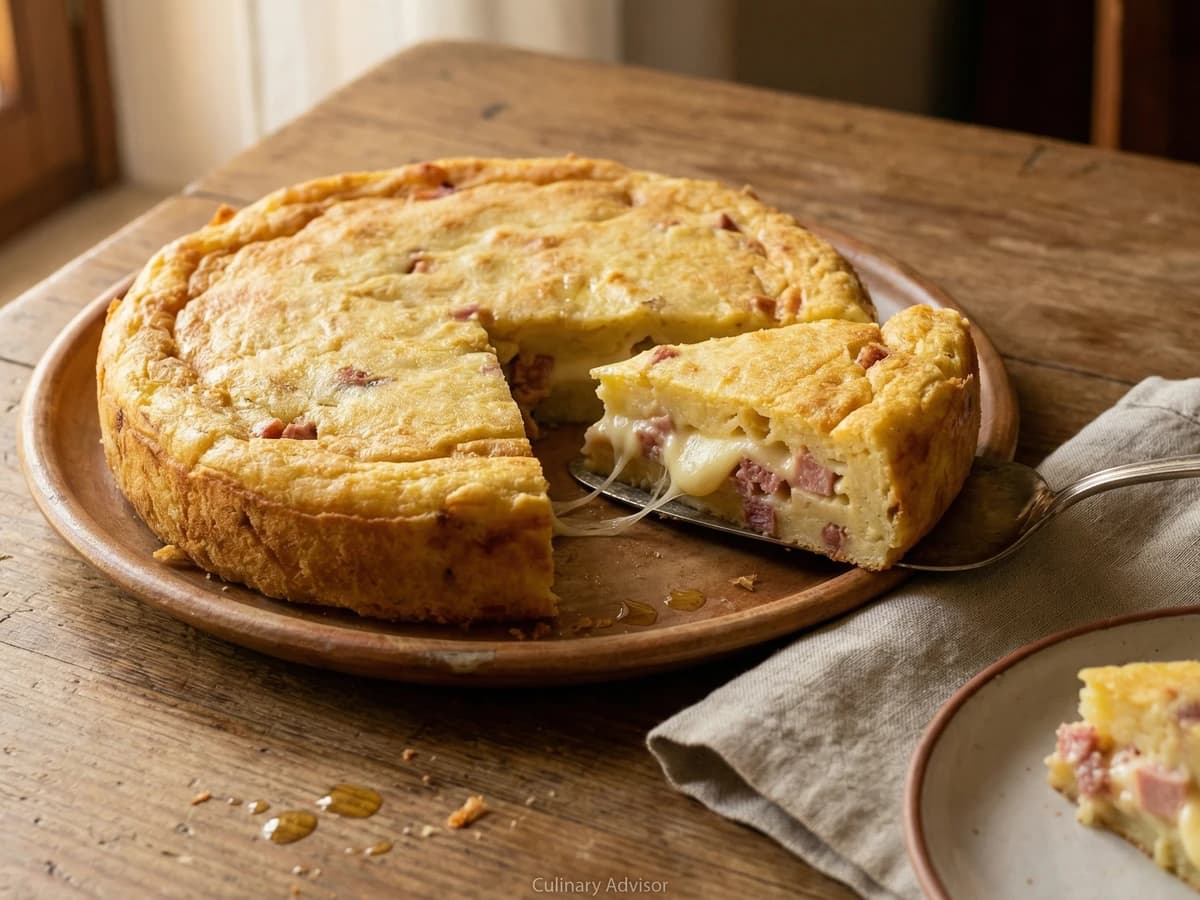
The baroque potato cake of Naples, where silky mashed potatoes enfold a hidden treasure of cheeses and cured meats, then bake until a golden crust gives way to molten richness within.
Chef Graziella
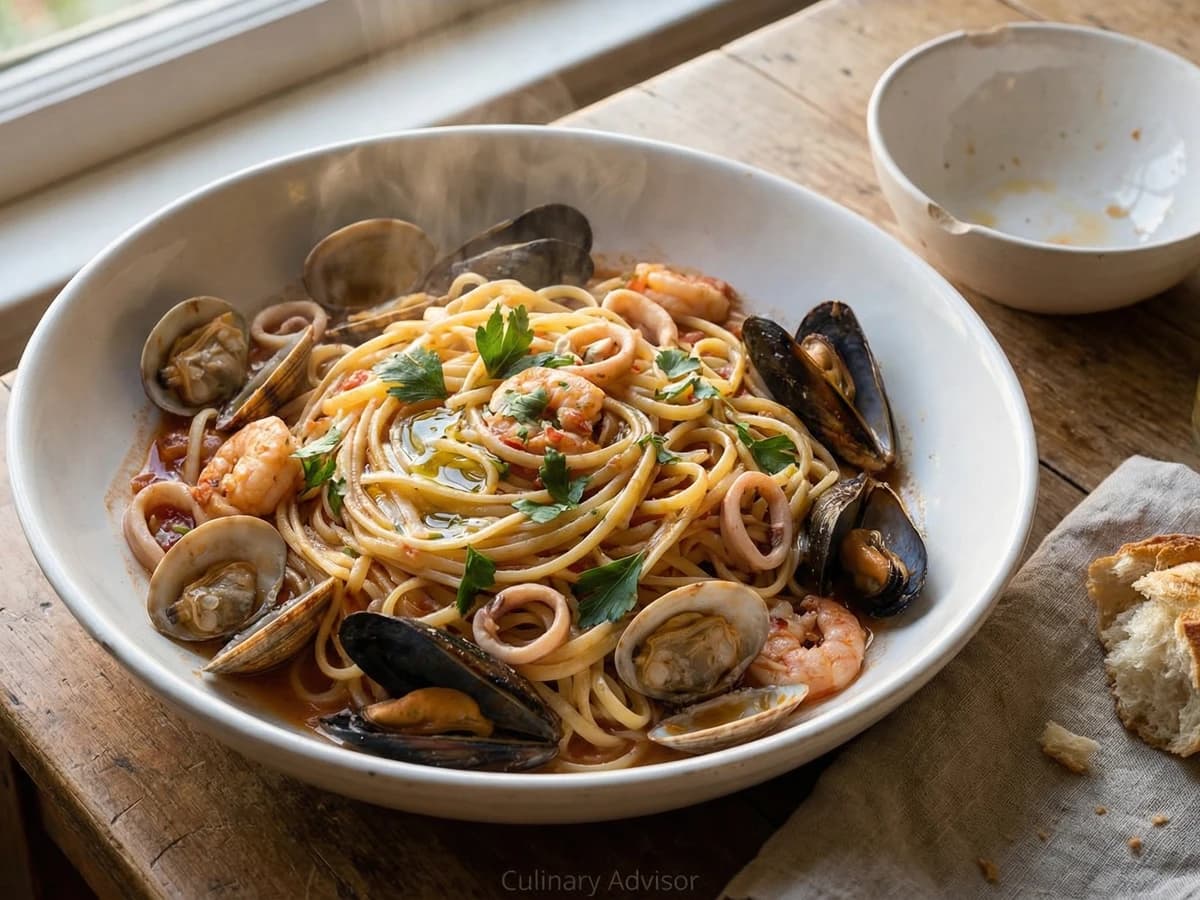
A tumble of clams, mussels, shrimp, and squid over linguine, bright with tomato and white wine. The fishermen's pasta of the Amalfi coast, where the rocks meet the sea.

Chef Graziella
The fisherman's masterpiece from the Gulf of Naples, where whole sea bream surrenders to a broth so simple it seems impossible that it could taste this good. This is what restraint achieves.