
Chef Graziella
Bistecca alla Fiorentina
The T-bone of Florence, thick as three fingers and charred over blazing coals, rested until the juices settle, finished with nothing but salt and the best olive oil Tuscany can offer.
A cooking platform built around craft, culture, and the stories behind what we eat.
Created by
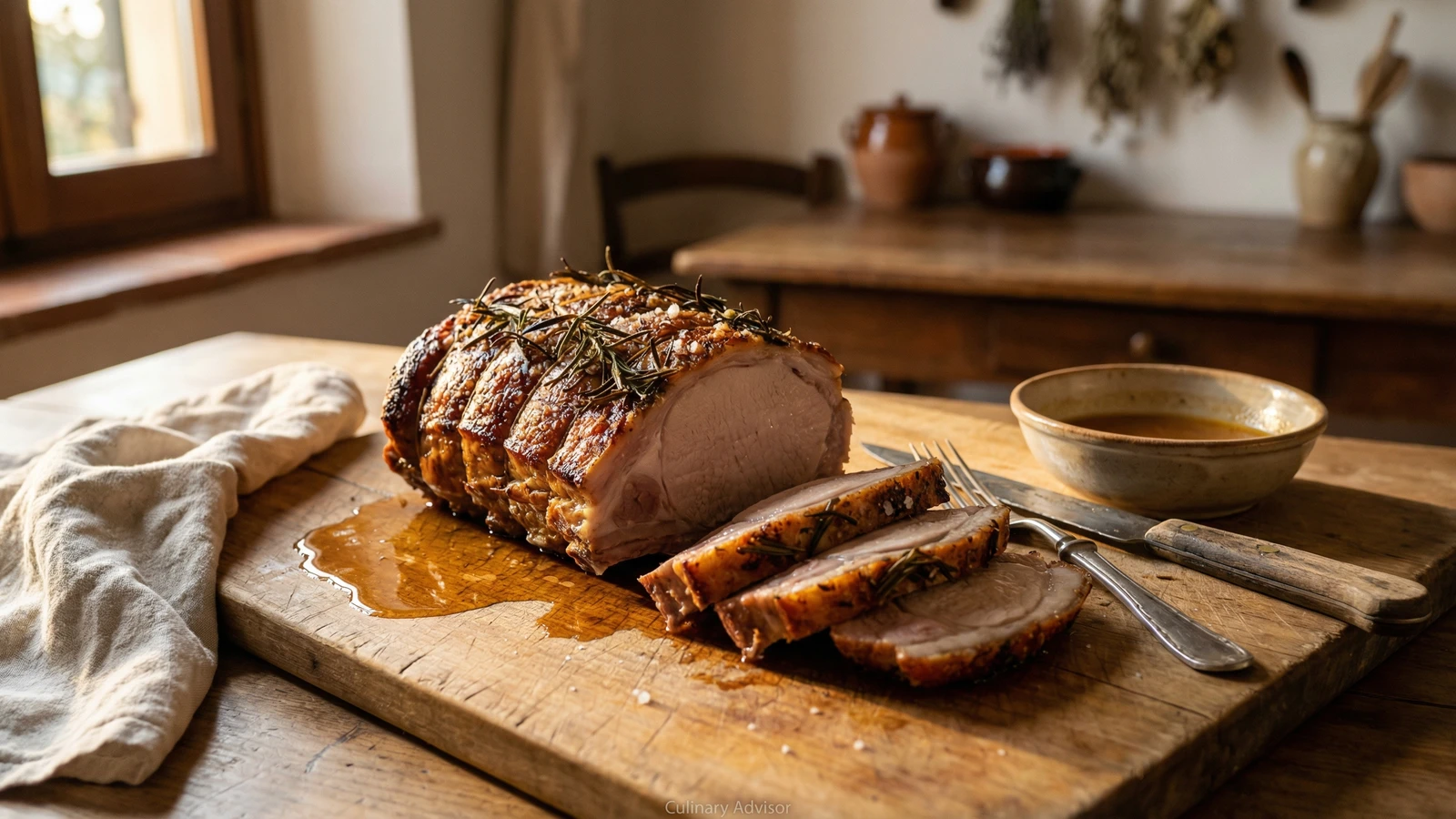
The roast pork of Florence: bone-in loin studded with rosemary and garlic, nothing more. This is the dish that earned its name from a Byzantine bishop who declared it aristos, the best.
Three ingredients season this roast: rosemary, garlic, black pepper. That is all. No marinades, no brines, no rubs with fifteen components. Tuscan cooking does not hide behind complexity. It demands quality ingredients and proper technique, then gets out of the way.
The pork loin must be bone-in. The bone conducts heat gently into the center of the roast and adds flavor to the pan juices. A boneless loin dries out faster and lacks the character of meat cooked on the bone. Ask your butcher for a center-cut roast from the rib section, with the chine bone removed for easier carving but the rib bones intact.
You will make incisions in the meat and force the rosemary-garlic paste deep inside. This is not decorative. As the roast cooks, the aromatics perfume the flesh from within. The exterior develops a golden crust while the interior remains succulent. The whole process takes patience, not skill. If you can operate a thermometer and resist the urge to add unnecessary ingredients, you can make arista.
Legend holds that during the Council of Florence in 1430, when Catholic and Orthodox church leaders gathered to discuss reunification, a Greek bishop tasted this Florentine roast pork and exclaimed 'Aristos!' meaning 'the best' in Greek. Whether true or apocryphal, the name stuck. Florentine butchers and home cooks have prepared arista the same way for six centuries: rosemary, garlic, pepper, and time.
Quantity
4 to 5 pounds
center cut
Quantity
6
Quantity
3 tablespoons (about 4 large sprigs)
Quantity
1 tablespoon
Quantity
2 teaspoons
freshly ground
Quantity
3 tablespoons
Quantity
1 cup
| Ingredient | Quantity |
|---|---|
| bone-in pork loin roastcenter cut | 4 to 5 pounds |
| garlic cloves | 6 |
| fresh rosemary leaves | 3 tablespoons (about 4 large sprigs) |
| coarse sea salt | 1 tablespoon |
| black pepperfreshly ground | 2 teaspoons |
| extra virgin olive oil | 3 tablespoons |
| dry white wine | 1 cup |
Strip the rosemary leaves from their woody stems. On a cutting board, combine the garlic cloves, rosemary leaves, sea salt, and black pepper. Chop them together, working the blade back and forth until you have a coarse paste. The salt acts as an abrasive, helping to break down the garlic and release the rosemary oils. You should smell the rosemary strongly. Add two tablespoons of the olive oil and work it into the paste.
Remove the pork from refrigeration one hour before cooking. Using a thin, sharp knife, make deep incisions all over the meat, about two inches apart and one inch deep. Push small amounts of the rosemary-garlic paste into each incision with your finger, forcing it deep into the flesh. Rub the remaining paste over the entire surface of the roast. The meat should be fragrant and thoroughly coated.
Heat the remaining tablespoon of olive oil in a roasting pan or large oven-safe skillet over medium-high heat. When the oil shimmers, place the pork fat-side down and sear until golden brown, about 4 minutes. Turn and brown all sides. This creates the foundation for the crust. Transfer the pan to a rack and let the meat rest while the oven heats.
Heat the oven to 325°F. Place the pork fat-side up in the roasting pan. Pour the white wine around (not over) the meat. Roast uncovered for approximately 1 hour and 45 minutes to 2 hours, until an instant-read thermometer inserted into the thickest part (not touching bone) reads 145°F. Baste with the pan juices every 30 minutes.
Transfer the pork to a cutting board and tent loosely with foil. Rest for 20 minutes. This is not optional. The juices must redistribute throughout the meat. If you carve immediately, those juices will run onto the board instead of staying in the meat where they belong.
While the meat rests, place the roasting pan over medium heat. If the pan juices have evaporated too much, add a splash of water or wine. Scrape up any browned bits from the bottom. Simmer briefly until slightly reduced. Taste and adjust salt. This is not a thick sauce. It is the concentrated essence of the roast.
Carve the roast into slices about half an inch thick, cutting between the rib bones if bone-in. Arrange on a warm platter and spoon the pan juices over. Arista may be served warm, at room temperature, or even cold the next day. In Tuscany, it is often prepared ahead and sliced for antipasto. The flavors deepen as it sits.
1 serving (about 170g)
Culinary guides, cultural storytelling, and the editorial depth that makes cooking meaningful.
Discover Culinary ExplorerChef Graziella
The T-bone of Florence, thick as three fingers and charred over blazing coals, rested until the juices settle, finished with nothing but salt and the best olive oil Tuscany can offer.
Chef Graziella
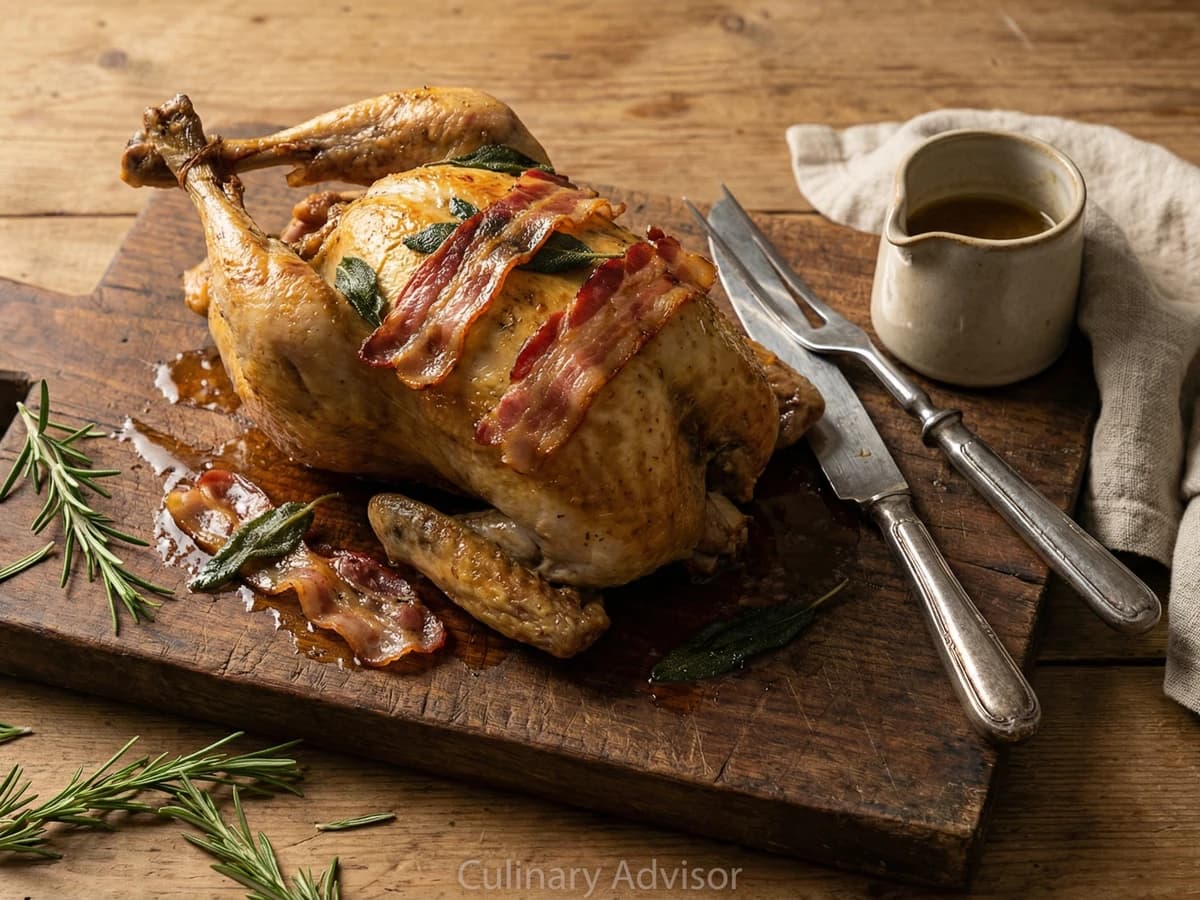
The noble guinea fowl of Tuscan farmhouses, wrapped in pancetta, perfumed with sage, roasted until the skin shatters and the meat stays moist. This is what Italians bring to the table when ordinary poultry will not serve.

Chef Graziella
The ancient grain of the Garfagnana, simmered with whatever the garden offers and finished with the green-gold olive oil that Tuscany produces better than anywhere else. Peasant food that sustained Roman legions and Tuscan farmers alike.

Chef Graziella
Thin pork slices rolled around spinach and ricotta, wrapped in pancetta, braised in white wine with sage until tender. The Tuscan approach to pork: herbs, restraint, and technique that rewards patience.