Culinary Explorer

A cooking platform built around craft, culture, and the stories behind what we eat.
Discover Culinary Explorer
Boston Cream Pie

Boston Cream Pie

Created by

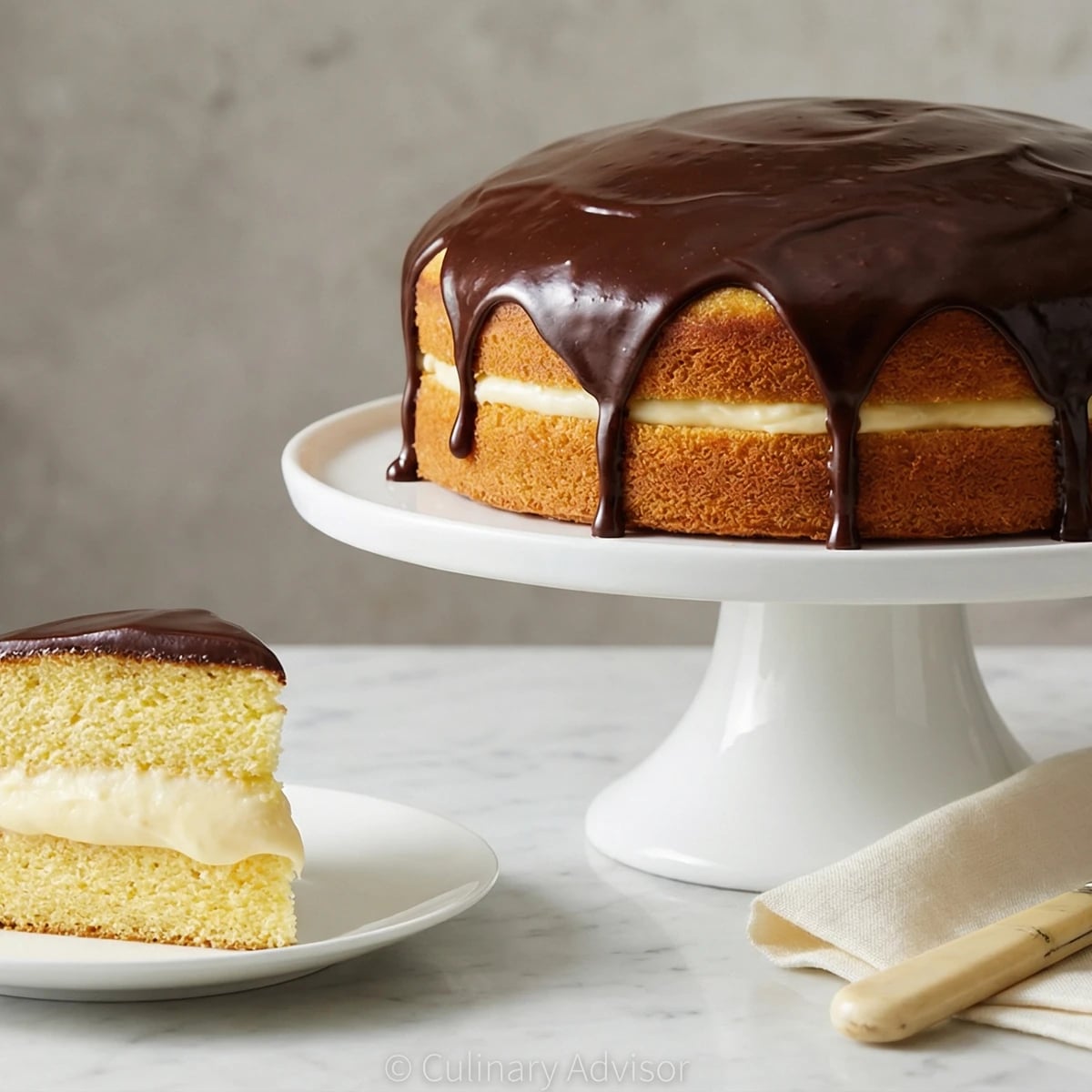
The Parker House Hotel's 1856 masterpiece that named itself a pie and became Massachusetts' official dessert: buttery sponge cake embracing cool vanilla custard beneath a cloak of dark, glossy chocolate.

Desserts
American
Birthday
Special Occasion
45 min
Active Time
25 min cook3 hr total
Yield1 nine-inch cake (10-12 servings)

This is not a pie. It never was. When a German pastry chef at Boston's Parker House Hotel created this confection in 1856, he called it a pudding cake pie, and the name stuck even as the logic didn't. What he actually invented was something far more seductive: tender yellow cake split and filled with silky pastry cream, the whole affair blanketed in a dark chocolate glaze that shatters slightly under a fork.

The genius lives in the contrasts. Cold cream against soft cake. Bitter chocolate meeting vanilla sweetness. A dessert that looks impressive but requires only patience, not professional training. Every component can be made in advance. The cake, the cream, even the ganache will wait for you.

I've taught this recipe to nervous bakers convinced they couldn't make pastry cream. They all could. The technique is simple: heat milk, temper eggs, whisk until thick. The only rule is don't walk away while it's on the stove. Pastry cream rewards attention and punishes distraction. Give it your focus for five minutes and you'll have something far better than anything from a bakery case.

This is the cake I bring to birthdays, to celebrations, to any gathering where I want people to feel looked after. It's a cake that says someone spent time on you. And isn't that what birthdays are really about?

The technique, the tradition, and the story behind every dish.

Discover Culinary Explorer

Ingredients

all-purpose flour

Quantity

1 1/2 cups (190g)

baking powder

Quantity

1 1/2 teaspoons

fine sea salt

Quantity

1/2 teaspoon

unsalted butter (for cake)

Quantity

6 tablespoons (85g)

softened

granulated sugar (for cake)

Quantity

1 cup (200g)

large eggs (for cake)

Quantity

2

at room temperature

pure vanilla extract (for cake)

Quantity

2 teaspoons

whole milk (for cake)

Quantity

3/4 cup (180ml)

at room temperature

whole milk (for pastry cream)

Quantity

2 cups (480ml)

granulated sugar (for pastry cream)

Quantity

1/2 cup (100g), divided

cornstarch

Quantity

1/4 cup (30g)

large egg yolks

Quantity

4

unsalted butter (for pastry cream)

Quantity

2 tablespoons

cut into pieces

pure vanilla extract (for pastry cream)

Quantity

2 teaspoons

fine sea salt (for pastry cream)

Quantity

1/8 teaspoon

semi-sweet chocolate

Quantity

6 ounces (170g)

finely chopped

heavy cream

Quantity

3/4 cup (180ml)

light corn syrup

Quantity

1 tablespoon

pure vanilla extract (for ganache)

Quantity

1/2 teaspoon

Equipment Needed

  • 9-inch round cake pan
  • Stand mixer or hand mixer
  • Medium saucepan for pastry cream
  • Whisk
  • Long serrated knife for splitting cake
  • Offset spatula
  • Wire cooling rack

Instructions

  1. 1

    Prepare your pans

    Position a rack in the center of your oven and heat to 350°F. Butter a nine-inch round cake pan generously, dust with flour, and tap out the excess. Line the bottom with a parchment round for insurance. This cake has a tender crumb that sticks when given the chance.

    You can also bake in two eight-inch pans for thinner layers. Reduce baking time by five minutes and watch carefully.
  2. 2

    Combine dry ingredients

    Whisk together the flour, baking powder, and salt in a medium bowl. Sift if your flour has been sitting a while and looks lumpy. This takes thirty seconds and prevents dense pockets in your finished cake.

  3. 3

    Cream butter and sugar

    Beat the softened butter and sugar in a stand mixer fitted with the paddle attachment on medium-high speed for four to five minutes. The mixture should turn pale yellow and fluffy, nearly doubled in volume. Scrape down the bowl twice during creaming. This step builds the structure that makes your cake tender.

    Butter should be cool room temperature, around 65°F. It should yield easily to finger pressure but not feel greasy or look shiny.
  4. 4

    Add eggs and vanilla

    Add the eggs one at a time, beating for thirty seconds after each addition. The batter may look slightly curdled after the first egg. This is fine. Add the vanilla with the second egg and beat until the mixture looks smooth and creamy again.

  5. 5

    Alternate flour and milk

    Reduce mixer speed to low. Add the flour mixture in three additions, alternating with the milk in two additions, beginning and ending with flour. Mix just until each addition disappears before adding the next. The batter should be smooth and thick, falling in ribbons from the paddle.

    Alternating dry and wet ingredients keeps the batter emulsified. Adding all the milk at once would overwhelm the structure and create a heavy cake.
  6. 6

    Bake the cake

    Pour batter into your prepared pan and spread evenly with an offset spatula. Bake twenty-two to twenty-five minutes, until the top springs back when pressed gently and a toothpick inserted into the center emerges clean. The cake will pull slightly from the pan's edges and turn a deep golden color.

  7. 7

    Cool the cake

    Let the cake rest in its pan on a wire rack for ten minutes. Run a thin knife around the edges, then invert onto the rack. Peel away the parchment and let cool completely, at least one hour. A warm cake will melt your pastry cream into a puddle.

  8. 8

    Make the pastry cream base

    Pour the milk into a medium saucepan. Add half the sugar (1/4 cup) and set over medium heat. Stir occasionally until the milk steams and small bubbles appear at the edges. Do not boil. Meanwhile, whisk the remaining sugar with the cornstarch in a medium bowl until no lumps remain. Add the egg yolks and whisk vigorously until pale and thick, about one minute.

  9. 9

    Temper the eggs

    When the milk steams, remove from heat. Pour about half the hot milk into the yolk mixture in a slow, steady stream, whisking constantly. This tempers the eggs, raising their temperature gradually so they don't scramble. Pour this mixture back into the saucepan with the remaining milk, whisking to combine.

    Tempering is the only tricky moment in pastry cream. Go slowly. If you see any bits of cooked egg, strain the finished cream through a fine-mesh sieve.
  10. 10

    Cook the pastry cream

    Return the saucepan to medium heat. Whisk constantly, reaching into the corners where the cream likes to catch and scorch. The mixture will seem thin at first, then suddenly thicken. When it reaches a boil, thick bubbles will plop lazily on the surface. Continue whisking for one full minute after it boils to cook out the starchy taste.

  11. 11

    Finish the pastry cream

    Remove from heat. Whisk in the butter pieces until melted and incorporated. Add the vanilla and salt, stirring to combine. The pastry cream should be thick, glossy, and smell deeply of vanilla. Transfer to a bowl, press plastic wrap directly onto the surface to prevent a skin, and refrigerate until cold, at least two hours.

  12. 12

    Split the cake

    Using a long serrated knife, cut the cooled cake horizontally into two even layers. Place one hand flat on top of the cake to hold it steady. Use a gentle sawing motion, rotating the cake as you cut rather than forcing the knife through. Set the top layer aside.

  13. 13

    Fill with pastry cream

    Place the bottom cake layer, cut side up, on your serving plate. Tuck strips of parchment under the edges to keep the plate clean while you work. Give the chilled pastry cream a vigorous stir to loosen it. Spread all the pastry cream over the bottom layer in an even thickness, leaving a half-inch border at the edges. The cream will spread when you add the top layer.

  14. 14

    Add the top layer

    Carefully place the second cake layer on top, cut side down, pressing gently to settle it. The pastry cream should spread just to the edges but not ooze out. Refrigerate the assembled cake while you make the ganache.

  15. 15

    Make the chocolate ganache

    Place the chopped chocolate in a heatproof bowl. Heat the cream and corn syrup in a small saucepan over medium heat until it just begins to simmer. Pour the hot cream over the chocolate and let stand for two minutes without stirring. The heat needs time to melt the chocolate evenly.

    The corn syrup adds sheen and keeps the ganache from cracking as it sets. A tablespoon is all you need for a perfectly glossy finish.
  16. 16

    Finish the ganache

    Starting in the center, stir the ganache with a spatula in slow, small circles, gradually working outward. This technique creates an emulsion and keeps the ganache smooth. When fully combined, the ganache will look glossy and thick enough to coat a spoon. Stir in the vanilla. Let cool for five minutes at room temperature; it should be pourable but not hot.

  17. 17

    Glaze the cake

    Remove the cake from the refrigerator. Pour all the ganache onto the center of the cake. Using an offset spatula, gently spread it toward the edges, letting some cascade down the sides in thick drips. Work quickly but don't fuss. The ganache should look casually elegant, not rigidly perfect. Pull out the parchment strips.

    If your ganache thickens too much while you work, warm it briefly over a pan of hot water and stir until pourable again.
  18. 18

    Set and serve

    Refrigerate the finished cake uncovered for at least thirty minutes to set the ganache. It will firm but remain slightly soft to the touch. Slice with a sharp knife dipped in hot water and wiped clean between cuts. The pastry cream should bulge invitingly at the edges of each slice.

Chef Tips

  • Room temperature ingredients matter here more than in most recipes. Cold eggs won't emulsify properly with butter. Cold milk shocks the batter. Set everything out an hour before you begin.
  • The pastry cream must be truly cold before filling or it will soak into the cake and turn everything soggy. Plan to make it the night before if you're serving the cake for an afternoon party.
  • For the cleanest slices, chill the filled cake for at least four hours before serving. Use a thin, sharp knife dipped in hot water and wiped between each cut.
  • The cake layers can be wrapped tightly in plastic and frozen for up to one month. Thaw at room temperature before filling. This lets you do the baking on a day when you have time.
  • If you prefer a more dramatic presentation, use eight ounces of chocolate and one cup of cream for a thicker ganache that drapes heavily down the sides.

Advance Preparation

  • The pastry cream can be made up to three days ahead and refrigerated. Press plastic wrap directly onto the surface to prevent a skin from forming.
  • The cake layers can be baked, wrapped in plastic, and refrigerated for two days or frozen for one month.
  • The ganache can be made ahead and refrigerated for up to one week. Reheat gently over a pan of simmering water, stirring until pourable.
  • The fully assembled cake keeps refrigerated for three days. Bring to cool room temperature thirty minutes before serving for the best texture.

Frequently Asked Questions

Nutrition Information

1 serving (about 130g)

Calories
450 calories
Total Fat
22 g
Saturated Fat
12 g
Trans Fat
0 g
Unsaturated Fat
10 g
Cholesterol
44 mg
Sodium
160 mg
Total Carbohydrates
55 g
Dietary Fiber
0 g
Sugars
42 g
Protein
8 g

Note: Chef personas and recipes are created with AI assistance. Cook with care: follow safe food-handling practices, check doneness with a thermometer when needed, and adapt for allergies and your kitchen.

Where cooking meets culture.

Culinary guides, cultural storytelling, and the editorial depth that makes cooking meaningful.

Discover Culinary Explorer

More from Delicious Desserts

Browse the full collection