
Chef Dean
Harvard Beets
Jewel-toned beets cloaked in a glistening sweet-and-sour glaze, the kind of honest side dish that transforms a weeknight supper into something your grandmother would recognize and approve.
A cooking platform built around craft, culture, and the stories behind what we eat.
Created by
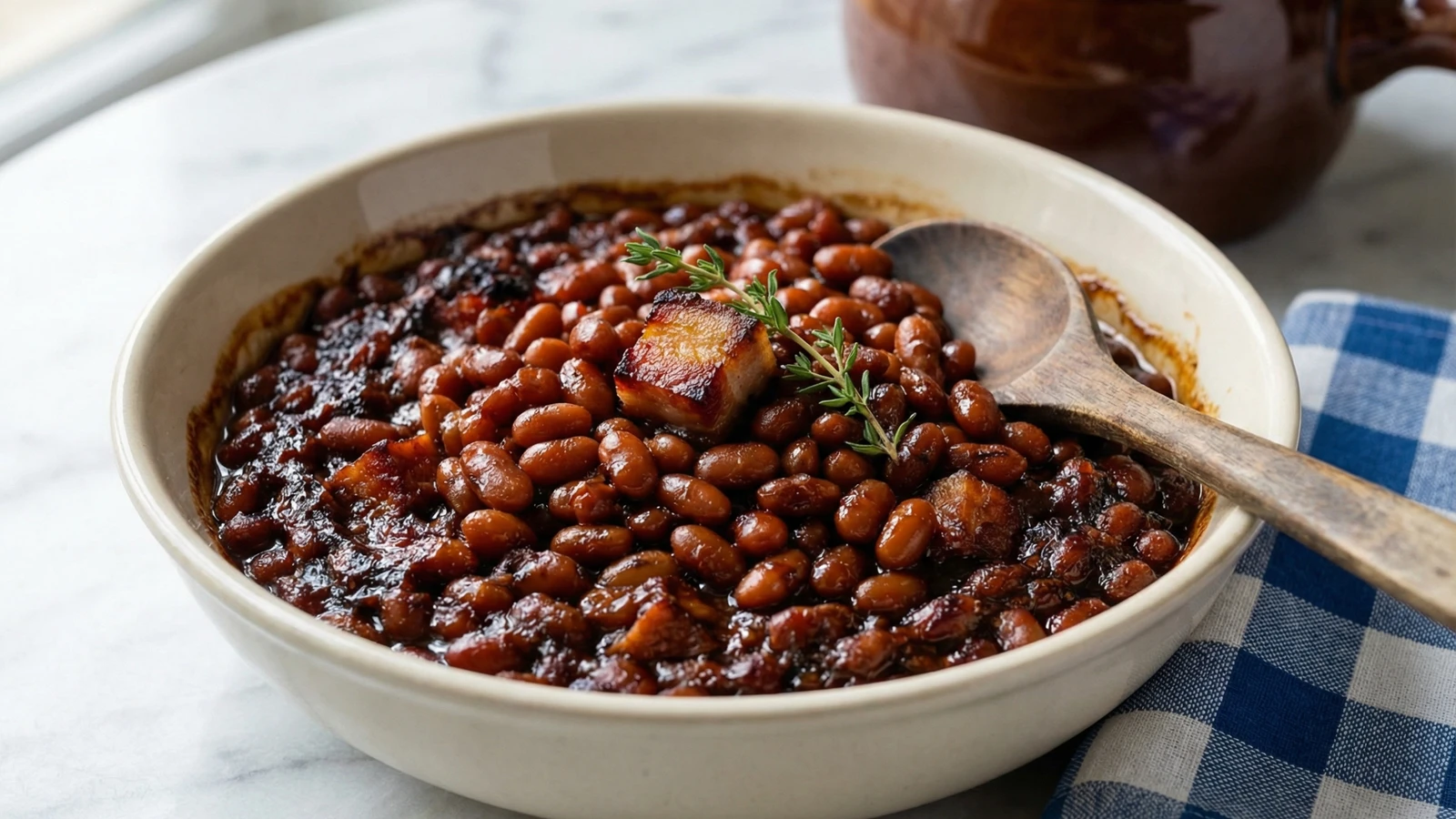
Navy beans transformed through eight patient hours into something sticky, sweet, and deeply savory. Salt pork melts into the molasses-dark sauce while mustard adds backbone. This is the dish that fed generations of New Englanders every Saturday night.
Boston baked beans carry three centuries of Yankee thrift in every spoonful. The Puritans baked them on Saturday, let them simmer through the Sabbath, and ate them for Sunday supper because their faith forbade cooking on the Lord's day. That religious necessity produced one of America's great dishes. The long, slow heat transforms humble navy beans into something approaching the sacred.
The molasses tells another story. Ships from the Caribbean brought it to Boston's wharves, where it became cheaper than sugar and flavored everything from brown bread to these beans. That distinctive bittersweet depth you taste? It's the flavor of colonial trade routes, of a city built on maritime commerce. When you make this dish, you're cooking history.
I've eaten baked beans from church suppers in Vermont, from diners in Worcester, from my own kitchen more times than I can count. The best versions share three qualities: beans that hold their shape but yield completely to the tooth, a sauce thick enough to coat a spoon, and that perfect balance where molasses sweetness meets the salt and smoke of good pork. This recipe delivers all three. It requires time, not skill. Set your pot in a low oven and let physics do the work.
Quantity
1 pound
Quantity
8 ounces
rind removed
Quantity
1 large
peeled and left whole
Quantity
1/2 cup
Quantity
1/4 cup
packed
Quantity
2 tablespoons
Quantity
1 teaspoon
Quantity
1/2 teaspoon
Quantity
1/4 teaspoon
Quantity
6 cups
plus more as needed
| Ingredient | Quantity |
|---|---|
| dried navy beans | 1 pound |
| salt porkrind removed | 8 ounces |
| yellow onionpeeled and left whole | 1 large |
| dark molasses | 1/2 cup |
| dark brown sugarpacked | 1/4 cup |
| dry mustard | 2 tablespoons |
| fine sea salt | 1 teaspoon |
| freshly ground black pepper | 1/2 teaspoon |
| ground ginger | 1/4 teaspoon |
| waterplus more as needed | 6 cups |
Spread the beans on a baking sheet and pick through them, discarding any shriveled specimens or small stones. Rinse under cold water. Transfer to a large bowl, cover with cold water by three inches, and let soak at room temperature for eight hours or overnight. The beans will swell to nearly double their size. Drain and rinse before proceeding.
Place the drained beans in a large pot and cover with fresh cold water by two inches. Bring to a boil over high heat, then reduce to a steady simmer. Cook uncovered for 45 minutes to one hour, until a bean pressed between your fingers yields easily but doesn't turn to mush. The skins may split slightly. This is fine. Drain the beans, reserving two cups of the cooking liquid. These beans are now ready to absorb hours of flavor.
While the beans simmer, prepare your salt pork. Cut it into two pieces: one chunk of about two ounces and the remainder sliced into half-inch cubes. The chunk will nestle into the beans and flavor the pot from within. The cubes will dot the surface and crisp during the long bake, becoming small treasures of rendered fat and caramelized pork.
Heat your oven to 275°F. In a Dutch oven or traditional bean pot, place the whole peeled onion at the bottom. Nestle the larger chunk of salt pork beside it. Add half the parboiled beans. Scatter the remaining salt pork cubes over this layer, then add the rest of the beans. The pot should be about three-quarters full.
In a bowl, combine the molasses, brown sugar, dry mustard, salt, pepper, and ginger. Whisk in six cups of boiling water until the sugar dissolves and the molasses loosens into a dark, fragrant liquid. The smell alone tells you something good is coming: sweet, sharp, earthy. Pour this mixture over the beans. The liquid should cover them by about half an inch. If it doesn't, add more hot water.
Cover the pot tightly with its lid or aluminum foil. Transfer to the center rack of your oven. Bake for six hours, checking every two hours. The beans should always be covered with liquid. Add boiling water as needed to keep them submerged. Resist the urge to stir. Let the beans develop their structure undisturbed.
After six hours, remove the lid. The beans should be tender and the liquid reduced but still soupy. Increase the oven temperature to 325°F. Continue baking uncovered for one and a half to two hours more, until the top develops a dark, glossy crust and the sauce thickens to coat the beans. The surface will caramelize, developing deep brown spots. This is exactly what you want.
Remove from the oven and let rest for fifteen minutes. The sauce will continue to thicken as it cools. Find the whole onion and discard it, or leave it for the person who likes such things. Serve the beans directly from the pot, spooning from beneath the crust to capture both the sticky top and the saucier depths below. These beans improve overnight. Make them Saturday, eat them Sunday, and thank the Puritans.
1 serving (about 275g)
Culinary guides, cultural storytelling, and the editorial depth that makes cooking meaningful.
Discover Culinary ExplorerChef Dean
Jewel-toned beets cloaked in a glistening sweet-and-sour glaze, the kind of honest side dish that transforms a weeknight supper into something your grandmother would recognize and approve.

Chef Dean
Humble root vegetables transformed by high heat and pure Vermont maple syrup into something golden, lacquered, and worthy of the Thanksgiving table. The honest sweetness of the earth, elevated.

Chef Juliette
Boulettes au suif, poached beside salt beef, turn equal weights of flour and finely chopped suet into tender, rich dumplings. Keep the beef liquor at a bare tremble and the old garnish works beautifully at home.

Chef Juliette
Bread, flour, frangipane, and rice become four cool, supple panades for binding forcemeats, each changing body and flavor while preserving tenderness. The finest Mousselines need none, and knowing that distinction is the lesson.